

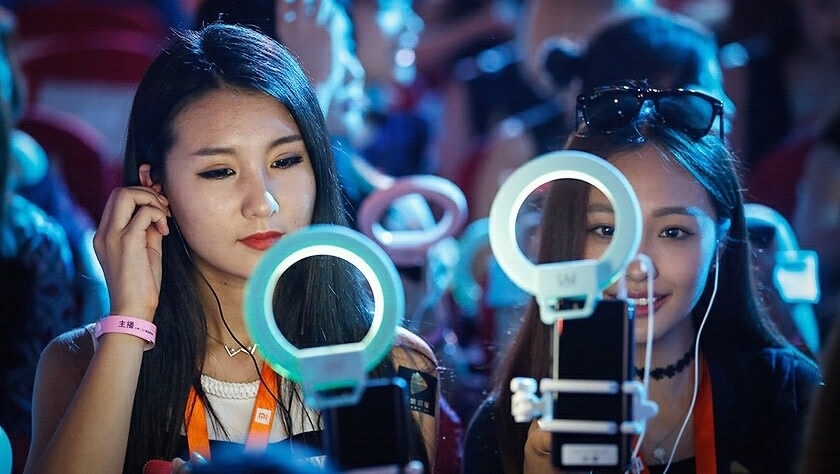
In 2020, live streaming began to become a trend in China. Hangzhou was the first to embrace this wave. According to the city's Commerce Bureau, online retail sales there increased by 200 billion RMB in 2020, ranking first in China with 4,265 live streaming companies. By 2022, this figure had exceeded one trillion RMB, creating jobs for over one million people. Statistics show that for every 224 people in Hangzhou, there is one individual who works as a streamer.
In this wave, many people's lives changed overnight. In October 2020, Xiao Xi, a former financial professional, stepped into the world of live streaming for the first time. In just eight months, her annual income exceeded 2 million yuan. Data shows that the average gross merchandise value (GMV) of a streamer can exceed 2.5 million yuan per year. Top individuals can generate up to 100 million yuan.
But then the situation gradually reversed. Now, the topic of discussion is the exodus from Hangzhou.
The golden age
In October 2020, Xiao Xi, who was struggling to close deals at her securities firm, decided to change careers. Confident in her speaking skills, she took on her first livestreaming job, earning 6,000 RMB per month.
In the first week, the female KOC achieved sales of 50,000-100,000 RMB. In the second month, her salary easily exceeded 10,000 RMB. At that time, this was just the "starting point" in the industry. Six months later, Xiao Xi rose to lead a product segment, earning 50,000 RMB per month.
 |
There used to be 1 million streamers in Hangzhou. Photo: Sixth Tone. |
That was a time when streamers only needed to dare to ask for a certain price, and the boss was willing to pay. When her old company refused to raise her salary, Xiao Xi immediately accepted an offer from another live streaming company. In her first live stream with the new organization, she increased her viewership from 800 to 4,000. Immediately, the business owner signed a contract with the female streamer with a salary of 200,000 RMB/month.
During its heyday, anyone who entered a livestreaming room could make money. According to female KOCs, earning 1 million RMB/year was very easy in the beauty and fashion industries. Mid-level streamers also earned over 500,000 RMB.
According to publicly available data from the Hangzhou Municipal Commerce Bureau, the city's online retail sales increased by 200 billion yuan in 2020, ranking first in China with 4,265 livestreaming-related companies. By 2022, this figure had exceeded 1 trillion yuan, creating jobs for more than one million people.
However, every streamer knows that this success is hard to sustain. Even at the peak, earning 2 million yuan a year, Xiao Xi never truly felt secure. "Actually, I feel that live streaming is just a way to make quick money. You have to sacrifice a lot in return, including your health," she said.
For Xiao Zhao, a newcomer, the pain came from having to spray so much medication into her throat before each shift to ensure her voice sounded normal. She also had to go to the hospital for nebulizer treatment after each broadcast.
This kind of "selling one's health" is not an isolated case. Industry data shows that 83% of streamers suffer from sore throats. The detection rate of vocal cord polyps among top streamers reaches 61%. After experiencing voice loss, vocal cord cysts, and sudden deafness, Xiaozhao realized he couldn't stream for the rest of his life.
The bubble burst.
Many KOLs (Key Opinion Leaders) have indicated signs of decline since 2024. Data shows that the growth rate of the live streaming e-commerce market in China has slowed from 40% in 2023 to 15%. Many platforms have seen revenue declines of 1-2 billion RMB during the same period.
As a top streamer, Xiao Xi feels that making money is no longer as easy as it used to be. Mid-level KOCs, earning 20,000-30,000 RMB/month, are starting to find it "not enough to live on".
In 2025, the recession officially began. Public data showed that Yaowang Technology, the first livestreaming e-commerce company established in Hangzhou, had reported losses for three consecutive quarters. Financial reports for the first half of 2025 indicated that the livestreaming e-commerce segment, which accounted for approximately 60% of the company's revenue, had declined by nearly 20% year-on-year.
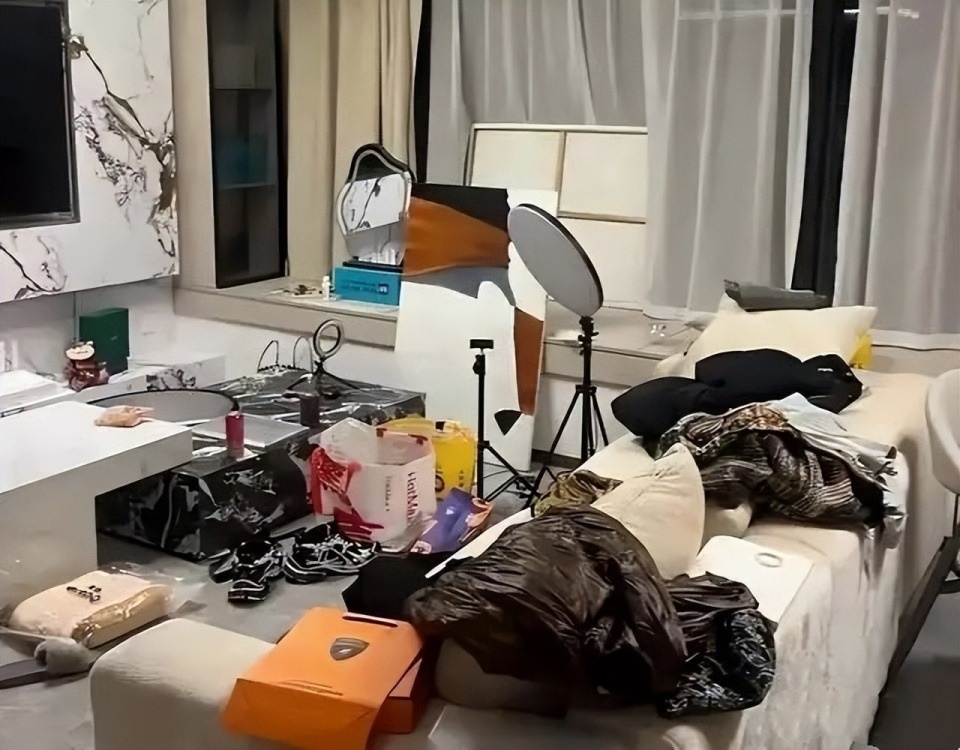 |
China's KOC (Key Opinion Leader) struggles with broadcasting work while incomes decline. Photo: Beijing Youth Daily. |
The downsizing of industry giants quickly spread throughout the ecosystem. Several top Hangzhou MCNs tightened spending. Hourly livestream rates dropped from 800 to 500 RMB.
This development gradually impacted the entire industry. Xiao Xi's income dropped by tens of thousands of yuan each month. The target of 1 million yuan per year became increasingly distant. For startups like Xiao Zhao, the salary was insufficient to cover the high cost of living in Hangzhou. She had to work multiple shifts continuously just to make ends meet.
The surplus of labor has led to increasingly lower wages. Xiao Zhao only receives about 60 yuan per hour.
This devaluation is clearly illustrated in KK's job search story. She's an experienced clothing sales clerk, and her minimum wage was 200 RMB/hour. But after the Lunar New Year in 2025, KK was only offered 120-130 RMB. "If I don't take it, someone else will," KK said. In the fiercely competitive Hangzhou market, the value of experience is completely diluted.
As a leader in the industry, Xiao Xi realized that the pie was shrinking. The era of growth, which supported all participants, was over. The most significant factor was declining viewership. The rapid explosion and emergence of new platforms had led to market saturation.
Flee from Hangzhou
Streamers began seeking out new markets, with new sources of viewership and merchandise. Most went to Guangzhou, with its extensive supply chain. Xiao Xi and Xiao Zhao chose to move there when recruitment surged. However, the area's infrastructure is not yet fully developed to support live streaming.
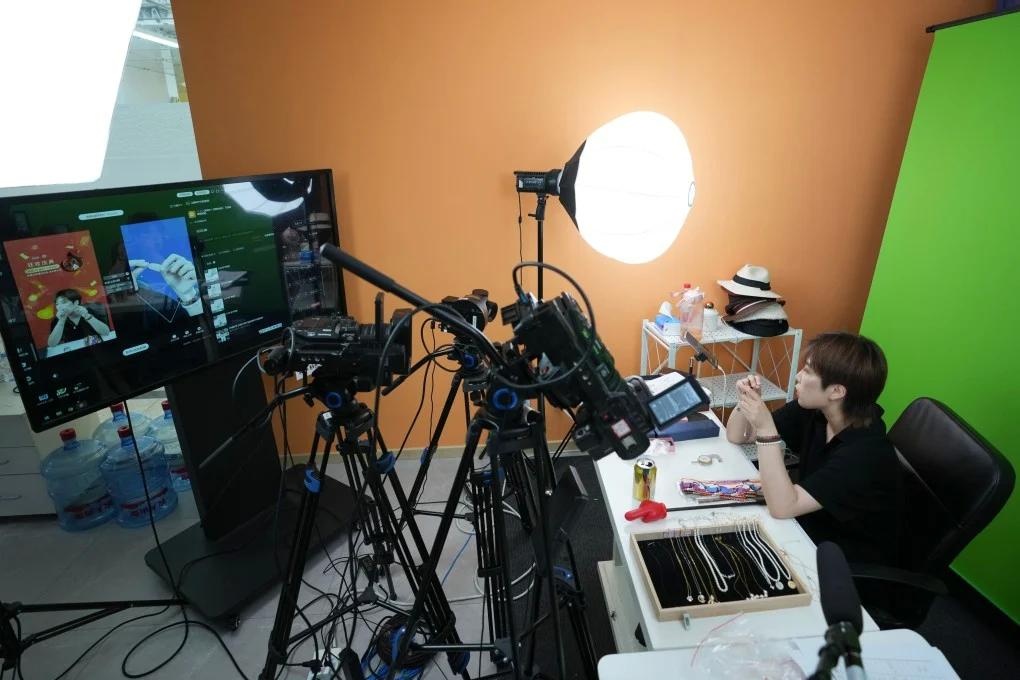 |
The broadcasting market is saturated with too many participants. Photo: SCMP. |
For Tongtong, a former teacher with excellent planning skills, what she needed was a stable job. Therefore, the streamer set her sights on Shanghai, the hub of major brands.
Unlike Hangzhou's self-distribution model, Shanghai represents a larger form of brand-sponsored sales. According to a research report published by i Research Consulting , brand-owned live streams account for nearly 50% of total transaction volume. However, this model diminishes the influence of the streamer. Customers choose based on the brand, rather than the person directly promoting the product.
But not everyone is as lucky as Xiao Xi or Tongtong; many accept failure, switch jobs, or choose to return to their hometowns when their investment in livestreaming loses money.
Source: https://znews.vn/thao-chay-khoi-thu-phu-livestream-post1634118.html
![[Video] Vehicles banned from crossing Long Bien Bridge for 2 months.](https://vphoto.vietnam.vn/thumb/1200x675/vietnam/resource/IMAGE/2026/03/28/1774680289371_1-png.)

![[Photo] General Secretary To Lam attends the ceremony commemorating the 80th anniversary of the Traditional Day of the Vietnamese Sports and Physical Education Sector.](https://vphoto.vietnam.vn/thumb/1200x675/vietnam/resource/IMAGE/2026/03/28/1774673986806_a1-bnd-4909-8531-jpg.)

![[Photo] Close-up of an Australian warship visiting Tien Sa port, Da Nang](https://vphoto.vietnam.vn/thumb/1200x675/vietnam/resource/IMAGE/2026/03/28/1774675489416_tau-5-jpg.)















































































Comment (0)