Looking back, the delay in issuing land prices caused many projects in the former Buon Ma Thuot City to stall. Hundreds of land plots could not be priced for compensation and land clearance support for a long time, forcing construction projects to temporarily halt even though they had already started. These obstacles mainly stemmed from the lack of a legal basis to determine prices that were appropriate to market fluctuations.
The 2024 Land Law, with its provision for establishing annual land price tables, is expected to fundamentally resolve this bottleneck. When land prices are regularly updated and closely reflect market prices, compensation will more accurately reflect the true value of the land being expropriated. This is not only an economic issue but also a key factor in fostering social consensus.
In reality, behind every square meter of land confiscated lies the livelihood and future plans of an entire family. Many people have experienced the situation of "losing their land and their livelihood" because the compensation was insufficient to rebuild their land or change their occupation. Therefore, the greatest expectation of the people when the new land price list is applied is to receive adequate, fair, and transparent compensation.
 |
| A delegation from the Provincial People's Committee inspected the land clearance work and construction progress of projects in the province. Photo: H. Tuyet |



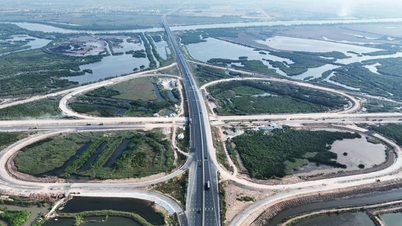
Ms. Vu Thi Huong's family (Ea Knuec commune), whose land is subject to expropriation for the Ho Chi Minh Highway Eastern bypass project in Buon Ma Thuot city, shared that previously, the biggest concern for residents when a project passed through their area was the compensation price being too low compared to the actual value. With the implementation of the 2024 Land Law, she and many other households hope that the new land price list will ensure their legitimate rights, helping them feel secure and stable in their lives after giving up their land for the project.
Sharing the same sentiment, Mr. Nguyen Van Chuong (Phu Nong neighborhood, Phu Yen ward) said that his family lives in the area where the high-speed railway project is planned to pass through. He fully supports the government's infrastructure development policy, but the key issue remains the compensation price. "If the land price is determined accurately, people will be willing to support it because their rights will be protected," Mr. Chuong said.
Besides expectations, many people also expressed concerns that as land prices rise, related taxes and fees such as land use fees, registration fees, personal income tax, land subdivision fees, and land use conversion fees will also increase. This could create financial pressure, especially for low-income households in urban areas.
According to many citizens, for the new land price list to truly take effect, along with adjusting land prices, the State needs to have mechanisms to exempt, reduce, or postpone financial obligations for vulnerable groups and cases of small-scale land use conversion to serve actual housing needs. At the same time, administrative procedures need to be simplified and made transparent so that people can easily access and implement them.
From a management perspective, Mr. Huynh Duc Nam, Head of the Housing and Real Estate Market Management Department of the Department of Construction, believes that when compensation prices are close to reality, complaints will decrease, the land clearance process will be accelerated, creating favorable conditions for investment and construction projects to be implemented smoothly. This is a double benefit: people's rights are protected, while the State and businesses save time and social costs.



Source: https://baodaklak.vn/kinh-te/202601/thao-go-nut-that-giai-phong-mat-bang-418127a/