A person's footprint shapes a nation.
The history of the Vietnamese nation in the early 20th century was marked by a long night of slavery. The country lost its independence, the people suffered, and patriotic movements failed one after another. In this context, on June 5, 1911, from Nha Rong Wharf, the young man Nguyen Tat Thanh set out to find a way to save the country with a burning desire: to regain independence for the nation.
That departure not only marked a turning point in a person's life but also a turning point in the history of the Vietnamese nation. After more than 30 years of wandering across continents, working various jobs to make a living and carry out revolutionary activities, he found the path to national liberation: the path of the proletarian revolution.
What was truly remarkable about Ho Chi Minh was not only his stature as a brilliant leader, but also his heart that was always deeply concerned about the fate of the nation and the happiness of its people. He once affirmed: "I have only one desire, an overwhelming desire, to see our country completely independent, our people completely free, and all our compatriots having enough food and clothing, and access to education."
That aspiration became the guiding light for the Vietnamese revolution, leading it from one victory to another. From the August Revolution of 1945, which gave birth to the Democratic Republic of Vietnam, to the Dien Bien Phu victory, "renowned throughout the world and shaking the earth," and then the Great Spring Victory of 1975, which unified the country, the imprint of Ho Chi Minh's thought and spirit has always been present as a tremendous source of national strength.
But what makes millions of Vietnamese people love and respect him is not only his contribution to the liberation of the nation, but also the noble character of a man who dedicated his entire life to the country and its people.
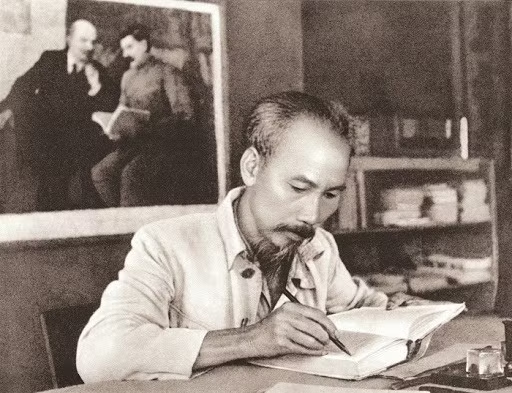
In his daily life, President Ho Chi Minh always maintained a simple, approachable, and humble lifestyle. From the modest stilt house in the Presidential Palace to his faded khaki clothes and simple rubber sandals, these became beautiful symbols of revolutionary ethics. He instructed cadres and Party members to be "diligent, thrifty, honest, upright, and selfless," and to truly be loyal servants of the people.
In his Testament , he said: “ Our Party is a ruling party. Every Party member and cadre must truly internalize revolutionary ethics, truly practice thrift and integrity, and be selfless and impartial. We must keep our Party truly clean and worthy of being a leader and a truly loyal servant of the people.”
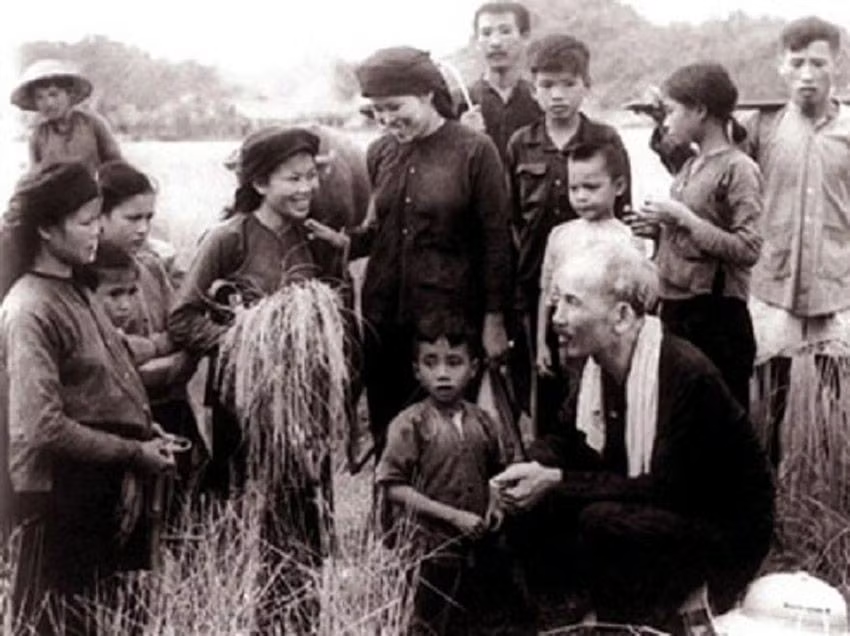
For the people, he always showed profound love. In his thought, the people were both the goal and the driving force of the revolution. He repeatedly emphasized: "Even if something is ten times easier, without the people, nothing can be achieved; even if something is a hundred times harder, with the people, everything can be accomplished." It was this deep belief in the power of the people that forged the resilience and enduring vitality of the Vietnamese revolution.
Following in the footsteps of President Ho Chi Minh today also means looking back at the arduous but glorious journey that the nation has gone through, and further appreciating the values of independence, freedom, peace, and development.
Following in his footsteps means learning the spirit of serving the country and its people.
The greatest legacy that President Ho Chi Minh left to the nation is not only his glorious revolutionary career but also his system of ideological, moral, and lifestyle values that hold contemporary significance. Following in his footsteps is not only a reminder of the nation's historical journey but also a way to learn from him the spirit of living for the country and the people; placing the interests of the Fatherland and the people above personal interests.
Throughout his life, he always reminded cadres and Party members to be close to the people, respect the people, and listen to the people. He once instructed: "Do everything that benefits the people, and avoid everything that harms the people." This is not only a teaching on public service ethics but also a profound philosophy about the responsibility of cadres to the people.
He was particularly critical of bureaucracy, detachment from the people, and formalism. According to him, if officials are distant from the people, they will not understand the people, nor grasp their thoughts and aspirations, which can easily lead to mistakes in leadership and management.


Therefore, learning from Uncle Ho today means first and foremost learning the spirit of responsibility towards work, the community, and the country. This is an attitude of dedication, honesty, matching words with actions, daring to think, daring to act, and daring to take responsibility for the common good.
In the context of the country entering a new stage of development with many intertwined opportunities and challenges, these values become even more profoundly significant. The 14th National Congress of the Party set the goal: “ Maintaining a peaceful and stable environment; developing the country rapidly and sustainably and firmly protecting the Fatherland; comprehensively improving and enhancing the people's lives… realizing the vision of becoming a developed, high-income country by 2045 for a peaceful, independent, democratic, prosperous, civilized, happy Vietnam, steadily advancing towards socialism.”
To realize that goal, it is crucial not only to have economic or scientific and technological resources, but also to strongly awaken the spirit of patriotism, self-reliance, self-improvement, and the desire to contribute in every Vietnamese person. This is also the overarching spirit in Ho Chi Minh's thought.
Someone once said, "Nothing is impossible if you have the willpower." This simple saying holds profound meaning about perseverance, willpower to overcome difficulties, and a spirit of action.
Following in his footsteps today also means learning a simple, humble, and sincere way of life. In a modern society with many changes, these moral values become even more necessary to preserve the cultural identity and spiritual foundation of the nation.
For the younger generation, learning from President Ho Chi Minh is not about grand, unattainable ideals, but begins with a conscious effort to study, work, and live responsibly towards family, community, and country. It is about aspiration, a spirit of innovation and creativity, and the courage to take risks and contribute.
For cadres and Party members, learning from Uncle Ho means preserving revolutionary moral qualities, combating individualism and pragmatic, opportunistic lifestyles; dedicating oneself to serving the people, and maintaining the people's trust in the Party.
More than anyone else, President Ho Chi Minh understood that the greatest strength of the revolution lies not in material resources but in the hearts of the people, in the people's faith.
Following in the footsteps of President Ho Chi Minh on the journey of building the nation today.
136 years since the birth of President Ho Chi Minh, Vietnam has undergone tremendous changes. From a poor and backward country after the war, Vietnam has risen to become a nation with an increasingly prominent position on the international stage, with the people's lives constantly improving and socio-economic development flourishing.
These achievements are the result of steadfastly following the path chosen by the Party and President Ho Chi Minh; and at the same time, they are vivid proof of the strength of national unity and the aspiration for progress of the Vietnamese people.
However, many difficulties and challenges still lie ahead. Strategic competition among major powers, the impact of climate change, digital transformation, population aging, and the demand for green and sustainable development are posing new tasks for the country.
In this context, following in his footsteps is not only a source of pride but also a responsibility to continue his legacy through concrete actions. This means continuing to build a clean and strong Party and political system; and developing a team of cadres with sufficient qualities, capabilities, and prestige to match the tasks at hand.
It means developing the economy while ensuring social progress and equity; constantly caring for the lives of the people, especially those in remote areas and ethnic minorities. It means maintaining national independence and sovereignty, and firmly protecting the Fatherland in all situations.
It also strongly inspires the aspiration for national development towards peace, independence, democracy, prosperity, civilization, happiness, and steadily advancing towards socialism in accordance with the spirit of the 14th National Congress of the Party.

Today, following in his footsteps also means building a modern Vietnam while preserving its national cultural identity; integrating deeply into the global community without assimilation; developing the economy alongside human development and preserving the fine values of the Vietnamese nation.
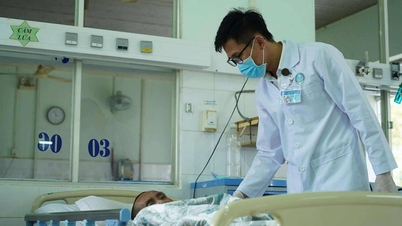
Every dedicated official, every teacher wholeheartedly devoted to their students, every doctor committed to treating the sick, every soldier steadfastly defending the Fatherland, every young person nurturing the aspiration to contribute… all are practical ways to continue on the path chosen by President Ho Chi Minh.
Following in the footsteps of President Ho Chi Minh today doesn't require grand gestures. It can begin with living more honestly, responsibly, and compassionately; prioritizing the community's interests over personal ones; and contributing instead of merely seeking enjoyment. Ultimately, learning from and emulating Ho Chi Minh's thoughts, ethics, and style lies not in words but in concrete actions in daily life.
***
Ho Chi Minh's footsteps have been imprinted for over a century, yet they remain deeply etched in the development journey of the Vietnamese nation. These are the footprints of fervent patriotism, the aspiration for national independence, a spirit of serving the people, noble revolutionary ethics, and an unwavering belief in the power of the people.
The 136th anniversary of President Ho Chi Minh's birth is not only an occasion to express gratitude for his immense contributions, but also an opportunity for every Vietnamese person to reflect on themselves, continue to learn from and follow his example through practical and concrete actions. Ho Chi Minh's thought, morality, and style will forever be a solid spiritual foundation and a guiding light for the Vietnamese nation to move forward.
Following in his footsteps today means continuing to write the story of Vietnam's aspirations - the aspiration for a strong and prosperous nation, a people who are well-off and happy, and an increasingly bright future.
Source: https://baogialai.com.vn/theo-dau-chan-nguoi-post587539.html