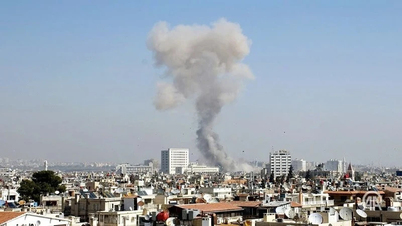
Kyiv Mayor Vitali Klitschko said the attack on the morning of July 2 (local time) claimed the lives of 13 people and injured at least 86. A high-rise apartment building was hit directly by Russian ballistic missiles, causing six floors to partially collapse. Klitschko also said many residents were trapped inside another nine-story residential building.
According to Tymur Tkachenko, head of the Ukrainian capital's military administration, at least two children were among the injured. More than 30 locations across the city were devastated.
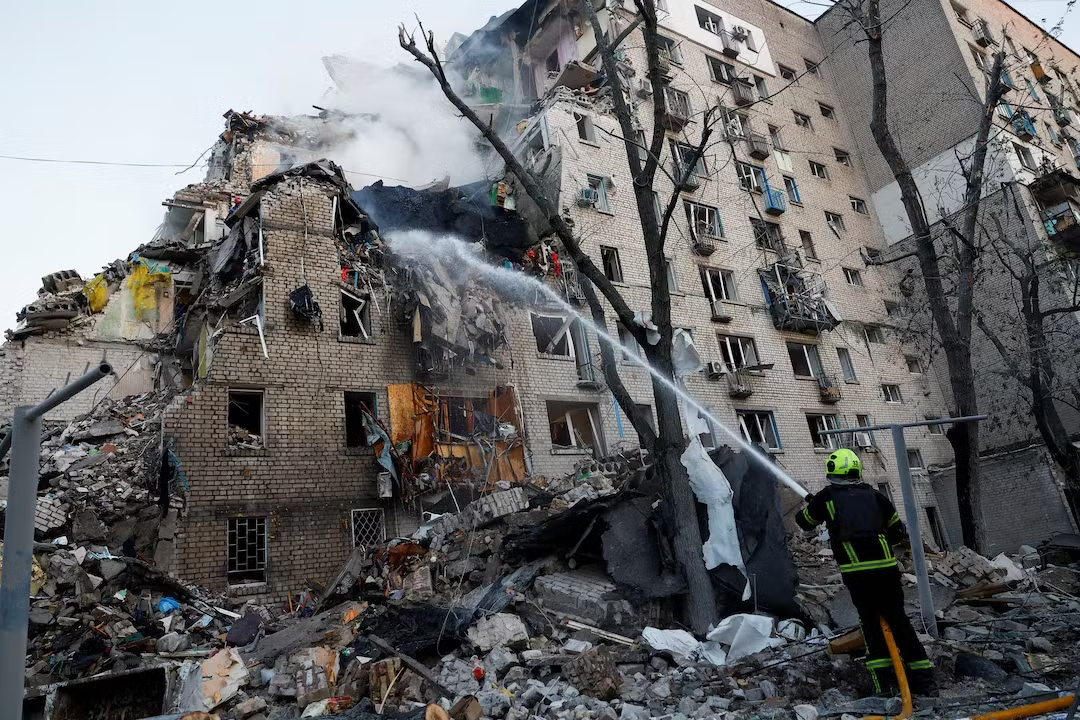
The Ukrainian Air Force announced on Telegram that Russia deployed 74 missiles and 496 UAVs overnight. Ukrainian air defense units successfully shot down or neutralized 48 missiles and 476 UAVs. However, 25 ballistic missiles and 12 UAVs still penetrated the air defense network, striking 33 targets.


In a statement, the Ukrainian Air Force emphasized: "We offer our condolences to all the victims and the families who have lost loved ones in this horrific attack. We will retaliate!"
According to experts, although Ukraine is highly proficient in intercepting UAVs, its "fatal weakness" remains dealing with ballistic missile threats – the cause of the greatest damage last night.
The events in Kyiv occurred shortly after President Zelensky cut short his visit to Ireland. In a press conference in Dublin with Irish Prime Minister Michael Martin on July 1st, he warned: "Today, we have intelligence about another large-scale attack by Russia. We know that Russia has been preparing for this for a long time. That is precisely the threat we face tonight."
On social media platform X, Zelensky urged citizens to be "especially careful" and "protect their families and children" by paying attention to air raid sirens. He also accused Moscow of completely rejecting efforts to negotiate an end to the war, claiming that Russia "only wants to continue its aggression against Ukraine, its neighbors, and all of Europe."
Zelensky will soon attend a NATO conference to request additional air defense systems, specifically US-made interceptor missile systems such as the Pac-2 and Pac-3, considered the most effective weapons currently available for intercepting ballistic missiles traveling faster than the speed of sound.


On the Russian side, the Ministry of Defense announced on Telegram that it had conducted a "large-scale attack" using high-precision long-range weapons launched from the air, land, sea, and UAVs. The focus of the attack was military and energy facilities around Kyiv, as well as military airfields in Poltava and Dnipropetrovsk. Moscow called this retaliation for Ukrainian attacks on Russian civilian infrastructure.
Source: https://cand.vn/thu-do-kiev-hung-chiu-dot-khong-kich-du-doi-post815602.html