Image created by AI.
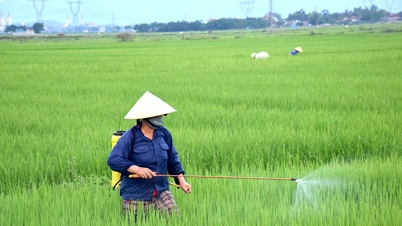
I grew up surrounded by the smell of fresh mud, the scent of new straw, and the rhythmic sound of the water pump every night. My father was out in the fields all year round. Each season had its own task. From sowing rice to fertilizing and spraying pesticides. In the scorching midday sun, while others sought shade to rest, my father would still be hunched over in the fields, his back bent like a rice plant heavy with grain.
When I was little, I didn't understand why my father worked so hard. Later, when I started working, there were days when the pressure of work was overwhelming. I once called home and told him I should quit my job and come back to the countryside to help him with the farming and relieve my stress. There was a moment of silence on the other end of the line.
Then my father chuckled dryly: "If I wanted you to suffer like me, why would I have let you go to school? If you could just learn basic arithmetic in the third or fourth grade, you could have stayed home and worked in the fields." I felt a lump in my throat.
My father was not very educated. He didn't know much about reading and writing. But there are some things he said that even someone who studies their whole life might not be able to come up with.
Once, my father went to the district office to do some paperwork. He wasn't familiar with the procedures and was told to go back and forth several times. When he came home, he was very angry. He sat outside smoking, his face gloomy.
That day, my father said to us, "If you're illiterate and don't understand life, you'll just have to accept whatever people say. I'm trying my best to give you all an education so that when you go out into the world, no one will look down on you, and you won't be at a disadvantage." It was probably from that afternoon that my father decided to give all six of us a proper education, even though our family was so poor that sometimes my mother had to work as a hired rice harvester, and my father spent all day plowing and tilling the fields.


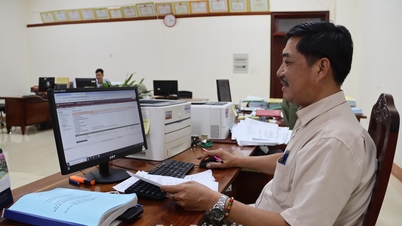
Of the six siblings, only I made it to university and then got a job in the government. When I got accepted, my father didn't cry. He just quietly went to buy a few kilograms of cakes to offer to our ancestors. That evening, I saw him sitting alone in the yard drinking tea, his eyes fixed on the dark fields. Perhaps for the first time in his life, he felt his poverty was about to be defeated.
I'll never forget a beating I received in eighth grade. Back then, I was addicted to video games and skipped extra classes for several days. My dad searched the whole neighborhood before finally dragging me home. He took a stick and beat me. I cried. But after a few lashes, he started crying first. He threw the stick down on the floor and said something that I still remember to this day: "Our family is poor. If you don't study, your life will be just like mine, son."
That saying stayed with me throughout the following years. It accompanied me through sleepless nights studying for exams, and through the days after graduation when I was looked at with suspicion while applying for jobs. A child from a poor farming family in the countryside, illiterate and clueless, who would believe I could become a journalist? Even when I was accepted into the newsroom, many people didn't believe it. Only my father smiled. That gentle, kind smile, as if he knew it all along.
At seventy years old, my father fell ill. We took him to the provincial hospital for a general check-up. The doctor looked at the results and said, "Your liver and intestines are fine. Your internal organs are still healthy. It's just that you've been working too hard for many years, so your body is aging quickly." I felt so sorry for him.
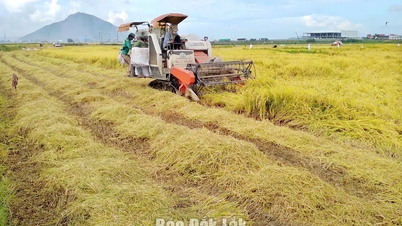
My father spent his whole life toiling in the fields, working under the sun and rain. Starting from nothing, he and my mother worked as laborers, saving every penny. Whatever they saved, they bought land. Ten acres, then twenty acres. And so it grew into a hundred acres. A hundred acres of land. That hundred acres was bought with my mother's youth, my father's bent back, and the cold, rainy seasons spent working in the fields.
Then my mother passed away.
Since my mother passed away, my father has visibly fallen ill. There's no one to nag him about food anymore, no more sounds of knives and chopping boards in the kitchen every afternoon. Many days I see him sitting listlessly, gazing out at the coconut grove behind the house. The place where my mother used to sit stripping coconut leaves and stacking firewood. His eyes are filled with profound sadness then.
We repeatedly urged Dad to remarry, to find someone to keep him company in his old age. He just shook his head: "My life only has your mother. Besides… I’m afraid she won’t love you." That man loved his children in such an awkward way his whole life.
Then one rainy morning, my father passed away.

The house was crowded that day. Neighbors came and went, relatives filled the yard. I knelt beside the coffin, imagining my father was just sleeping, exhausted after the harvest. Outside, the rain pattered on the tin roof. The sound was exactly like those nights when I was a child watching my father brave the rain to visit the fields. Since my father passed away, I've come to understand that in this world, there are loves that, once lost, can never be replaced.
Now, whenever I feel tired amidst the hustle and bustle of life, I remember my father's words from years ago: "Our family is poor. If you don't study, your life will be just like mine, with your head bowed in shame." I still try my best to work. To live a decent life. To write well. Not to be better than anyone else. Just so that somewhere, my father can look down... and be pleased.
Source: https://baoangiang.com.vn/tia-toi-a484947.html