Billion-dollar metro system expands to tourist capitals.
The An Giang Provincial People's Council recently approved the investment plan for the Phu Quoc metro project, with Phu Quoc Sun Co., Ltd. as the investor, under a BOT (Build-Operate-Transfer) contract. The total investment for the project is nearly 9,000 billion VND, of which state capital accounts for no more than 70% (equivalent to over 6,200 billion VND), and the remaining over 2,600 billion VND will be contributed by the investor or the project enterprise. The news of Phu Quoc's decision to build a metro system surprised many, as urban rail development has traditionally focused on Ho Chi Minh City and Hanoi – major metropolises facing severe traffic congestion and air pollution.
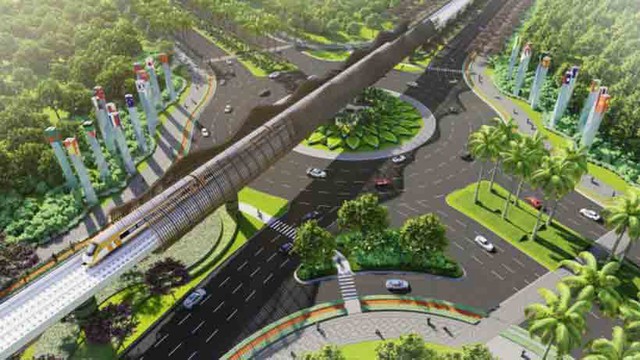
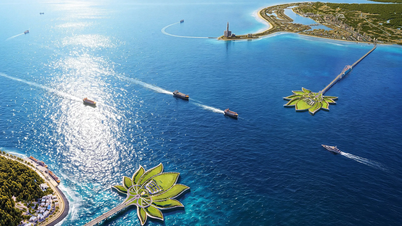
According to the plan, phase 1 of the Phu Quoc urban rail line will begin construction at the end of this year and be completed in mid-2027.
PHOTO: DEVELOPER
The People's Committee of An Giang province explained that Phu Quoc's goal is to develop the special economic zone into a green urban island with sustainable tourism; therefore, the metro is the top choice to connect a modern public transportation system, serving both residents and tourists. Furthermore, the first phase of the Phu Quoc metro line, spanning 18 km and connecting Phu Quoc International Airport with the APEC Convention Center, will contribute to Phu Quoc's ability to serve and build the most beautiful urban image for international friends through the APEC 2027 conference .
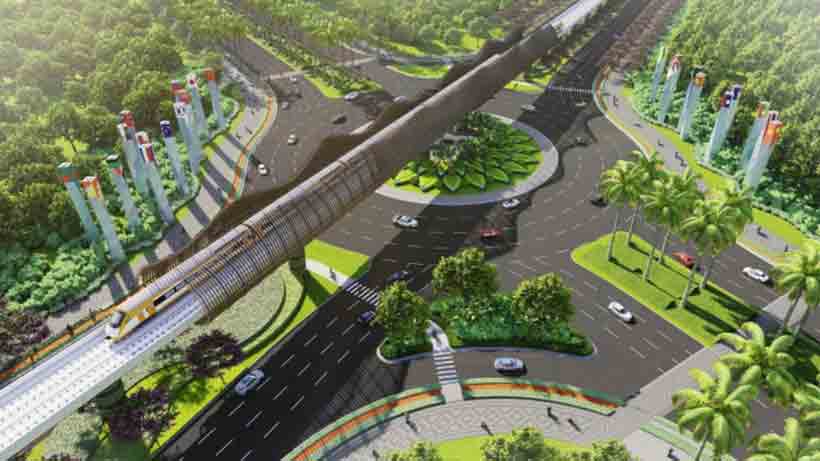
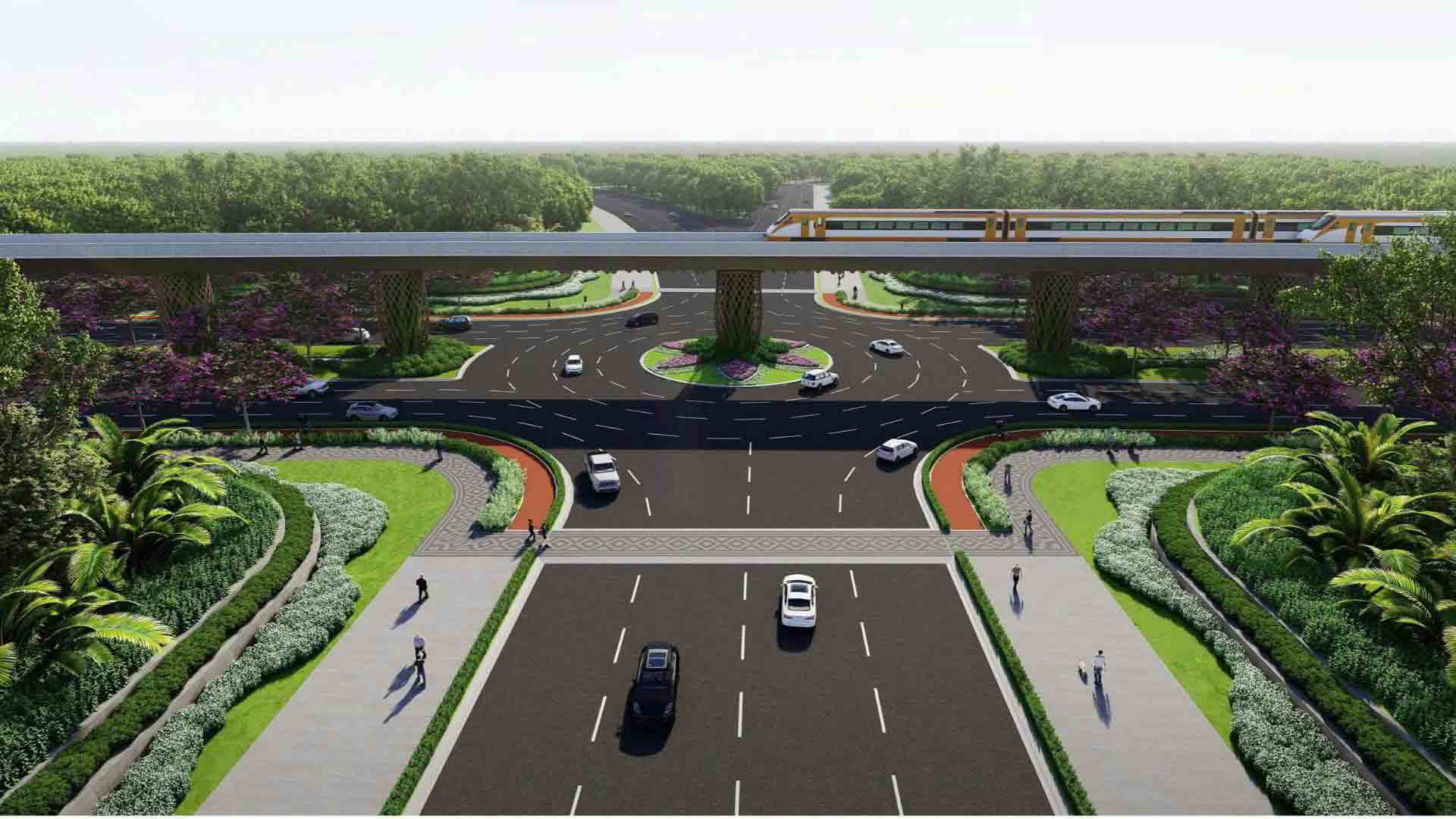
According to the investor's proposal, Phu Quoc Island's first metro line will consist of a 1.3 km elevated section, a 14.3 km surface-level section, and a 2 km underground section through the city center.
The route will include 6 stations, a technical maintenance center, and trains consisting of 3-5 carriages, each over 34 meters long, with a capacity of approximately 180 passengers. The design speed is 70-100 km/hour. Construction is expected to take place from Q4 2025 to Q2 2027, with a maximum contract term of 40 years from the date of handover and commissioning.
Prior to Phu Quoc, Da Nang City also announced its planning orientation for 17 urban railway lines with a total length of over 204 km, in the period from now until 2045.
In the urban railway system, the Da Nang authorities have prioritized the study of the first line connecting Da Nang International Airport - Hoi An - Tam Ky - Chu Lai; and the second line connecting the high-speed railway station to the central urban railway station. The goal of this railway line is to serve the connection between the national high-speed railway station area and the city center.
Mr. Le Quang Nam, Vice Chairman of the Da Nang City People's Committee , stated that after the merger, Da Nang is undergoing a strong transformation towards becoming a major socio-economic center of Southeast Asia, a livable, smart, and modern city. Along with this growth, the pressure on the transportation system is increasing. Traffic congestion, environmental pollution, and the ever-growing travel needs of residents and tourists are posing numerous challenges.
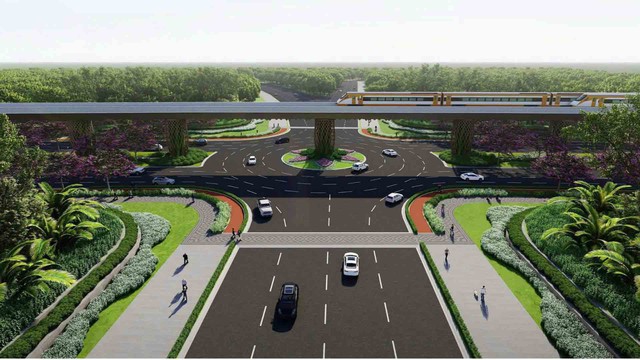
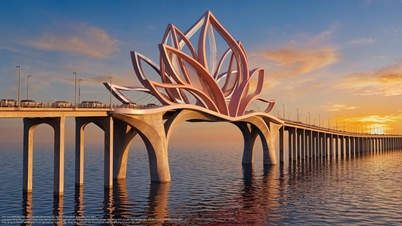
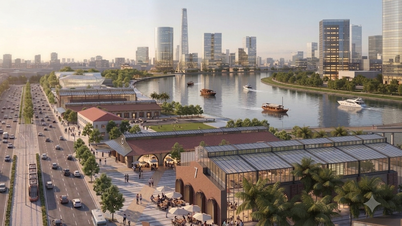
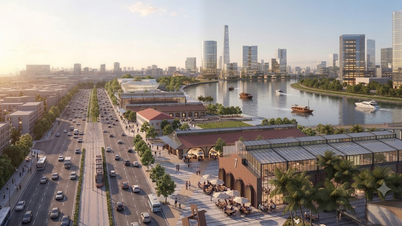
Perspective view of provincial road DT975 and the urban tram line connecting Phu Quoc International Airport with the APEC Convention Center.
PHOTO: DEVELOPER
To maintain its development pace and improve its quality of life, Da Nang needs a breakthrough in transportation infrastructure. And the most strategic and prioritized solution is the construction of a modern, efficient, and sustainable urban railway system.
"The urban railway system is not just a means of connection, but also a sustainable solution that contributes to reducing traffic congestion, minimizing carbon emissions, and encouraging environmentally friendly transportation. At the same time, it is also a driving force for socio-economic growth, trade, services, tourism, and logistics in the surrounding area. The urban railway is not just a transportation project; it is a visionary undertaking, reflecting the aspiration to elevate Da Nang to a regional level, connecting functional areas, maintaining economic growth, and creating a greener, cleaner, and more beautiful living environment for future generations," Mr. Nam affirmed.
Highways usher Vietnam into a new era.
You may also like
Identifying intangible assets in the digital age.On December 10th, the Ho Chi Minh City Association of Economic and Management Sciences, in collaboration with the Vietnam Copyright Association (VIETRRO) and other relevant organizations, held its annual national conference on copyright and reproduction rights with the theme "Identifying and Protecting Intangible Assets - The Foundation for the Development of Vietnam's Creative Economy". While many localities have identified the development of transport-oriented urban areas (TOD) based on metro systems, Ho Chi Minh City and Hanoi are also facing a golden opportunity to complete the "framework" for this development.
Hanoi aims to complete the construction of 96.8 km of metro lines by 2030; 301 km by 2035; and 200.7 km by 2045 to serve the capital's residents. To date, the elevated section of Line 3.1 (Nhon - Hanoi Station) has been completed, spanning 8.5 km. The Hanoi Metro Management Board (MRB) is currently constructing the underground section as planned, with tunnel drilling expected to be completed in the first quarter of 2026, followed by the commencement of equipment installation. Most recently, in early October, the Hanoi People's Committee commenced construction of Metro Line 2, the Nam Thang Long - Tran Hung Dao section, with a total investment of over 35,000 billion VND. In addition, MRB is actively finalizing the procedures for preparing the investment project to build the Hanoi urban railway, Line 5, Van Cao - Ngoc Khanh - Lang - Hoa Lac, to commence construction by the end of this year. Furthermore, other metro projects according to the plan are also undergoing investment preparation.

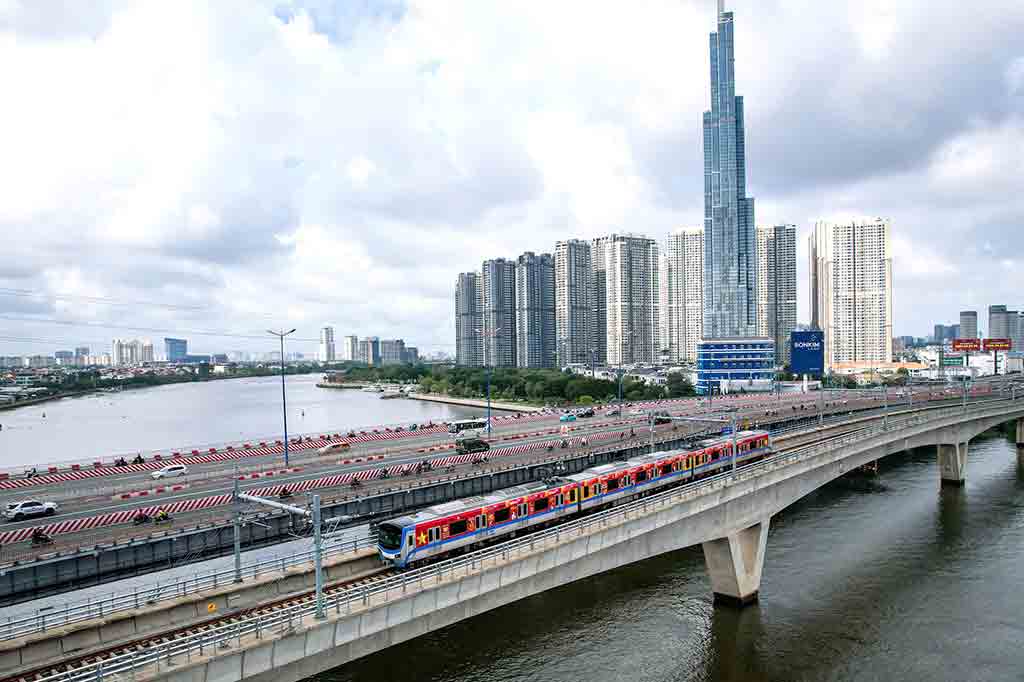
The metro system will contribute to transforming the urban landscape and boosting economic growth in local areas.
PHOTO: NHAT THINH
Overall, the pace of metro projects in Hanoi is being aggressively accelerated in order to fulfill the "responsibility" of greening the city that the Government has assigned to the capital's authorities.
Ho Chi Minh City, on the other hand, has never received such significant attention from private businesses regarding urban railway projects as it does now. Following the issuance of the "four pillar resolutions" that wholeheartedly support the participation of private businesses in key national projects, along with special mechanisms for railways, a series of proposals from USD billionaires have poured into the city. Notably, these businesses have committed to completing each line within 2-4 years if approved. This is a record timeframe, raising hopes that the "dream" of a comprehensive metro system for Ho Chi Minh City residents will soon become a reality within the next decade.
Dr. Nguyen Hoang Binh, lecturer at the Business Faculty (RMIT University Vietnam), assessed: "The 'metro era' is opening up opportunities to change the urban landscape and boost economic growth in localities. While previously metro lines relied heavily on the budget, leading to slow implementation, the participation of the private sector has made projects more vibrant. Metro will contribute to a 'transformation' of urban areas, promote economic growth and improve the quality of life, while also driving the development of many industries such as construction materials, trade, and services along the route."
Dr. Nguyen Quoc Hien, Deputy Head of the Ho Chi Minh City Urban Railway Management Board (MAUR), also expressed high expectations for the development of the metro network in the new era of the nation. According to Dr. Hien, the railway system is both the artery and the framework for urban development. Building metro lines and LRT (light rail) lines is the fundamental and only solution to sustainably address urban traffic congestion. In fact, in wealthy and prosperous cities around the world, people primarily use public transportation. This not only aims to reduce congestion but also provides a solution to environmental pollution and improve traffic safety in urban areas.
Emphasizing that the four "Asian Tigers" all have developed railway systems and that the rise of these countries and territories often coincides with the development of urban rail, Dr. Nguyen Quoc Hien cited the following examples: Seoul (South Korea), with a population of about 10 million, has had approximately 340 km of metro lines built in the last three decades. Singapore, Hong Kong, and Taipei, each with a population of around 6 to 8 million, all have around 200 km of urban rail lines and are still under construction. In these cities, the percentage of people using public transport during peak hours ranges from 40% to 70%, with Hong Kong reaching 90%. The development of urban rail in Chinese cities over the past three decades has also coincided with the country's remarkable development. Currently, China's urban rail network spans approximately 11,000 km across 47 cities, exceeding the combined length of urban rail systems in all countries outside of China.
"Vietnam is currently in a new phase of strength and potential, marking the beginning of a new development phase. We are also fortunate that many surrounding countries and territories in the region are already major players in the railway sector, so we can learn a great deal from them. With unique, revolutionary mechanisms, investment and development of urban railway systems in Ho Chi Minh City, Hanoi, and other localities nationwide will have many advantages. This is an opportunity to form an infrastructure framework that will propel Vietnam into a new era," Dr. Nguyen Quoc Hien observed.
A sustainable financial and operational model needs to be developed.
While acknowledging that metro systems represent a green development trend implemented by many countries to reduce emissions and improve urban transportation, Dr. Duong Nhu Hung, Head of the Industrial Management Department at Ho Chi Minh City University of Technology, argues that metro investment requires very large and high fixed costs, therefore its effectiveness will only be realized when the passenger volume is sufficiently high.
Therefore, localities wishing to build metro systems need to carefully consider financial aspects and sustainable operating models. If investments are spread too thinly and do not recover capital sufficiently, it will lead to debt pressure and a burden on the budget. Even if the money comes from businesses, projects with insufficient passenger numbers or operating at a loss will face significant risks. Therefore, cities should prioritize metro lines in densely populated areas with high travel demand and significant traffic congestion. Longer lines connecting remote areas should consider switching to express trains or conventional railways, which are more cost-effective and suitable for the population density.
"Another important factor is connectivity within the urban transport system. The metro only plays the role of the 'backbone'; to attract more passengers, the stations must be effectively connected with buses, regional railways, and other passenger pick-up and drop-off services. If metro stations lack convenient connections, it will be very difficult to attract people to use them. In general, before implementing any metro project, market research is a mandatory requirement to assess actual demand, passenger traffic, and return on investment, avoiding the situation of 'seeing others succeed and doing it ourselves,' leading to wasted resources," this expert noted.
Dr. Nguyen Hoang Binh believes that selecting metro investors is a complex process requiring a comprehensive evaluation of many criteria. First and foremost are financial capacity, technical expertise, and project operation experience. In the public-private partnership (PPP) model, investors are typically pre-selected based on financial capacity, followed by consideration of technical and financial criteria. Decree 71/2025 also emphasizes requirements regarding capital arrangement ability, operational capacity, key personnel, and experience in implementing similar projects. Furthermore, the feasibility of the financial model and risk-sharing mechanism needs to be assessed, prioritizing transparent options and reasonable risk allocation.
According to Mr. Binh, cities also need to consider the possibility of integrating metro systems with the TOD (Transit-Oriented Development) model and applying land value recovery (LVC) tools to reinvest in infrastructure. Environmental and social factors such as land acquisition, resettlement, and community consultation must also be strictly controlled to avoid delays. Finally, there is the need for mechanisms to guarantee and enforce contracts.
Sharing international lessons, Dr. Nguyen Hoang Binh assessed Hong Kong's Rail + Property model as a success, combining infrastructure and real estate development, using the LVC mechanism to create revolving capital for metro projects. In Tokyo (Japan), private railway companies proactively develop destinations such as shopping malls, schools, and hospitals along the route to increase passenger numbers and form new urban hubs. In Ahmedabad (India), the government requires a certain percentage of low-income housing in redevelopment areas, linked to policies increasing building density.

Vietnam encourages US businesses to expand investment in high technology.On the morning of June 26th, at the Government Headquarters, Deputy Prime Minister Ho Quoc Dung received Mr. Jeff Place, Supply Chain Director of Coherent Group (USA). During the meeting, the Deputy Prime Minister affirmed that Vietnam encourages US businesses to expand investment, especially in high-tech, innovation, and semiconductor industries. "For the metro system to be effective and create momentum for sustainable development, localities need to establish transparent criteria for selecting investors, have long-term operational and maintenance strategies, and design fair urban policies, ensuring that people benefit from a modern public transportation system," recommended Dr. Nguyen Hoang Binh.
Building many metro lines with very short distances will make them unusable. Da Nang doesn't have significant traffic congestion yet, and if the distance is less than 4 km, no other mode of transport can compete with motorbikes. Therefore, Da Nang needs to plan fewer lines but with longer distances, which will be more effective. Da Nang should prioritize investment in three metro lines: The first connecting the North-South high-speed railway station to Da Nang airport - My Khe beach - Hoi An, prioritizing tourism development. The second is a tramway running along the coast to serve tourism. The third is a line connecting industrial zones with seaports.
Dr. Nguyen Quoc Hien , Deputy Head of MAUR
Vietnam will build two high-speed railway lines.
Deputy Prime Minister Tran Hong Ha has just approved the adjustment of the Railway Network Planning for the period 2021-2030, with a vision to 2050. According to the new plan, Vietnam will build two high-speed railway lines: the North-South line (1,541 km) and the Hanoi-Quang Ninh line (124 km). Of these, the Hanoi-Quang Ninh line will be prioritized for investment before 2030 with a total capital of approximately 5.4 billion USD.
The North-South route is divided into two sections: Hanoi - Vinh and Nha Trang - Ho Chi Minh City, with a design speed of 350 km/h, and an initial operating speed of 160-250 km/h. These projects are expected to shorten travel time, increase regional connectivity, and boost tourism, logistics, and trade. In particular, the Hanoi - Quang Ninh route will contribute to increasing the attractiveness of Ha Long and the Northeast region.
Thanhnien.vn
Source: https://thanhnien.vn/tien-vao-ky-nguyen-metro-185251101174232376.htm