

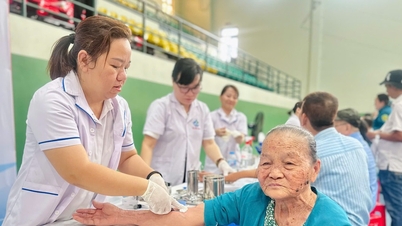
According to information from the Ho Chi Minh City Department of Health , this health check-up is being conducted at 168 commune, ward, and special zone health stations, as well as other suitable locations, to facilitate easy access to healthcare services for the people without having to travel far.
Bringing specialized medical services closer to the people.
A notable aspect of this deployment is the coordinated participation of 103 general hospitals, specialized hospitals, hospitals under various ministries and sectors, and private healthcare facilities. These hospitals are assigned to directly support the grassroots healthcare system, ensuring that health check-ups are conducted in a synchronized, unified, and professionally in-depth manner.
The screening focuses on early detection of non-communicable diseases – a group of diseases that are on the rise in many large cities. In addition, people are also checked for common specialized conditions such as cardiovascular diseases, diabetes, cancer, respiratory diseases, mental health disorders, dental problems, and nutritional status.
"The simultaneous organization of 168 examination points is not only an event but also a key activity in the roadmap to improve the quality of routine health check-ups. The goal that the Ho Chi Minh City health sector is aiming for is to strengthen early detection of diseases, improve the quality of healthcare for the people, and gradually build a model of universal health management right in the community," the Ho Chi Minh City Department of Health emphasized.
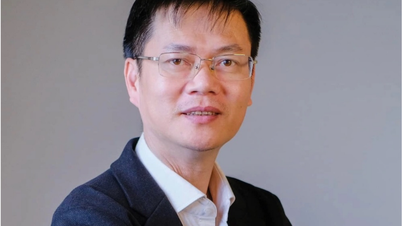
Participating in this health check-up campaign, the Ho Chi Minh City Oncology Hospital will conduct screenings for thyroid cancer, breast cancer, and cervical cancer in the wards and communes of Binh Thanh, Hoa Hung, and Phu Hoa Dong, with approximately 200 people at each location. Dr. Diep Bao Tuan, Director of the Ho Chi Minh City Oncology Hospital, stated: "The hospital has mobilized a team of experienced doctors and nurses in community cancer screening; and has prepared equipment such as 3D/4D color ultrasound machines for early detection of thyroid cancer, breast cancer, and equipment for cervical cancer screening."
According to Dr. Diep Bao Tuan, implementing out-of-hospital cancer screening also faces many difficulties. One of the biggest limitations is that the local equipment cannot fully meet the requirements for advanced techniques such as mammography, CT scans, MRI scans, or histopathology tests. Therefore, community-based activities mainly stop at initial screening, and suspected cases are referred for more in-depth diagnosis.
In reality, screenings have revealed many high-risk cases, primarily thyroid cancer, breast cancer, and cervical cancer. Notably, the group with the fewest regular check-ups is often middle-aged and low-income individuals. "The reasons many people delay seeking medical attention often stem from a lack of medical knowledge, fear of illness, and limited financial resources. As a result, many cases are only detected at a late stage, reducing treatment effectiveness, increasing costs, and placing a significant burden on families," the Director of the Ho Chi Minh City Oncology Hospital expressed his concern.
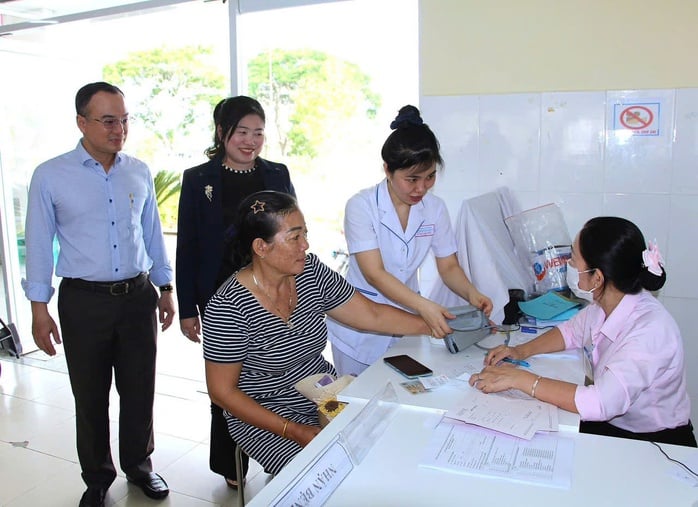
Early screening helps reduce the burden of disease.
In the field of obstetrics and gynecology, Dr. Vuong Dinh Bao Anh, Deputy Director of Tu Du Hospital, said that the hospital has just deployed 4 mobile examination teams in Can Gio, Thanh An, An Thoi Dong communes and Phuoc Thang ward.
These teams consist of 63 medical staff members and are expected to examine approximately 800 people. The medical staff will focus on general gynecological examinations, cervical cancer screening using Pap smears combined with artificial intelligence (AI), gynecological ultrasound, etc.
According to Dr. Vuong Dinh Bao Anh, primary healthcare plays a crucial role in initial patient screening, data reception and management, and ensuring information exchange between different levels of healthcare. "Thanks to regularly organizing mobile medical examinations, the implementation process is relatively stable. However, community-based activities are still primarily for screening; any abnormalities detected will be referred to hospitals for further specialized testing and treatment," he observed.
According to the Deputy Director of Tu Du Hospital, previous examinations have shown a relatively high rate of abnormalities, ranging from 40% to 50%, including conditions such as vaginal infections, uterine fibroids, and cervical abnormalities. Some cases of lesions were detected early thanks to the application of supporting technology, which has helped improve treatment effectiveness.
Dr. Vuong Dinh Bao Anh noted that the biggest obstacle currently remains the psychological factor, especially the reluctance to have a sensitive area examined. This causes many women to only seek medical attention when they have clear symptoms, increasing the risk of late diagnosis.
According to doctors, organizing screening points simultaneously in the community not only helps reduce the burden on higher-level facilities but also brings about fundamental changes in people's healthcare habits. When medical services are brought closer to the people, barriers of distance, cost, and psychological apprehension are significantly reduced. More importantly, people have the opportunity to access official medical information, better understand disease risks, and proactively participate in regular health screenings.
Doctors believe that if this model is maintained long-term, the people of Ho Chi Minh City could significantly increase the rate of early disease detection, thereby improving treatment effectiveness, reducing mortality rates, and easing the financial burden on families and society. This is also an important step in the roadmap to building a universal healthcare system. In this system, primary healthcare plays a key role, while higher-level hospitals provide specialized support and treatment when needed.
The Ho Chi Minh City Department of Health aims to provide free health check-ups for approximately 15 million people by 2026; and by 2030, to build a proactive screening system using digital technology.
Looking ahead to 2026, Ho Chi Minh City's health sector will focus on finalizing professional regulations, financial mechanisms, and implementing basic health check-up packages and electronic health records. By 2027, Ho Chi Minh City aims to establish a network of healthcare facilities based on a non-geographical model, covering residential areas, industrial zones, and schools.
By 2028, Ho Chi Minh City's health sector will implement screening programs for hypertension, diabetes, cancer, hepatitis, tuberculosis, etc. By 2030, Ho Chi Minh City will complete an electronic coordination system, enabling proactive invitation of citizens to participate in medical examinations.
The important role of primary healthcare
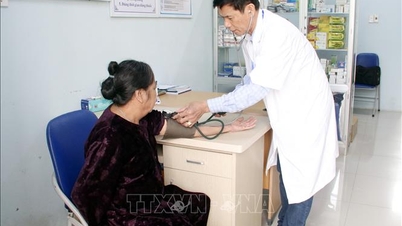
At the grassroots level, health stations are playing an increasingly prominent role in screening and early detection of diseases.
Dr. Pham Xuan Hai, Deputy Director of the Tan Nhon Phu Ward Health Station, said that in previous activities in response to the National Health Day (April 7), the station had screened for many diseases such as hypertension, diabetes, cancer, and lung diseases. Several suspected cases of pulmonary tuberculosis were also detected and treated promptly in the community.
During this April 17th event, the Tan Nhon Phu Ward Health Station continued its collaboration with Le Van Viet Hospital to screen approximately 200 residents aged 40 and above for cardiovascular diseases and diabetes. Preparations were carried out comprehensively, from patient flow management and examination table arrangements to providing support to residents throughout the screening process.
In Binh Thanh ward, Dr. Quach Kim Ung, Acting Director of the Health Station, informed that the local authorities, in coordination with the Ho Chi Minh City Oncology Hospital, organized a cancer screening program with 200 screening slots, equally divided between men and women. The screening focused on thyroid cancer, with women also being screened for breast and cervical cancer.
Due to limited resources and time, this program was only implemented in the morning. Participants were selected through invitations, prioritizing high-risk groups such as the elderly, poor households, near-poor households, and those with limited access to healthcare services.
In parallel, health check-ups for the elderly in the locality are maintained regularly four days a week, contributing to creating conditions for people to access medical services right where they live.
Source: https://ttbc-hcm.gov.vn/tp-hcm-dong-loat-kham-suc-khoe-mien-phi-1021126.html





![[Photo] General Secretary and President visit the China-ASEAN AI Application Cooperation Center](https://vphoto.vietnam.vn/thumb/1200x675/vietnam/resource/IMAGE/2026/04/17/1776404277677_vna-potal-tong-bi-thu-chu-tich-nuoc-tham-trung-tam-hop-tac-ung-dung-ai-trung-quoc-asean-8706616-2286-jpg.webp)
















![[Photo] National Assembly Chairman Tran Thanh Man attends the policy seminar to promote Vietnam-Türkiye cooperation.](https://vphoto.vietnam.vn/thumb/1200x675/vietnam/resource/IMAGE/2026/04/16/1776351415367_vna-potal-chu-tich-quoc-hoi-tran-thanh-man-du-toa-dam-chinh-sach-thuc-day-hop-tac-viet-nam-tho-nhi-ky-8705791-jpg.webp)


























































Comment (0)