Strategic move
The Ho Chi Minh City Steering Committee for Science, Technology, Innovation, and Digital Transformation announced that in 2026, the city will research, develop, and pilot sixth-generation (6G) mobile technology in several areas. This is part of Plan 27, implementing Resolution 57 of the Politburo on breakthroughs in science and technology development and digital transformation.
Alongside 6G trials, the city aims for 5G coverage of approximately 95% of the population, progressing towards 100% in major urban areas, high-tech zones, seaports, airports, and logistics centers. This shows that 6G is not separate from 5G but is being prepared as the next upgrade in telecommunications infrastructure.
Internationally, 6G is still in the research phase, lacking official technical standards and widespread commercial devices. According to the projected roadmap, this technology could be commercialized around 2030. Therefore, the pilot program in 2026 is primarily for research, evaluating its applicability, and preparing resources.
Experts predict that 6G will achieve data transmission speeds many times higher than 5G, extremely low latency, and deep integration of artificial intelligence into the network infrastructure. These characteristics could expand the application space for smart cities, smart manufacturing, autonomous transportation, and digital services requiring real-time processing.
For Ho Chi Minh City, early participation in the 6G research process is of strategic importance. Next-generation telecommunications infrastructure not only meets connectivity needs but also serves as a foundation for the digital economy , data-driven urban management, and an innovation ecosystem.
![[GALLERY] A series of extremely useful Zalo messaging tips that many people still don't know.](https://vphoto.vietnam.vn/thumb/192x108/vietnam/resource/IMAGE/2026/07/03/1783013697557_za-3-png.webp)

Notably, at the national level, the new Radio Frequency Spectrum Plan has prioritized frequency bands for next-generation technologies, including 6G. The 6,425-7,125 MHz band is designated for the International Mobile Network (IMT), creating legal and technical space for enhanced 5G and 6G in the future. This shows that Ho Chi Minh City is leveraging available policy space to stay one step ahead in the race for next-generation digital infrastructure.
We propose that 3 network operators participate.
Recently, the Ho Chi Minh City Department of Science and Technology also issued a document requesting Viettel Group, VNPT Group, and MobiFone Corporation to research and develop 6G technology in 2026, and to coordinate the pilot deployment of 6G coverage in a specific area of the city.
According to the plan, the Department is assigned to lead the research, development, and testing of 6G in Ho Chi Minh City, and to propose to the Ministry of Science and Technology to allow the deployment of trials in a specific area within the city.
The Ho Chi Minh City Department of Science and Technology requests that interested corporations study the above-mentioned content and send their written feedback to the Department before March 7th to serve as a basis for coordination and implementation of the next steps according to the plan issued by the Steering Committee. This deadline shows that the city wants to quickly determine the readiness level of businesses and develop a detailed roadmap.
Representatives from telecommunications companies stated that 6G is still in the global research phase; activities are primarily being implemented at the corporate level and within the framework of international cooperation. The immediate investment focus remains on expanding and optimizing 5G. Therefore, if deployed in Ho Chi Minh City, 6G will be pilot-based, on a limited scale, and linked to specific urban challenges.
Inviting all three major companies to participate demonstrates a collaborative approach in the field of core infrastructure. In the long term, early participation in 6G research can help domestic businesses accumulate experience, contribute to the international standardization process, and prepare capabilities for the commercialization phase.



In the context of rapid digital transformation, the question "why is it necessary to accelerate 6G development?" is not just about connection speed, but also about the ability to master infrastructure, technology, and the long-term vision of a major city in the face of this new wave of technology.
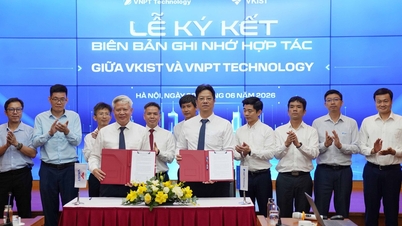
The Department has advised on piloting drone delivery services in the High-Tech Park and on the Can Gio - Vung Tau route; organized a conference to promote investment in digital technology infrastructure and large data centers serving the International Financial Center; and signed agreements to develop data centers and artificial intelligence infrastructure. The city is also accelerating the completion of information technology infrastructure to support digital transformation, implementing the licensing of artificial intelligence assistants for the public sector, working with the Ho Chi Minh City People's Council on digital infrastructure, and signing a cooperation program for the 2026-2030 period with the Vietnam National University Ho Chi Minh City.
Source: https://daidoanket.vn/tphcm-vi-sao-can-tang-toc-phat-trien-6g.html