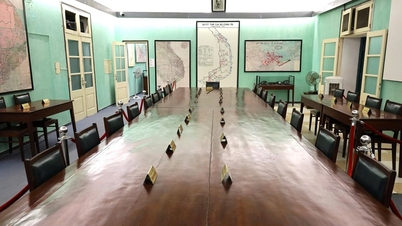
Suddenly, Mr. Trach's voice rang out, firm and resolute like a hoe striking hard ground:
- You're going to cut down those old tea bushes to straighten the road. Are you trying to destroy the village?
A murmur arose, then gradually turned into a wave. A young woman, carrying a child, stood up, her eyes red and swollen:
- That tea hill is where my grandfather and father spent their youth, where my mother picked leaves to feed the whole family, and where my sisters and I gathered leaves to make tea extract for medicinal purposes. Do you know that?
Dang swallowed hard. His throat was dry and sore, but he tried to remain calm.
- Ladies and gentlemen, I don't intend to demolish everything. I'm only proposing to open a small road to make it easier for tourists to access the village center, and at the same time create a new tourist landscape near the tea hills.
- Landscape? What landscape?!
A man slammed his hand down on the wooden table.
- Your "small road" project will require removing more than a dozen ancient tea trees. You can't even brew a decent pot of tea yet, and you want to destroy a centuries-old tea plantation to build a tourist attraction.
A young man raised his hand to speak. His voice trembled, but it was still clear:
- My house is located right on the planned road section. If they build it, my house will have to be moved back, and the chicken coop and well will all be gone. The compensation hasn't been adequate. We're poor villagers, who have lived on this land for generations, and now they just say "planning" and everything is over?!
A man at the back of the hall uttered a dry remark:
- There's no point in protesting now. What's signed must be done. The important thing is the village's centuries-old tea garden!
Whispers erupted again, escalating into waves of tension. The atmosphere in the crowded hall grew increasingly strained by the exchange of words. Dang clutched the file tightly in his hand.
Out there, dark clouds gathered over the hills. A storm was brewing. The ancient tea bushes shivered in the wind.
***
As evening fell, long shadows stretched across the small path. Dang drove slowly through the temple gate, the red dirt road winding across the fields gradually appearing before his eyes. The familiar path from his school days remained intact, untouched by time. Dang longed for change; tourism would be a new door, an opportunity for people's lives to improve. Outdated thinking and backward constraints could not nurture his dreams for his homeland. In the distance, the scent of cooking smoke, fresh straw, and tea brewing in old kitchens lingered in the air.
 |
| Illustration: Duong Van Chung |
Dang's father was watering the tea plants in the backyard. It was a type of tea grown in the midland region, short in stature, with sparse branches and thick leaves, and very tolerant of sunlight. Cool water from the hose dripped onto the leaves, reflecting tiny rays of light in the afternoon sun. He was still wearing his faded shirt and worn-out rubber sandals.
- Why didn't you say anything at the meeting this morning, Dad?
Dang looked at his father with a skeptical expression.
Mr. Lap didn't look up. The water from the watering can continued to flow steadily through his hand. After a while, he finally replied, his voice slow and deliberate:
- Why say something when people don't want to hear it?
Dang pursed his lips. Since he started working on the planning project, he hadn't heard his father speak a word. Dang's father was a retired commune official. He lived alone after Dang's mother passed away, tending to his small garden, a couple of vegetable patches, and a few tea bushes. Dang couldn't understand why his father, who had worked in the commune and was the most active in building electricity, roads, schools, and health stations for the commune, was now as silent as a statue when discussing planning. When Dang showed his father the planning map on his computer, his father only took a sip of tea and said nothing.
- Doesn't Dad want our village to change?
Dang once asked, "When will you be back?"
He simply replied:
- I'd like to! But if change means losing our traditions, then we won't be ourselves anymore.
Dang brewed tea, but it seemed the water wasn't quite right, so the aroma didn't fully develop. The taste was a lingering bitterness, bland and tasteless. He opened his computer, the screen's light illuminating his focused face. He reviewed the map, noted down locations, and scheduled upcoming surveys. Everything had to be perfect. A tourist project would spring up here, amidst the lush green tea hills. Dang buried himself in his work. In his ears, he could still hear his father's hoeing and the gentle rustling of the tea bushes in the wind. He was racing against time, pursuing his dream of transforming his homeland in the modern era.
***
Night.
There was no moon.
The wind rushed down from the hill, howling in long gusts.
The tea hills were shrouded in darkness, only the swaying leaves illuminated by the dim light emanating from the makeshift shelters at the foot of the hill. The hastily hung tarpaulins rustled. Suddenly, a dry "boom" echoed. Then a small flame, no bigger than the head of a matchstick, flared up in the corner of the shelter, but it spread rapidly. The fire licked at the boxes of documents and blueprints, engulfing Dang's laptop, which was still plugged in and charging.
The wind fueled the flames, causing them to spread. In an instant, the makeshift shelters turned into a sea of red, flickering light and screams. People rushed out, splashing water and trampling on the burning tarpaulins. The flickering flames cast shadows of people running across the tea plantation, wavering like thin shadows gliding through the night.
The burnt pages of the blueprints curled up, swirling into sparks of embers, floating in the air before scattering and falling to the ground…
The next morning, the village meeting room was unusually quiet. Early morning sunlight streamed through the cracks in the door, casting slanted streaks across the old meeting table. Dang stood there, his eyes sunken, his face pale as if he had just lost all his strength after a fever. Before him lay a complaint letter, its contents concise and firm: “Protest against the planning project. The construction has been and is encroaching on the cultural landscape, disrupting the sacred space around the ancient tea garden.”
Dang looked down at the last line. The signature was unmistakable, neat and careful, just like its owner. He felt as if someone had suddenly punched him hard in the chest.
***
Mr. Lap sat silently by the tea table, his eyes fixed on the mixed tea garden in front of the yard. The old, overgrown tea bushes were low and stunted, their gray, dusty leaves seemingly having lost all their former green color.


- It's Dad. How could he...
Dang said, his voice choked with emotion.
Mr. Lap turned back and added more water to the teapot he was drinking from. His eyes were calm.
- The father signed the petition! Opposing his own son!
- Think carefully, son. This isn't just a tea plantation. It's our ancestral land, our roots, the soul of the village. Those tea bushes are over 300 years old, accumulating the spiritual energy of this entire region.
A silence as solid as stone.
Dang tried to restrain himself.
- Dad, do you think my money is just paper?! I put in so much effort and money to get this project approved!
Mr. Lap set down his teacup, his eyes gazing out towards the ancestral tea hill. The large tea bushes rustled in the wind.
Everyone values money, but there are some things money can't buy, my child.
Dang stood motionless. His hand tightened slightly at the hem of his shirt. He wanted to speak but couldn't utter a word.
Mr. Lap tried to keep his voice calm, but he couldn't help but be moved:
- My great-grandfather, my grandfather, and countless generations have personally picked, planted, and extracted the tea leaves. Those tea bushes once sheltered cadres during the resistance war, provided shade for travelers returning home, and were where my mother and I gathered leaves to make tea extract for medicinal purposes…
Dang pursed his lips, sweat beading on his temples. He slumped into his chair, head bowed, his breathing heavy as if trying to suppress something in his throbbing chest.
A gentle breeze swept through, carrying the scent of damp earth and the slightly bitter aroma of tea.
***
Dang was no longer seen at the commune office. People said he had left for the city. Some expressed concern, others hinted, "I knew it, he wouldn't last long!" In truth, Dang had left the village one morning without anyone noticing. Hanoi greeted him with a persistent damp spell, the air hazy and humid like a damp cotton towel left out for too long without sunlight. In his small room, Dang lived like someone who had lost their way. He didn't visit the construction site, didn't attend design group meetings, and didn't touch his unfinished drafts.
While tidying up his old desk drawer, Dang found a sketchbook from his student days. On the first page, the pencil marks were smudged, but the words he had written were still legible: "Public spaces are places to rest, places where memories live alongside people."
His hand paused on the old page. Outside the window, a late summer breeze had just blown through, gently swaying the white curtain.
The next day, he sought out his old professor who had taught him Community Planning in his final year of university. They sat at a small roadside stall by the lake, two glasses of iced tea placed on a plastic table, the clear, yellowish-green liquid echoing softly against the sides of the glasses like an unnamed musical note. Dang held his glass of tea in his hand, remaining silent for a long time.
- I thought I was doing the right thing.
He spoke softly.
But then, the more I did, the more I felt I was losing my footing.
The teacher nodded slowly, his eyes gazing out at the misty surface of the water.
- The most difficult thing for urban planners is not what to build, but what to preserve. Public spaces are not just places for people to come and go. They are places where memories can reside, where people can live alongside what once nurtured them.
That night, Dang couldn't sleep.
He reprinted the entire map of Yen Binh village, spreading the planning layers on the floor, using colored pens to mark the points worth preserving, especially the ancient tea hill. The roads had to be slightly curved, the accommodation area and parking area moved further back… He no longer saw himself as designing a project, but as if he were rewriting the rhythm of the village, the breath of the land, of the ancient tea hill. The light cast his shadow on the wall, slender, quiet, but firm.
Before returning to his village, Dang quietly gathered documents and field photos to complete the application for recognition of the ancient tea hill as a National Heritage Tree. He did it with all his effort and desire to protect the memory legally, so that these ancient tea trees would be given a worthy status among nature.
***
The car stopped at the turnoff to the village, where the red dirt road was still as dusty as it was when he was a child. Dang silently gazed at the tea bushes along the road, the tiled roof of a village temple faintly visible in the distance. The wind carried the scent of damp earth, the smell of freshly harvested straw, and the faint aroma of freshly picked tea leaves.
Dang spread the new design on the wooden platform of Mr. Trach's house, the man who had most vehemently opposed him during their first meeting. Mr. Trach said nothing. His cloudy eyes stared intently at the drawing. His gaze stopped at the pencil mark on the winding road, with the annotation: "Preserve the ancient tea hills. No excavators. No concrete. No demolition."
A little while later, the old man stood up and poured himself some tea.
Dang sat opposite, his eyes following the thin wisp of smoke rising from the freshly poured cup of tea. The tea's aroma was warm and deep, a rustic scent that seemed to have permeated this land and its people for generations. Silence. Only the sound of the wind rustling through the tea garden, slipping through the cracks in the door, and gently blowing into the space between them.
A bee buzzed around the water tap in the front yard, then flew away.
Grandpa Trach took a worn handkerchief from his pocket, slowly wiped the rim of the teacup, and pushed it towards Dang. His gaze fell upon the ancestral tea hill, where the tea bushes, as tall as the rooftops, their gnarled canopies spreading like old hands holding the earth, stood there in silence. He spoke, his voice hoarse and rough.
- This year's tea harvest is poor. The weather is erratic, and the land is weary.
Dang held the teacup to his lips. The initial bitterness lingered on his tongue, then gradually softened, leaving a sweet aftertaste in his throat. The ticking of an old clock, the rustling of tea leaves on the veranda. The dampness of the earth, the aroma of aged tea, the faint scent of kitchen smoke. A sense of peace Dang hadn't experienced in a long time.
During the village meeting, he stood up, his voice calm and full of energy:
- I would like to preserve the ancient tea hill as it is. No trees will be cut down, no concrete will be added. Only stone paving will be used for the walking paths winding along the hillside, so that villagers and tourists can leisurely stroll past each old tea bush. In the middle of the hill, I would like to build a small wooden hut, called the "Memory Station," where I can display photos, old artifacts, and stories of our village from the time of our ancestors…
He paused, looked around, then continued:
- The outdoor stage will be moved 50 meters away from the village communal house, constructed of bamboo, with a thatched roof and an untouched earthen floor. It will be the venue for folk performances.

- As for the parking lot, I've moved it to the vacant land near the health center, so it won't affect the landscape.
Dang wasn't just talking. He turned on the projector, and 3D drawings appeared one after another. Stone-paved paths around the tea hills, small huts hidden among the green canopy, a folk stage… The entire planned space unfolded softly, as if filtered from the very memories of the village.
The hall fell silent. No one spoke for half an hour. Then Mr. Trach nodded slightly, his eyes fixed on the screen.
The second person nodded. Then the third.
Mr. Lap smiled, his eyes silently fixed on his son. Dang gently stroked the bridge of his nose, trying to hide his emotion.
He stayed in the village throughout the construction season. Not just to supervise, but also to pick tea leaves, process tea, and listen to old stories every afternoon. From an architect, he became familiar with the land and the plants. The children in the village called him "Uncle Tea Architect."
***
Late in the afternoon, the wind changed direction.
Mr. Lap rode his old bicycle, its frame peeling paint, slowly across the cobblestone road leading to the Memory Station. His back was slightly more hunched than before, and a few more strands of gray hair had appeared. Villagers greeted him, and he nodded, his demeanor still calm and composed. In his hand, he carried a tightly wrapped package of hand-processed, naturally fragrant tea leaves—a tea his son loved but had never learned how to brew properly.
Under the canopy of ancient tea trees, the afternoon sun filtered through the leaves, casting pale yellow diagonal streaks on the stone benches in the station. Dang was there with his friends, preparing for the inauguration. Seeing his father arrive, he went to get the tea set and carefully rinsed the cups with water.
Mr. Lap opened the tea packet, poured a small pinch into his palm, and brought it to his nose to smell it.
- New tea, but old flavor. Brewing it hastily can easily ruin the taste.
Dang bowed his head, then raised the cup to his lips. The hot tea touched his tongue, spread down his throat, and then a very strong, deep sweetness lingered.
- This time, I'll learn how to make it again.
On the day of the tourist resort's inauguration, Mr. Lap stood below, hands clasped behind his back, silently watching Dang give his speech. Everyone looked towards him, waiting for a nod, a confirming glance. But he remained silent. The children chattered excitedly to each other:
Go check out "Uncle Dang the tea vendor"!
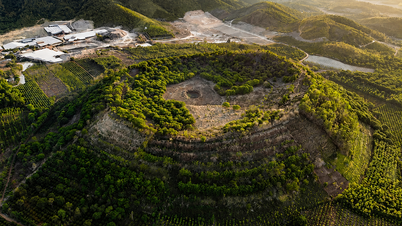
That day, Yen Binh village was prominently mentioned in the provincial newspaper, with the striking headline: "Yen Binh - rural tourism associated with the preservation of ancient tea culture and national heritage tea trees." The good news spread quickly, and visitors flocked there in droves. Everyone wanted to stop and take pictures, checking in at the large sign at the gable end: "Ancient Tea Hill - National Heritage Trees." The centuries-old tea trees stood there majestically, steadfast like village elders, their branches spreading to shade the winding paths around the hillside. Mothers and sisters led their children and grandchildren for walks under the tea trees, their laughter and chatter mingling with the rustling wind and the fragrant tea aroma. Visitors stopped under the hut called "Memory Station," where old stories and legends about the tea village were recorded. Mr. Trach no longer worked in the fields, but every morning he would leisurely stroll around the hill, leaning on his cane. When visitors asked about the ancient tea garden, he smiled, his eyes crinkling warmly.
- Mature tea leaves are thick and have deep roots. The aroma is subtle, and the flavor is rich and full-bodied.
Outside, the sun slanted across the hillside, filtering through layers of dense, dark green foliage, and slowly falling onto the tea table. Nearby, the oldest tea tree was sprouting tender, vibrant green leaves.
Source: https://baothainguyen.vn/van-nghe-thai-nguyen/202508/tram-ky-uc-2133126/



![[Photo] General Secretary and President To Lam working with the Technical and Professional Center, Ministry of Public Security](https://vphoto.vietnam.vn/thumb/1200x675/vietnam/resource/IMAGE/2026/07/06/1783318005842_a1-bnd-1129-2263-jpg.webp)