

Although no longer bustling and a major trading hub, the Southwestern region of Vietnam still has dozens of floating markets with hundreds of boats engaged in trade. Unlike the Cai Rang floating market in Can Tho City, which is a tourist attraction and well-known, the floating markets in Long Xuyen, Nga Nam, Nga Bay, Cai Be, Ca Mau, etc., remain an integral part of the trading life of many people in the Southwestern region.
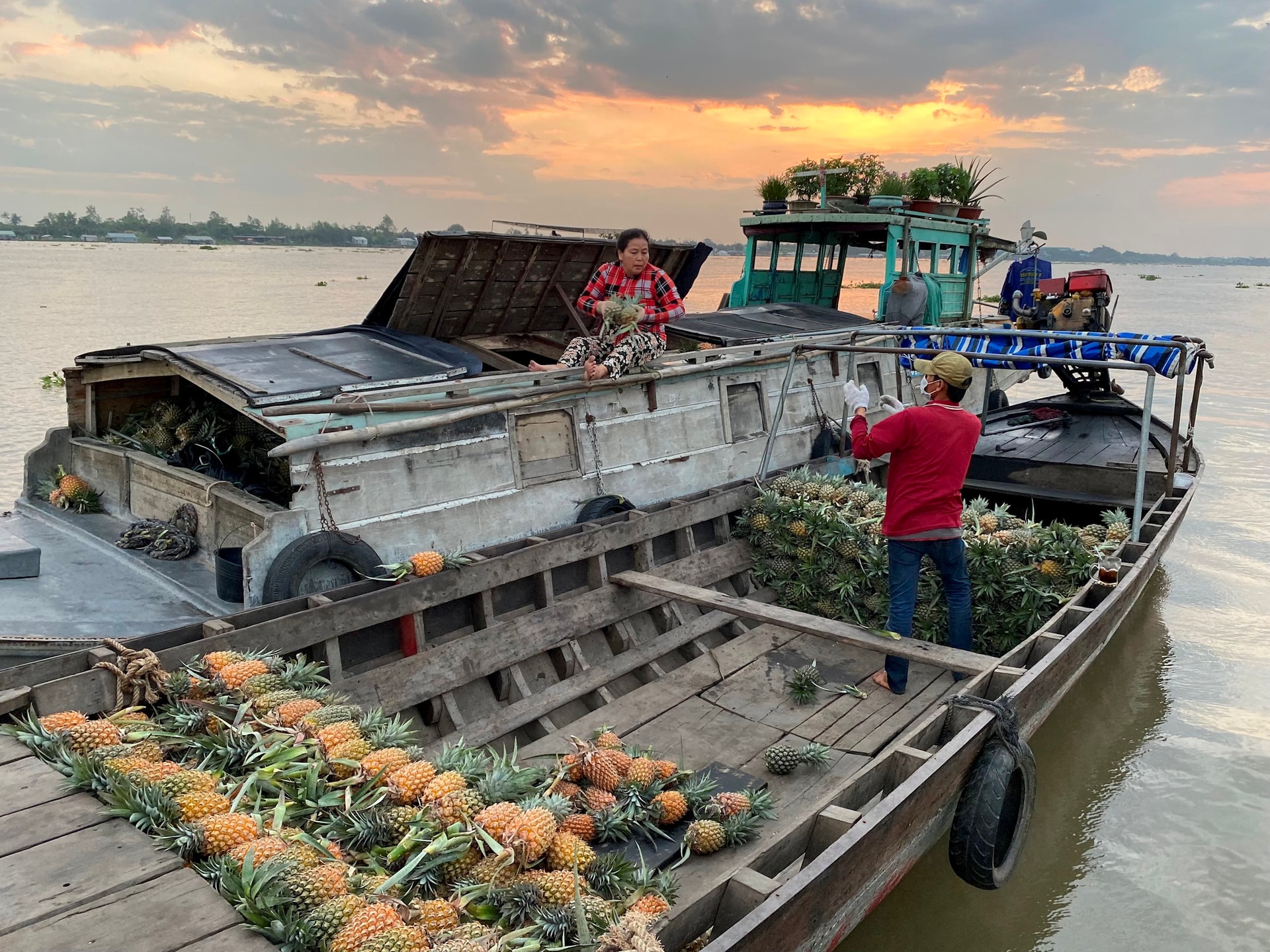
Visiting that floating market on the last day of the year, one not only witnesses the bustling atmosphere of buying and selling and the specialties of the river region, but also feels transported back to the past, hundreds of years ago.
Go to O Moi wharf to visit the floating market.
Located just about two kilometers from the Vam Cong Bridge, the Long Xuyen floating market sits in the middle of the Hau River, always bustling with hundreds of merchant boats, primarily selling fruits and agricultural products. What's even more special is that because many boats anchor at the market for extended periods waiting to sell (or buy) goods, it attracts other convenient services such as food, groceries, and fuel vendors around the market. Of course, all market activities take place by boat. Therefore, the atmosphere of the Long Xuyen floating market is quite lively, especially in the mornings. According to local elders, the Long Xuyen floating market today is not much different from what it was a few decades ago. That is, the market still preserves almost entirely the culture of riverine trading practiced by the people of the Mekong Delta, with the distinctive ceremonial poles used by each boat.
From the historic O Moi ferry terminal, located next to the central square of Long Xuyen city, visitors can easily reach the floating market by renting a boat from local residents. The floating market is about one kilometer by waterway from the O Moi ferry terminal. Here, boats from all over the Mekong Delta, from Chau Doc, Hong Nguy, and Tram Chim, travel downstream, while those from Cho Lach, Tra Cu, Cang Long, Tieu Can, and Vi Thanh travel upstream. Each place has its own specialties and products, transported by boat to the market for exchange and sale. Mr. Tran Van Teo, 61 years old, a boat owner specializing in selling pineapples, said that his family lives in Tan Phuoc town (Tan Phuoc district, Tien Giang province) but regularly brings pineapples to Long Xuyen market to sell. “My wife and I have been living on this boat for over a decade. We usually sail along the Thap Muoi canal to the Tien River, then upstream to Vam Nao and downstream to Long Xuyen. A trip like that takes more than a night. This season, pineapples sell very quickly because people buy them to make jam for Tet. Pineapple jam is delicious, with its sweet and sour taste. We also make pineapple candy. When we go upstream from here to Tan Phuoc, I also bring back mangoes and guavas to supply to the wholesalers along the canal,” Mr. Teo shared. According to Mr. Teo, his wooden boat is 22 meters long and 4.5 meters wide, with an additional compartment at the back, which serves as a sleeping area and cooking space. During the end-of-year period when sales are good, he returns to Tan Phuoc to get more goods in about 2-3 days. When sales are slow, he and his wife anchor their boat in Long Xuyen for a whole week. Life on the river is the same everywhere, anchoring the boat on the Hau River, the Tien River, or the Thap Muoi canal… it’s all the same.
But it wasn't just Mr. and Mrs. Teo; along the Hau River, there were hundreds of other boats. Most of them carried coconuts, mangoes, rice, fishmeal, and other goods. These boats could anchor for a few days, a week, or even a month, depending on the owner's wishes. The only thing these boats had in common was a long bamboo (or mangrove) pole, about 3 meters long, with the boat's products tied to the end. Traders moving through the floating market could tell what products were available just by looking at the pole. If all the goods were sold, the boats would lower the pole. Nowadays, most boat owners communicate with their customers by phone or social media, but they still make the poles and hang their products on them as a habit, a unique cultural aspect of the riverine region.
Besides the trading boats, in recent years the Long Xuyen floating market has become even more bustling and crowded with dozens of floating houses belonging to residents returning to their hometowns from Tonle Sap Lake. They build these floating houses along the river to raise fish, catch seafood, work as laborers, or engage in petty trading at the Long Xuyen floating market and covered market. On the opposite side of the floating market, along the Hau River in Cho Moi district ( Long An province), there are also many similar floating houses for aquaculture, making the area even more crowded and lively with a high density of boats passing through.
Bustling days at the end of the year
But Long Xuyen floating market isn't the only one; today, the southwestern region of Vietnam still boasts many other floating markets, though not as bustling. These include Cai Be floating market (Cai Be district, Tien Giang province), Nga Nam floating market (Nga Nam town, Soc Trang province), Nga Bay floating market (Nga Bay city, Hau Giang province), and Ca Mau floating market (Ca Mau city)... A common characteristic of these floating markets is their location in the urban center of their respective localities, often accompanied by a larger land-based market. This allows them to survive, even though they no longer maintain the same level of bustling trade as before, remaining an indispensable part of the local culture. In fact, these are all floating markets hundreds of years old, closely linked to the history of our ancestors' conquest of new territories. The Nga Bay floating market (also known as Phung Hiep floating market) is located in Nga Bay city (Hau Giang province), at the intersection of seven river and canal branches: Cai Con, Mang Ca, Bung Tau, Soc Trang, Xeo Mon, Lai Hieu, and Xeo Vong canals. The market was established over 100 years ago, marked by the completion of the Cai Con canal (also known as the Xang-Cai Con canal) in 1915, which ran through the area. This canal was later further extended to Nga Nam and Ca Mau, stretching hundreds of kilometers along the Quan Lo-Phung Hiep road. Today, the Nga Bay market is no longer as bustling and crowded due to various reasons. The boats that come to the Nga Bay market now mainly serve the local residents because it is located next to a busy local market. Furthermore, the construction of riverbank embankments to prevent erosion and create urban landscapes has significantly narrowed the riverbed, making it almost impossible for boats to anchor along the banks. This is why farmers' boats no longer frequent the Nga Bay floating market as often as before. Most boats only arrive at night, unload their goods along the banks for the local market, and then leave to avoid congestion.
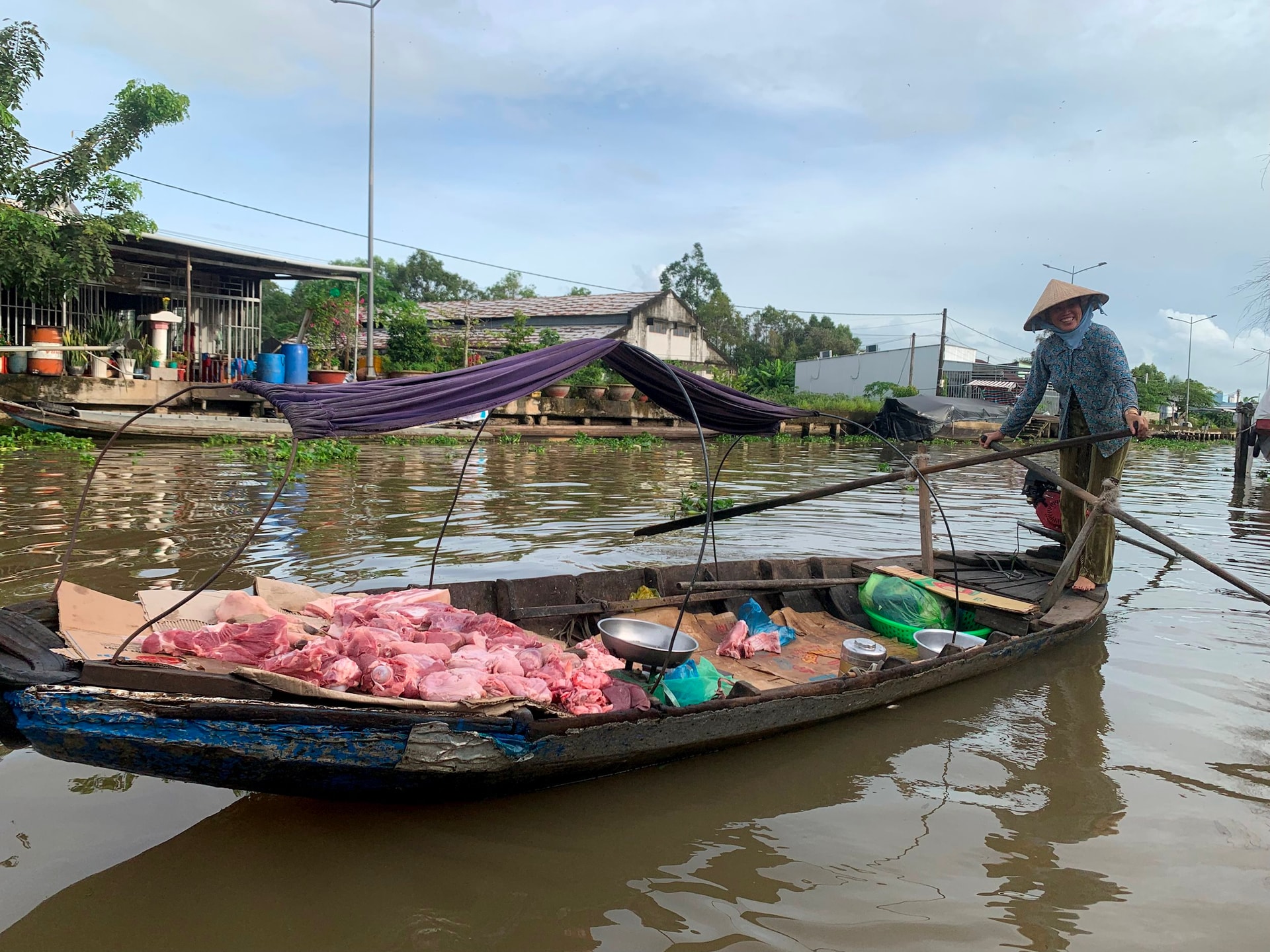
About sixty kilometers from Nga Bay market is Nga Nam floating market, also located on the Xang canal running from Nga Bay and intersecting with four other canals. Once a large and important waterway network hundreds of years ago, Nga Nam floating market is no longer as bustling with boats as before because the embankments along the canals have been reinforced with concrete, making it impossible for large boats to anchor. However, smaller boats from nearby areas still come to Nga Nam market to sell their goods, especially during the night and early morning hours. Most of these boats arrive at Nga Nam market and then load their goods onto land vehicles for onward transport to Can Tho, My Tho, or Ho Chi Minh City. Furthermore, along the five canal branches surrounding Nga Nam market, people still use small boats to navigate the waterways despite the construction of numerous bridges. Using boats is both a habit and more convenient than riding motorbikes across multiple roads and bridges. Many people, especially the elderly, still habitually use boats to go to the market or do daily chores instead of motorbikes because of certain advantages. Small-scale traders also frequently use small boats to sell pork, groceries, household plastic goods, fruit, etc., to families along the canals or deep in the fields. This seems to be a cultural characteristic of the long-standing residents here. Ms. Trinh Thi Be, a small trader who has been selling pork from a small boat around Nga Nam market for over 30 years, says that every day her boat travels through the branches of Nga Nam market selling pork. Compared to pork sold in the market, the pork she sells on her boat is cheaper because she doesn't have to rent a stall. And customers don't have to travel much if they want to buy.
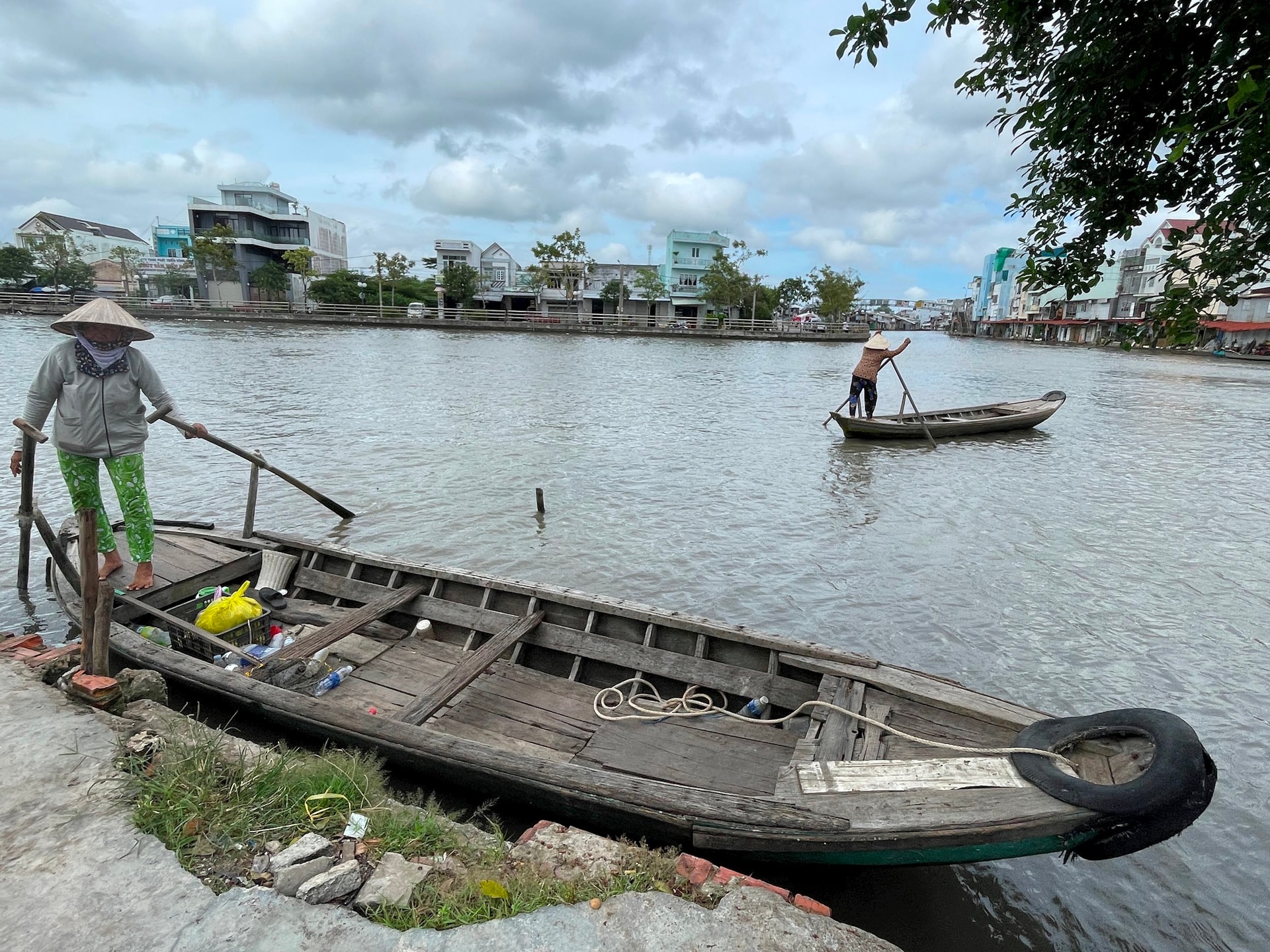
In the Nga Nam market area, as well as many other places in the Southwestern Mekong Delta, people still build houses with one side facing the river or canal (the back). Therefore, buying, selling, and daily life connected to the river environment remain quite convenient. Similar to the Nga Bay market, the Nga Nam floating market is currently being planned and developed for tourism, along with a nighttime food and entertainment space. This planning helps maintain the floating market, preventing its decline and creating additional income for local residents. Towards the end of the year, activities at these floating markets are quite vibrant and bustling.
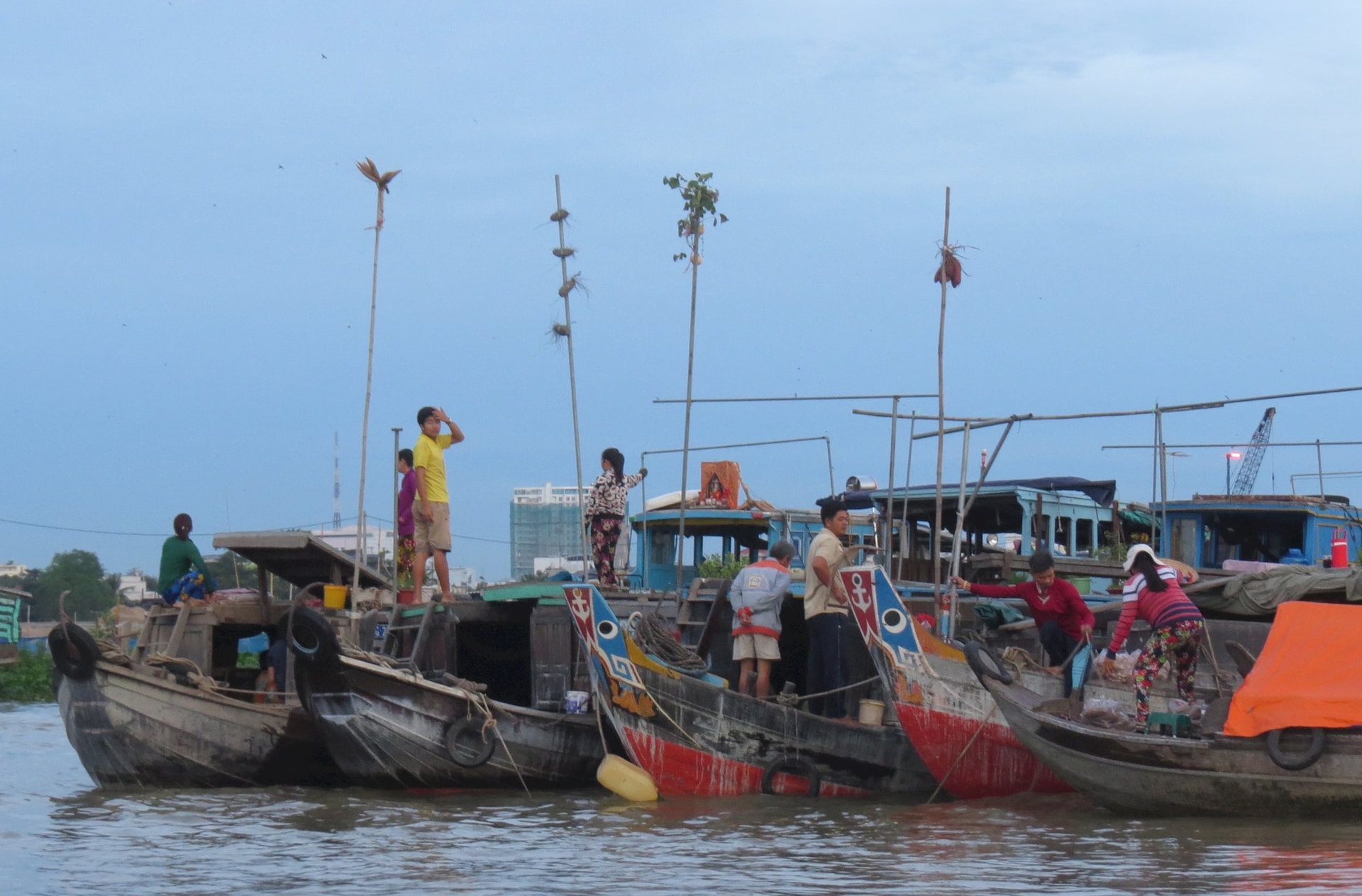
Meanwhile, although no longer bustling, the Ca Mau floating market, located at the confluence of the Ganh Hao and Ca Mau rivers in the heart of Ca Mau city, is still a popular destination. Besides being a trading hub for hundreds of boats today, the market is also famous for the melodious tune of the song "The Mat Seller's Love" by composer Vien Chau. Previously, the specialty of the Ca Mau floating market was the boats selling colorful mats. For a time, mat-selling boats from the Dam Doi, Thoi Binh, and Cai Nuoc areas would come to the Ca Mau floating market to anchor and sell mats to other boats. These boats would then travel upstream to Tac Say, Nha Mat, Cai Tac, and Ke Sach, creating a brand name for the market. Today, the Ca Mau floating market no longer specializes in selling mats; most boats now sell agricultural products, fruits, and seafood. Boats from the districts of U Minh, Ngoc Hien, and Nam Can also bring local specialties to the Ca Mau floating market to sell. Besides, boat tours of the Ca Mau floating market still exist, but they are no longer as bustling. However, the experience of riding on small boats owned by the local riverine residents to explore the Ca Mau floating market is still very interesting. Especially, from these boats, tourists can reach some ancient temples and shrines in Ca Mau located nearby without having to travel by land.
There used to be dozens of famous floating markets and many smaller ones located where rivers and canals intersected, but today, floating markets are only a source of livelihood for a select few. Besides the daily changes in road networks, the number of merchants who trade and live on boats has also decreased. Most now view boats as purely a means of transportation, rather than as a place to live or as their very life as in the past. Therefore, after selling their goods, these boats anchor somewhere to return home, instead of anchoring and living on the waterways like the merchants of hundreds of years ago. Perhaps this is the reason why floating markets are becoming less bustling in the Southwest of Vietnam.
Source: https://daidoanket.vn/tram-nam-cho-noi-thuong-ho-10297125.html

![[Photo] Prime Minister Pham Minh Chinh presides over a dialogue with Japanese businesses.](https://vphoto.vietnam.vn/thumb/1200x675/vietnam/resource/IMAGE/2026/03/21/1774097547316_ndo_br_dsc-0448-jpg.webp)
























































































Comment (0)