Children also need to "let loose".
Adults often think of summer as a time of emptiness that needs to be filled. But for young children, sometimes the most precious thing is time that isn't structured. The current school year can be quite stressful for children. Long classes, extracurricular activities, homework, and extracurricular activities leave many children mentally and physically exhausted when summer arrives.
Therefore, mornings when children wake up later, afternoons with free play, or days without a specific schedule are especially valuable. These are times when children can truly rest, do what they enjoy, and be "children" in the truest sense. Education experts believe that free play is not a waste of time.
Conversely, it helps children recover energy, nurture their imagination, and stimulate creativity. Without the pressures of schedules or grades, children have more opportunities to listen to their feelings. Many parents worry that their children will fall behind if they "do nothing" during the summer. However, sometimes what children need most isn't more knowledge, but a quiet space to regain balance after a stressful period of studying.
However, rest doesn't mean children have to stay home all day and be completely isolated from learning activities. In fact, many summer classes offer something that schools sometimes fail to provide: learning in a stress-free environment.
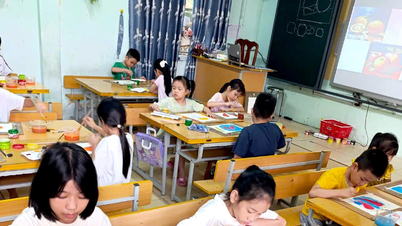
Without grades, tests, or competitive pressure, children can approach learning in a more relaxed and enjoyable way. A class in drawing, baking, programming, martial arts, or music can help children discover talents they may not have realized before.
The biggest difference in summer classes lies in the mindset. Without the pressure of academic achievement, children are more open to new experiences. Learning is no longer a "duty," but becomes a joy. Furthermore, not all useful skills are taught in schools today.
Summer extracurricular activities can therefore become opportunities for children to develop soft skills such as communication, teamwork, creative thinking, and independence. For shy children, summer classes are also a safe environment to make friends and build confidence. A small group with similar interests can sometimes help children open up much more easily than in a regular classroom environment.

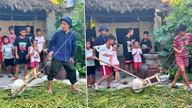

Make summer more enjoyable.
Many parents have experienced this: After just a few weeks of initial excitement, children start complaining of boredom, spending all day glued to their phones or staring at screens. A long holiday without any activities can sometimes disrupt a child's routine. Therefore, a few activities with a fixed weekly schedule can help create a more balanced summer.
In reality, children don't need too many activities. Just a few short classes each week are enough to give them something to look forward to, while maintaining a habit of physical activity and mental engagement. For families with parents who work from home or have busy schedules, having children participate in some summer activities can also help stabilize family routines. More importantly, these activities should be seen as positive experiences rather than mandatory obligations. When children feel comfortable, they will absorb things much more naturally.
However, the line between a "beneficial summer" and an "overloaded summer" is sometimes very thin. Many parents, fearing their children will waste time, unintentionally fill their summer schedules with a series of classes: English, critical thinking math, music, swimming, life skills, etc., making children just as busy as during the school year. When every day is packed, summer easily loses its original meaning.
Children also need time to play freely, sit and read, watch movies, ride bikes, or simply lie around doing nothing. These seemingly "useless" periods of time are precisely when emotions are relaxed and energy is restored.
If summer is simply a series of days rushing from one school to another, children may continue to feel exhausted, just like during the school year. Many experts believe that the ideal formula for a summer vacation is a harmonious blend of learning, rest, and free play. The key is to avoid extremes in either direction.
In many adult debates about what children should do in the summer, sometimes the simplest thing is overlooked: Ask the child themselves. There are children who genuinely love summer classes and eagerly look forward to them each year.
However, some children simply want to stay home and rest after a stressful semester. Listening to your child's wishes doesn't mean giving them complete control. It helps children feel respected and involved in the choices that affect their lives.



This is also an opportunity for parents to teach their children about balance – a skill just as important as academic knowledge. When children understand that rest is just as necessary as studying, they will gradually learn how to take care of their mental health and manage their energy better.
Each family will have a different way of celebrating summer. Some parents prefer their children to participate in many beneficial programs. Others prioritize complete rest for their children. And many families choose a balanced approach. The most important thing is not how many skills classes a child takes during the summer, but whether, when the new school year begins, the child feels happy, curious, and ready to return to school.
If parents are still wondering whether or not to enroll their children in a particular summer activity, perhaps they should start with a simple question: Will it truly excite and make them happy? After all, a meaningful summer isn't about having the busiest schedule, but about helping children grow up in the most relaxed and joyful way.
Source: https://giaoducthoidai.vn/tre-thuc-su-can-gi-khi-nghi-he-post781433.html
![[Photo] Opening Ceremony of the 13th National Congress of the Ho Chi Minh Communist Youth Union](https://vphoto.vietnam.vn/thumb/1200x675/vietnam/resource/IMAGE/2026/06/24/1782286753905_ndo_br_1-8510-jpg.webp)
![[Photo] The 13th National Congress of the Youth Union conducts personnel work.](https://vphoto.vietnam.vn/thumb/1200x675/vietnam/resource/IMAGE/2026/06/24/1782299943080_ndo_br_1-6868-jpg.webp)


![[Photo] General Secretary and President To Lam attends the Central Public Security Party Committee Conference](https://vphoto.vietnam.vn/thumb/1200x675/vietnam/resource/IMAGE/2026/06/24/1782302063612_a1-bnd-9302-9166-jpg.webp)