Musician Thanh Tung conducted the orchestra in a musical program commemorating musician Trinh Cong Son at Phan Dinh Phung Gymnasium in April 2003 - Photo: TTD
On July 21, 1954, the Geneva Accords were signed, ushering in a new era in the nation's history. In the context of a temporarily divided country, over 32,000 students from the South were sent to the North for education. Among them was a six-year-old boy, without family or parents, who left his hometown of Nha Trang alone with a simple belief: "I'm going to school for something greater than myself."
That boy was Nguyen Thanh Tung (musician Thanh Tung 1948 - 2016).
Summer of 1954 and the seeds of art
Mr. Nguyen Duy (100 years old) - father of musician Thanh Tung, a revolutionary fighter, and a liaison officer for General Secretary Le Duan from the age of 11 - recalled:

Musician Thanh Tung (left) during his time studying in Pyongyang (North Korea) - Photo: Archival material
"Tung was 6 years old when he came from the South to the North to study, and he went alone. I followed later. When he was 10, Tung came to live with me at 3 Thuy Khue Street."
At an age when many of his peers were still within the embrace of their families, Thanh Tung embarked on a special journey.
The early years of primary school in Northern Vietnam are not only a time for learning but also a process of character formation.
Nurtured by the care of their teachers and fellow countrymen, the generation of students from the South who relocated to the North grew up with a clear sense of civic responsibility.
In Thanh Tung's work, those values didn't just remain at the level of awareness, but gradually transformed into emotions, into thinking, and later, into music .
His artistic seeds did not sprout from purely personal aspirations. They were nurtured in an environment rich in ideals, where beauty was always linked to truth, and art was intertwined with social responsibility.

Musician Thanh Tung receives renowned singer Nana Mouskouri - UNICEF Ambassador - at the 19-5 Shelter in 1996 - Photo: Archival material.
A turning point in Pyongyang
In the late 1960s, Thanh Tung studied in North Korea – as part of the government's strategy to train high-quality human resources.
Initially, he studied maritime studies, specializing in ship navigation. Nguyen The Vinh, one of Thanh Tung's friends in the Korean student association, recounted that although he studied ship navigation, Thanh Tung "set his sights" on the music department of the school. He showed a particular fondness for it, learning about and happily playing and singing on every musical instrument.
Seeing the immense potential and artistic talent of this maritime student, a music professor shared the story with officials at the Vietnamese Embassy in North Korea.
Knowing that Thanh Tung had a beautiful singing voice, excellent musical skills, and a love for art since his school days, and now with the added "suggestion" from a professional in a neighboring country, the organization agreed to let him transfer to study at the Pyongyang Conservatory of Music, specializing in composition and orchestral conducting.
This was a crucial turning point, not only for Thanh Tung personally but also for the future of Vietnamese music.
Thanks to a well-structured training environment, Thanh Tung not only gained access to classical music techniques but also developed a mindset for structure, orchestration, and orchestration – elements that were still very new to Vietnamese music at that time.
In many performances abroad, he still chose to perform Vietnamese revolutionary works, sometimes wearing a liberation army uniform. Perhaps, for Thanh Tung, music was not only an art but also a way to express identity and ideals.
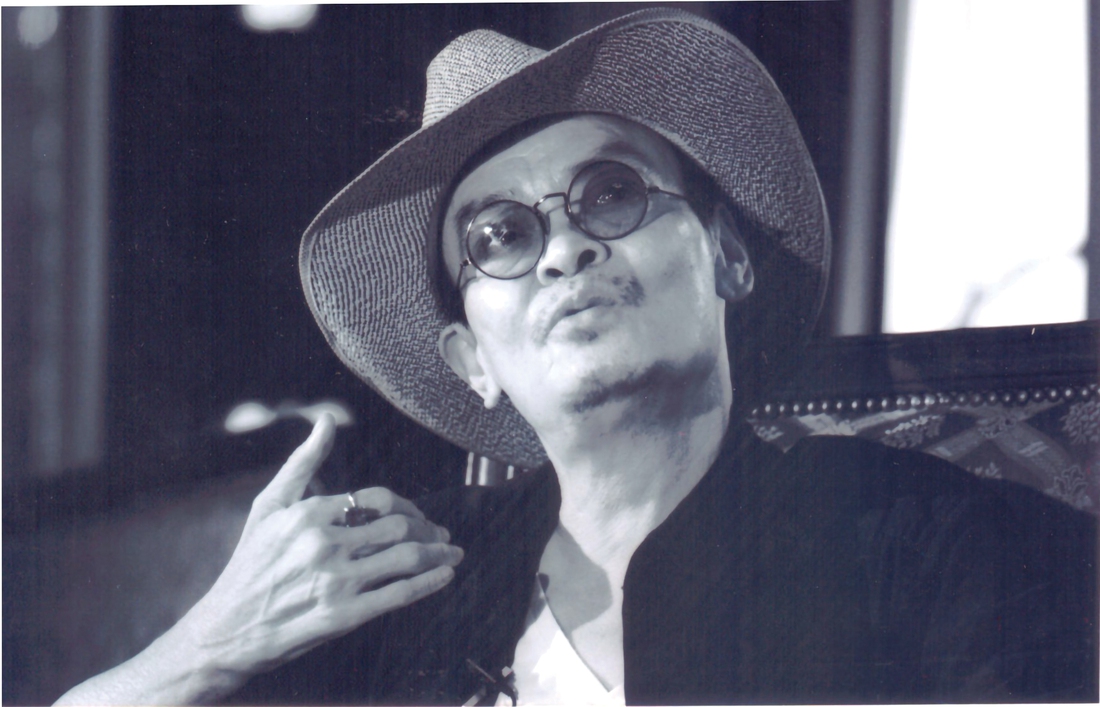
Composer Thanh Tung at the "Alone" concert in 2008 - Photo: Archival material


Music is Thanh Tung's "soft weapon".
After graduating and returning to Vietnam in 1971, Thanh Tung worked at Vietnam Radio II. This was a period when he quietly contributed to the musical life through work that was little known to the public, but had fundamental significance.
He arranged a series of revolutionary songs into instrumental music for symphony orchestra. Familiar works such as "The Green Canal ," " The Bird Bringing Good News ," "Going to Harvest Rice ," "The Sound of the Pestle in Bom Bo Village ," etc., through his hands, took on a new, more refined, and musically richer appearance while still retaining their familiarity.
When the concept of "harmony and orchestration" was still unfamiliar, composer Thanh Tung contributed to shaping a new standard for popular music. He incorporated academic elements into music without sacrificing its popular appeal, a feat not easily accomplished.
Composer Nguyen Van Ty at the time remarked that Thanh Tung had the best arrangement of the song "Mother Loves Her Child " (performed by Thanh Huyen). Music during this period truly became a "soft weapon" for Thanh Tung, helping him contribute to nurturing the spiritual life of society.
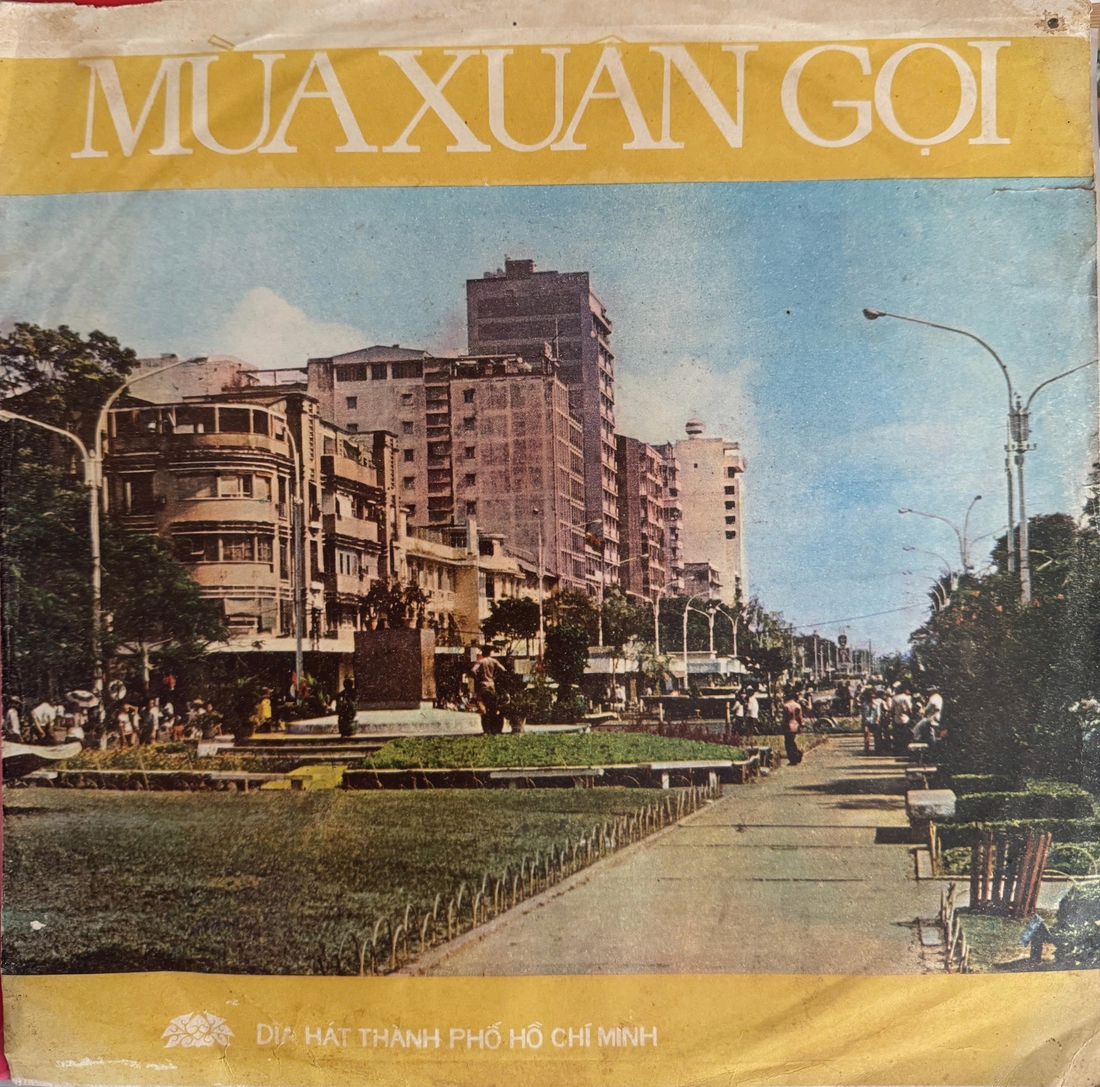
The album "Spring Calling" features 9 out of 10 songs arranged by Thanh Tung (the remaining song was arranged by Tran Huu Bich). Among them are classic arrangements such as: "Spring Calling" (Tran Tien), "The Season of Swallows Flying" (Hoang Hiep), "Hey, My Pretty Little Lover" (Nguyen Ngoc Thien), and "Love Poem at the End of Autumn" (Phan Huynh Dieu, Xuan Quynh).
"The Golden Key" of Vietnamese pop music
After 1975, Thanh Tung moved to Saigon to embark on a new journey: building a foundation for urban music life after the war.
He was one of the founders of the Ho Chi Minh City Television Light Orchestra, and also participated in establishing many performing arts troupes in localities such as Lam Dong, Khanh Hoa, Quang Nam, Hai Phong...
Wherever he went, Thanh Tung's mark was associated with professionalism, systematic approach, and effectiveness. There was a period when the art world called him the "golden key to solitude," because the programs he directed often achieved high results at national festivals.
Behind those accolades lies a process of persistent hard work. Thanh Tung not only composed music but also organized, trained, and passed on his experience to subsequent generations. Therefore, musician The Hien, in a conversation with fellow musicians, called Thanh Tung a silent "architect" of musical life.

The single "Bài ca không quên" (Unforgettable Song), which includes "Bài ca không quên" and "Tình biển" (Sea Love) - two hugely popular hits from the early 1980s - were both arranged by musician Thanh Tùng.
From collective responsibility to individual voice
After a long period of involvement in collective artistic activities, Thanh Tung entered a new phase where he began composing songs with a distinctly personal touch.
His debut song, "The Durian Tree Blooms" (Cai Luong style - performed by Le Thuy & Thanh Hai), demonstrated his ability to combine modern and traditional music. From there, he continued to write many songs for local movements, which were both encouraging and rich in artistic emotion.
A series of songs were created during this period, such as: "Hai Phong, City of Childhood ," " The Girl from the Central Highlands Working on Irrigation ," "Come to Tri An ," "The Rice Plant of Quang Nam, " etc. Although these songs were composed on commission, they were not at all dry or rigid, because they were all places he had visited and had many memories of.
Meanwhile, singer Cam Van recalled her memories with "Hoang Hon Mau La" (Sunset in the Color of Leaves) - a song written by composer Thanh Tung as a gift to the Youth Volunteer Force: "The composer trusted me and chose me as the first singer to perform 'Hoang Hon Mau La' . At that time, I was truly happy and also very surprised, because I had never received a song about construction with such romantic and lovely lyrics."
"Do you still remember the dream, the vast forest? The song the color of the rosy sunlight, easing the longing for home. Does your heart still remember, the vast forest? The kiss the color of young leaves, the sunset . Singing it once, I remember it, I cherish it to this day."
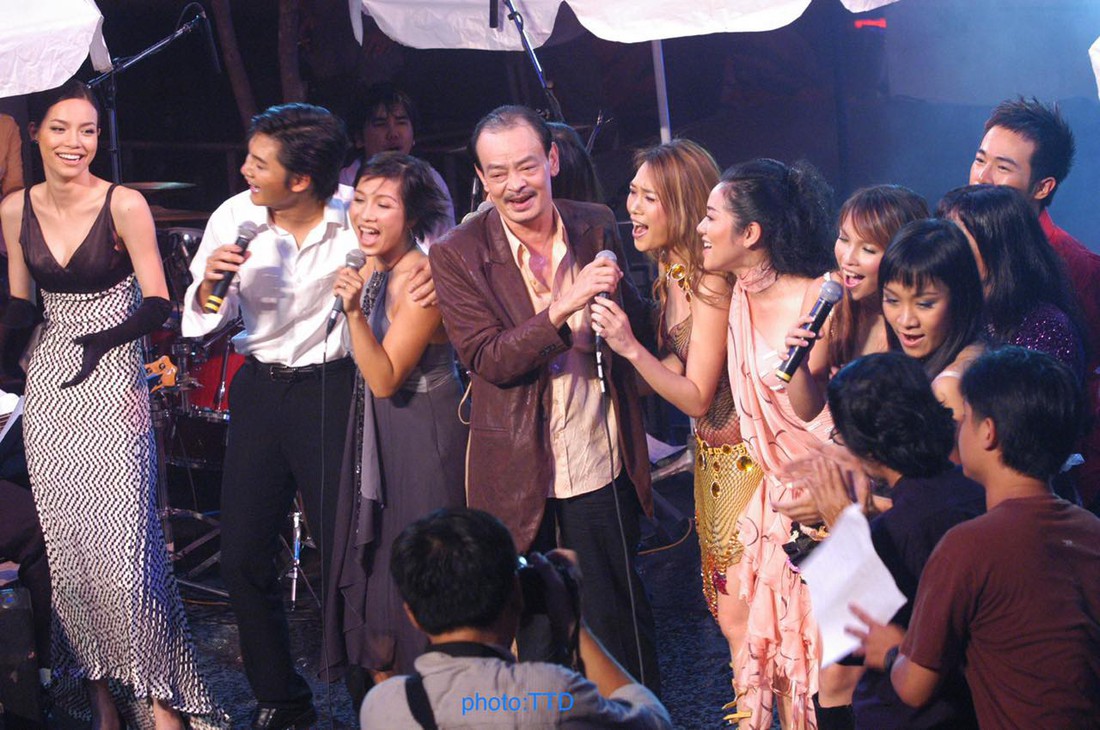
Musician Thanh Tung (center) with famous singers in the "Music Road" program, episode 4, August 2005 - Photo: TTD
The experiences during this period provided Thanh Tung with a solid foundation of life skills and professional expertise. This allowed him to make a strong breakthrough in the mid-1980s as the country entered the period of reform and the music scene underwent a transformation. And composer Thanh Tung was one of the pioneers in shaping Vietnamese light music.
Composer Tran Manh Hung, who arranged nearly 20 pop songs by composer Thanh Tung into a classic crossover style (combining a symphony orchestra with a modern band) for the Legacy of Love project – commemorating 10 years of composer Thanh Tung – commented: "Composer Thanh Tung was one of the pioneers in bringing Vietnamese light music closer to international styles."
A series of songs were created during this period, such as: "Springtime Love Confession ," "Sunlight on the Threshold ," "Dewdrop on Eyelids ," "Lonely Star ," "Love Story of the Sea ," " Singing with the Little Cicada ,"... quickly winning the hearts of the public, before he released more personal songs, mourning his deceased wife: "Alone ," "Purple Flowers in the Yard ," "The Old Path We Return To , " "Yellow Chrysanthemums"...
In the flow of contemporary Vietnamese music, Thanh Tung's melodies still resonate not only as memories but also as a part of the present. And somewhere within those melodies, one can still hear the echoes of the summer of 1954 – where a farewell opened a path of commitment, and also the beginning of sounds that continue to resonate today.
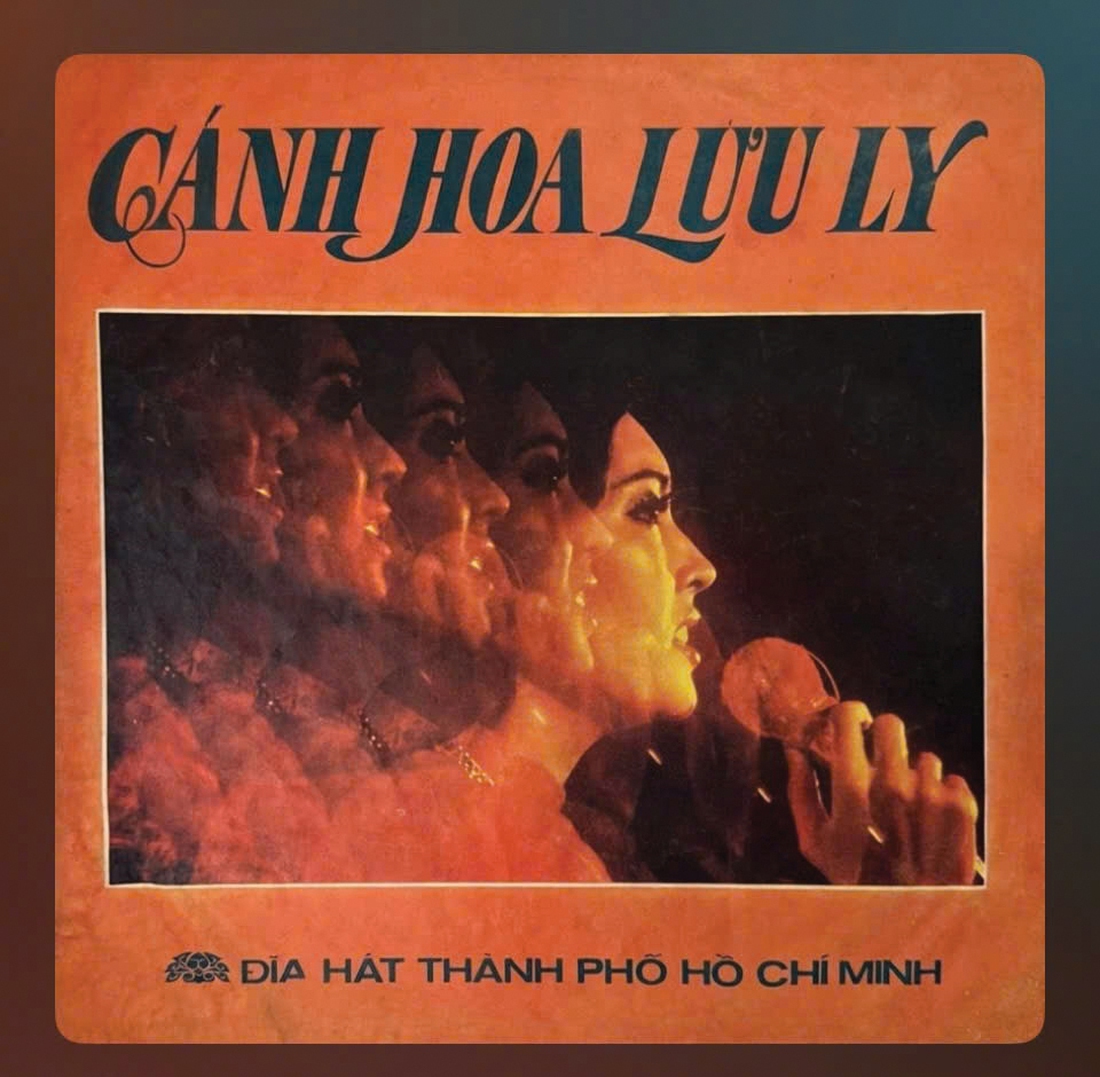
Musician Thanh Tung is the arranger for "Canh Hoa Luu Ly" (composed by Diep Minh Tuyen; sung by Hoa Mi) - Photo: Archival material.



The distinctive style of 80s music is extremely prominent.
Another substantial musical legacy of composer Thanh Tung, which many have forgotten due to limitations in available documentation, is his remixes of songs produced by the Ho Chi Minh City Record Factory. From these remixes, hundreds of songs were brought to the public, becoming contemporary hits under his skillful arrangement and conducting.
Thanks to the skillful arrangements of musician Thanh Tùng, many songs are still sought after by collectors and recognized as classic versions, such as: "Bài ca không quên" (Pham Minh Tuan; sung by Cam Van), "Tình biển" (Tran Quang Huy; sung by Nha Phuong), "Cánh hoa lưu ly" (Diep Minh Tuyen; sung by Hoa Mi), "Trị An âm vang mùa xuân" (Ton That Lap; sung by Nha Phuong and Hoang Cuc), "Nơi em gặp anh" (Hoang Hiep; sung by Lam Xuan), "Mimosa" (Tran Kiet Tuong; sung by Chanh Tin)...
These arrangements brought a fresh pop-rock spirit, combined with strings from his classical foundation, creating catchy melodies, or what are now called memorable "hooks." Therefore, these songs gained widespread popularity.
The influence of those arrangements later appeared in his light music songs, creating a distinctive style of 1980s music that was very prominent and also very different from many musicians of the time. When broadcast, these songs still receive a warm reception from listeners of previous generations, as they remind them of a nostalgic era.
Thanh Tùng also composed music for quite a few animated films produced by the Ho Chi Minh City General Film Enterprise (now Giai Phong Film Studio). Some of these films were very familiar to young audiences at the time, such as: The Cicada and the Ant , The Friendly Umbrella , The Beloved Ball , The Cat Falls Down the Well , Borrowing the Tiger's Authority ...
However, when mentioning the film music legacy of composer Thanh Tùng, one must mention the magnificent 8-episode Vietnamese film " The Upside Down Card Game ," for which Thanh Tùng composed music from episode 2, "The Moving Chess Piece," to the end. More than 40 years later, audiences still vividly remember the familiar melody at the beginning of the film when the character Nguyễn Thành Luân (played by Nguyễn Chánh Tín) steps out of his car and enters the rubber forest.
Thanh Tùng also composed music for several famous war-themed films, including the two-part series " Hòn đất " and " Chiến trường chia nửa vầng trăng" (both directed by Hồng Sến). He also collaborated with musician Trịnh Công Sơn on the film "Bãi biển đời người" —a little-known collaboration between the two composers.
Although Thanh Tung didn't compose a large number of songs about building up the homeland, they still left a strong impression on the audience, especially those who frequently listened to music on the radio. Some of his songs were written during the vibrant political song movement of that time, such as " Returning to Tri An" (also known as "The Sun of Tri An," first recorded by the artists Chanh Tin and Bich Tram), which was very popular and frequently performed by political song groups everywhere.
Another song he wrote for the Hai Dang Dance and Music Troupe (Phu Khanh province, now Khanh Hoa) to perform at a festival became a "hit" on the radio due to its unique and innovative music, quite different from other "local songs," that was "Da Ban, the Spring Water Flow ." This "local song" genre also includes several other notable songs, perhaps connected to memories in his life, such as " The Ancient Story of Nghi Tam ," " A Glimpse of Ba Vi," etc.
Editor Minh Duc - VOV
Source: https://tuoitre.vn/truc-tinh-ca-thanh-tung-da-viet-cho-dat-nuoc-20260429061526306.htm


![[Photo] Strengthening character and expertise: Intense training for artillery soldiers.](https://vphoto.vietnam.vn/thumb/1200x675/vietnam/resource/IMAGE/2026/06/30/1782815602541_lu-368-1875-4571-jpg.webp)









































![[Photo] The search and rescue team of the Vietnamese Ministry of Public Security begins deploying search and rescue operations in Venezuela.](https://vphoto.vietnam.vn/thumb/402x226/vietnam/resource/IMAGE/2026/06/30/1782812458643_anh-man-hinh-2026-06-30-luc-16-40-09.png)