Many unmanned aerial vehicles (UAVs) manufactured in Vietnam have been put into combat service with military units.
Pioneering and leading the way, producing products bearing the distinct intellectual mark of "Made in Vietnam" in the field of research, development, and manufacturing of unmanned aerial vehicles (UAVs), include the Institute of Military Science and Technology ( Ministry of National Defence ), the General Department of Defence Industry, and the Institute of Air Defence and Air Force Engineering…
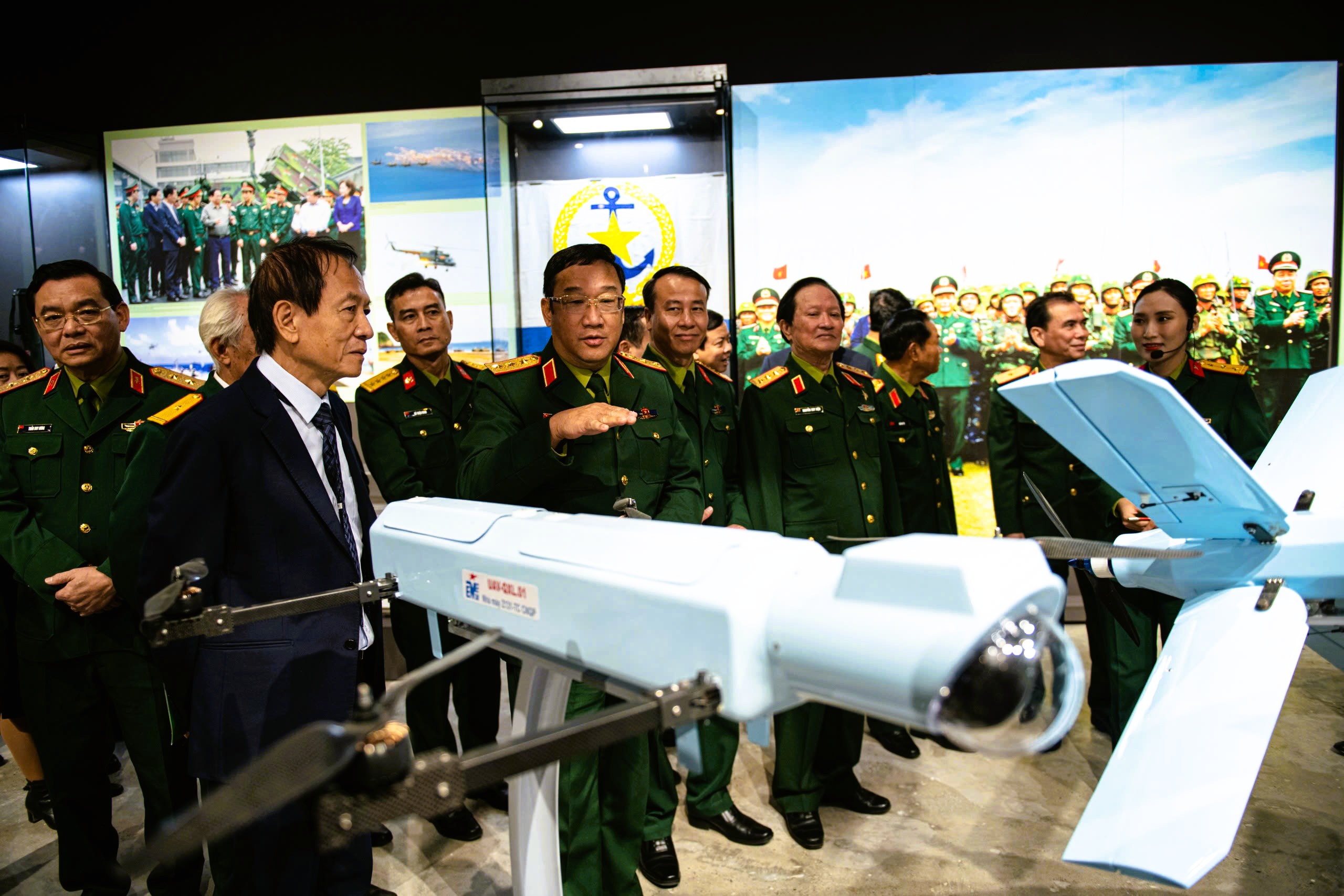
Lieutenant General Pham Hoai Nam (Deputy Minister of National Defense) introduces the features and functions of the UAV-QXL.01 to Mr. Vo Hong Nam (front row, left), son of General Vo Nguyen Giap. PHOTO: PV
UAVs for training purposes.
The Air Defense - Air Force Engineering Institute is the leading scientific research center of the Air Defense - Air Force Command, established in May 1978.
The Institute is tasked with researching scientific and technological issues in the field of air defense and air force engineering, serving training and combat readiness; researching the exploitation, preservation, use, extension of service life, improvement, and eventual production of weapons, equipment, and technical supplies for air defense and air force.
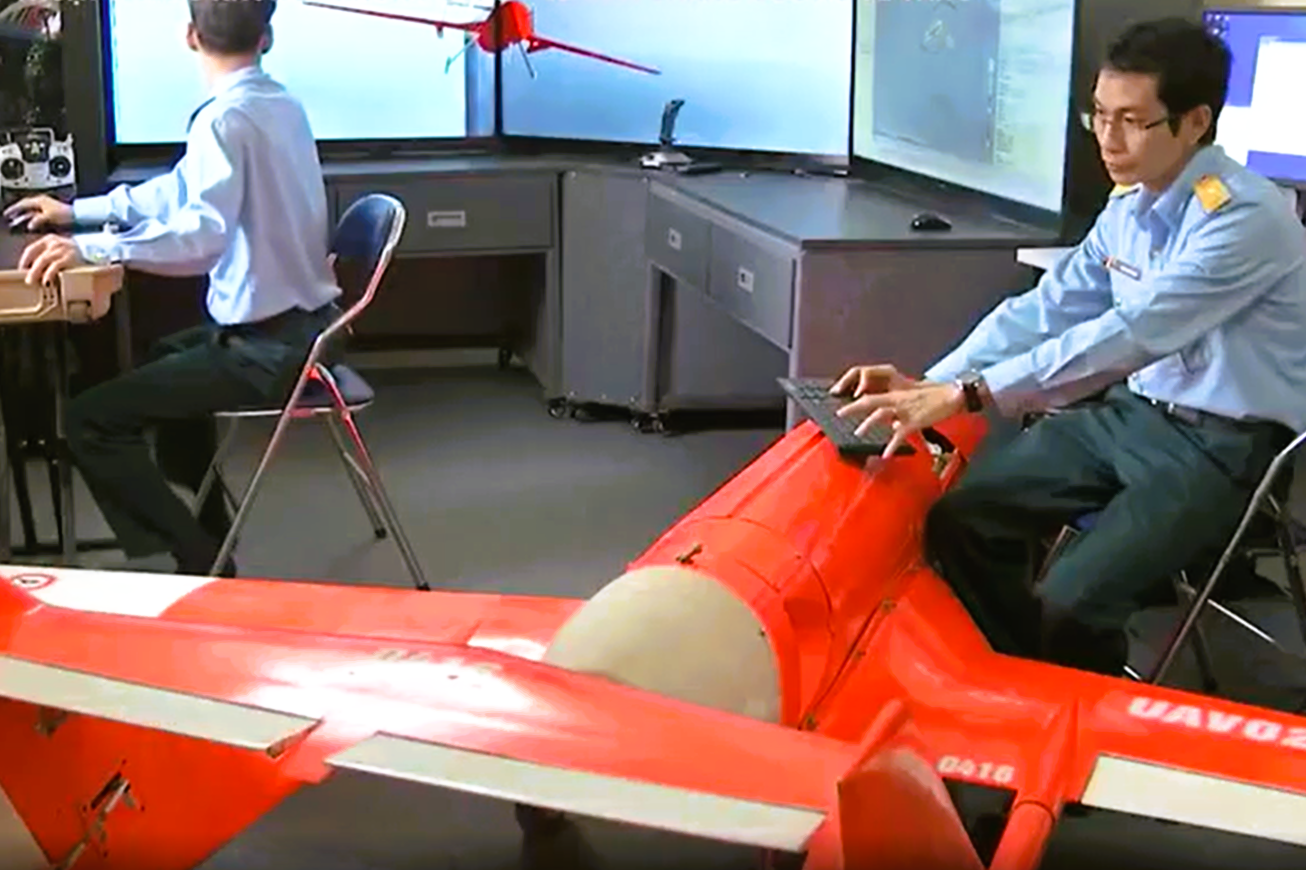
Officers from the Air Defense - Air Force Engineering Institute are researching training UAVs. PHOTO: Archival
Over the years, along with its core research directions, the Institute has focused on grasping and gradually mastering new technologies and effectively applying them in scientific and technological research.
Notably, significant research projects with practical applications include the successful development and flight test of the first manned TL-1 aircraft; and the successful development and testing of the HL-1 and HL-2 training aircraft.
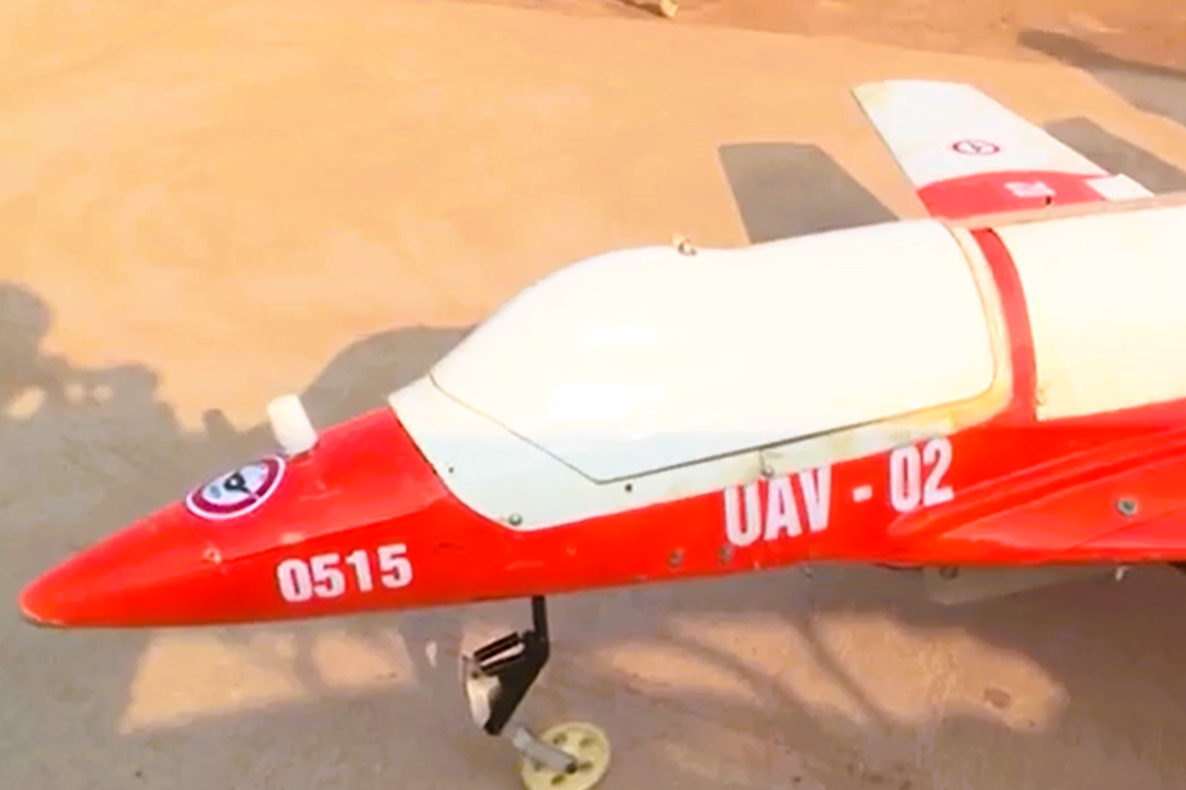
UAV-02 of the Air Defense - Air Force Engineering Institute. PHOTO: Archival.
The Institute provided design consultancy and, together with the A41 factory (Air Defense - Air Force Command), successfully manufactured 5 VNS-41 ultralight dual-purpose aircraft.
In particular, during the period 2014-2016, the Institute was assigned by the Ministry of National Defence to design and manufacture the IFF-VN friend-or-foe identification system. The IFF-VN system was inspected and highly evaluated by the Ministry of National Defence and put into service. Currently, phase 3 of the IFF-VN project is being equipped to key units throughout the army.
The military has additional forces to counter UAVs.
In early June 2023, at the TB-1 National Shooting Range, the Air Defense - Air Force Command held its first ever competition in Visual Observation, Shooting Down Low-Flying Aircraft with Infantry Rifles, and Suppressing Unmanned Aerial Vehicles (UAVs) with Portable Electronic Devices (comprising both theory and practice).
According to regulations, combat teams must participate in both theory and practice.
This allows for timely supplementation of training content, refinement of combat procedures, enhancement of combat readiness, and fulfillment of mission requirements in the new situation.
The Institute has successfully manufactured and put into service hundreds of sets of tires for MiG-21, Su-22M, Su-22M4, and L-39 aircraft; and hundreds of tons of liquid rocket fuel. It has also participated in the repair, improvement, and successful manufacturing of numerous pieces of equipment and systems, such as the A-313 navigation computer; the ECRAN system on the Su-27 aircraft; the VT-05 satellite navigation support equipment; the KQ-SAP objective inspection system (black box) equipped on various aircraft of the Air Defense - Air Force; and improvements to the S-75M missile control station...
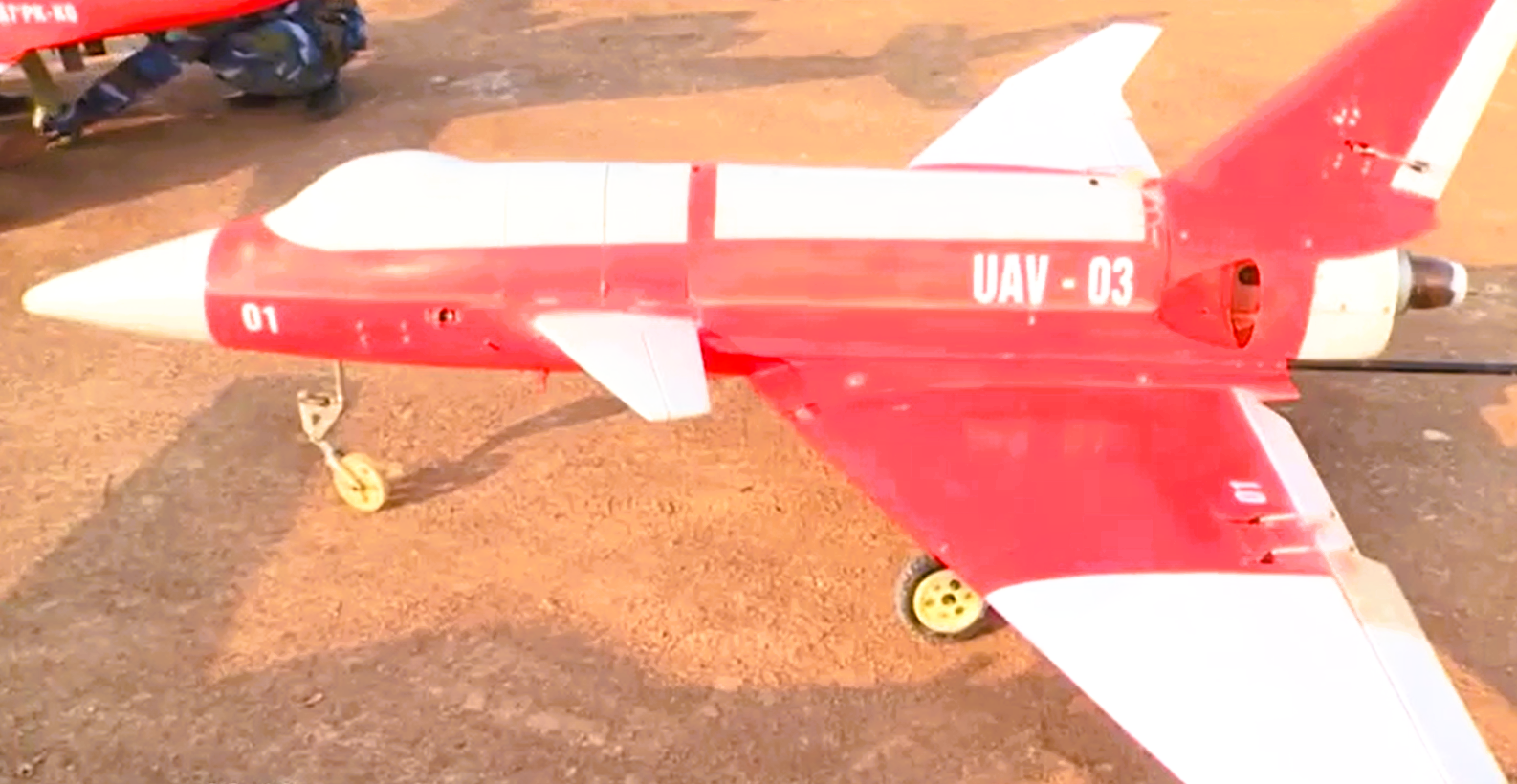
Training UAV with the designation UAV-03. PHOTO: Provided.
In addition, the Institute has successfully researched, designed, and manufactured various types of static and dynamic flight simulators for training pilots of IAK-52, L-39, Mi-8, Su-22M, and Su-22M4 aircraft; unmanned aerial vehicles (UAVs) used as targets for air force interception and for air defense forces to fire live ammunition; and manufactured self-recording training missiles for training on Su-27 and Su-30MK aircraft...
Currently, the Institute is carrying out scientific and technological projects, research topics, and tasks serving the exploitation and mastery of new and modern technical equipment, such as Su-30MK2, C-295, C-212, and IAK-130 aircraft; and missile systems: S-300PMU1, C125-2TM, and Spyder... making a significant contribution to improving the capacity and quality of technical equipment repair in the Air Defense - Air Force Command.
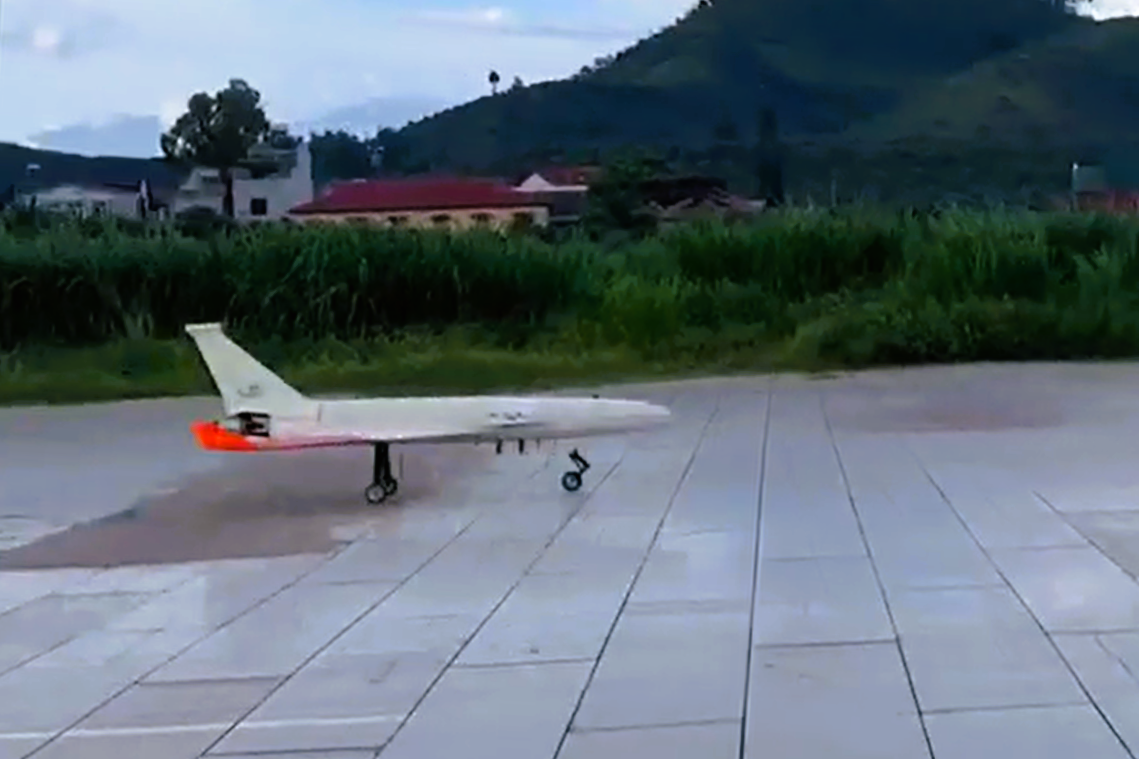
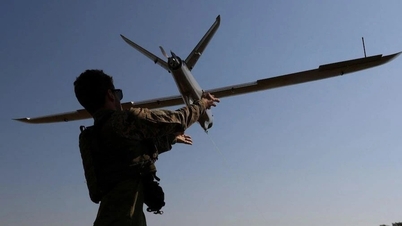
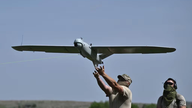
UAVs of the Air Defense and Air Force Command take off. PHOTO: PV
For unmanned aerial vehicles (UAVs), the Institute focuses on products that serve the military's training missions and the country's socio-economic development.
To date, nearly 30 models of unmanned aerial vehicles (UAVs) have been developed, with the majority being drones that have been successfully implemented in various fields, particularly in the military and defense sectors, such as the M-96CT, M-100CT, M-400CT, and M-400ST.
Currently, the Air Defense - Air Force Engineering Institute possesses DIS-18 unmanned aerial target drones equipped with jet engines, a flight ceiling of up to 5,000 m, a speed of up to 100 m/s, and an operating radius of 100 km. These drones are used for training and live firing exercises with the S-300PMU1 missile system and Su-30MK2 aircraft.
Aerial radiation reconnaissance

The airborne radiation reconnaissance device was researched and manufactured by the Institute of Electronics (Institute of Military Science and Technology, Ministry of National Defence) in collaboration with the Institute of Military Environmental Chemistry (Chemical Corps).
This device utilizes a multi-rotor UAV. Reconnaissance data, including the time and location of observation, is transmitted in real time to a ground station for processing and visual display on a digital map, according to different observation scenarios with isotope indication capabilities.
The device measures the radiation dose rate in the air, analyzes the signal spectrum, and sends the information to the command center. Each reconnaissance device can operate independently or in combination with two or three other devices depending on the reconnaissance task.
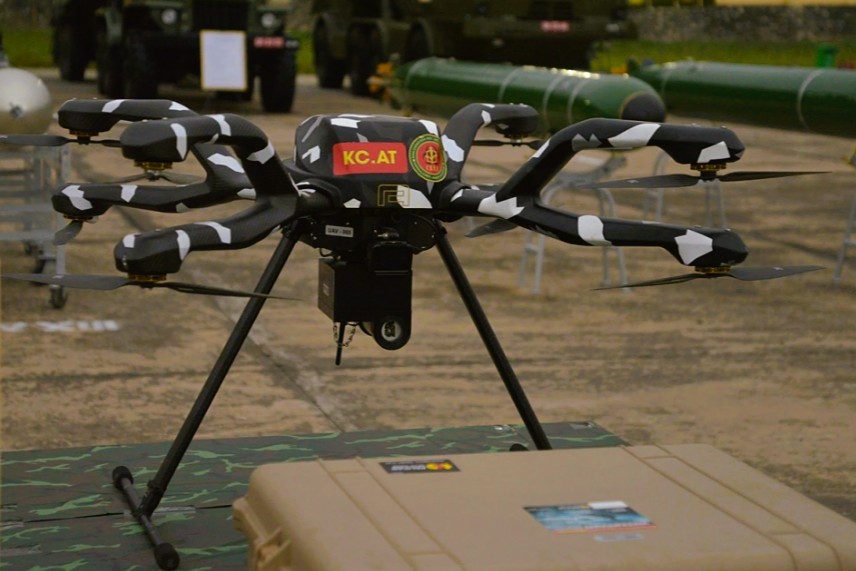
Aerial radiation reconnaissance equipment. PHOTO: PV
The tactical and technical features of each device, as well as of the entire system, have been tested and proven to be satisfactory.
In particular, airborne radiation reconnaissance equipment uses spread spectrum encryption technology for data transmission, resulting in high stability and security.
According to this technology, the device used is compact in size, consumes little power, but still ensures long-range communication, suitable for various types of aerial reconnaissance, integration into robots, and personal observation equipment.
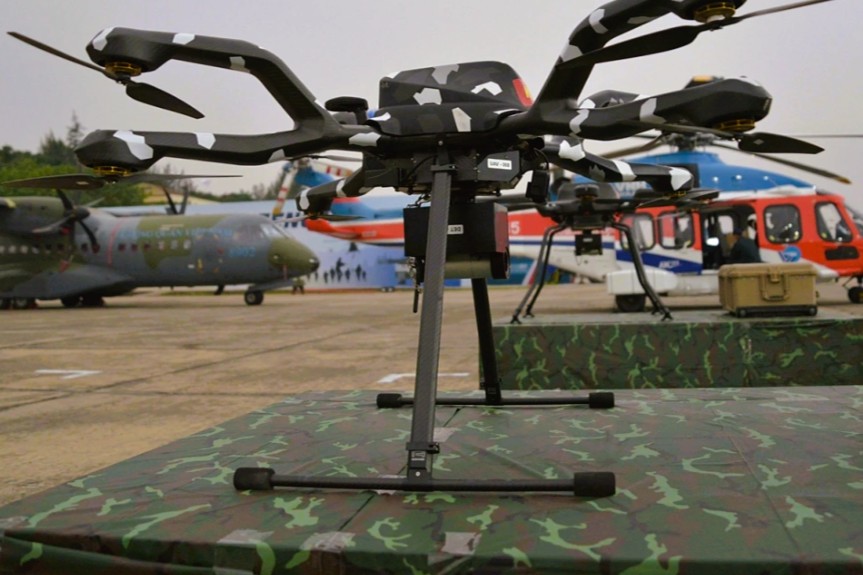
The equipment was displayed at the Vietnam International Defence Exhibition 2022. PHOTO: PV
The results of this project open up a research direction for applying new technologies in the design and manufacture of UAVs to integrate various types of sensors for chemical reconnaissance.
The research product can also be extended to various types of aerial reconnaissance for other forces in the military, such as artillery reconnaissance, border patrol reconnaissance, coast guard reconnaissance, mechanized infantry reconnaissance, etc.
Suicide UAVs
On the morning of December 13th, the General Political Department of the Vietnam People's Army and the Vietnam Military History Museum organized an exhibition of products from several factories under the General Department of Defense Industry and various branches of the armed forces.
Among these are many modern and cutting-edge UAV models researched, developed, and produced by our military, focusing on propeller-driven suicide combat UAVs.
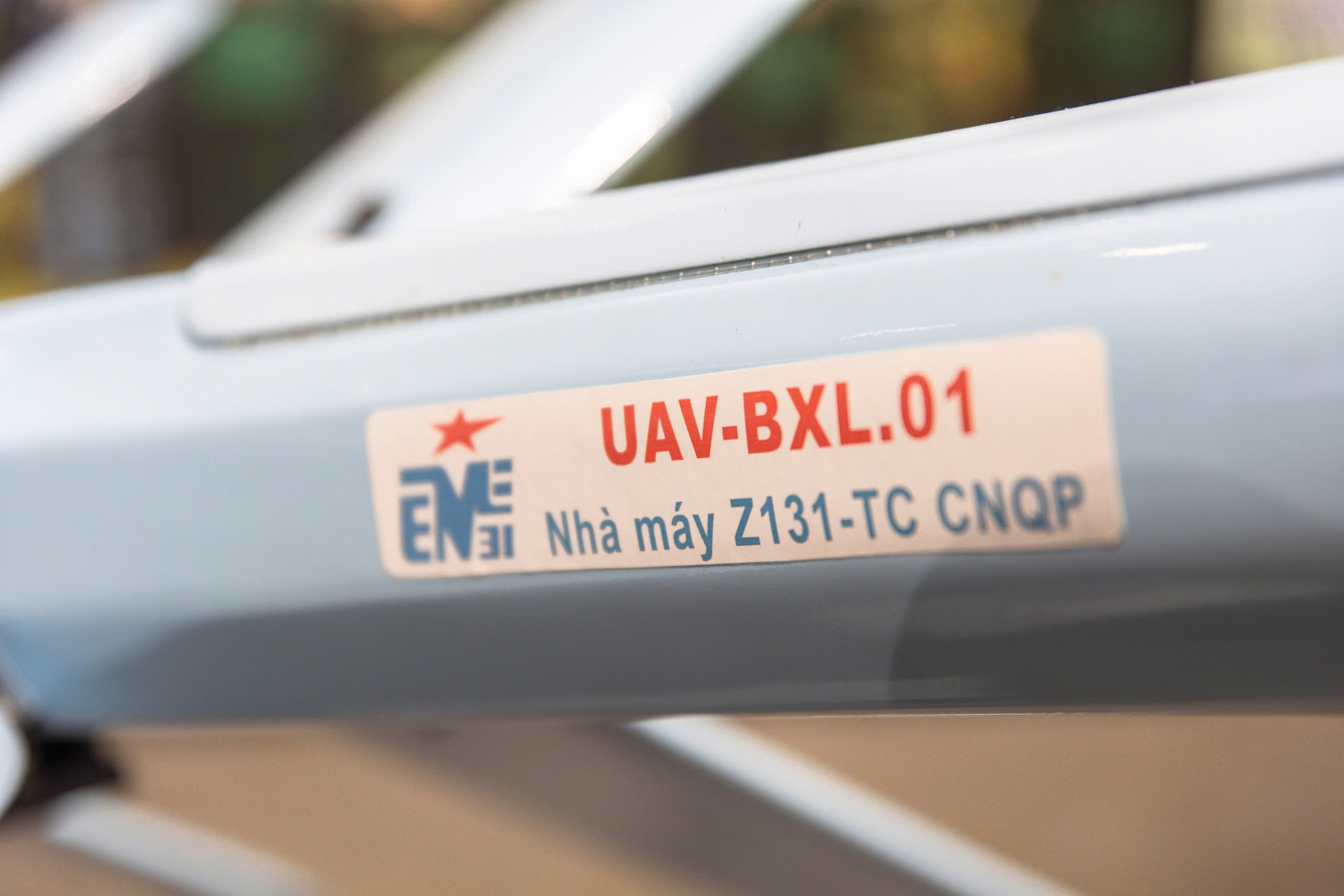
The UAV-BXL.01 was designed and manufactured by the Z131 factory of the General Department of Defense Industry. PHOTO: PV
A typical example is the UAV - BXL.01, designed and manufactured by the Z131 factory of the General Department of Defense Industry. These are kamikaze combat UAVs with rotor blades, carrying armor-piercing warheads to destroy tanks, armored vehicles, self-propelled artillery, radar stations, and other stationary armored technical vehicles with wall thickness not exceeding 250 mm.
The UAV's attack speed must not be less than 150 km/h. The target attack error must not exceed 3 meters. It can be controlled manually or automatically. Maximum takeoff weight is 10 kg. The flight ceiling is 1,000 m. The operating altitude is 150-500 m. The cruising speed is 100-120 km/h, and the maximum communication range is 10 km.

UAV-QXL.01. PHOTO: PV
The QXL.01 UAV, manufactured in 2024, is a kamikaze combat drone with a shaped-charge warhead designed to destroy tanks, armored vehicles, self-propelled artillery, radar stations, and other stationary armored technical vehicles with wall thicknesses not exceeding 250 mm. It has a maximum takeoff weight of 8 kg, a ceiling of 1,000 m, a maximum warhead weight of 1.2 kg, and a target engagement accuracy of no more than 2 m. This product was also designed and manufactured by the Z-131 factory.
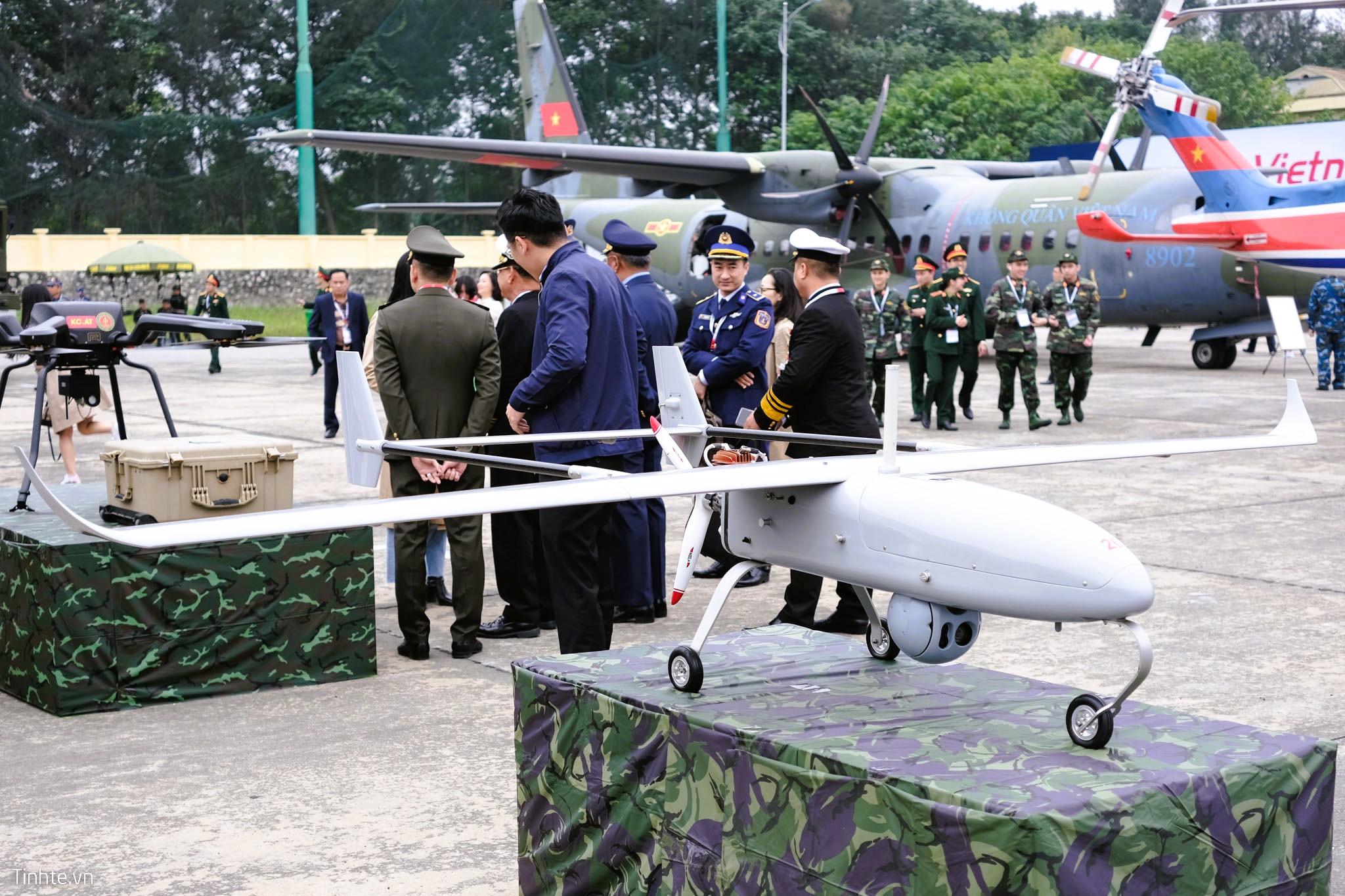
Viettel's VUA-SC-3G UAV on display in December 2022. PHOTO: PV
Besides these prominent UAV products, there are also several products from the Military Telecommunications and Industry Corporation (Viettel). According to the advertisements on their website, some products such as the VUA-SC-3G UAV, Shikra UAV, and the short-range soldier reconnaissance UAV1-1… are primarily used for reconnaissance missions.
Some images of unmanned aerial vehicles (UAVs).
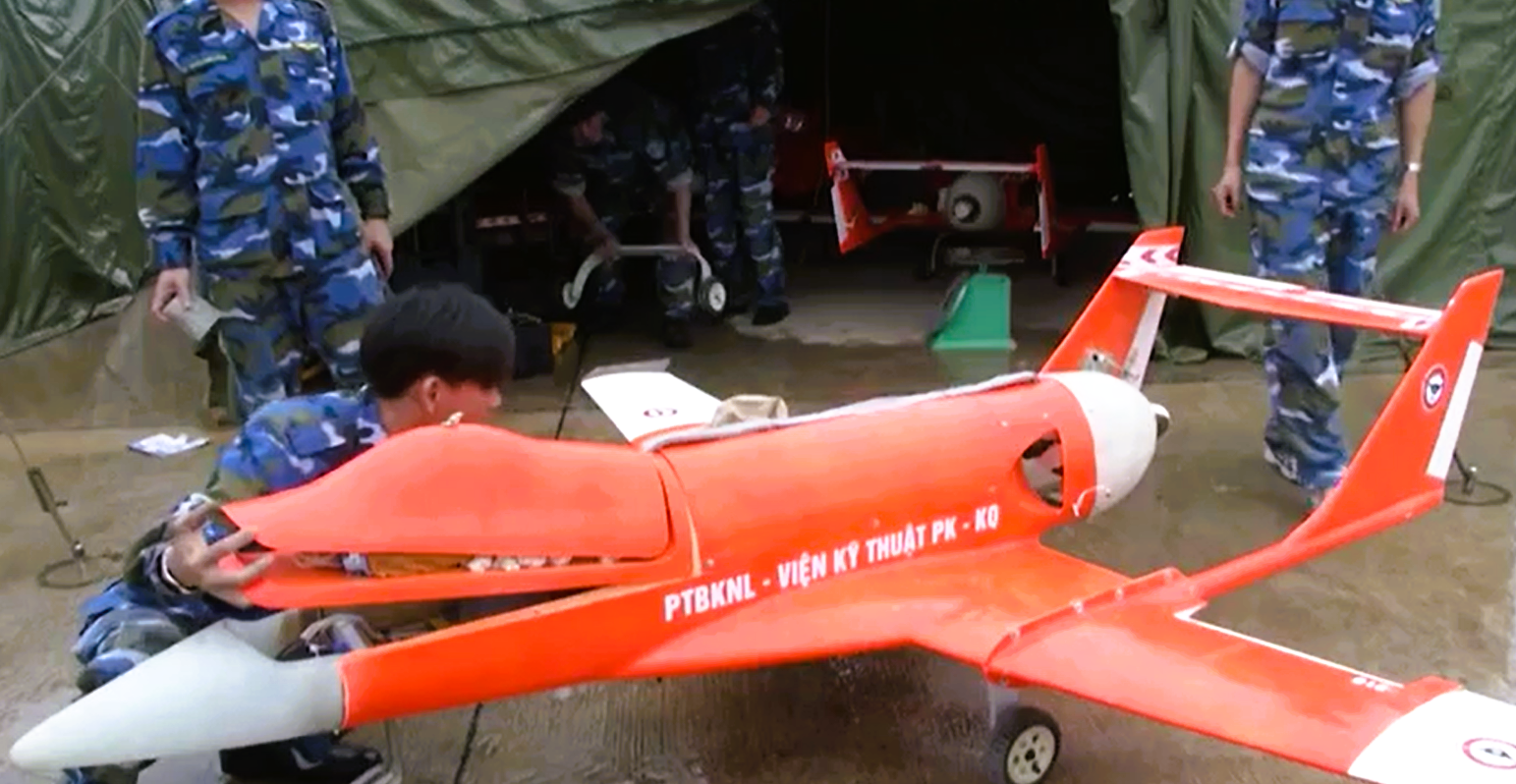
Officers from the Air Defense and Air Force Engineering Institute with a UAV for missile firing exercises. PHOTO: Provided.
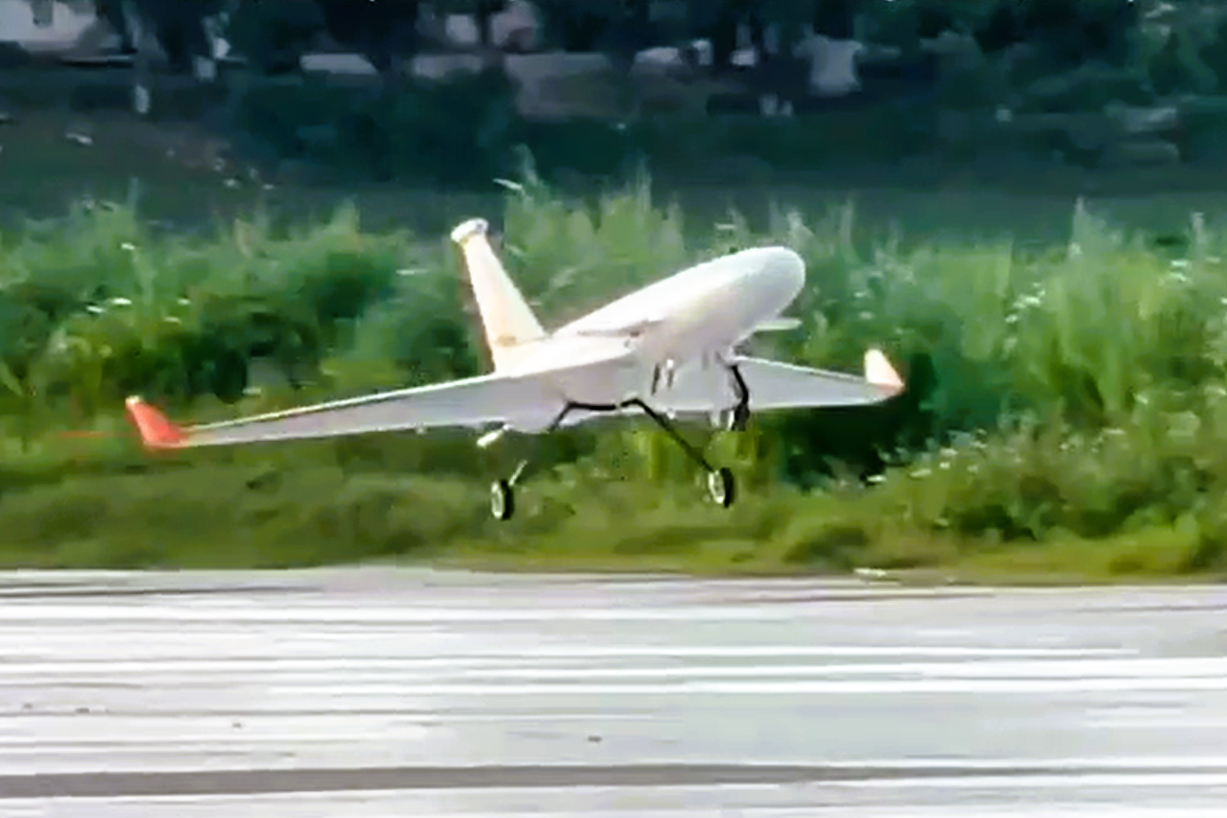
Training UAV takes off on a narrow runway. PHOTO: Provided



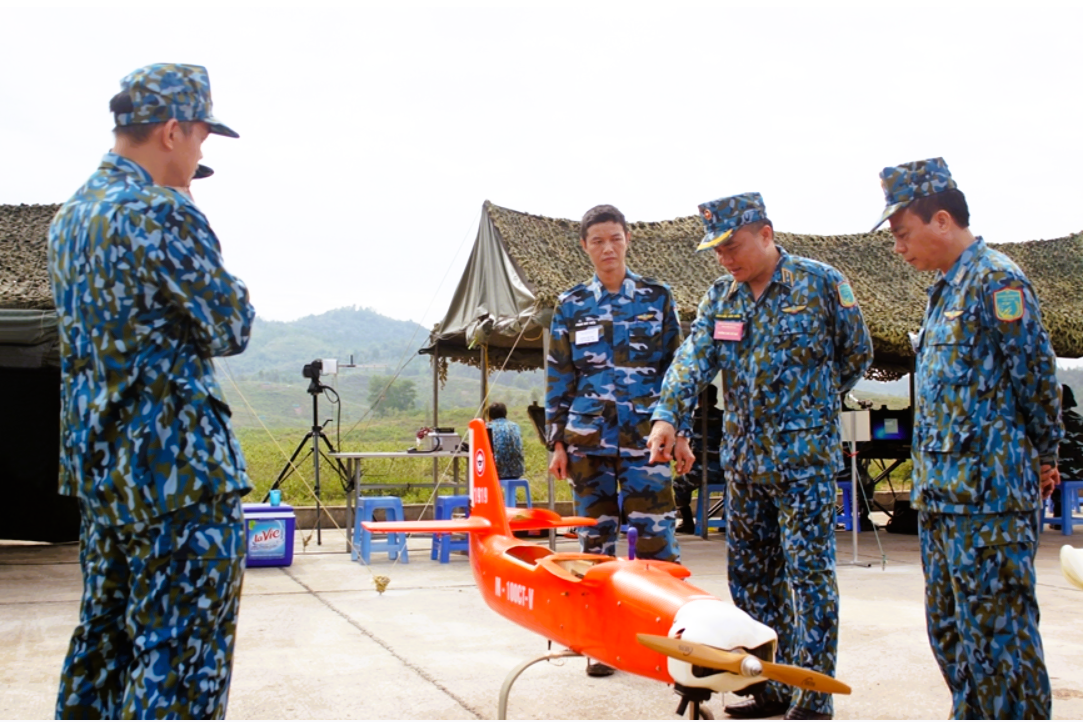
Lieutenant General Nguyen Van Hien (Member of the Central Committee of the Communist Party of Vietnam, Commander of the Air Defense - Air Force Command) inspects a UAV used for training missions. PHOTO: PV
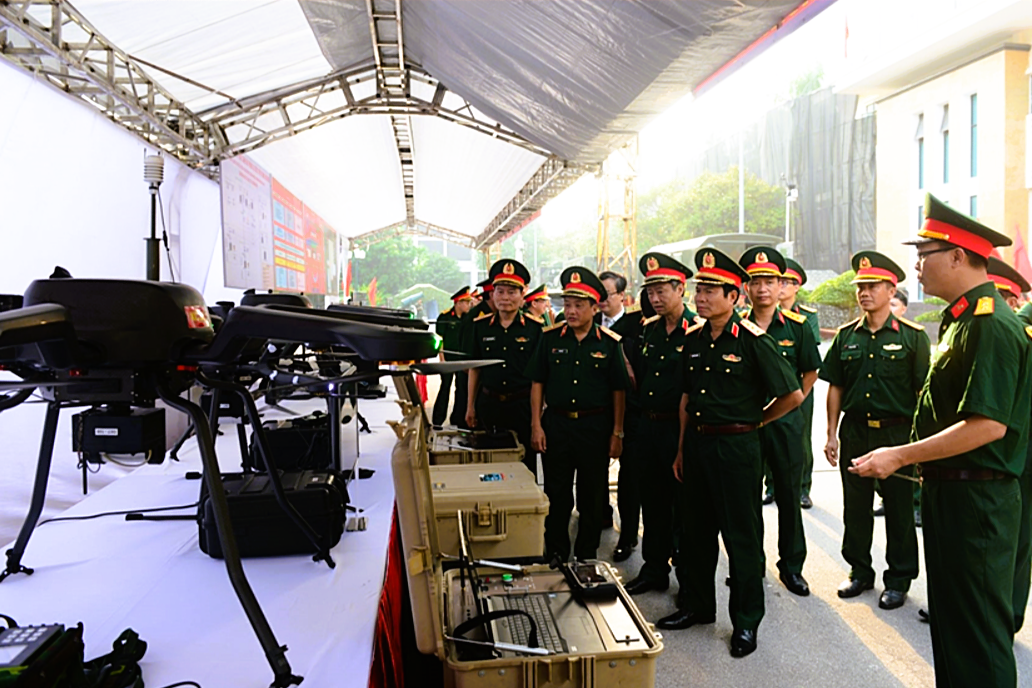
The Minister of National Defense listens to a presentation on airborne radiation reconnaissance equipment. PHOTO: PV
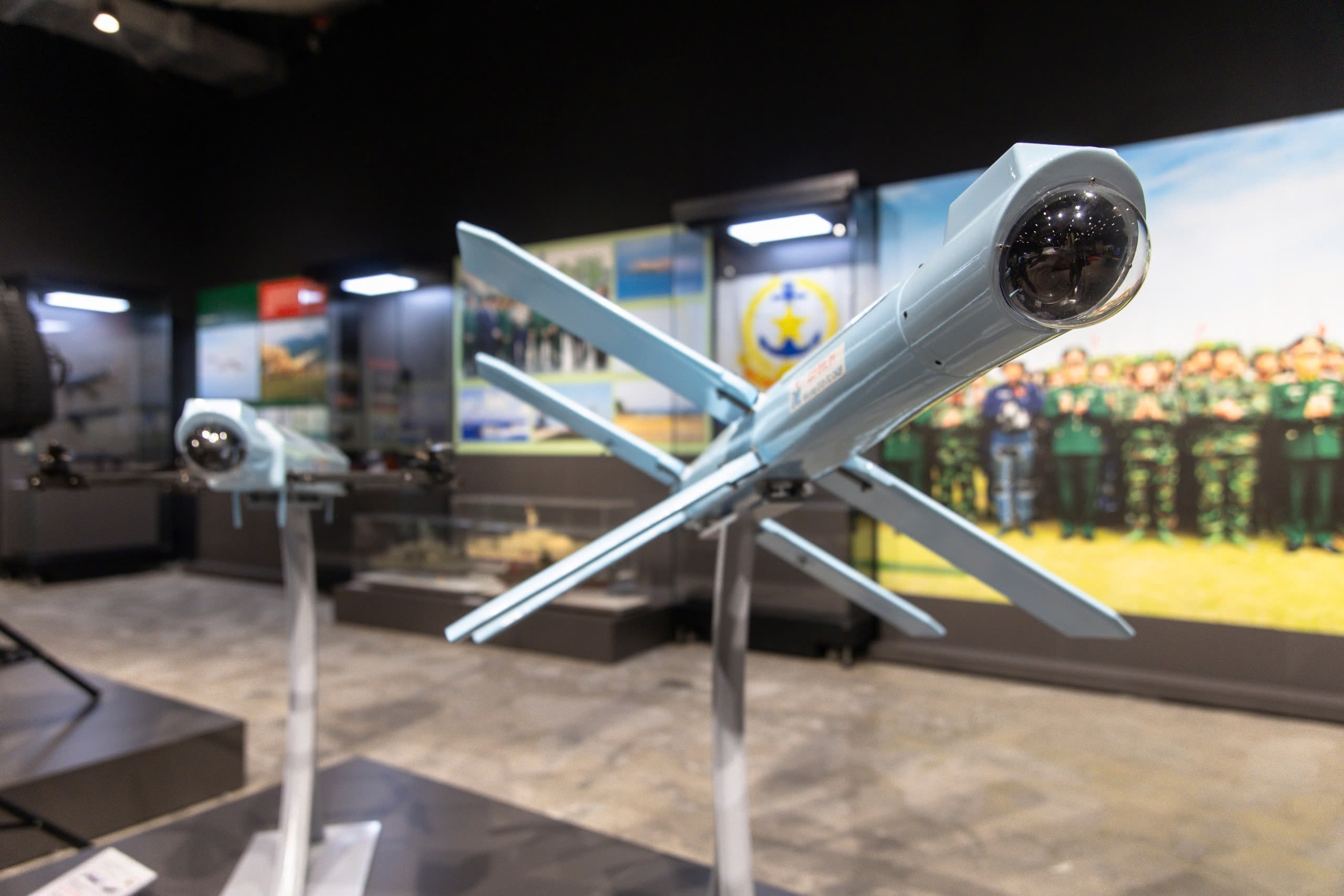
UAV - BXL.01 is a suicide drone carrying shaped-charge projectiles, specializing in destroying tanks, armored vehicles, self-propelled artillery, etc. PHOTO: PV
The UAV - QXL.01 can carry a maximum combat payload of 1.2 kg. PHOTO: PV
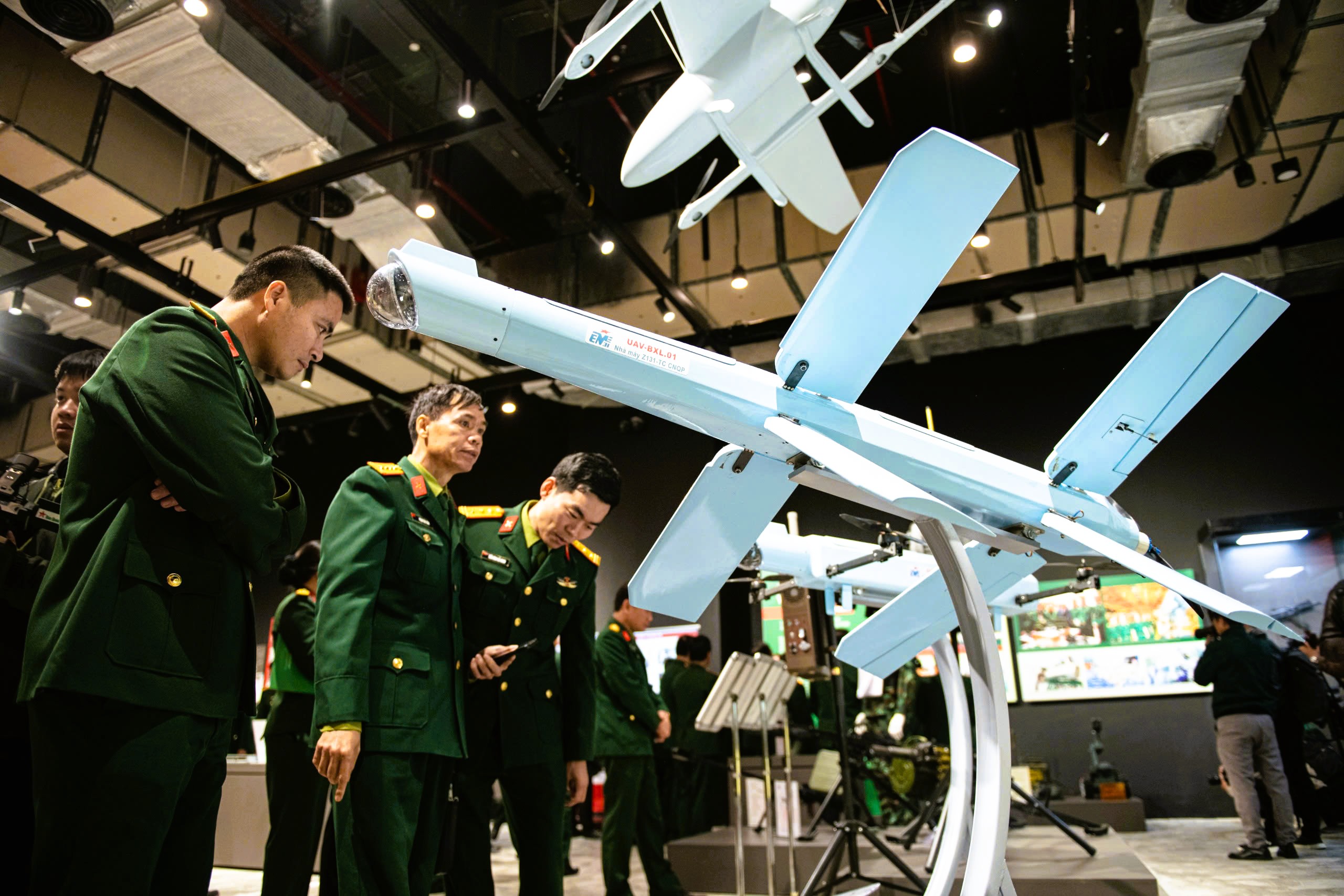
Suicide drone designs are receiving a great deal of attention. PHOTO: PV
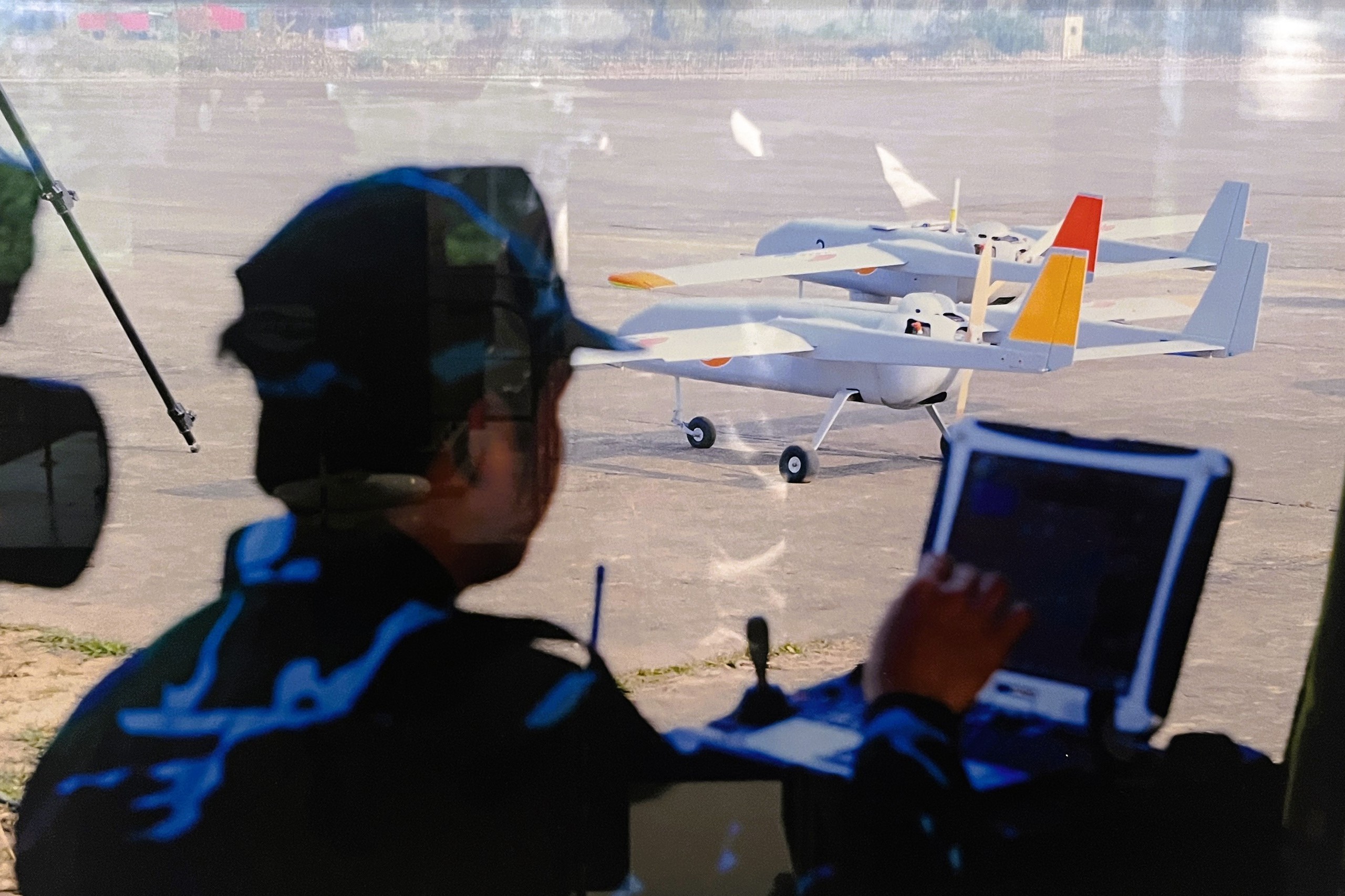
Controlling the UAV using specialized equipment. PHOTO: TL
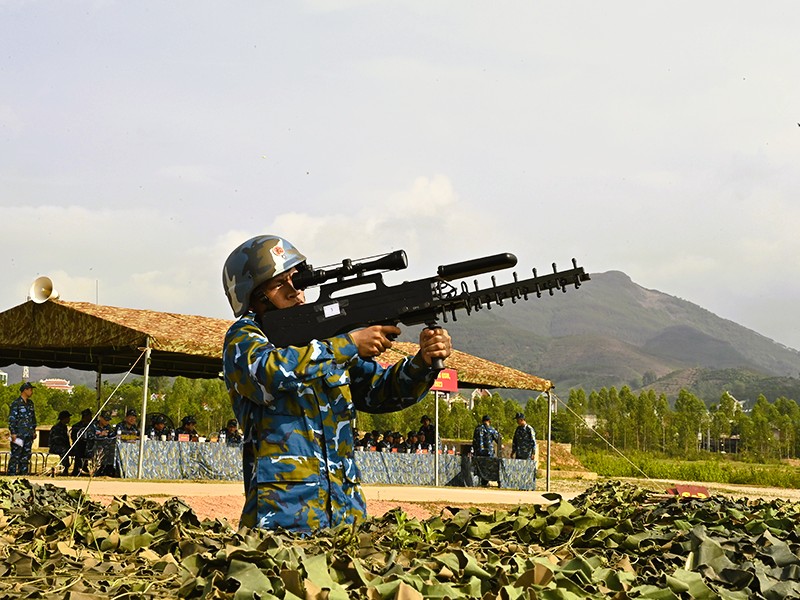
Air defense soldiers practice suppressing UAVs.
Source: https://thanhnien.vn/uav-cua-quan-doi-nhan-dan-viet-nam-185241215201411786.htm




![[Image] National conference summarizing one year of operation of the overall organizational model of the political system, the three-tiered government model.](https://vphoto.vietnam.vn/thumb/1200x675/vietnam/resource/IMAGE/2026/07/01/1782882811691_ndo_br_1-jpg.webp)