The global aviation industry is undergoing a profound structural transformation. Modern airports are no longer simply passenger transit hubs but have become ecosystems known as "airport cities" or "airport urban areas," playing a crucial role in driving economic growth for both regions and nations.
One of the key issues determining the success or failure of the Long Thanh International Airport project is its human resources. With tens of thousands of job positions awaiting completion, the recruitment challenge now demands a vision that goes beyond traditional human resource management frameworks.
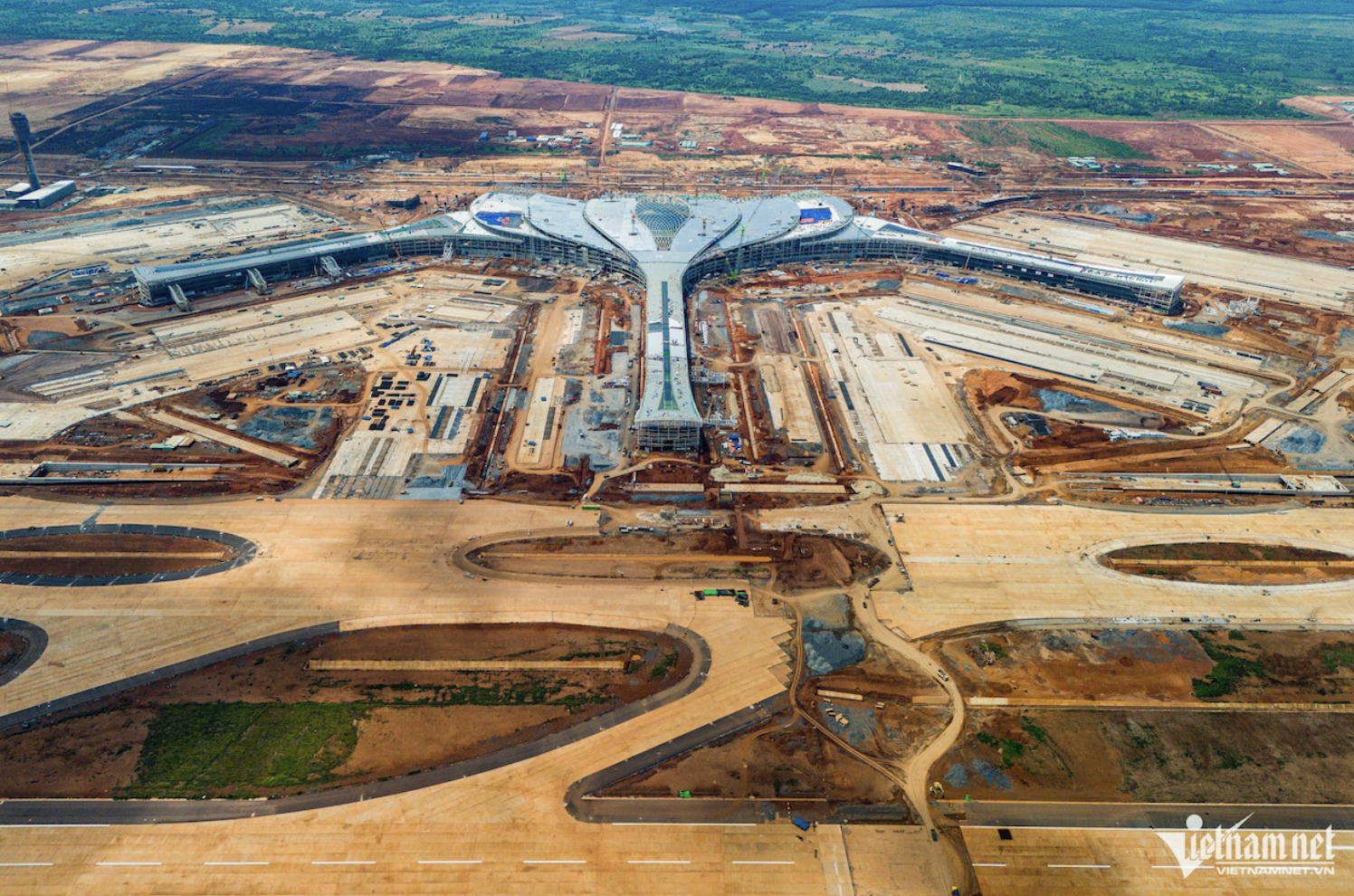

Long Thanh Airport project. Photo: Nguyen Hue
The scale of personnel demand for Long Thanh International Airport is unprecedented for Vietnam's civil aviation industry. It is estimated that activating the first phase of the project will require a massive workforce of approximately 14,000 people. Recently, the Airports Corporation of Vietnam (ACV) officially launched a recruitment drive aimed at filling around 3,000 job positions, with ACV directly recruiting approximately 1,400 core positions.
The standards set by ACV are highly specialized, with strict age limits (maximum 30 or 35 years old depending on the position). These age limits reflect a priority on building a young, healthy workforce that is adaptable to digital technology . However, from a risk management perspective, this simultaneously narrows the supply of human resources and could lead to the risk of not utilizing older, experienced workers already employed at Tan Son Nhat, for example.
Another problem is that its distance from the existing urban center is creating a major barrier. Solving the issues of long travel times, a lack of urban amenities in the vicinity of Long Thanh, and high transportation costs connecting the core of Ho Chi Minh City to Dong Nai is no easy task.
Costly lessons from international airports
The global aviation industry has provided a wealth of data on costly failures when managers underestimated the complexity of the human resources challenge at mega-airports.
In the United States, Denver International Airport (DEN) is a classic example. In the 1990s, Denver implemented a fully automated baggage handling system but failed to train its ground staff to operate it. This failure cost the budget $560 million and cost the city approximately $1.1 million per day.
Currently, Denver, with its 40,000-strong workforce, continues to grapple with the "geographical distance challenge" as traffic congestion discourages employees. The airport has been forced to spend $1.2 million to develop a Demand Management Plan and subsidize public transportation passes for employees.
Similarly, in post-Covid-19 Europe, major airports like Manchester and Heathrow experienced prolonged chaos. Having laid off tens of thousands of workers during the pandemic, they were unable to rehire quickly enough when demand recovered due to stringent background checks and extremely low base salaries (around £16,000 per year for new employees). Cost-cutting through staff reductions created uncontrollable vulnerabilities. When technical and technological systems failed, they became completely paralyzed because there weren't enough backup personnel to handle the situation manually.
In another development, South Africa's aviation industry is suffering heavily from a "brain drain." Air traffic control specialists are constantly being sought after by major airports in the Gulf region (such as Dubai or Doha) with tax-free salaries, housing allowances of up to 30% of base salary, and superior transportation benefits.
The "airport city" solution and its integration with local communities.
In contrast to failures, successful models around the world share a common solution: they view human resources not as an operating cost, but as a strategic partner that needs careful nurturing through housing infrastructure, transportation support, and engagement with the local community.
Beijing Daxing International Airport is the most successful example of overcoming geographical barriers through "airport city" planning. Located 46km from Beijing, instead of displacing 20,000 rural residents, the government built a large-scale social housing system, providing subsidized apartments up to 115m² to retain them. In addition, a large-scale skills training program transformed over 11,439 farmers into airport employees, giving Daxing a stable workforce and avoiding burnout from commuting to Beijing.
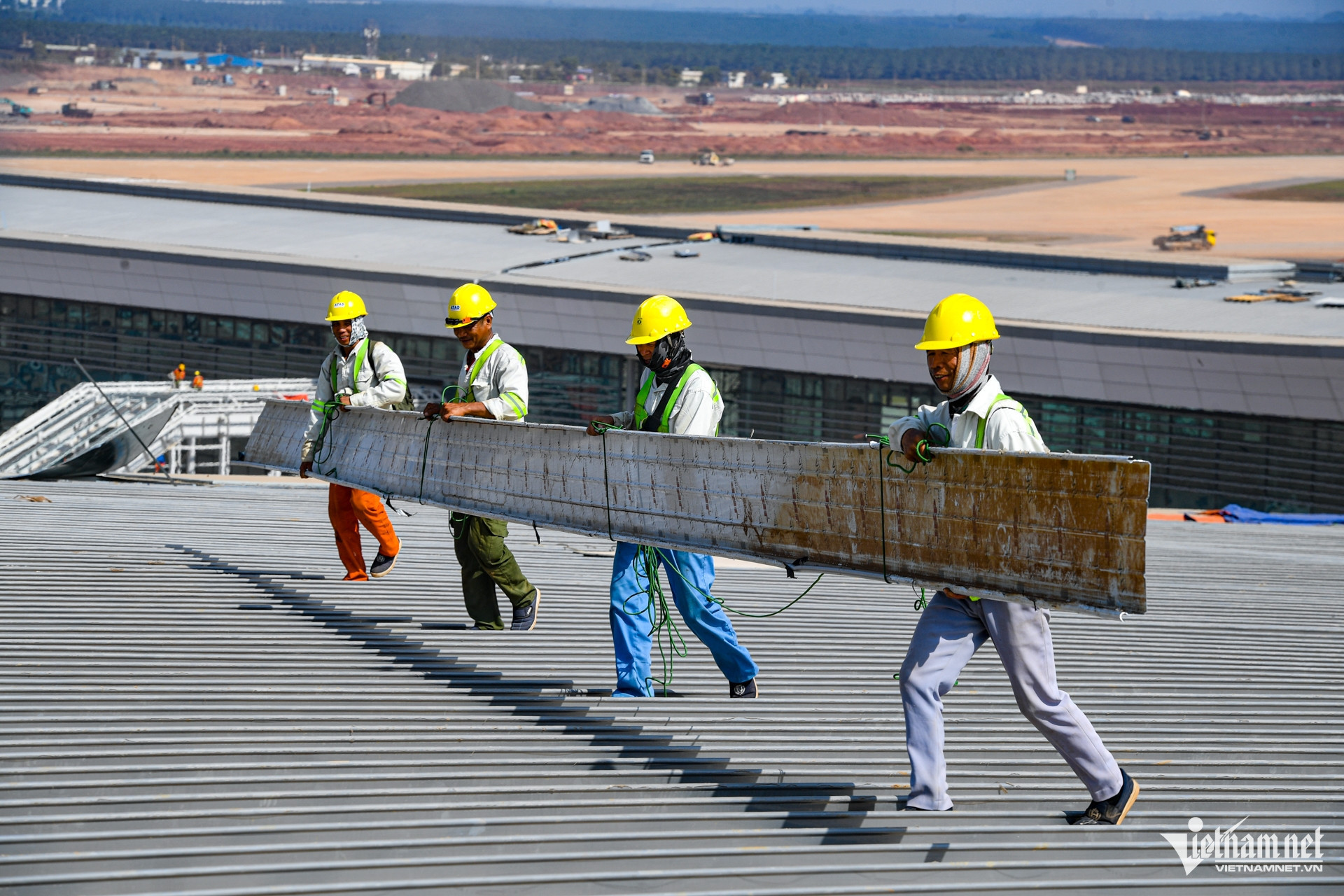
Construction workers at the Long Thanh airport construction site. Photo: Nguyen Hue
In Australia, Western Sydney International Airport established a mandatory legal requirement from the outset: a minimum of 30% of its construction workforce had to be recruited from Western Sydney. In fact, they achieved over 50%. The airport's success stemmed from establishing early career networks in collaboration with vocational schools to train and utilize a local workforce, rather than trying to attract people from the bustling city center.
In Southeast Asia, Changi Airport (Singapore) has transformed transportation into a corporate responsibility rather than a burden on workers. Ground handling companies there collaborate with digital bus platforms like SWATBiz to provide door-to-door employee transportation services, ensuring absolute safety and convenience for those working late-night shifts.
What is the solution for Long Thanh?
Based on the experiences of Noi Bai and Cam Ranh airports and international precedents, attracting 14,000 workers to Long Thanh clearly requires a strong shift in mindset from "mechanical recruitment" to "comprehensive human resource ecosystem management".
Firstly, remove traffic "obstacles." ACV needs to completely abolish all parking fees for personnel directly working at Long Thanh Airport, regardless of whether they are ACV employees or not. At the same time, it needs to implement high-quality, 24/7 shuttle bus services from Ho Chi Minh City and Bien Hoa directly to the airport, completely free of charge for employees.

Vietnam encourages US businesses to expand investment in high technology.On the morning of June 26th, at the Government Headquarters, Deputy Prime Minister Ho Quoc Dung received Mr. Jeff Place, Supply Chain Director of Coherent Group (USA). During the meeting, the Deputy Prime Minister affirmed that Vietnam encourages US businesses to expand investment, especially in high-tech, innovation, and semiconductor industries. Secondly, social housing privileges. Dong Nai is implementing large-scale social housing projects in Long Thanh and Nhon Trach districts. Local authorities need to sign agreements to allocate a certain "aviation housing quota" within these projects specifically for airport employees. Providing rent subsidies or low-interest home loans would transform "geographical distance" into an advantage for securing stable housing.
Thirdly, shift towards building a local ecosystem. Instead of relying on attracting personnel from Ho Chi Minh City, ACV and other aviation industry entities such as the Vietnam Air Traffic Management Corporation, Vietnam Airlines, Vietjet, etc., need to cooperate with educational institutions in Dong Nai to build a "regional aviation training school," training technical personnel from their time in school.
At the same time, to compensate for the risk of a lack of experience among young personnel, it is necessary to develop a policy of rotating veteran experts from Tan Son Nhat for a limited time to mentor new staff, ensuring absolute safety in the initial years of operation.
Clearly, Long Thanh International Airport has opened a new chapter in Vietnam's infrastructure development history. However, the runway and digital equipment cannot operate independently. The recruitment process for an airport located quite far from the city center requires a vision that goes beyond traditional human resource management.
We must resolutely eliminate policies that hinder travel and adopt the airport city model to ensure workers have guaranteed housing, transportation, and a transparent development path. Only when workers truly become "strategic partners" can Long Thanh safely and steadily take off in the era of national growth.
Source: https://vietnamnet.vn/van-de-then-chot-cua-san-bay-long-thanh-2509156.html











![[Image] National conference summarizing one year of operation of the overall organizational model of the political system, the three-tiered government model.](https://vphoto.vietnam.vn/thumb/1200x675/vietnam/resource/IMAGE/2026/07/01/1782882811691_ndo_br_1-jpg.webp)