Every day, browsing the news, we easily come across heartbreaking headlines about traffic accidents. Behind the dry statistics lies the agonizing pain of families who have lost their breadwinners, and the burden on society. The causes largely don't stem from infrastructure or vehicles, but from the awareness of the drivers themselves. To ensure that every journey is no longer a source of anxiety, implementing the "Four No's" principle should be seen as a commitment to compassion and responsibility.
Don't drink and drive - Don't let alcohol cloud your judgment.
The Vietnamese tradition of offering drinks or toasting to celebrate the Lunar New Year is inherently a beautiful expression of hospitality, but once outside the table and on the road, it becomes a hidden "killer." Decree 100/2019/ND-CP marked a major turning point, but in reality, the practice of customers driving themselves home from drinking establishments remains common.
Science proves that even a small amount of alcohol can reduce reaction time by 0.5 to 1 second. In traffic, that 1 second is the line between life and death. We often have confidence in our alcohol tolerance, thinking, "Just one glass won't hurt." But in reality, when the alcohol level is high, reflexes slow down, vision blurs, and your hands on the steering wheel are no longer under your control.
Imagine this: behind the door of your home, a wife is waiting for dinner, children are hoping their parents will come home to tell them bedtime stories. A decision to drive under the influence of alcohol not only risks your own life but also deprives countless other families of their right to peace.
If you know you're going to a party, proactively use ride-hailing services. Don't wait until you're not sober to decide, because by then your mind will no longer be clear. You can drink strong alcohol, but you absolutely must be sober on your way home.
Don't speed or drive recklessly - Slow down a little to understand.
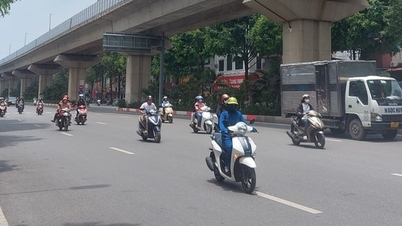
In the hustle and bustle of modern life, we seem to constantly fear being late. We rush to overtake others, cut in front of trucks, or weave through narrow gaps just to save a few seconds. But have you ever wondered if those few seconds are worth a lifetime? Speed brings fleeting excitement, but caution brings lasting prosperity.
The streets are a shared space, where you'll find elderly people with slow gait and poor eyesight, and women with weak driving skills. Speeding not only endangers yourself but also creates panic for those around you.
Learn to start your journey 10 minutes early. That extra time will help you relax, giving you the patience to yield to a pedestrian or smile at a minor traffic violation. Kindness on the road begins with a steady pace and a peaceful state of mind.
Do not run red lights - Respect the common life of the community.
A red light is not an obstacle; it's a "break" to regulate traffic flow. Running a red light often stems from mob mentality or personal selfishness. This not only violates the law but also infringes on the rights of those complying with regulations in the priority lane and creates chaos at intersections.
Waiting at a red light is for you to check your route or simply to rest your hands while driving; don't just follow others and overtake. Be a civilized driver and stop at the designated line. Staying in the correct lane, even if it's a few hundred meters longer, is always faster than having to deal with the consequences of a collision or pay a traffic fine.
Do not encroach on the road or sidewalk.
Sidewalks are occupied by parking and vendors, forcing pedestrians onto the road, exposing them to the dangers of passing vehicles. Motorbikes riding on sidewalks during rush hour to get past traffic jams is also a frustrating sight. When roads are narrowed by illegally parked vehicles, traffic congestion is inevitable. One person parking illegally can cause hundreds of others to be late.
Building a traffic culture is also about building urban beauty. A clear and orderly street not only makes travel easier but also reduces stress. Choose designated parking spaces, even if it means walking a little further. A civilized city begins with each person knowing how to share common space, not sacrificing personal gain for the community.
Building a traffic culture – where happiness lies in every safe mile – is about changing our individual awareness. The "Four No's" are not dry prohibitions, but rather "four reminders" to protect what is most precious.
Let each time we step out onto the road, we carry not just a means of transportation, but also alertness, courtesy, and a sense of responsibility. Because the most important destination of any journey is not where we intend to go, but a safe return to the warm embrace of our loved ones. Traffic culture begins with me, with you, starting today.
Source: https://baophapluat.vn/van-hoa-giao-thong-va-bon-khong.html



















































































Comment (0)