The title is epic and heroic, yet the melody is gentle, and the lyrics are as rustic as rice grains, potatoes, and the harvest season. Horses neigh, soldiers cheer! Is it war, iron, blood, and slaughter? Yet, listen to "Mother welcomes our soldiers home to rest. Holding us, she asks, 'Our liberation army... Have you heard the Hieu River of our homeland, flowing downstream to Dong Ha wharf, telling joyful stories, telling stories...'" Also in the mid-1960s, in the North, another lyrical narrative song resonated, tinged with the "flavor of war": "Quang Binh, My Homeland": "If anyone asks why our homeland has so many new tiled roofs, then..."
Perhaps the answer is the same: 950 years ago, this land was already one; that from the southern foothills of the Hoành Sơn mountain range to the Hiếu River, it was united with Đại Việt. After the Lý dynasty's victory in 1069, forcing the Champa king (Chế Củ) to cede three provinces to ransom his life, in 1075, Lý Thường Kiệt drew a map, changing Bố Chinh to Bố Chính, Địa Lý to Lâm Bình, and Ma Linh to Minh Linh. He organized an administrative apparatus and recruited people from Thanh Nghệ to cultivate the land. This was the first migration and land reclamation in the form of a state organization, beginning the journey southward. 230 years later, in 1306, the land from south of the Hiếu River to north of Quảng Nam was further incorporated into Đại Việt through a political marriage between a Trần dynasty princess and the Champa king Chế Mân. Through many dynasties, the boundaries of the provinces and prefectures changed, until during the reign of Lê Thánh Tông, for the first time, Quảng Bình, Quảng Trị, and Thừa Thiên were "unified."
Historical records state: “…1466… Thuan Hoa province comprised land from Hoanh Son and Deo Ngang to the north of present-day Quang Nam.” In 1470, King Le Thanh Tong, after a successful southern campaign, issued a decree allowing people from the North to settle in the new land. Many villages in present-day Binh Tri Thien were established from this migration, naming them after the surname of the leader of the pioneering group, a name that remains to this day.”
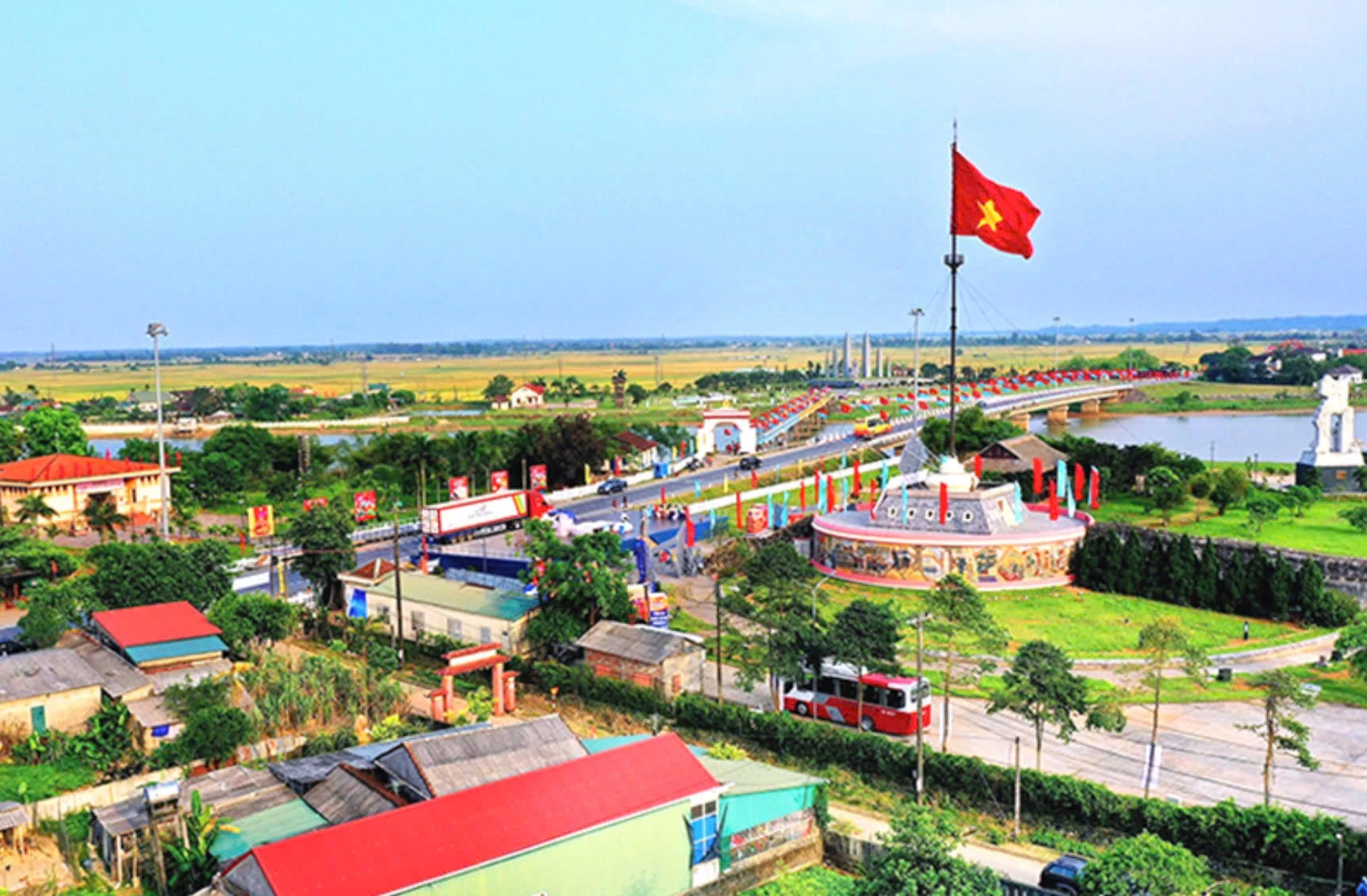 |
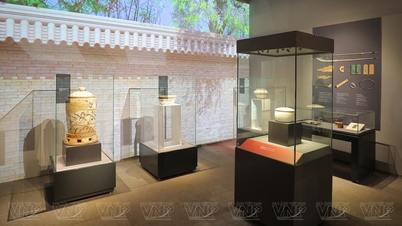
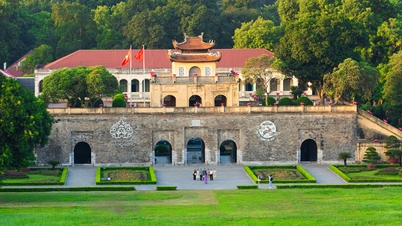
| Developing tourism products from historical sites is a strength of Quang Tri province. Photo: IPA Quang Tri |
In 1502, the land of Hai Lang produced the first Doctor of Literature, Bui Duc Tai. Fifty years later, Doctor of Literature Duong Van An of the Mac Dynasty, from Le Thuy, compiled the "O Chau Can Luc" (O Chau Near Records), "drawing a map" of Thuan Hoa, including its administration, products, and population. Just a few years later, in 1558, Nguyen Hoang, along with his troops, approached the Vietnamese guest's territory and "established his capital" in Ai Tu, beginning to use the land from the "Hoanh Son mountain range..." as a base, giving birth to two dynasties, nine lords, and thirteen kings, "...a place of refuge for generations" (Nguyen Binh Khiem). After 149 years since the first battle at the mouth of the Nhat Le River (1627), in 1776, the Trinh army breached the Tran Ninh rampart, causing the people of Quang Binh to suffer the pain of separation, with the Gianh River becoming the dividing line. The Ba Don and Bai Vong hills on the north bank, and the Ba Trai, Dinh Muoi, and Dinh Ngoi on the south bank, bear the marks of the military garrisons on both sides. When the West began its invasion in 1885, King Hàm Nghi fled to Cam Lộ, issuing the Cần Vương (Support the King) decree. He then traveled through Laos , circled back to Hà Tĩnh, entered Tuyên Hóa, and issued a second Cần Vương decree. For three years, Quảng Trị and Quảng Bình became the capital of the resistance.
Nine years of protracted resistance, "Binh Tri Thien engulfed in flames," the 325th Division, comprising the 18th Regiment (Quang Binh), the 95th Regiment (Quang Tri), and the 101st Regiment (Thua Thien), divided the war effort, controlling both the mountainous and lowland regions until the day of victory: "Here is Cu Nam, there is Cau Nhi, here is Ba Long, there is Khe Sanh, this is where the enemy's corpses are buried, Binh Tri Thien is the furnace of struggle, killing the cruel enemy, deeply etched in the hearts of the nation." In 1954, not the 18th parallel (Gianh River) or the 16th parallel as debated at the negotiating table, but a middle ground was chosen, the 17th parallel, the Ben Hai River, as the temporary demarcation line: Quang Tri was divided, even a single commune, Vinh Son, was split in two. Vinh Linh, along with Quang Binh, became the direct rear base. The liberation army, "Northern food, Southern enemy," fought a few battles in Quang Tri (B5) and then moved to Quang Binh-Vinh Linh to consolidate. Until March 30, 1972, the ground shook from artillery fire and powerful North Vietnamese units crossed the Ben Hai River. After 32 days, on May 1, we declared the liberation of Quang Tri, followed by an 81-day and 81-night battle to defend the town, a fierce battle unprecedented in the history of the Indochina War.
Strange, such ups and downs, such deadly bombs and bullets! In January 1965, on the North bank, the US Air Force launched Operation "Fire Spearhead," bombing and destroying Dong Hoi, Ho Xa, and 72 other locations. On the South bank, the US Army landed in Da Nang, beginning a localized war. Yet, two songs typical of this land of "connected rivers and streams" still flow gently, like a woman recounting her life story while styling her hair, saying, "There was bitterness, so now there is sweetness" ; and "On Highway 9 today, the bodies of countless American and puppet soldiers lie buried here..."
Ten years earlier, in 1956, when the enemy began to violate the agreement, threatening the country with a protracted struggle, the people of Hien Luong expressed their stance with a pair of six-line verses that seemed perfectly typical:
"Even though the river separates the docks."

"It's not easy to stop him from being with her."
The declaration of war was as gentle as folk songs yet as resounding as a call to arms. Whether ten, twenty, or even longer, while Quang Tri "steadfastly waited," Quang Binh responded with the promise : "Thousands of people, as one, send their unwavering loyalty to Tri Thien. We promise that on the day of victory, we will return to one home..."
And modern history proves: the people's will prevailed. For twenty years, divisions of soldiers from the North marched south, using Quang Binh as a base before crossing the Ben Hai River into battle. For twenty years, the coconut trees of Tri Thien, bound together by brotherhood along the Nhat Le River, grew ever greener and more resilient. People from western Quang Tri, brutally persecuted by the Ngo Dinh Diem regime, fled north, creating a "path" that allowed the North to build Route 16 from Le Thuy, cutting through the West to join the Truong Son Road, crossing Vit Thu Lu, crossing the Nghin Linh Mot Pass through Laos, and returning to the South. For twenty years, rice was divided into three parts, the echoing song "Carrying Rice from Tri Thien" still resonates today. For twenty years, the sons of Quang Tri gathered in Quang Binh, "North by day, South by night," along with the main Quang Binh battalions 45 and 46, crossing the Ben Hai River to fight, then quickly withdrawing to secure the rear.
There's a story of people from Quang Tri relocating to Quang Binh that echoes the migrations of people from Hoan Ai (Thanh Nghe) to the South, and Europeans to America. In late 1955, as the demarcation line was about to close and the Hien Luong River would no longer be navigable, a group of about twenty families left their hometown of Nai Cuu (Trieu Dong) to seek a way north. After crossing the Ben Hai River for about 30km, they encountered a river blocking their path. Recognizing fertile land and honest people, the group leader, a Red Peasant Association official, urged everyone to put down their loads so he could meet with the authorities. They settled on the right bank of the Kien Giang River, in Uan Ao village, Le Thuy district. The local government provided land, helped them build houses, lent them farming tools, and allocated land for cultivation. Not long after, several dozen families from Trieu Phong settled on the new land, establishing Uan Nam hamlet within Uan Ao village, meaning the new Uan Ao hamlet for people from the South. The leader of the Nai Cuu group was Mr. Nguyen Duc Kinh, who became a village elder , like a village headman today. Just a few years later, the younger generation grew up without distinguishing between the natives and the migrants. Twenty years later, after the liberation of the South, the original 20 families separated, and several more households were provided with motorized vehicles by the Le Thuy government to return to their hometowns, carrying with them memories of their temporary settlement, beautiful like a fairy tale. Around this time, the banner of leading agriculture, "Great Wind," in the "Three Best" movement, swept across the North. Interestingly, of the three members of the cooperative's management board who achieved this miracle, two were from Quang Tri: Labor Hero Nguyen Ngoc Anh, Chairman of the Cooperative, from Cam Lo; and Mr. Nguyen Si Loc, Vice Chairman in charge of technical matters, from Trieu Hoa, Trieu Phong.
In 1975, people from Quang Tri province repatriated, and a year later, Binh Tri Thien province was united under one umbrella – a "long province, wide district, large commune" – sharing the hardships of daily life and overcoming the ten years of post-war struggle. From 1989 to the present, with the re-establishment of the three provinces, travelers passing through Sen Thuy and Vinh Chap are somewhat surprised by the extremely fragile boundary between Quang Binh and Quang Tri: Just a sign planted between the land of two adjacent houses, with shared yards. Sweet potato vines grown on Sen Thuy (Le Thuy) land creep across to Vinh Chap (Vinh Linh) land. Fruit trees in Vinh Chap's garden cast shade and their branches laden with fruit extend into Sen Thuy's yard. Elementary and kindergarten children "have" to attend schools "outside the province" to be closer to home, avoiding the worry of parents picking them up and dropping them off. And, it seems, we encounter a familiar image once present in poetry: people from the two provinces calling out to each other, asking for firewood across the fence . The Song Hien Folk Song Club was established and gained prominence at the same time that the Le Thuy folk singing heritage was recognized by the nation. And, the singers from both places sang together, chanted together, and performed the same melodies without a single note missing.
Thirty-six years like that! And it seemed like it would continue forever. Then one day, a "rearrangement of the land," a "running and queuing" process, seemed difficult and awkward, but it had always been that way, and it remains so now. Mountains are connected, rivers flow together, land is contiguous. The Truong Son Mountains, since the dawn of time, have protected the western part of Central Vietnam. The Kien Giang River originates from Quan Do Mountain (Quang Tri), flows downstream, merges with Long Dai, and empties into the Nhat Le estuary in Quang Binh. The mountains, rivers, and soil seem to have been waiting for a long reunion. It's nothing, just a matter of removing the wooden sign marking the boundaries of the two provinces; it doesn't affect the sweet potato vines or fruit trees between the two families. The age-old tea table of the elders of the two provinces, separated by adjacent yards, hasn't moved. Children still attend the nearest school, but it's no longer considered an out-of-province school. The gentle, rhythmic singing of the two folk song clubs, Song Hien and Le Thuy, still resonates as if… "There was never… a separation…"
"The sky remains a beautiful blue in Quang Tri."
"The horizon, the clouds and mountains, are not far away at all."
The verse evokes the image of Nguyen Du's *Truyen Kieu*: "The distant mountains and the nearby moon are together." Yes, from the foot of the Ngang Pass, the "Hoanh Son mountain range" stretches endlessly to the banks of My Chanh, officially becoming the place where the carrying pole rests, bearing the weight of both ends of the country, turning either way, the burden on both shoulders.



In July 2025, if it weren't for the large number of vehicles bearing license plates numbered 74, people would likely be unaware of the administrative upheaval in the newly formed Quang Tri province: The same slightly harsh, heavy, yet gentle accent, with its indistinguishable intonation and rhymes. The same dishes with their strong, salty shrimp paste and tongue-burning green chili peppers. Many couples who formed families during the "13 years of Binh Tri Thien unification" between people from the two provinces are now living together. At the beginning of the week, the 74-numbered buses travel to Dong Hoi, only to return south on Friday afternoon. New houses will be built in the provincial capital, and there will be quiet adjustments in the population, as life and communication have always been. The coconut trees of the Tri-Thien brotherhood along the banks of the Nhat Le River will still reach high in the breeze, and the Uan Nam hamlet will merge with the Uan Ao village of Le Thuy commune. The middle-aged generation, born during the 20 years of temporary settlement, have now become grandparents, uncles, and aunts, raising their children in Lien Thuy-Trieu Dong. This spring, they will plan their time to celebrate Tet (Lunar New Year) with their children and grandchildren on both sides of the family. It's not far at all, only 60 kilometers by car. High-speed roads and railways will soon connect the "border" regions of the new province, North and South. Then, a young couple will celebrate New Year's Eve in a small village in the far north of Tuyen Hoa, and on the first day of Tet, they will be peeling sticky rice cakes in Lao Bao, Khe Sanh, or somewhere in the far south.
Yes! The green color of Quang Tri remains on this land, for a long time and forever.
Nguyen The Tuong
Source: https://baoquangtri.vn/van-hoa/202607/van-mot-mau-xanh-quang-tri-a6d1960/