


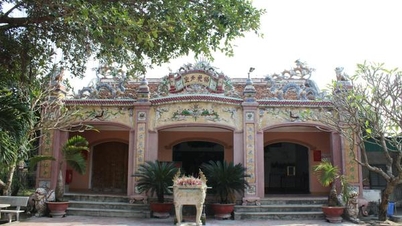
The Le Loi shrine in Van Nho commune serves as a place for educating the younger generation about revolutionary traditions.
According to the history of the former Ba Thuoc District Party Committee, the Ba Thuoc area was the most continuous and longest-lasting operational base of the Lam Son rebels. From 1420-1423, the Lam Son rebels achieved many resounding victories, including the Battle of Ba Lam (Dien Lu, Dien Quang) in 1420; the Battle of Kinh Long (Co Lung) in 1421... The contributions of the people of the former Ba Thuoc district to the Lam Son rebels are still preserved in unofficial historical accounts and relics. A prime example is the temple dedicated to Le Loi in the Bo Ha village field (formerly Ky Tan), now Van Nho commune.
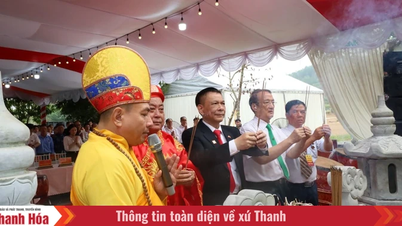
Legend has it that while plowing his field, farmer Ha saw three strangers passing by. These strangers, claiming to be merchants, asked to rest in his hut for lunch. Farmer Ha invited them in. Seeing they were hungry, he took out a bundle of sticky rice and a pot of soup and offered them a meal. They chatted happily, finding common ground, and farmer Ha prepared many dishes to share. The guests praised the meal and, before leaving, instructed the farmer that if he ever succeeded, he should offer them a feast like this as a tribute. Upon returning home, he recounted the story to the villagers. After hearing it, many speculated that Le Loi and the generals of the Lam Son army had disguised themselves as merchants to deceive the enemy and gather intelligence. Some time later, Le Loi fled the enemy to Muong Muan, in what is now Van Nho commune, to hide. There, the Lam Son army was sheltered and helped by the local people. After the Lam Son Uprising was victorious, the people of Muong Muan built a shrine on a high mound in the middle of the Bo Ha village field to commemorate the contributions of the national hero Le Loi. Every year, on the 22nd of August (lunar calendar), the people prepare offerings and light incense at the shrine to remember the hero Le Loi.
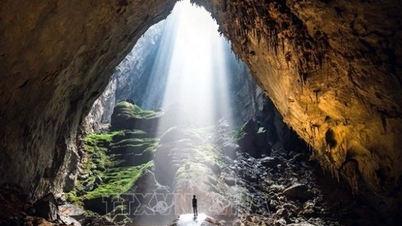
In the Van Nho area, tourists can also explore and experience the sacred fish cave in Chieng Ban village. Many inexplicable stories, steeped in mythology, still surround the cave. Therefore, the people of Van Nho highly revere the fish that live in the cave.
From the sacred fish cave, following the terraced rice fields up the mountainside, lies a rocky cave – the location of an altar dedicated to the leaders of the Can Vuong movement. According to the history of the Van Nho commune Party Committee, this rocky cave was where the leader of the Can Vuong movement, Tong Duy Tan, took refuge. Here, Tong Duy Tan was sheltered and cared for by the people. However, due to the betrayal of Cao Ngoc Le, the French army discovered his hiding place. After capturing Tong Duy Tan, the French tried to subdue him but failed, and ultimately executed him. To commemorate Tong Duy Tan, the people of Van Nho commune erected a shrine in his honor.
During the resistance war against the US, the Van Nho area became the base of an air defense radar company. During this period, Mr. Ha Van Kep from Hieng village, Van Nho commune, was honored with the title of Hero of the People's Armed Forces.
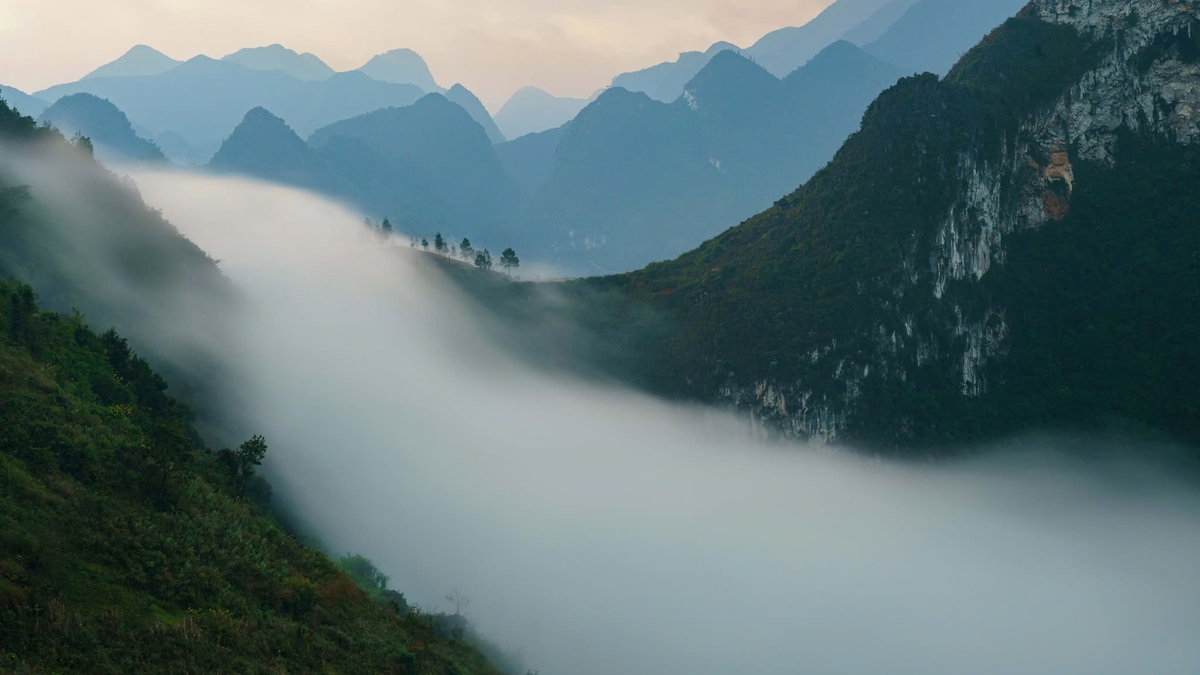
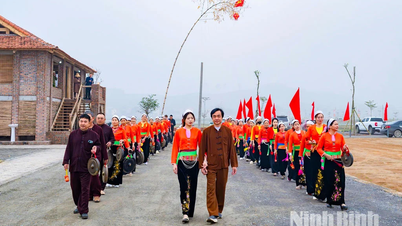
Visiting Van Nho, tourists can explore and experience the cultural space of the Thai ethnic people, admire the majestic natural landscape, and enjoy the traditional dishes of the local people... This is an important condition for Van Nho commune to develop tourism , create more jobs, and increase income for the people. However, due to many subjective and objective factors, the potential and advantages of the cultural and historical land of Van Nho have not been fully exploited by the people.
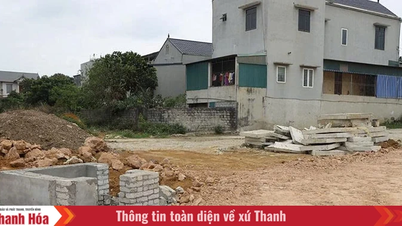
Mr. Tong Minh Hoa, Chairman of the People's Committee of Van Nho commune, said: Van Nho is a land of history and culture, where the people still preserve many traditional cultural values. However, for many years, the locality has not had the conditions to exploit its potential and advantages to serve tourism development. In the coming time, Van Nho commune will focus on restoring and renovating the Tong Duy Tan cave and the Le Loi shrine; focusing on developing eco-tourism in the Bat Cave area (Pat village), the Sacred Fish Cave (Chieng Ban village), and Ta Ton waterfall (Hien village); restoring the Muong Ky Festival; organizing the Rain Prayer Festival... To achieve this goal, the commune will focus on promoting the beauty of nature and traditional historical and cultural values. It will strengthen efforts to attract potential businesses to explore opportunities and cooperate in tourism development. It will also prioritize investment in building transportation infrastructure and basic cultural institutions. To improve the quality of human resources, exploit the tourism potential of the Van Nho region, and contribute to the socio-economic development of the locality.
Text and photos: Xuan Cuong
Source: https://baothanhhoa.vn/van-nho-vung-dat-lich-su-van-hoa-270242.htm










![[Infographics] Cultural, sports and tourism events in Thanh Hoa province in April 2026](https://vphoto.vietnam.vn/thumb/402x226/vietnam/resource/IMAGE/2026/04/02/1775102507332_infographics-ca-w1200t0-di2613d199d4100842t11358l1-skt4-026.webp)















































Comment (0)