

Dich Long Cave is located halfway up Dich Long Mountain in Gia Thanh commune, Gia Vien district, Ninh Binh province. Inside the cave is a Buddhist shrine, so the locals often call it Dich Long Pagoda.
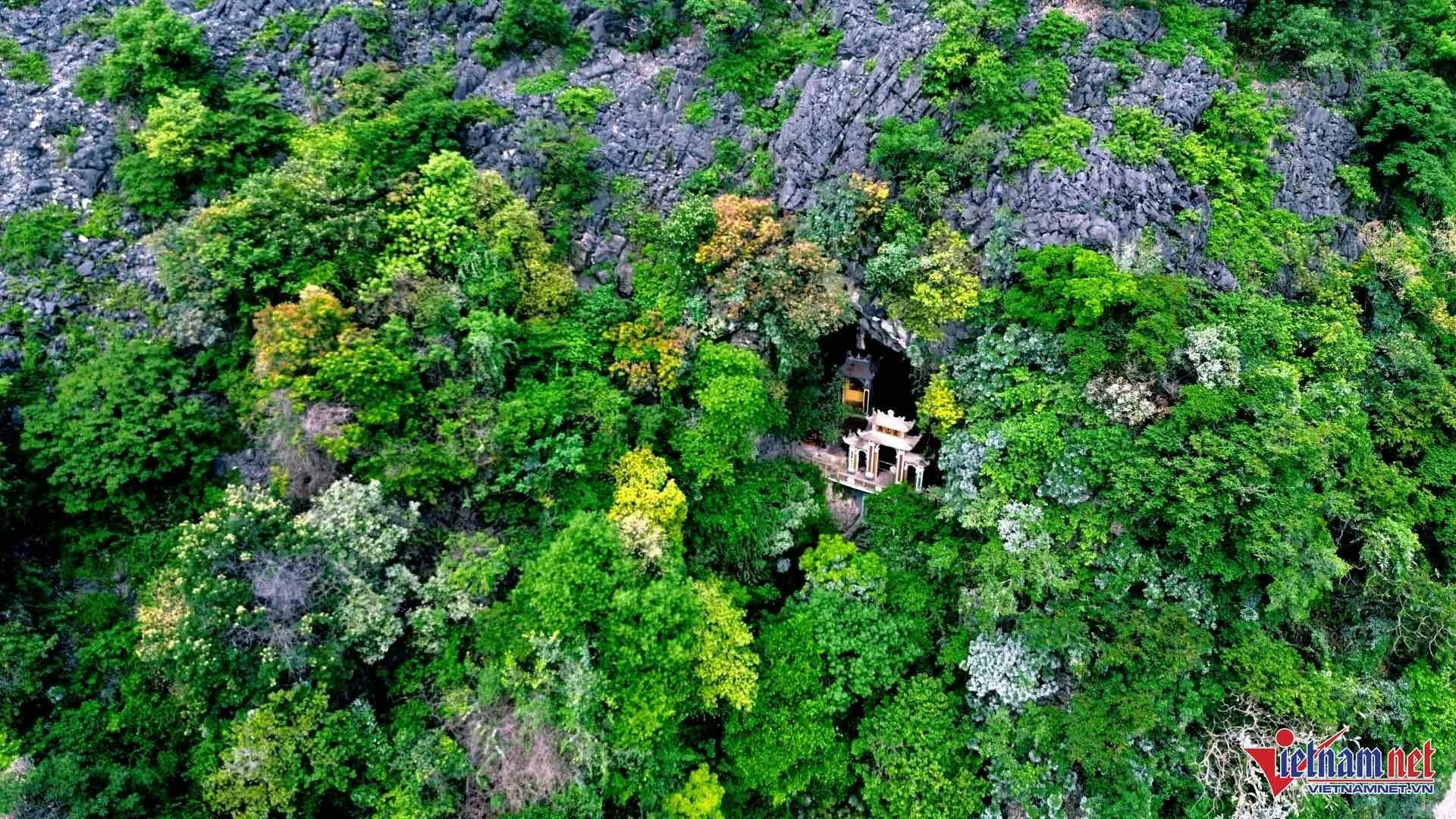 |
| The cave is located halfway up the mountain; standing at the entrance, you can hear the wind sounding like a flute. (Source: Vietnamnet) |
This place was bestowed the title "Nam Thien De Tam Dong" (the third most beautiful cave in Southern Vietnam) by King Minh Mang during a tour in 1821.
According to historical records, in 1739, a woodcutter discovered this cave while cutting firewood in the mountains. Inside, there were many stalactites resembling the image of Buddha, so he set up an altar there. In 1740, the locals built a road and established a temple to worship Buddha, named "Nham Son Dong Co Am Tu" (meaning Co Am Temple and Nham Son Cave).
The Dich Long Cave and Pagoda were classified as a national historical and cultural relic in 1990. This complex of historical and scenic relics includes a stone pavilion (16 monolithic stone pillars), a temple dedicated to Ly Quoc Su (also known as Saint Nguyen), the Lower Pagoda, and a Buddhist garden.
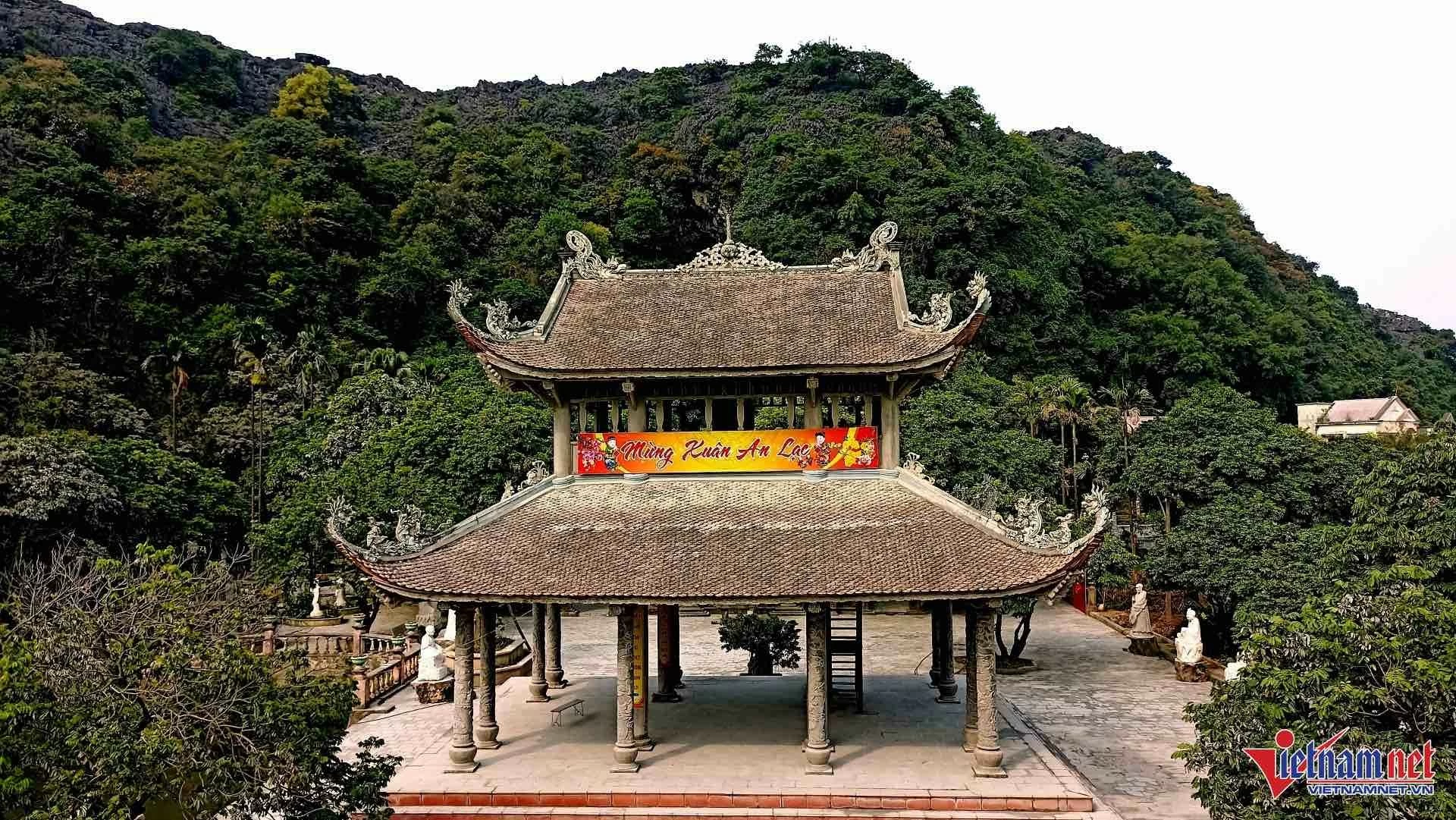 |
| The front yard of the cave houses shrines dedicated to the Goddess of the Mountains and the Holy Mother. (Source: Vietnamnet) |
To reach Dich Long Cave, visitors must climb 105 stone steps from the foot of the mountain to reach the cave entrance. In front of the cave are shrines dedicated to the Goddess of the Mountains and the Holy Mother.
Dich Long Cave has two areas, divided by the entrance: Bright Cave and Dark Cave, with countless stalactites in various shapes resembling Buddha, a kneeling elephant, a lion, a crouching horse, an elephant drinking water from a jar, and a tiger drinking water from a vat.
Dich Long Cave has three interconnected chambers, so when standing at the cave entrance, visitors can hear the wind whistling like a flute.
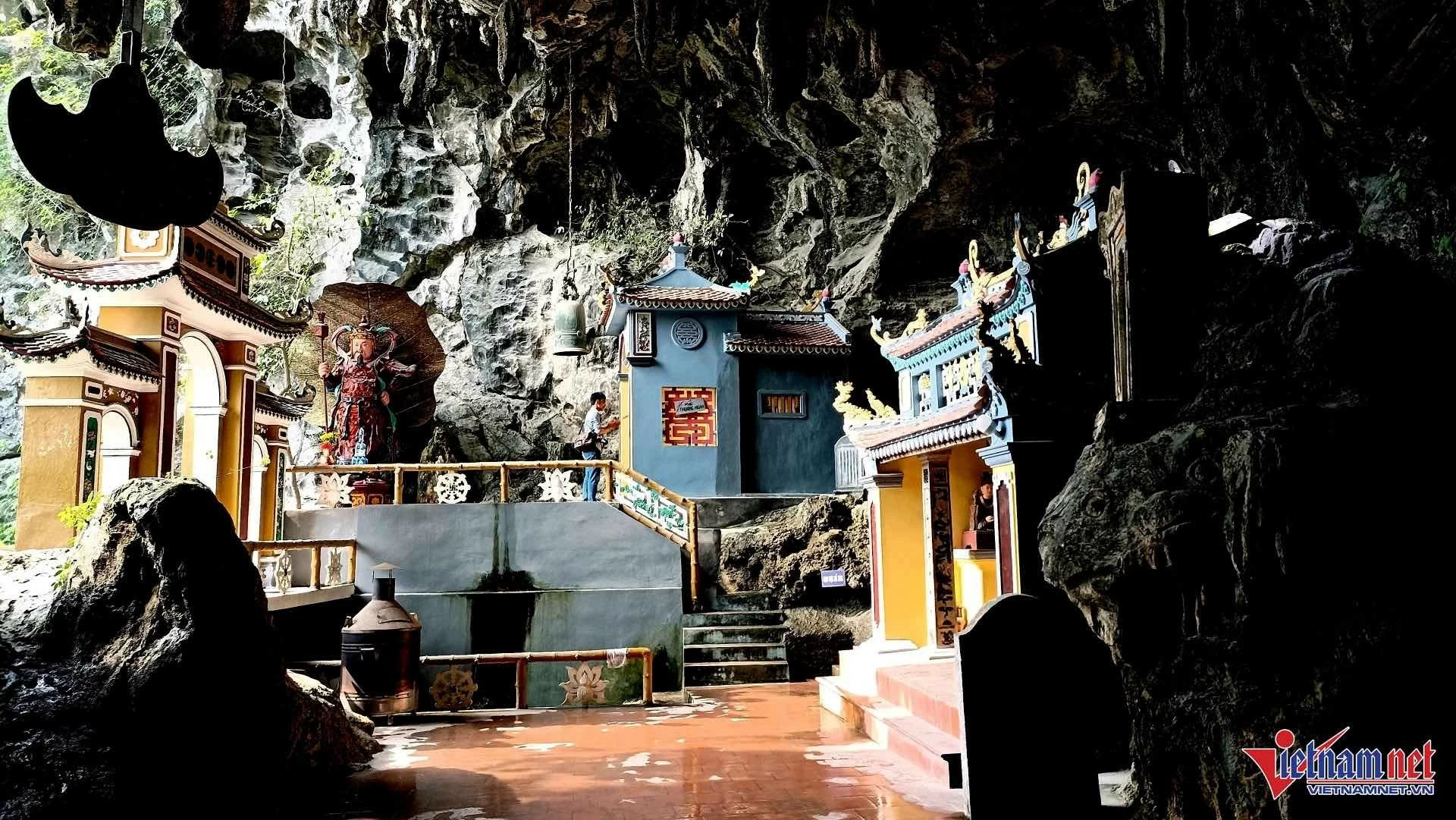 |
| There are many shrines inside the cave. (Source: Vietnamnet) |
Locals call this a giant stone wind flute and name it Dich Long ("Dich" means flute, "Long" means wind).
The pagoda and cave also served as revolutionary bases during the resistance war against the French, where weapons were stored and where our army and people manufactured weapons.
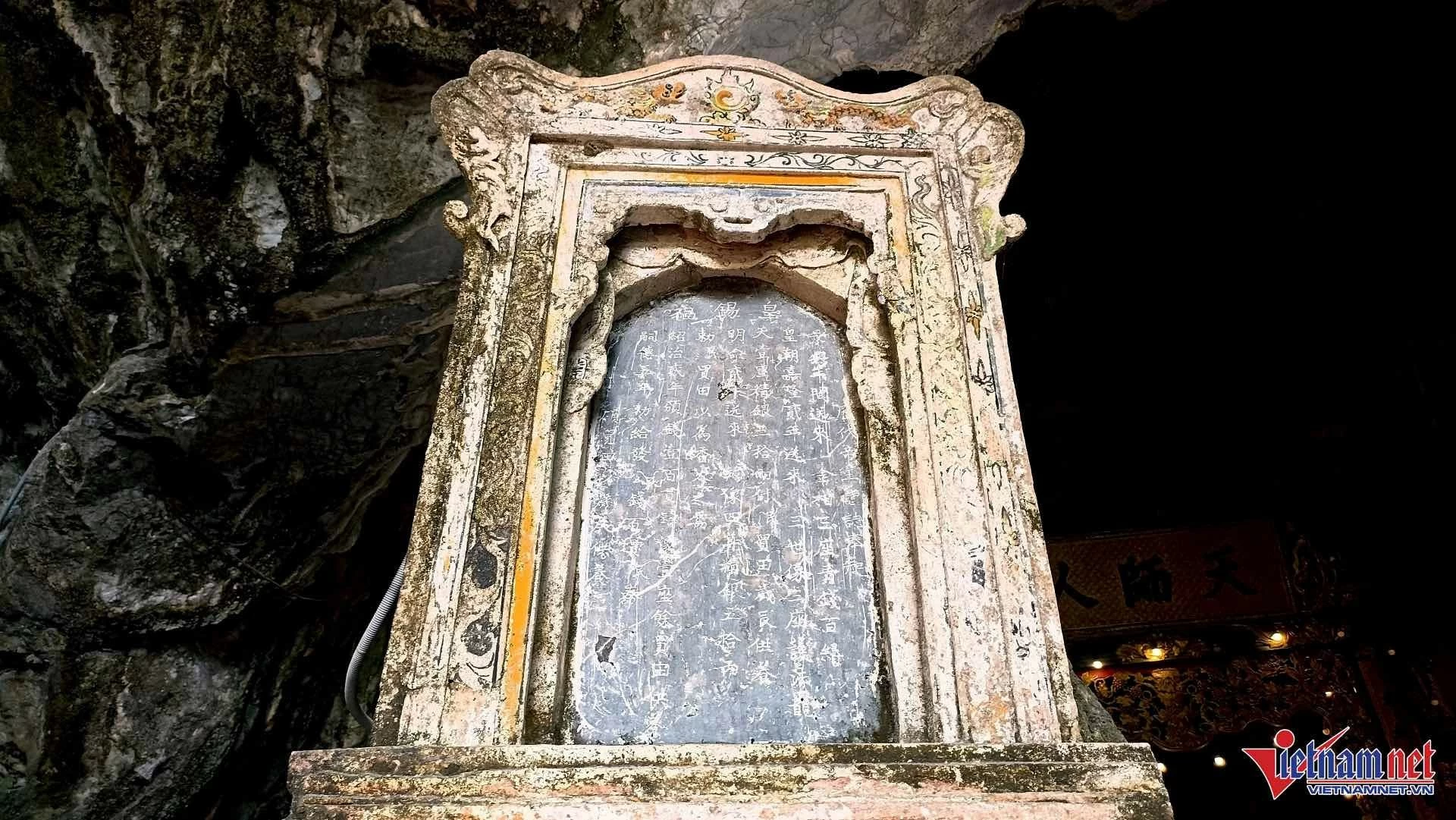 |
| Inside the cave, there is also a stone tablet inscribed with Chinese characters. (Source: Vietnamnet) |
According to Ms. Nguyen Huong Lan, Deputy Head of the Culture and Information Department of Gia Vien District, Dich Long Pagoda is currently managed by the Gia Thanh Commune People's Committee.
Currently, the local authorities have not developed this tourist attraction, and the number of tourists visiting here annually is not large, mainly consisting of locals.
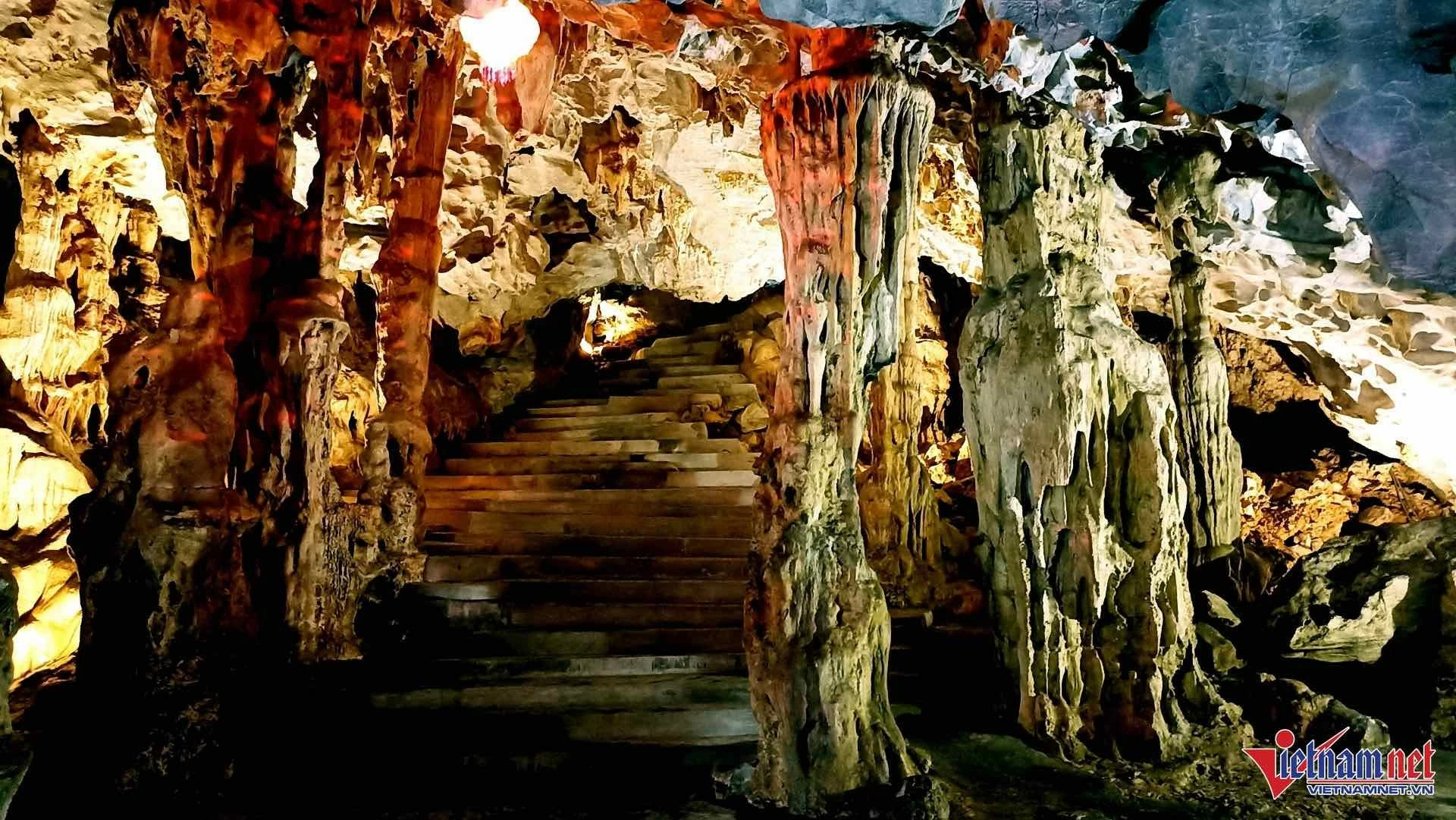 |
| The stalactite formations create the mystical beauty of Dich Long. (Source: Vietnamnet) |
Every year, on the 6th and 7th days of the third lunar month, the people of Gia Thanh commune organize the Dich Long Pagoda festival, praying for national peace and prosperity, bountiful harvests, and a life of abundance and happiness.
Source: https://baoquocte.vn/ve-ninh-binh-kham-pha-dong-dep-thu-3-troi-nam-284573.html
![[Image] National Assembly discusses the implementation of the socio-economic development plan.](https://vphoto.vietnam.vn/thumb/1200x675/vietnam/resource/IMAGE/2026/04/20/1776696707422_ndo_br_img-20260420-185419-jpg.webp)



![[Photo] General Secretary and President To Lam meets with National Assembly delegates from ethnic minorities.](https://vphoto.vietnam.vn/thumb/1200x675/vietnam/resource/IMAGE/2026/04/20/1776696701056_a1-bnd-8331-3342-jpg.webp)



![[PHOTO] The most beautiful sidewalks in Saigon that captivate people, captured with smartphones.](https://vphoto.vietnam.vn/thumb/402x226/vietnam/resource/IMAGE/2026/04/21/1776707735189_anh14_rlcz.jpeg)
















![[Infographic Series] Historical Sites in Dong Nai: Long Khanh Provincial Administrative Building, Long Khanh Town Party Committee Base, Xuan Loc Temple - Xuan Hoa Pagoda Complex](https://vphoto.vietnam.vn/thumb/402x226/vietnam/resource/IMAGE/2025/9/26/1331532306fb4ad18e4a849e5c64202a)


























































Comment (0)