Pilgrims visiting the Truong May - Chang Lia hilly region often hear these two lines of folk song: "Every evening swallows fly over Truong May / Feeling sorry for Uncle Lia besieged in the fortress!"

The fortified area and the tomb of Chang Lia still bear traces of many ruins on Truong May mountain, Hoai An commune.
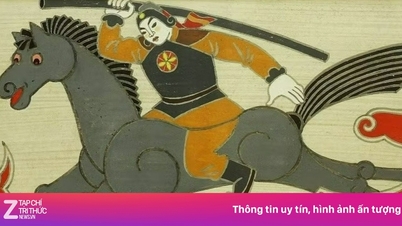
The story of Chàng Lía evokes many emotions in locals and tourists alike. Over the centuries, although not officially recorded in history, the story's powerful presence has permeated folk culture through poetry, ballads, narratives, stories, and traditional folk theater.
According to records from the Binh Dinh ( Gia Lai ) General Museum, the Chang Lia uprising took place in the latter half of the 18th century, when Southern Vietnam was in crisis. Landlords, officials, and the Nguyen lords relentlessly plundered, putting immense pressure on the peasants. Lia came from a poor peasant family; his father died early, and his mother took him to her maternal grandparents' home in Phu Lac (Tuy Vien district, Quy Nhon prefecture) to raise him. As a child, he herded buffalo for wealthy landowners and was often bullied and beaten severely.

In the middle of the Truong May rebel fortifications, there is a tomb believed to be the tomb of Chang Lia.

The Truong May rebel stronghold from the past still stands today.
Once, seeing the imperial soldiers oppressing the villagers, Lía took matters into her own hands. When the soldiers pursued them, Lía carried her mother and fled, encountering a band of robbers whom she subdued and was honored as their leader. Later, Lía took the Uất Trì citadel of the Champa people as her mountain stronghold, performing acts of chivalry and righteousness, earning the love and respect of the people.

These laterite stones were used to build the ramparts of the Chàng Lía rebel army in the past.
After his mother passed away, Lía went to Truông Mây (now in Hoài Ân district) to gather patriots and continue his policy of helping the poor. Lía's patriotic army repeatedly punished corrupt officials...
Currently, the remnants of the Truông Mây – Chàng Lía stronghold in Hoài Ân are still quite clear after nearly three centuries. These include the tomb of Chàng Lía, traces of the ramparts, an observation tower, and barracks. The Lía fortress was large in scale, with two layers of walls.

In 2012, the People's Committee of Binh Dinh province (now Gia Lai province) recognized the Truong May - Chang Lia historical site as a provincial-level historical site.
Mr. Tran Van Truong (71 years old, former Secretary of the Party Committee of An Duc commune, now part of Hoai An district) recounted that the people of Vinh Hoa village have long held a special affection for "Mr. Lia." Every year, the villagers choose the 7th day of the first lunar month to commemorate Mr. Lia. Although the exact date of his death is unknown, the villagers use the day of the forest's opening as the memorial day. After the ceremony, the entire village goes into the mountains to work in the fields as a way of honoring him as their tutelary deity. "The people here really hope that the local authorities will pay attention to upgrading the historical site so that the memorial ceremony can be held solemnly on a provincial-level heritage scale," Mr. Truong said.

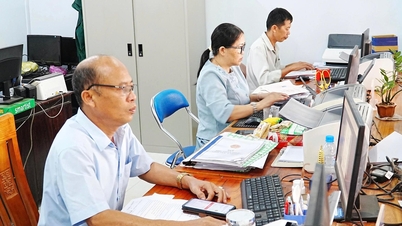
Mr. Nguyen Van Truong (right) discusses the history of Truong May - Chang Lia.
According to Mr. Tran Anh Hoang Vu, Vice Chairman of the Hoai An Commune People's Committee, the Truong May - Chang Lia base relic site was classified as a provincial-level historical site in 2012, with a protected area of approximately 7,000 square meters. Going forward, the commune will focus on investing in infrastructure and transportation to serve religious activities, and plan projects to transform this site into a representative spiritual and cultural space of the province.

The Truông Mây - Chàng Lía relic site in Hoài Ân commune clearly shows the original fortifications and burial grounds.
In addition, the local community is collecting and compiling stories and anecdotes about Chàng Lía to strengthen the heritage value and serve the development of culture and tourism .

Generations of local leaders have discussed plans to restore and open access to the Truông Mây - Chàng Lía historical site.
"The story of Chàng Lía has also been incorporated into the curriculum of schools in Hoài Ân, fostering love for the homeland and self-reliance among local students," Mr. Vũ said.
NGOC OAI
Source: https://www.sggp.org.vn/ve-truong-may-tham-mo-chang-lia-post844867.html


























































































Comment (0)