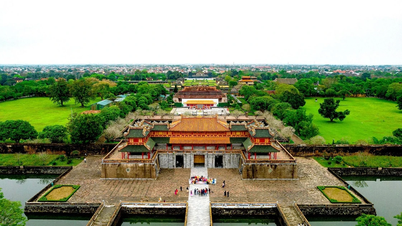
Returning to Nghi Xuan means returning to the Hong Lam region, home to Hong Linh Mountain – the most famous mountain range in Ha Tinh province, once listed among the 21 most beautiful scenic spots of ancient Vietnam. Along with the Lam River, Hong Linh Mountain is considered a symbol of the sacred spirit of Nghe An province. Hong Linh Mountain is located between Hong Linh town and the two districts of Nghi Xuan and Can Loc, about 10km south of Vinh city. The northern slope of Hong Linh Mountain runs along the Lam River. Hong Linh Mountain is one of the few place names inscribed in the Nine-Tiered Encyclopedia currently located in the ancient capital of Hue (in the 7th year of Minh Mang's reign, 1836). The Hong Linh mountain range is famous for its historical and cultural relics such as the Flag Tower peak where the prince, son of Mai Thuc Loan, built his base; the Stone Fortress where Ngo Quang rose up against the French ; and many myths and legends related to Hong Linh Mountain. There are approximately 100 temples and shrines in the area. There are very ancient temples such as Huong Tich Pagoda – in Thien Loc, Can Loc, and Chan Tien Pagoda – where footprints of people and horses can still be seen on the rocks…
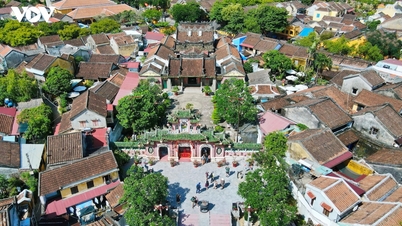
Nestled against the Hong Linh mountain range, at the foot of Ngu Ma mountain, lies the Cui Temple. From Ben Thuy 1 bridge, follow National Highway 1A south for 4km, then turn right and continue for about 200m to reach Cui Temple. The temple is located in Xuan Hong commune, Nghi Xuan district. Cui Temple dates back over 500 years and, despite numerous historical ups and downs, has always been preserved and restored, making it one of the most famous and sacred temples in the country. Previously, the temple was called Linh Tu Thanh Mau. Due to its connection with the Cui Market area, it was later renamed Cui Temple. The Cui Temple grounds cover 1040m2, primarily dedicated to Ong Hoang Muoi (Hoang Muoi), alongside other deities such as the Three Holy Mothers, Buddha, Christ, five high-ranking officials, Chau Muoi, and Hung Dao Dai Vuong. In the minds of the people, Ong Hoang Muoi is the embodiment of Le Khoi, a general of the Lam Son army who made significant contributions to the resistance against the Ming army. The temple, built in the "Two Dragons Worshipping the Moon" architectural style with exquisite and majestic carvings, is nestled within a garden of ancient trees, facing the Lam River, creating a sacred and mystical atmosphere. During the Lunar New Year and major holidays of Củi Temple, such as the 3rd day of the 3rd lunar month (commemorating the Holy Mother), the 20th day of the 8th lunar month (commemorating King Tran Hung Dao), and the 10th day of the 10th lunar month (commemorating the Holy Emperor Mười), a large number of visitors from all over come to pilgrimage, praying for health, good fortune, and blessings for the new year.
“…Last night in Nghi Xuan district
"With a heavy heart, I remember the old man and feel pity for Kieu..."
When visiting Nghe An and Ha Tinh provinces, tourists simply cannot miss the opportunity to visit the Nguyen Du Memorial Site – a World Cultural Figure. Located in Tien Dien commune, Nghi Xuan district, the site is a complex of architectural structures dedicated to the worship and commemoration of the World Cultural Figure, the great poet Nguyen Du – who made significant contributions to Vietnamese and world literature with his masterpiece, *Truyen Kieu* (The Tale of Kieu). It is also the ancestral shrine of the Nguyen family of Tien Dien, home to many highly accomplished and talented individuals such as Nguyen Nghiem, Nguyen Khan, and Nguyen Ne. The entire site is divided into six main areas: the temple of Nguyen Nghiem, the temple of Nguyen Trong, two houses of scholars, the tomb of the great poet Nguyen Du, the Nguyen Du Museum, and the Nguyen Du Church. On September 27, 2012, the Prime Minister decided to classify the Nguyen Du Memorial Site as a special national historical site.

Every year, the Nguyen Du Memorial Site welcomes thousands of visitors, contributing to promoting the image of Nghi Xuan's land and people to all parts of the country. The Nguyen Du Memorial Site is the core of a tourist route connected with the Nguyen Cong Tru Memorial Site, Co Dam Ca Tru singing village, Hoi Thong ancient communal house, Xuan Thanh beach, and the scenic Hong Mountain - La River area…
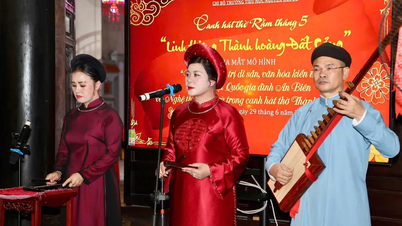
Not far from the Nguyen Du Memorial Site is the Nguyen Cong Tru Memorial Site – a figure credited with opening up the two districts of Kim Son and Tien Hai, and the two villages of Hoanh Thu and Ninh Nhat. Besides his patriotic and benevolent military talent, he was also a poet with the demeanor and spirit of a true man, leaving behind over 150 poetic works, most notably ca tru (traditional Vietnamese folk singing) and nom (Vietnamese vernacular poetry). The Nguyen Cong Tru Memorial Site includes his tomb and temple. His tomb is located in Uy Vien village, now part of Xuan Giang commune, Nghi Xuan district. This is also an attractive destination for tourists visiting Nghi Xuan. Currently, at the Nguyen Cong Tru Memorial Site, the Nguyen Cong Tru Ca Tru Club holds regular weekly meetings and performances of ca tru singing, allowing tourists visiting Nghi Xuan to easily enjoy this art form. Ca trù first appeared in the early 11th century, began to flourish in Vietnam from the 15th century, but only became known to the world in the latter half of the 20th century. Depending on the locality and performance space, Ca trù singing is also known as hát ả đào, hát cửa đình, hát cửa quyền, hát cô đầu, hát nhà tơ, hát nhà trò, or hát ca công. Through its development and the ups and downs of history, Ca trù has reached a high aesthetic level, affirming its important position not only in Vietnam but also in the world. On October 1, 2009, Ca trù was inscribed by UNESCO on the list of intangible cultural heritage in need of urgent safeguarding. Along with 15 other provinces and cities, Co Dam - Nghi Xuan is a region famous for its historical and cultural traditions, and is the "cradle" of the Ca trù art form.

Nghi Xuan is not only famous for its spiritual tourism destinations, but visitors can also enjoy local specialties such as watermelons (Xuan Thanh, Xuan Hong), millet cakes, rice cakes (Xuan Giang, Tien Dien), mackerel, dried squid (Xuan Hoi, Cuong Gian)... and relax, enjoying the pristine, cool atmosphere of Xuan Thanh beach. Xuan Thanh beach is located in Xuan Thanh commune, more than 5km from the Nguyen Du Memorial Site. The seawater here has a moderate salinity, is clear and very clean. Notably, there is a freshwater river called My Duong, originating from Hong Linh mountain and flowing parallel to the length of the beach. The river is not deep but the water never dries up. Both banks of the river are covered with lush green vegetation. While some guesthouses and restaurants have been built to serve tourists, they are still on a small scale; therefore, visitors can still admire the vast, pristine, and equally attractive natural landscape.
With its advantageous tourism potential, the tourism industry in Nghi Xuan is receiving increasing attention and development. Recently, the Master Plan for the Preservation and Restoration of the Nguyen Du Memorial Site was approved by the Prime Minister, aiming to develop the site into a national cultural and tourist destination associated with the poetic values of Nguyen Du and the traditional cultural values of the locality. Solutions for tourism development include: building tours to visit historical sites (linking with sites such as the Nguyen Cong Tru Temple, Cho Cui Temple, etc.); exploring culture associated with Xuan Thanh beach resort and sports center, Thien Cam National Tourist Area, and tours in the North Central Region; and organizing international cultural and artistic festivals on a rich and diverse scale at the Nguyen Du Memorial Site, based on traditional performance spaces combined with spaces that promote the value of the historical site in the conservation and promotion area. Organizing numerous exhibitions and art performances related to the history and culture of the Tien Dien region…
With its current pace of development, Nghi Xuan will soon become an attractive destination in the tourism industry of Ha Tinh province in particular and the whole country in general.



Author of the article: Tú Quỳnh
Source: https://dulichhatinh.com.vn/news/so-tay-du-lich/ve-voi-nghi-xuan-265/


![[Photo] Strengthening character and expertise: Intense training for artillery soldiers.](https://vphoto.vietnam.vn/thumb/1200x675/vietnam/resource/IMAGE/2026/06/30/1782815602541_lu-368-1875-4571-jpg.webp)