At Domingo Luciani Hospital in Caracas, medical staff work 24-hour shifts, facing shortages of medicines, supplies, and modern equipment, making treatment extremely difficult.
The hospital had to activate a priority treatment mode, focusing resources on severe trauma cases, while patients with minor injuries were transferred to other facilities to reduce the burden on the emergency room and operating rooms. Many doctors and nurses worked continuous shifts, with almost no time for rest, and the high workload exhausted the medical staff both physically and mentally.
In addition to the hospital system, temporary shelters have also become places providing emergency medical services with the participation of pediatricians, mental health professionals, and volunteers.
![[Podcast] World News July 1st: Iran Refuses to Meet with US Envoy](https://vphoto.vietnam.vn/thumb/192x108/vietnam/resource/IMAGE/2026/07/01/1782896024877_khung-thumbnail-tham-khao-tu-mau-cu-500-x-500-px-900-x-600-px-15.jpeg)
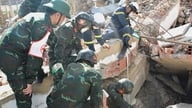

To provide temporary shelter for those who have lost their homes or are afraid to return home for fear of their houses collapsing, the Venezuelan government has established 15 large refugee camps in La Guaira and approximately 50 shelters in and around Caracas.
These camps were set up in public spaces, equipped with tents, communal kitchens, and sanitary facilities, providing food, clean water, and overnight shelter for thousands of families.
In refugee camps, in addition to providing material relief, some artists and volunteer groups organize activities such as painting and playing music to help children and adults relieve stress and gradually overcome psychological trauma.
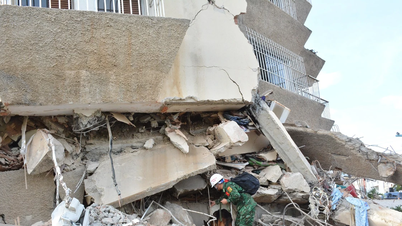
As of July 2nd, the death toll had surpassed 2,000, the number of injured had risen to over 10,000, while more than 600 aftershocks continued to be recorded following the disaster. Venezuelan authorities affirmed that they would maintain a state of emergency, mobilize maximum domestic resources, and call for international assistance to gradually overcome the consequences of the earthquake.


RG
Source: https://baoangiang.com.vn/venezuela-1-tuan-sau-tham-hoa-dong-dat-a491203.html
















![[Video] Weather forecast for tonight and tomorrow, July 3, 2026: Tropical depression likely to strengthen into a storm tonight](https://vphoto.vietnam.vn/thumb/402x226/vietnam/resource/IMAGE/2026/07/02/1782997465372_dem-2-png.webp)


















































![[Infographic] Which types of behaviors are strictly prohibited in digital transformation from July 1, 2026?](https://vphoto.vietnam.vn/thumb/402x226/vietnam/resource/IMAGE/2026/07/02/1783004068098_thumb_5_hanh_vi_nghiem_cam_20260702184923.jpeg)