

| Vietnamese rice holds 40% market share in China. Where are the obstacles for the high-quality Vietnamese rice and coffee certification labels? |
When unnecessary controversies arise.
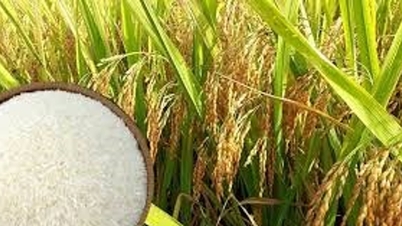
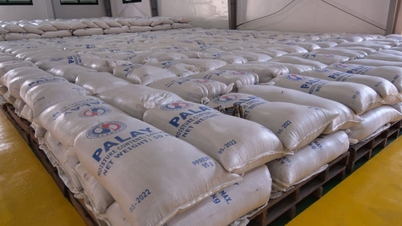
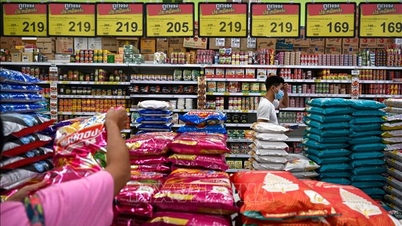
Besides achieving a record export value of $4.41 billion in the first 11 months of 2023, a 36.3% increase, Vietnamese rice continues to receive good news with the honor of being named "The Best Rice in the World ".
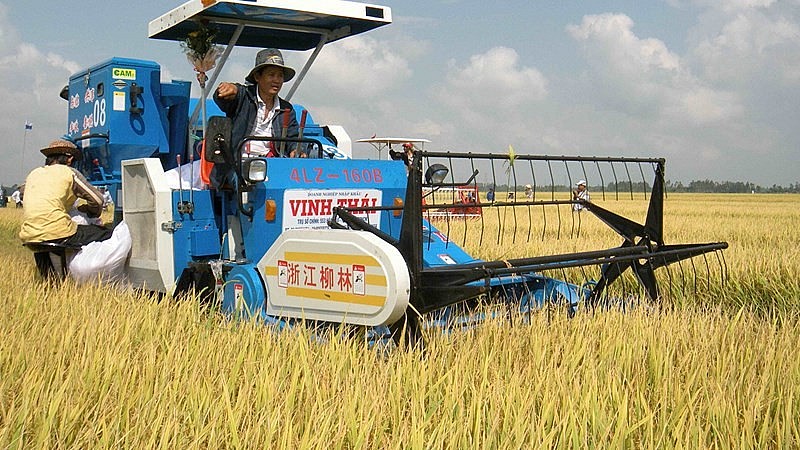 |
| Rice exports in the first 11 months of 2023 reached US$4.41 billion. |
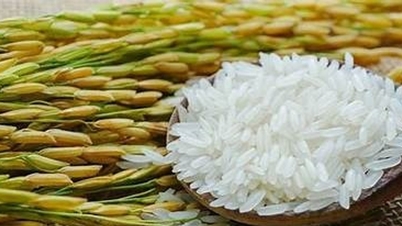
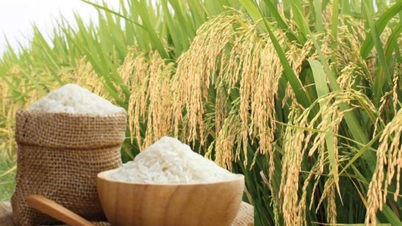
Specifically, at the Global Rice Trade Conference organized by The Rice Trader in the Philippines, Vietnamese rice surpassed its competitors and was honored with the "World's Best Rice" award. This title is proof of the proactive research, selection and breeding of high-quality varieties, and systematic commercialization by Vietnamese businesses.
Accordingly, Vietnam had 3 businesses participating in the conference and submitted 6 rice samples for the award. Specifically, Ho Quang Tri Private Enterprise submitted 2 rice samples (ST24 and ST25); Loc Troi Group submitted 2 rice samples (LT28 and Nang Hoa 9); and ThaiBinh Seed Group submitted 2 rice samples (TBR39-1 and A Sao sticky rice).
Ideally, the whole of Vietnam could have celebrated this victory together. However, immediately after the announcement, debates arose about whether "Vietnamese rice" or "ST25 rice" is the best rice in the world.
Due to controversies from Vietnam, the organizers were forced to announce the winner six months earlier than planned. Accordingly, the rice variety that received the award for the world's best rice in 2023 is ST25 rice from Vietnam, developed by the private enterprise Ho Quang Tri. Besides ST25, no other Vietnamese rice variety made it into the top 3 finalists, and no other rice variety influenced the competition results.
Thus, after a week of controversy, all the information has become clear. Regarding the announcement that ST25 rice won the award for best rice in the world in 2023 earlier than expected, the organizers stated: "Faced with an unforeseen issue, we felt it necessary to intervene to protect the integrity of the award and encourage the excellence of individuals whom we highly value."
Being honored as the world's best rice once again affirms the quality and reputation of Vietnamese rice in the international market. What should have been a cause for celebration for the Vietnamese rice industry has instead turned into an unfortunate incident.
In fact, this is not the first time in Vietnam there has been controversy regarding the ownership of the world's best rice. In 2019, the Rice Trader's announcement ceremony for the world's best rice also saw controversy when there was inconsistency in information about whether ST24 or ST25 was the best rice variety. Ultimately, ST25 was announced by the organizers as the world's best rice.
In 2022, a controversy also arose at the Vietnam's Best Rice competition when the "creator" of ST25 and ST24 rice varieties suspected and requested a reassessment of the rice sources used by participating units to determine if they were using rice varieties protected by intellectual property rights.
Let's move on to the brand story of Vietnamese rice.
Currently, Vietnam maintains 11 groups of agricultural, forestry, and aquatic products with export turnover of 1 billion USD or more, of which 7 groups have achieved export turnover exceeding 3 billion USD.
Despite achieving impressive export figures, 80% of exported agricultural products lack established brands, logos, and labels, and have not fully integrated into global value chains. Many products are exported and sold in foreign markets under brands that do not belong to Vietnamese businesses.
Out of the 13 key national agricultural products registered for protection in Vietnam, only 2 have certification marks, including "Vietnamese Rice".
Although the Vietnamese Rice Certification Mark has been protected domestically and in several countries, it has not yet been granted to any business for use due to some outstanding issues.
The problem stems from the incomplete legal framework governing the management and use of certification marks . Registering for protection abroad is also difficult for two reasons: lack of registration funds; and some countries only accept protection in the form of ordinary trademarks, not certification marks.
Lack of collaboration is an inherent problem for Vietnamese businesses. This has made already weak businesses even weaker. The saying by American billionaire Warren Buffett, "If you want to go fast, go alone; if you want to go far, go together," or the proverb "Business thrives with partners, sales prosper with a community," remain relevant and valuable in all circumstances.
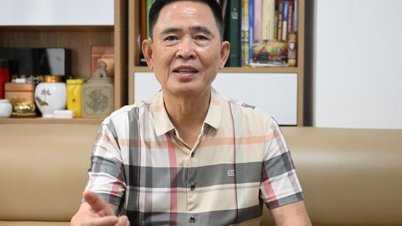
Agricultural expert Hoang Trong Thuy commented that every business hopes to win an award in a competition. This is not only about affirming the brand of their rice variety but also a matter of honor for the business. However, in commerce, businesses must also consider the balance between "trading" and market development. Because only when they build customer trust, a trust built on discipline and ethics, will the market be sustainable. And clearly, this incident has left an unnecessary "scar" on the Vietnamese rice trade.
Looking at Southeast Asia, Thailand is also focusing on building national brands for its key agricultural products. The government prioritizes investment in building and developing national brands in the food industry. From the national brand "Thailand - Kitchen of the World," with the aspiration for Thailand to become the "kitchen" of the world, the country's food export growth rate is impressively high at 10% per year.
Currently, Thai food is ranked 4th (after Italy, France, and China) in terms of recognition among diners worldwide, which also significantly contributes to boosting tourism and trade in the country.
With specific products, Thailand has successfully built national brands for its products, especially those with distinctive characteristics. The THAI'S RICE brand is a national brand of Thailand used for many products such as Thai Hom Mali and Thai Pathumthani (two types of rice products within the national brand).
The national brand "Thai's rice" is a guarantee from the Thai government regarding the product's characteristics, including quality, origin, and tradition, for consumers worldwide. This brand is managed by the Department of International Trade, Ministry of Commerce.
Thailand builds brand recognition based on the reputation for quality and flavor of Thai rice in the market and a common image of Thai rice, improving the quality and varieties of rice to differentiate itself from competitors.
Most importantly, the government and the private sector are collaborating to promote the quality and flavor of Thai rice in the global market.
The question is, what about other agricultural, forestry, and aquatic products? If the Vietnamese rice industry still maintains a "trader" mindset, will Vietnamese rice be able to reach a wider market?
Source link



























































Comment (0)