France enters the 2026 World Cup in a familiar position: a strong contender for the title. This is not surprising for a team that has reached the finals of the last two World Cups, winning in 2018 and only losing to Argentina on penalties in the 2022 final.
But after their 3-0 victory over Sweden, that status is no longer just a pre-tournament prediction. France is proving it through their form, the quality of their squad, and statistics that are hard to ignore.
Against Sweden, Kylian Mbappé scored a brace, Bradley Barcola found the net, and Michael Olise continued his significant influence with incisive assists. Didier Deschamps' team didn't need a flashy performance, yet they still won convincingly, kept a clean sheet, and advanced with a very proactive attitude.
The scary thing is that France hasn't yet shown they've unleashed their full potential.
The attacking line scores goals as a matter of habit.
France's most obvious strength is their attack.
Following their victory against Sweden, Les Bleus have scored 13 goals at the 2026 World Cup , averaging more than 3 goals per game. This is a performance that should make any opponent in the knockout rounds wary.
France doesn't just have one spearhead. Mbappé is the biggest star, but surrounding him are Ousmane Dembélé, Michael Olise, Bradley Barcola, Désiré Doué, and many other attacking options. This allows Deschamps to rotate the squad without significantly reducing their attacking prowess.
The match against Sweden is the clearest example. When Désiré Doué wasn't in the starting lineup, Barcola was given a chance and immediately scored. That's a luxury not many national teams possess: a player might be on the bench in one match, but come on as a substitute or start in another and still be able to decide the outcome.
France is strong not just because they have Mbappé. They are strong because they have so many players who can score goals.
Shoot frequently, shoot often, and always apply pressure.
To score consistently, a team must create enough pressure on the opponent's goal. France is doing very well in that regard.
Against Sweden, Les Bleus unleashed 25 shots. This is a very large number in a knockout match, where teams usually play more cautiously because just one mistake can cost them their place in the tournament.
Mbappé had 5 shots. Olise had even more attempts, with 6. This shows that France doesn't rely on a single attacking approach. When opponents neutralize Mbappé, Olise, Dembélé, or Barcola can still find alternative options.
The way France presses is also noteworthy. They don't necessarily need to hold possession for too long to be dangerous. Just a burst of speed, a pass to the wing, or a short set piece is enough to put the opponent's goal under threat.
That's the kind of football that's perfectly suited to the knockout rounds: fast, direct, and capable of finishing off opponents in short bursts.
Mbappé is turning the World Cup into his own stage.
Kylian Mbappé continues to be the center of attention.
His brace against Sweden brought his total goals at the World Cup to 18 in 18 matches. In the knockout rounds alone, Mbappé has scored 10 goals, a figure that shows he's not only good at scoring against weaker opponents, but is particularly dangerous in big matches.
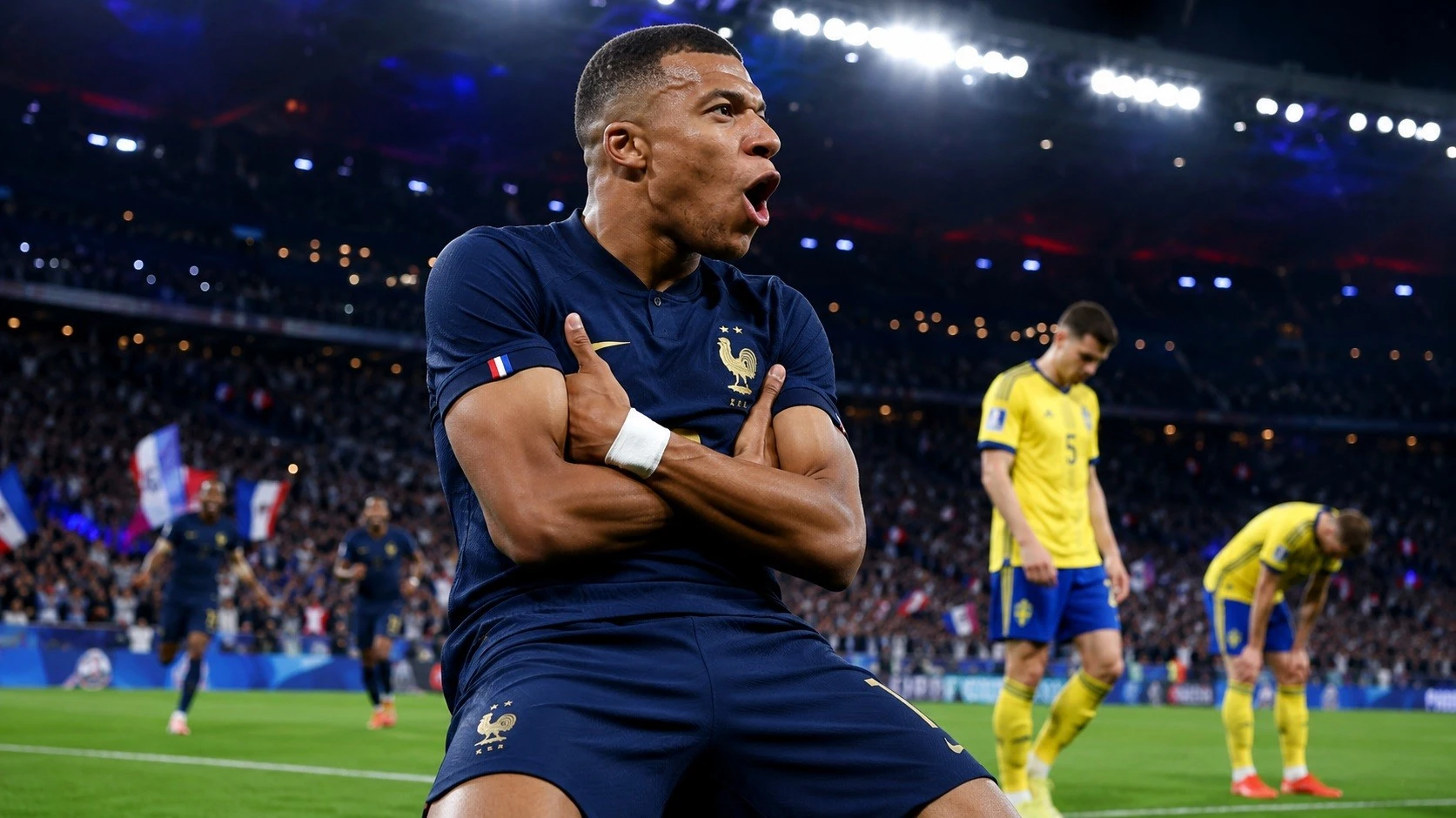

This is crucial. The World Cup isn't decided by easy wins in the group stage, but by moments in the knockout rounds. And on that stage, Mbappé is showing that he belongs to the group of the most formidable players in the history of the tournament.
He possesses speed, finishing ability, positional instinct, and composure when opportunities arise. Against Sweden, Mbappé's opening goal came at a crucial moment, just before the end of the first half. It was the kind of goal that disrupts the opponent's plans and forces them into the second half chasing the game.
With 6 goals at the 2026 World Cup, Mbappé is also competing for the Golden Boot with Lionel Messi . But as the French striker himself admits, his biggest goal is not individual titles, but to lead France to the final.
Olise is the "soft brain" behind Mbappé.
If Mbappé is the one to finish, Michael Olise is the one to unlock.
Against Sweden, Olise provided two assists: one for Barcola's goal, and another for Mbappé to complete his brace. Olise's touches felt very smooth, but their impact was extremely high.
After this match, Olise has 5 assists at the 2026 World Cup. This is a particularly impressive statistic, especially for a player who isn't always the first name mentioned when discussing the strength of the French national team.
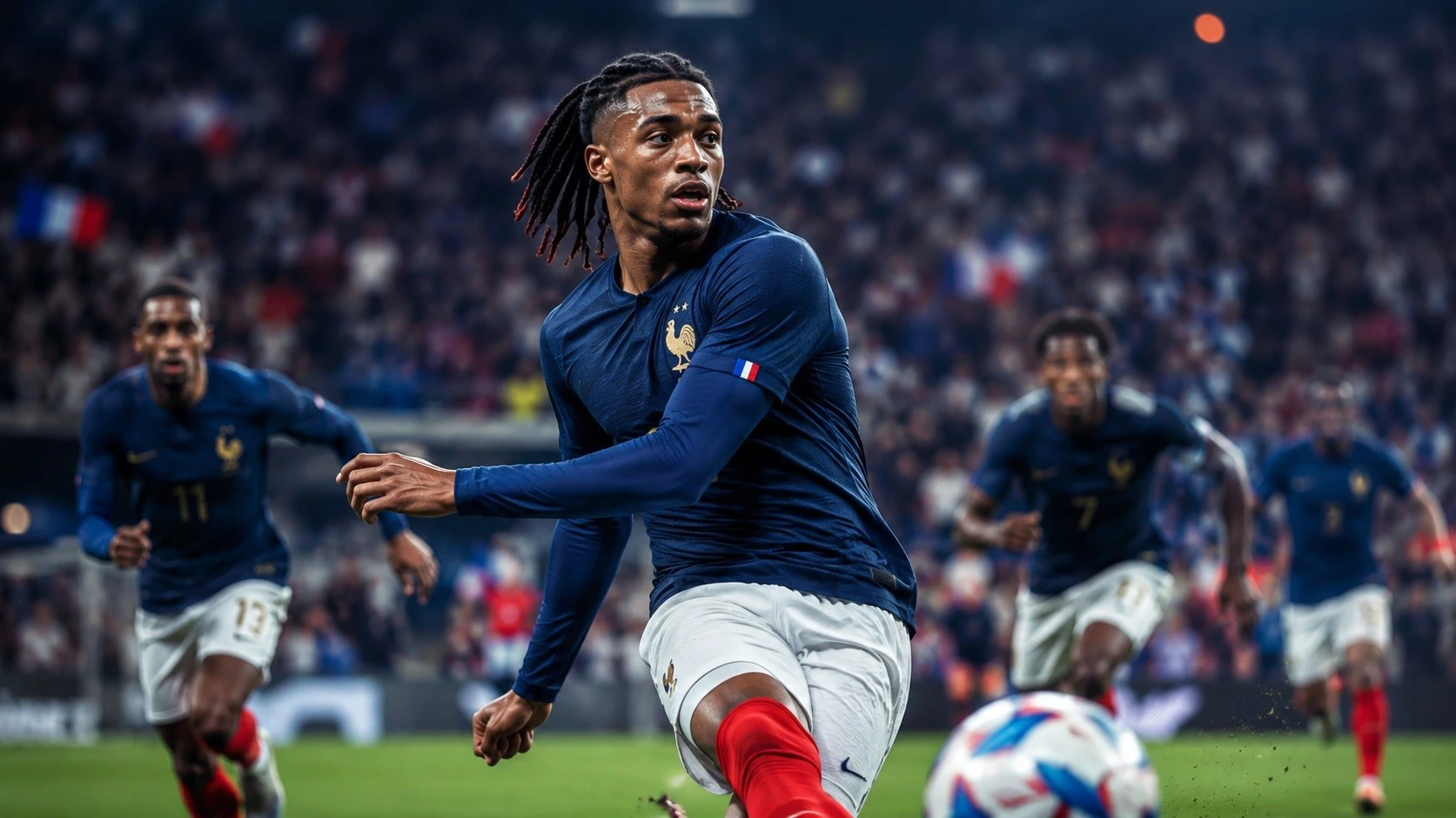
Olise brings a very different kind of creativity to France. He can cut inside to create chances, he can make through passes, he can shoot himself, and he can also combine quickly in tight spaces. With a player like that, Mbappé doesn't have to create every opportunity for himself.
That's why France is far more dangerous than the image of a team that just relies on Mbappé's bursts of speed. Les Bleus now have both speed and creativity.
France have scored at least 3 goals in 5 consecutive World Cup matches.
One statistic highlights France's remarkable consistency: they have scored at least three goals in five consecutive World Cup matches.
This is no longer a temporary boom. It's a trend.
In the World Cup, scoring three goals in a single match is already difficult. Doing it consistently is even harder, because the further you go in the tournament, the more cautious your opponents become, the less space you have, and the greater the pressure.
But France has maintained that performance. This reflects the individual quality, squad depth, and tactical adaptability of Deschamps.
France can attack down the flanks, through the middle, launch quick counter-attacks, use small-group combinations, or capitalize on set pieces. When one option is blocked, they have many other options to open up the game.
That's the difference between a strong team and a team capable of winning the championship.
Deschamps remains the "king of knockouts".
When talking about France, it's impossible to ignore Didier Deschamps.
He's not the type of coach who always creates the most beautiful football. But at the World Cup, Deschamps knows how to win. After the match against Sweden, he continued to extend his impressive record in World Cup knockout matches.
Under Deschamps, France possesses a very distinct quality: the further they progress in the tournament, the more difficult they become. They are not easily swayed by emotions, they don't always need to dominate possession, but they always know how to exploit their opponents' weaknesses.

Against Sweden, France didn't panic when their opponents started the game with effort. They calmly controlled the game, opened the scoring at the right moment, and then accelerated in the second half to end any hope of resistance.
This shows the character of a team that is very familiar with big matches.
Why is France the strongest candidate right now?
Brazil, Argentina, England, Spain, and Portugal all have reasons to dream of winning the championship. But if we only consider their current form, France is the most formidable team at the moment.
They have a consistently scoring attack. They have Mbappé in superb form. They have Olise playing as a great source of creativity. They have squad depth. And more importantly, they have the experience to go the distance in the World Cup.
After reaching the World Cup final for two consecutive tournaments, France understands very well what a major competition requires: not necessarily winning beautifully in every match, but knowing when to win, maintaining fitness, minimizing mistakes, and possessing stars who can decide the outcome of a game.
France's 3-0 victory over Sweden wasn't the only statement. It served as a reminder to the rest of the tournament: Les Bleus are still there, still cool, still dangerous, and still capable of reaching a third consecutive final.
France's next opponent is Paraguay. In theory, that's a very different challenge compared to Sweden: more pragmatic, more defensive, and potentially able to drag the game into a longer, more evenly matched contest.
But if France continues to maintain its current performance, the question might not be whether they are formidable or not. A more accurate question would be: who is capable of stopping Mbappé and his teammates at the 2026 World Cup?
Source: https://baolaocai.vn/vi-sao-phap-dang-so-nhat-world-cup-2026-post902985.html




![[Image] National conference summarizing one year of operation of the overall organizational model of the political system, the three-tiered government model.](https://vphoto.vietnam.vn/thumb/1200x675/vietnam/resource/IMAGE/2026/07/01/1782882811691_ndo_br_1-jpg.webp)