


People line up to buy silver - Photo: HH
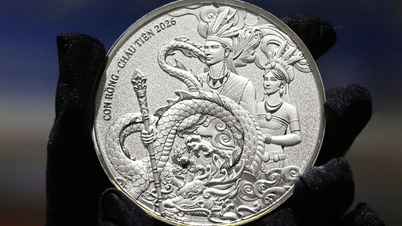
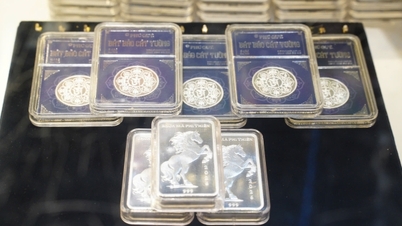
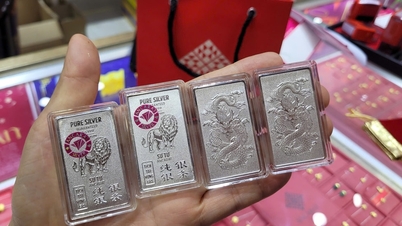
In reality, silver is not scarce in Vietnam; the trend of post-delivery requests is mainly due to businesses' production capacity not being able to keep up with customer demand.
The world has abundant silver reserves.
* He said that silver is not scarce in Vietnam, but why do companies currently mainly sell silver on a deferred payment basis, meaning payment is made upfront and the physical silver is received only 3 months, or even 6 months later?
- Companies are currently increasing their silver production capacity. Silver is now significantly cheaper than gold, leading some customers to purchase tens of thousands of units. This quantity alone represents a substantial portion of a factory's production capacity. As a result, no factory can meet demand quickly enough, leading to a trend of future delivery.
Silver is not scarce in Vietnam, as the Vietnamese silver market is fully connected to the global silver market. Companies are allowed to import raw silver, and each company can have multiple partners to purchase silver for production. Raw silver is readily available to meet market demand.
* There are reports of a global shortage of physical silver; is this true?
- That information exists, but it's scarce in each country and at what price. Singapore and Hong Kong always have a certain amount of silver to serve the Asian regional market. When demand spikes and these two markets run out of stock, then treasuries or companies will have to ship silver from London and New York, which will result in longer waiting times.
Scarcity at that time meant scarcity for a certain period, not complete absence. And the world's silver reserves remained very abundant.
* Recently, there has been a lot of information circulating about China restricting silver exports, leading to concerns about supply and future silver prices.
- China is an extremely large silver market, possibly the largest in the world. Silver is hoarded, and those hoarding it have no need to sell it, so the price of silver in China is higher than the world price. China's demand for hoarded silver is enormous, so much so that it's impossible to quantify or measure. Recently, China has had to start importing or gradually withdrawing silver from other sources.
The Vietnamese silver market is very small compared to China, and the amount of silver held by the population is not significant. There are also few silver manufacturing businesses in Vietnam, limiting their ability to meet customer demand.
Prepare the money to buy back when the investor sells.
* Silver prices have repeatedly risen sharply and then fallen sharply. What are your predictions regarding the trend of silver prices?
- Globally, only 17% of liquid silver (including silver held by individuals and in storage) is available. The rest is used in electronic components, electric vehicle batteries, solar panels, etc. Therefore, this has led to a recent surge in buying activity due to fear of missing out on the opportunity for rising silver prices, not only in Vietnam but around the world.
Meanwhile, the amount of gold in circulation that can be traded globally accounts for more than 50%. Therefore, it can be seen that gold price fluctuations will not be as rapid and strong as silver price fluctuations. In other words, silver prices rise quickly and fall just as quickly. This current price fluctuation cycle for silver is very difficult to predict.
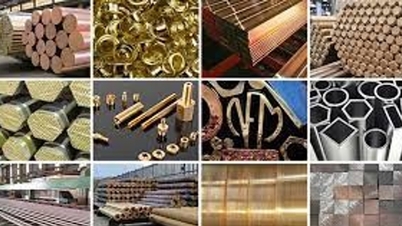
* After the silver rush, copper ingots were also traded on the market. In the current market context, does the company plan to expand into other metals?
- Until now, precious metals have been defined only as gold. It wasn't until November 2025 that the US and the European Central Bank added silver to the group of precious metals, while copper, iron, and aluminum remain non-ferrous metals. We currently have no business strategy focused on non-ferrous metals.
* Amidst the current silver rush, many are worried that investors will rush to take profits when prices rise further. Will the company be prepared to buy back the silver then?
- We always maintain a reserve of cash in case investors sell back. Additionally, when we reach a point where we need to transfer liquidity internationally, our suppliers and business partners are ready to buy it back from Vietnam.
What are the predictions for gold prices this week?
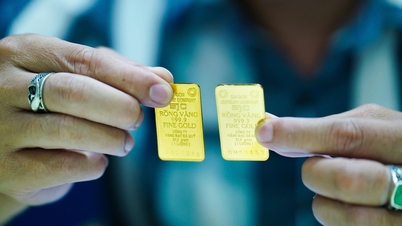
On January 30th and 31st, world gold prices experienced a "historic" drop, falling from $5,600 per ounce to $4,889.4 per ounce. This decrease in world gold prices is equivalent to $710.6 per ounce (22.4 million VND per tael).
Domestically, from a peak selling price of 191.3 million VND/ounce, the price of SJC gold bars closed the trading week at 172 million VND/ounce, a decrease of nearly 20 million VND/ounce - a record drop in recent months that has caused concern among investors.
The price of 9999 gold rings also decreased to 171 million VND/ounce (selling price) and 168 million VND/ounce (buying price).
Experts liken the recent sharp drop in gold prices to a "start over" because the market was overheated and heavily speculative. World gold prices in January alone surpassed forecasts for the entire year of 2026, leading to profit-taking. From a technical perspective, several indicators have also signaled that gold prices have entered an overbought state, necessitating a correction.
Will gold prices continue to fall sharply next week? Some experts warn of a continued downward trend. Expert Tran Duy Phuong predicts that world gold prices may rebound early next week after falling too sharply. However, after recovering to the $5,070/ounce range, world gold prices may fall again.
Source: https://tuoitre.vn/viet-nam-khong-khan-hiem-bac-20260202072531267.htm






























































































Comment (0)