Vietnam has become one of the first countries in the world to have a set of criteria and programs for net emission reduction.
Just two years after Prime Minister Pham Minh Chinh 's commitment to achieving net-zero emissions by 2050 at COP26 in 2021, Vietnam has become one of the first countries in the world to have a set of criteria for achieving this goal. These rapid and decisive steps are marking a "green" Vietnam in the new "game" of global trade and investment.
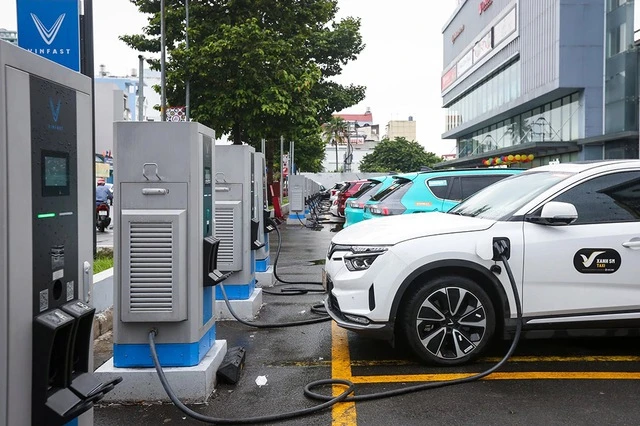
Vietnam is one of the countries producing electric vehicles and shifting towards green transportation.
NHAT THINH
It's not just "empty words".
Having directly participated in Prime Minister Pham Minh Chinh's delegation to COP28 in the UAE in early December 2023, Mr. Do Van Su, Deputy Director of the Foreign Investment Department (Ministry of Planning and Investment), proudly shared that Vietnam is among the first few countries in the world to have a set of criteria and programs for net emission reduction. The Net Zero Tracker climate monitoring group at COP28 warned that most countries and territories committed to net carbon zero emissions have not yet announced any plans to phase out fossil fuels, and this risks making these commitments merely "empty words." While approximately 150 countries and territories made a general commitment to net carbon zero emissions, only 13% of them have presented at least one specific plan for reducing emissions. "This came as a real surprise to many of the agencies present at COP28 because we are not a leading country in emission reduction or green growth, yet we have implemented these measures very quickly and actively," said Mr. Do Van Su.
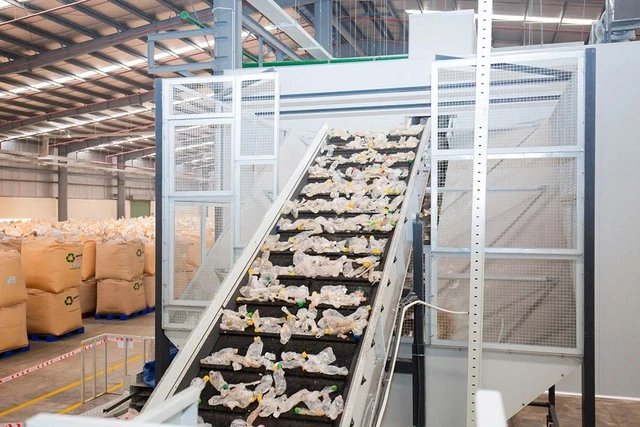
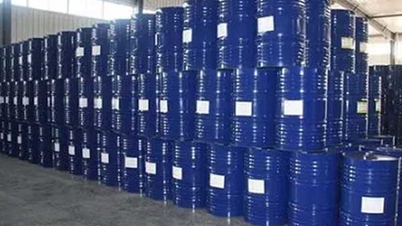
Manufactured by Duy Tan Recycled Plastic Company
Collaborator
In fact, immediately following the Prime Minister 's commitment to 25,000 delegates from 200 countries and territories attending COP26, Vietnam completed its Nationally Determined Contribution (NDC) report, carefully reviewing strategies and policies, and updating policies to align with the net zero emissions commitment, including the National Climate Change Strategy to 2050 and the Vietnam Power Development Plan (PDP8). In addition, the Prime Minister approved an action plan to reduce total methane emissions by at least 30% by 2030 compared to 2020 levels in agriculture, livestock farming, solid waste management, wastewater treatment, oil and gas exploration, coal mining, and fossil fuel consumption. Simultaneously, the Government has also issued an Action Program on Green Energy Transition, reducing carbon and methane emissions in the transportation sector to develop the transportation industry and promote clean transportation nationwide, including promoting the use of electric vehicles, promoting physical infrastructure including charging stations, and promoting electric public transport systems. In particular, Vietnam's agreement with the International Partnership Group (IPG) on establishing a Just Energy Transition Partnership (JETP) with commitments to concretize and outline a roadmap to accelerate the energy transition process has been truly impressive. The policy on climate change, reaffirmed by Prime Minister Pham Minh Chinh at COP28, along with 12 major, comprehensive measures that Vietnam has implemented and announced, and the Plan to mobilize resources for the implementation of a just energy transition, has attracted high attention and commitment of support from international organizations. In numerous discussions, Vietnam has been repeatedly mentioned as a successful model to be replicated in responding to climate change. Many countries have affirmed their support and cooperation with Vietnam in energy transition and enhancing adaptation capacity, thereby contributing to promoting green growth in Vietnam and protecting the planet.
The first country to export green mobility services.
Immediately after being among the first countries to have criteria and programs for net emission reduction, Vietnam continued to become the first country in the world to export green mobility services with the official launch of the first electric taxi service in Laos by Green & Smart Mobility JSC (GSM). On the afternoon of November 9, 2023, more than 150 VinFast VF 5 Plus cars in the distinctive cyan color of the Green SM brand lined up neatly, seemingly soothing the scorching sun of Vientiane. Although Laos' car usage culture is ahead of Vietnam's, VinFast confidently chose to target the newest market, the most advanced technology: electric vehicles and green services. As Dr. Vo Tri Thanh, Director of the Institute for Brand and Competition Strategy Research, exporting services is not a new factor for Vietnam. We have exported many types of services such as tourism, logistics, telecommunications, banking… However, we mainly export goods and have a service trade deficit. Green SM is once again bringing Vietnamese taxi services back to conquer the Lao market, contributing to expanding Vietnam's service export market and creating a trend of diversifying service types offered globally. The Vietnamese electric taxi brand in Laos not only serves the Lao people but also helps promote the image of Vietnamese businesses and brands to the world. Alongside bringing Vietnamese electric taxi brands to the international stage, Green SM is also gradually greening Vietnam's streets. The Green SM Taxi app reached 100,000 downloads on its first day of launch and has since reached millions of downloads on both Google Play and the App Store, consistently ranking #1 in the App Store Travel category and consistently ranking among the top free apps on the iOS platform. Vietnam's first all-electric taxi company, and indeed the world's, took only 38 days to realize a multi-billion dollar project and 51 days to recruit 1,700 employees across Vietnam's two largest cities. After more than seven months since its launch, GSM boasts a workforce of 30,000 people, including over 14,000 taxi drivers. The fleet is expected to reach 30,000 electric cars and 60,000 electric motorbikes in the next few months. GSM's current number of vehicles and drivers is equal to or even exceeds that of long-established taxi companies. Local authorities nationwide are also strongly promoting policies to implement the green transportation transition, with Ho Chi Minh City leading the way. In January 2022, Ho Chi Minh City launched a study on a plan to phase out gasoline-powered vehicles and replace them with electric vehicles through the "Transportation Initiative in the NDC in Asian Countries - NDC TIA" project, funded by the German government, aimed at promoting low-carbon transportation and reducing greenhouse gas emissions. At that time, Ho Chi Minh City's aspiration to become the first city in Vietnam to develop electric transportation was met with little attention and even skepticism regarding its feasibility. However, just two months after announcing the plan, Ho Chi Minh City officially piloted its first electric bus route, initiating the diversification of clean energy bus transportation. Most recently, the city plans to issue a scheme to support people in switching to electric motorbikes and implement it in the first quarter of 2024, after obtaining the legal basis from Resolution 98 of the National Assembly on the special mechanism for the development of Ho Chi Minh City. This includes policies that prioritize supporting people in replacing old fossil fuel-powered motorbikes with new electric vehicles and vehicles using clean fuels. The policies are structured at different levels: encouragement, support, and incentives. Simultaneously, the Ho Chi Minh City Department of Transport is also researching a pilot program prioritizing 100% electric vehicles throughout Can Gio District and some areas within the inner city. Alongside this, the city is accelerating the conversion of taxis, buses, and government-purchased vehicles to electric vehicles. Following Ho Chi Minh City, Hanoi has successively introduced electric buses, CNG-fueled buses, and urban bicycles. Da Nang, Hue, and Ba Ria-Vung Tau are also taking the first steps in green transportation by encouraging people to use public bicycles, combined with a gradual transition of the bus network to using CNG. Electric motorcycles and electric cars have gradually become familiar to the people of Vietnam. Our country also possesses one of the world's highest densities of charging stations. Although we entered the market later, we are rapidly accelerating our progress towards green transportation.
Promoting the green economy and circular economy.
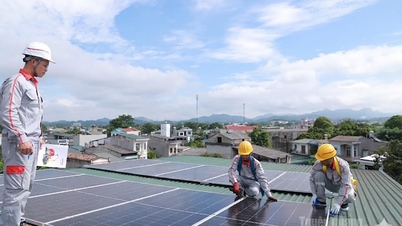
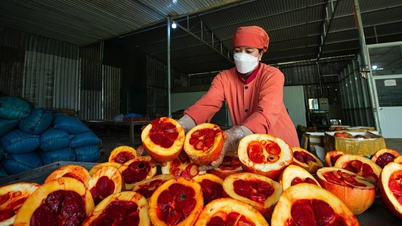
Beyond the advancements in electric vehicles, numerous businesses have gradually transformed to develop a green and circular economy . For example, Nestlé Vietnam has shifted to a circular economy model, from product design to transforming waste into valuable raw materials, aiming to protect the environment and natural resources. Similarly, all of Heineken Vietnam's product packaging is now recyclable. Over 98% of plastic crates are recovered and reused for 5 to over 10 years, 97% of glass bottles are reused more than 30 times, aluminum cans are produced with 40% recycled aluminum, and 100% recycled paper is used to produce cardboard boxes. Another pioneering Vietnamese company in the recycling field, Duy Tan Recycled Plastic Joint Stock Company, has received a total of 23 international quality certifications to date, most notably the FDA certification from the US Food and Drug Administration and the EFSA certification from the European Food Safety Authority. This has helped the company's products export quite smoothly. Every year, Duy Tan Recycled Plastics exports 5,000 tons of raw plastic pellets to the US without ever having them returned. Currently, exports account for nearly 60%, with the rest going domestic. The company hopes to continue cooperating with Vietnamese businesses in the coming years to increase the domestic consumption rate to 50%… According to Dr. Nguyen Quoc Viet, Deputy Director of the Vietnam Institute for Economic and Policy Research (VEPR) under the School of Economics (Vietnam National University, Hanoi), implementing the roadmap for reducing emissions to zero or the circular economy is creating pressure on all businesses, especially export-oriented production units. This is because some exported goods, from 2024 onwards, will be required to meet carbon emission reduction conditions or pay carbon emission fees when entering the EU market. This production transformation process will also place a cost burden on businesses, especially given that the global economy in 2024 is not yet fully recovered and Vietnam's economy is unlikely to achieve the high growth it had before the pandemic. Therefore, the government needs solutions to support businesses in shifting to green production and a circular economy. Mr. Viet suggested providing financial support, aiming for preferential loan access for businesses to upgrade their machinery and technology, including foreign-invested enterprises. In addition, it is necessary to accelerate market mechanisms to promote renewable energy production and increase the proportion of these products in Vietnam's electricity supply. This is because many regulations will require exporting businesses to demonstrate the source of clean, green energy in their production process. Furthermore, Dr. Nguyen Quoc Viet emphasized that solutions and roadmaps for implementing green production and reducing emissions need to be carefully considered for each industry so that businesses can implement them, because it is impossible to rush or green immediately when businesses are still facing many difficulties.
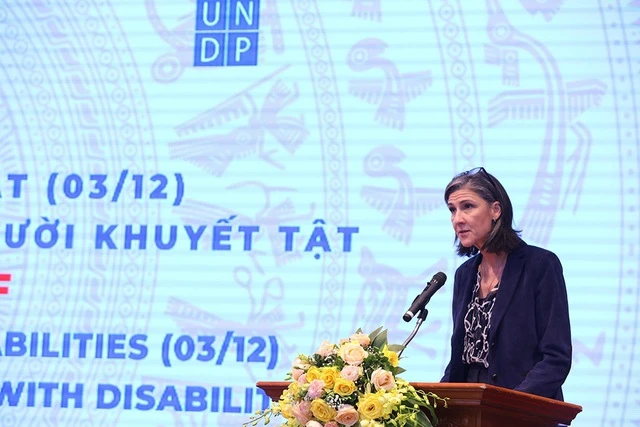
Ms. Ramla Khalidi
VNA
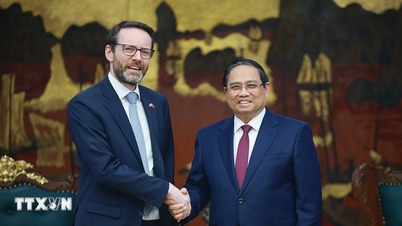
We appreciate the Government and the Ministry of Natural Resources and Environment for their pioneering efforts related to the JETP over the past several months, most recently the preparation of a comprehensive draft of the JETP Resource Mobilization Plan for launch at COP28. By promoting efforts to transition to a green economy while ensuring sustainable job creation and equity aspects in the transition process, Vietnam can achieve net-zero emissions and realize the country's energy transition and sustainable development goals.
Grandma Ramla Khalidi,UNDP Representative in Vietnam
On November 1, 2023, the Minister of Planning and Investment issued Circular No. 10 stipulating the set of statistical indicators for green growth . This serves as the basis for monitoring and evaluating the implementation of the National Strategy on Green Growth for the period 2021-2030, with a vision to 2050, in provinces, centrally-administered cities, and the entire country. The set of statistical indicators for green growth includes four main objectives: Reducing the intensity of greenhouse gas emissions per GDP; Greening economic sectors (including energy, transportation, agriculture, trade and services, technology, investment capital, bonds, credit, forest resources, mineral resources, and water resources); Objective 3 is Greening lifestyles and promoting sustainable consumption (environment, society; urban areas; and government); and the final objective is Greening the transition process based on the principles of equality, inclusiveness, and enhanced resilience.
The Ministry of Natural Resources and Environment has drafted a National Action Plan on Circular Economy and is seeking broad feedback from ministries, sectors, localities, and the business community. The draft identifies five main perspectives, general objectives, and specific targets from now until 2025 and 2030 for the implementation of a circular economy in Vietnam to promote the transition of the economic model towards sustainability, transforming waste into resources, achieving carbon neutrality, and net zero emissions by 2050. Based on this, the draft proposes the application of 16 indicators to assess the implementation of a circular economy at the national level, categorized into three groups: indicators on efficient use of resources and materials, energy saving, and renewable energy development; indicators on extending product lifecycles, limiting waste generation, and reducing negative environmental impacts; and indicators on socio-economic efficiency, innovation, and sustainability.




![[Photo] General Secretary and President To Lam meets with National Assembly delegates from ethnic minorities.](https://vphoto.vietnam.vn/thumb/1200x675/vietnam/resource/IMAGE/2026/04/20/1776696701056_a1-bnd-8331-3342-jpg.webp)
![[Image] National Assembly discusses the implementation of the socio-economic development plan.](https://vphoto.vietnam.vn/thumb/1200x675/vietnam/resource/IMAGE/2026/04/20/1776696707422_ndo_br_img-20260420-185419-jpg.webp)






































































Comment (0)