

 |
| VN-Index loses over 50 points, large amounts of capital withdraw from the market. |
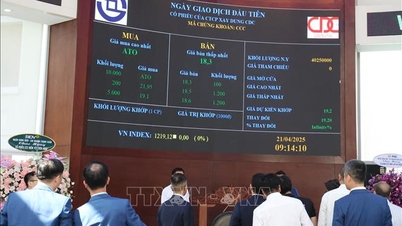
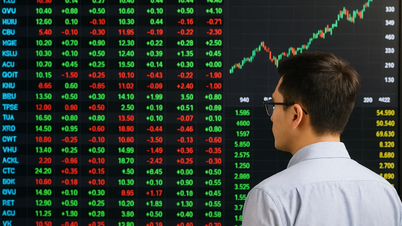
The weekend trading session saw widespread negative developments as the Vietnamese stock market plunged into a strong sell-off. Intense selling pressure in the afternoon dragged the VN-Index down by 51.32 points, or 3.02%, to 1,647.81 points, marking the deepest decline in the recent short-term rebound.
Not only the VN-Index, but other indices also declined simultaneously. The HNX-Index fell 2.27 points to 243.46 points, while the UPCoM-Index lost 0.21 points, closing at 123.74 points. This negative development shows that a cautious, even pessimistic, sentiment is prevailing throughout the market.
The focus of the price decline was on the energy sector, with a series of oil and gas stocks being heavily sold off, despite news of rising domestic fuel prices. Major stocks in the sector all suffered significant losses, such as BSR down 4.27%, PVS down 6.76%, PVT down 6.65%, while PLX and PVD were sold off to their floor prices. Notably, OIL was the biggest loser in the group, falling by as much as 8.08%.
In addition, many other stocks such as PVP, PVC, POS, and COM also fell by over 4%, reflecting the outflow of capital from this sector after a period of strong oil price volatility. This development shows that investors tend to take profits and reduce their positions, despite the supportive factor from energy prices.
Although the market weakened in the morning session, selling pressure truly exploded in the afternoon. Liquidity on the HoSE exchange surged by 80.4% compared to the morning, reaching 17,461 billion VND, the highest level in the last 12 sessions.
Market breadth leaned heavily toward sellers, with 95 gainers compared to 241 losers. Notably, 110 stocks fell by more than 2%, and around 60 stocks declined by 1-2%, indicating significant losses. Overall, nearly 46.4% of stocks on the VN-Index fell by 1% or more.
Total market liquidity reached over 33,200 billion VND, with more than 1.1 billion shares changing hands. HoSE alone accounted for nearly 29,850 billion VND, reflecting the large amount of money being used to offload shares.
The biggest pressure came from large-cap stocks, especially real estate and banking. VIC fell by as much as 6.9%, becoming the biggest drag on the market. Other stocks in the same sector such as VHM, NVL, KBC, KDH… also experienced sharp declines.
The banking sector, a crucial pillar of the market, was not immune to the negative trend. VCB, CTG, BID, MBB,ACB , and VPB all fell by 1.7% to over 3%, with LPB even dropping by as much as 6.38%. The lack of support from the banking sector deprived the market of a vital anchor.
The VN30-Index fell 3.03%, with 27 out of 30 stocks declining. Of these, 19 stocks fell by more than 2%, with many large-cap stocks such as GAS, PLX, and DGC hitting their lower limit. Liquidity in the VN30 basket also increased to its highest level in 8 sessions, with many stocks reaching trading values in the trillions of dong – a sign of strong selling activity from institutions.
One of the factors contributing to the negative market sentiment was the strong net selling by foreign investors. The total net selling value on the HoSE exchange during the session reached VND 1,906.6 billion.
Stocks experiencing heavy net selling were concentrated in the blue-chip group, such as VIC (-320 billion VND), MSN (-180 billion VND), HPG (-150 billion VND), and VHM (-120 billion VND). The banking sector also faced significant pressure, with VCB, CTG, BID, and VPB all experiencing net selling of tens of billions of VND.
In the afternoon session alone, the value of foreign selling increased 3.8 times compared to the morning, indicating strong selling pressure as the market weakened.
Amidst a sharp market downturn, the number of rising stocks was quite limited. Although 95 stocks increased in value, only about 20 reached a trading volume exceeding 10 billion VND. Some stocks such as VCK, VCI, PC1, REE, POW, GEX, and TCH recorded gains of over 1%, but these were not enough to provide support for the overall market.
Notably, the VN-Index retreated to the 1,650-point level, corresponding to the 200-day moving average (MA200), which is considered a crucial technical support level. Maintaining or losing this level will determine the market's medium-term trend.
According to Thien Viet Securities' assessment, the VN-Index may continue to test the 1,650-point level in the short term and consolidate before having a chance to recover at the end of March. Market valuations are currently discounted to attractive levels, with a projected P/E ratio of approximately 10.4 times, lower than the 5-year average.
In addition, expectations of a market upgrade from FTSE Russell could be a supporting factor for foreign capital inflows in the near future.
In the current context, experts recommend that investors closely monitor the VN-Index around the 1,650-point level. Investment should be made cautiously, prioritizing gradual disbursements when the market confirms a bottom and clear signs of recovery appear.
The sell-off at the end of the week once again showed that short-term risks remain high, especially as large capital flows show signs of withdrawal. However, with attractive valuations and positive medium-term earnings prospects, the market is still expected to stabilize soon as investor sentiment improves.
Source: https://thoibaonganhang.vn/vn-index-thung-moc-1650-diem-179202.html

![[Photo] Memorable moments at the 10th Vietnam-China Border Defense Friendship Exchange](https://vphoto.vietnam.vn/thumb/1200x675/vietnam/resource/IMAGE/2026/03/20/1773986226876_giao-luu-bien-gioi-vntq-lan-10-ben-tq-9737-4225-jpg.webp)




































































































Comment (0)