

The ups and downs of history
According to the 2013 An Giang Gazetteer, during the resistance war against French colonialism (1945-1954), An Giang province at that time comprised Long Xuyen and Chau Doc, part of present-day Dong Thap province. It had a very large area but only about half a million inhabitants. Therefore, the population was very sparse both in the enemy-occupied and liberated areas, except for urban areas and large population centers. By 1975, the population had increased to 1.36 million people. From 1945 to 1975, An Giang province underwent eight major administrative divisions and mergers, with many different names, such as: An Giang, Long Xuyen, Chau Doc; Long Chau Tien, Long Chau Hau; Long Chau Ha, Long Chau Sa; Chau Ha; Long Chau Ha, Long Chau Tien.
On December 20, 1975, An Giang province was re-established. The provincial Party Committee immediately set about consolidating and building the government at all levels, restoring production, stabilizing the lives of the people, and rebuilding the homeland under very low starting conditions. However, peace did not last long. On the night of April 30, 1977, the reactionary Pol Pot regime launched a war of aggression against the southwestern border of our country.
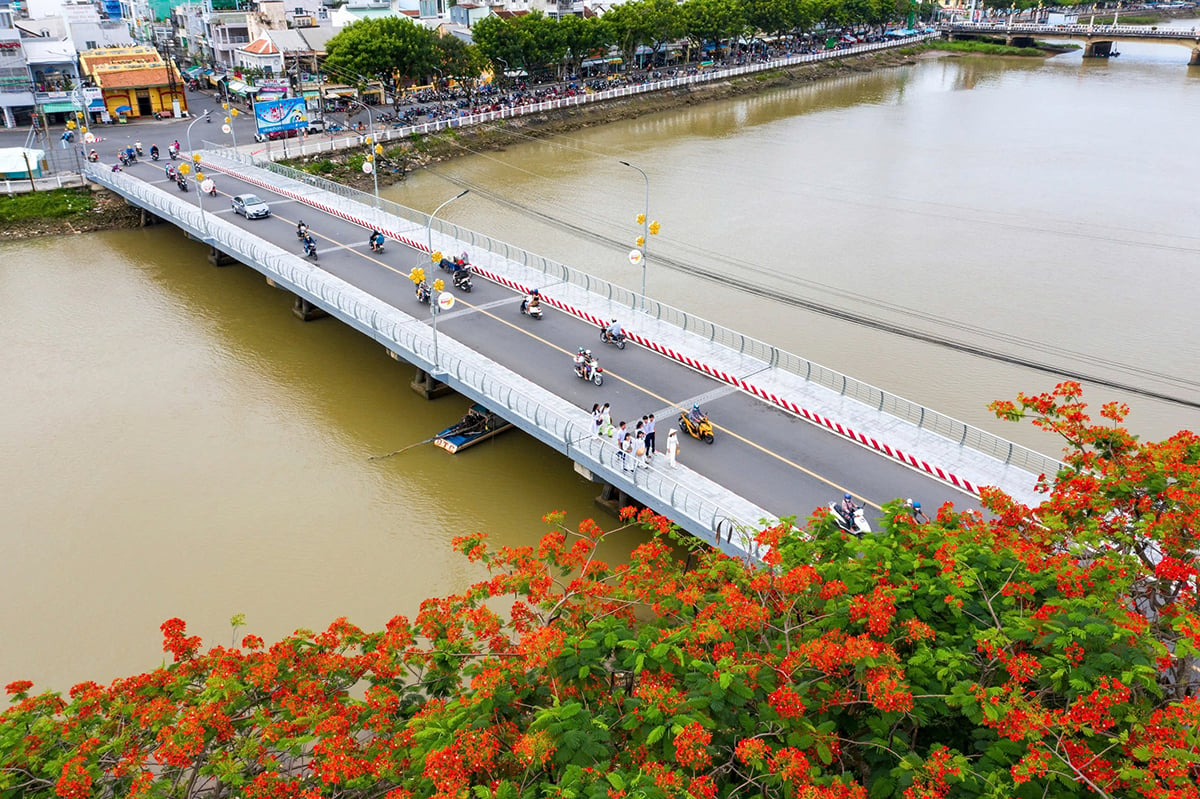
Photo: TRAN KIM LUAN
The province had to relocate people to resettle them and build new economic zones. Nearly 20,000 people from border areas were evacuated to the rear to stabilize their living conditions; 55,000 Khmer people were resettled in Hau Giang and Minh Hai districts as directed by the Central Government. Once again, the An Giang Party Committee, united from top to bottom, continued to lead the people in doing a good job in rear-area work, contributing manpower alongside the whole country to fight and firmly protect the southwestern border of the Fatherland, and helping the Cambodian people overthrow the genocidal regime (January 7, 1979).
After liberation, the people returned to their old homes, repairing and rebuilding houses and fields that had been destroyed by bombs and bullets, especially in remote and liberated areas. The people worked hard to boost production, and their lives gradually improved, with a higher standard of living than before. Rice fields were expanded, and irrigation networks were implemented, dredging across the fields, bringing silt to the land and removing acidity, making the fields even more fertile and ensuring full granaries. The province combined the expansion of irrigation and flood control dikes along 3,800 km with the resettlement of the population. Nearly 10,000 households scattered in flood-prone areas were relocated, and 84 residential clusters and 35 residential lines were built, totaling nearly 100 km in length, eliminating the annual worry of fleeing floods.
Lessons in unity and creativity.
The An Giang Party Committee has always been steadfast in its goal of national independence linked with socialism. Adhering to the lesson of "putting the people first," the entire political system, with the primary responsibility of key officials at all levels, has consistently and effectively addressed emerging perceptions and ideologies to maintain ideological stability. The vast majority of officials, Party members, and people of An Giang are confident in the Party's reform policies, see the prospects for the province and the country's progress, voluntarily comply with the Party and State's policies, and actively participate in the local reform and innovation initiatives.
Throughout the reform process, An Giang has flexibly and creatively applied a series of policies and guidelines of the Party and State to the province's practice in the reform and modernization of agriculture and rural areas; comprehensively and effectively resolving issues related to agriculture, farmers, and rural areas, meeting the legitimate needs and aspirations of the people. These include: Strengthening two-way contracts with advance payments to farmers; the State purchasing goods from farmers at contract prices; the policy of "buying right, selling right"; eliminating checkpoints that block trade; the policy on the three rural issues (agriculture, farmers, and rural areas, also known as the "Three Rural Ideology"); the Long Xuyen Quadrangle Exploitation Program (1988); the Agricultural Extension Program (1989); the Rural Development Program (1992); the Industrial Promotion Program (1996); the Forest Planting and Protection Program; developing the farming and export of catfish and basa fish, etc. Developing high-tech agriculture (2012)...
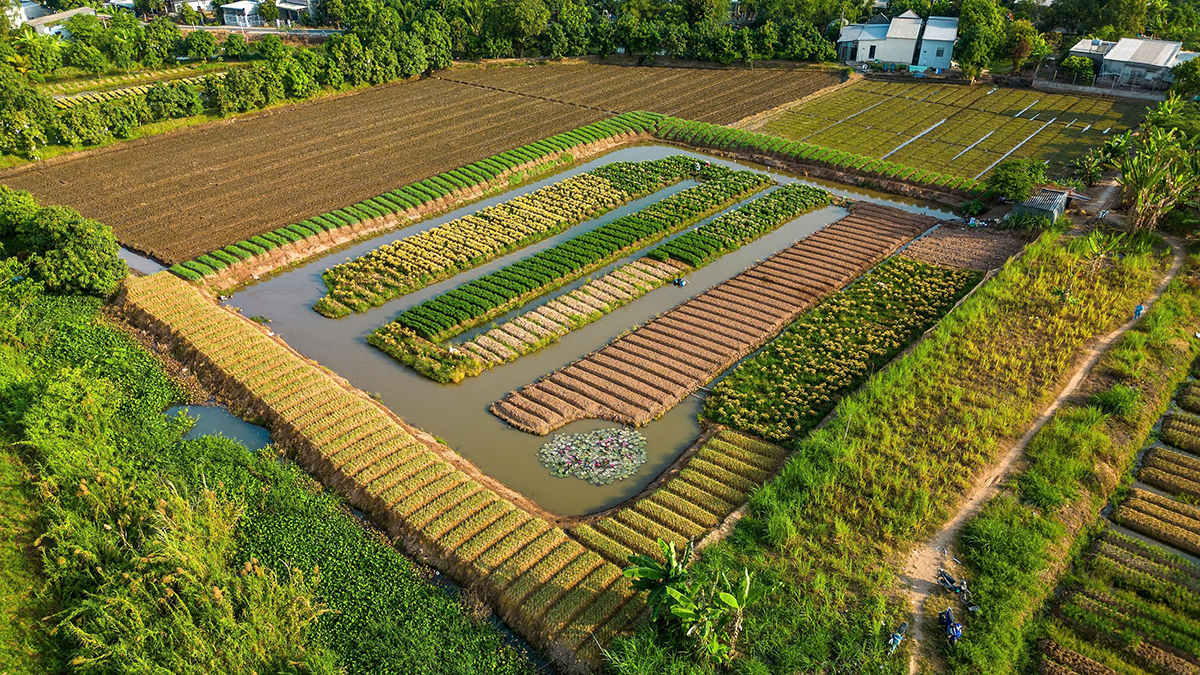
As a result, from a province on the verge of food shortages (rice production of 848,000 tons in 1986), it has achieved a surplus for export, reaching over 2 million tons for the first time in 1996, over 3 million tons in 2007, and currently over 4 million tons; becoming one of the leading rice-producing provinces in the country, successfully fulfilling the task of ensuring national food security; people's lives have improved, and the face of rural areas is constantly changing. The achievements of the province in recent years are an important foundation for the province to continue to innovate and develop in the coming years; contributing to the great and historically significant achievements of the whole country on the path of building socialism and defending the Fatherland.
“Although life is still full of difficulties and complexities, cadres and Party members remain steadfast in their work and study the shining examples of revolutionary heroism. We look straight at reality to fight, build, and promote the revolutionary traditions of the Party, contributing to the education of communist ideals, ethics, and lifestyles for the younger generation; showing gratitude for the contributions, preserving achievements, and worthily continuing the glorious cause of the Party. We look to the future with optimism and confidence, pledging unwavering loyalty to the people and the Party; contributing to building clean and strong grassroots Party branches and committees in An Giang, making the province increasingly prosperous and beautiful, worthy of being the homeland of the beloved President Ton Duc Thang,” Mr. Huynh Phu Huu (Chau Doc City Literature and Arts Association) expressed in his article “The Party's Will Resonates with the People's Hearts”.
The tradition of unity among the Party Committee and people of An Giang has been forged and strongly promoted for hundreds of years. The new situation is presenting and will present An Giang with many new opportunities and challenges, and new tasks. However, we will certainly create more miracles and strategic breakthroughs, ready to enter an era of self-improvement and continue writing the glorious history of our homeland, An Giang!
Source: https://baoangiang.com.vn/vung-dat-an-giang-kien-cuong-phat-trien-a418924.html


![[Photo] General Secretary and President visit the China-ASEAN AI Application Cooperation Center](https://vphoto.vietnam.vn/thumb/1200x675/vietnam/resource/IMAGE/2026/04/17/1776404277677_vna-potal-tong-bi-thu-chu-tich-nuoc-tham-trung-tam-hop-tac-ung-dung-ai-trung-quoc-asean-8706616-2286-jpg.webp)











![[Photo] National Assembly Chairman Tran Thanh Man attends the policy seminar to promote Vietnam-Türkiye cooperation.](https://vphoto.vietnam.vn/thumb/1200x675/vietnam/resource/IMAGE/2026/04/16/1776351415367_vna-potal-chu-tich-quoc-hoi-tran-thanh-man-du-toa-dam-chinh-sach-thuc-day-hop-tac-viet-nam-tho-nhi-ky-8705791-jpg.webp)


































![[Video] Preserving the "green gold" on Hong Thai Mountain](https://vphoto.vietnam.vn/thumb/402x226/vietnam/resource/IMAGE/2026/04/18/1776468522858_a1-jpg.webp)





Comment (0)