

The press faces immense pressure from Big Tech. The future of journalism and media is increasingly precarious as big tech companies are further exploiting artificial intelligence (AI) to infringe on the copyrights of journalistic works. There is no other way; journalism must stand up against, or at least pressure, them to stop using AI and other "technological weapons" to appropriate its work. |
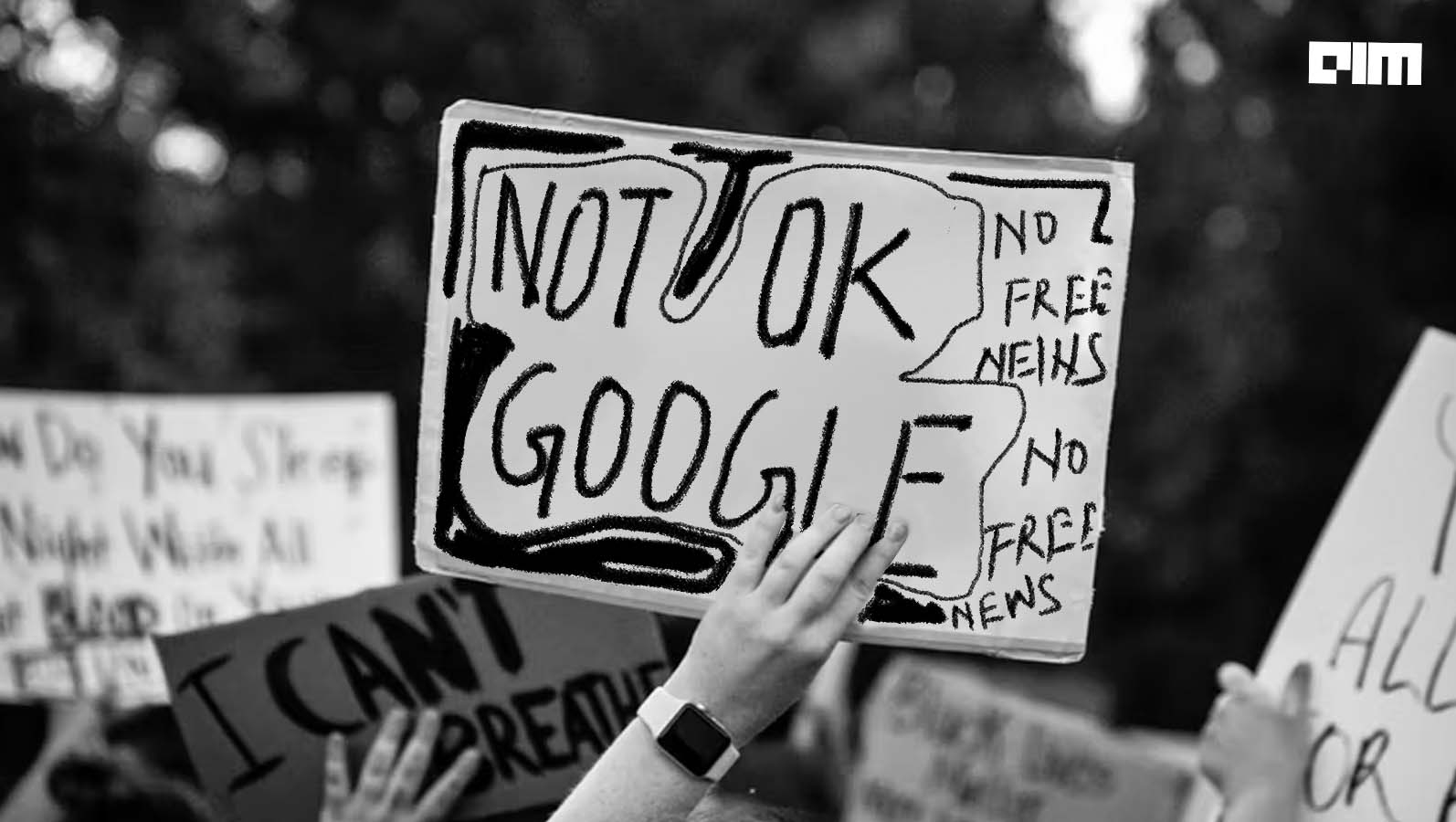
The global press is fiercely fighting to reclaim what it has lost to Big Tech. (Illustration: GI)
Less than a year after artificial intelligence (AI) exploded with the "signal" of ChatGPT at the end of 2022, society in general and the media in particular feel like they've just gone through a decade due to the many changes that have taken place. Artificial intelligence has now "infiltrated" every corner of human life.
The explosion of AI is believed to strongly propel the 4.0 revolution for human progress, helping many aspects of life develop in a more positive direction. In this vast historical context, the press and media seem insignificant, like a small sandbar before the turbulent river of the times.
In other words, the press cannot be an obstacle, and even less should it seek to become an obstacle hindering the wheels of history on its journey towards the next level of civilization for humanity. In fact, one of the noblest missions of the press is to accompany and encourage human progress.

With AI, Big Tech companies like Google and Facebook will become increasingly sophisticated in hijacking journalistic content to profit. Photo: FT
When journalism has to fight against technology
But, does it now feel like the world of journalism is on the other side of the battlefield, confronting technology in general, and artificial intelligence in particular? No, journalism, like many other affected industries, is not fighting against AI, but rather against "greedy giants" who want to exploit AI for their own gain, wanting to push journalism further into a corner after already crushing it with other sophisticated "technological weapons" - such as social media, sharing tools, or search engines.
In the final days of 2023, one of the world's most successful newspapers, both in terms of content and economics , the New York Times officially sued OpenAI and the tech giant Microsoft for the unauthorized use of their articles to train AI models like ChatGPT and Bing, demanding billions of dollars in compensation.
This is just the latest battle. The fight has been raging, not only in journalism and media, but also in other creative fields such as literature and film. Over the past year, artists, screenwriters, novelists, and other authors have filed lawsuits against Big Tech companies, seeking compensation for the unauthorized use of their works to train AI models for profit, without any intention of paying fees.
In May 2023, at the INMA media conference, News Corp CEO Robert Thomson expressed the media industry's outrage at AI, stating: “The collective property of the media is under threat and we should fight hard for compensation... AI is being designed so that readers will never visit a news website again, thus severely undermining journalism.”
Meanwhile, the Financial Times stated: “Copyright is a vital issue for all publishers.” Mathias Döpfner, CEO of the Axel Springer media group, owner of Politico, Bild, and Die Welt, declared : “We need a solution for the entire journalism and media industry. We must unite and work together on this issue.”
Those calls were urgent, not mere slogans. In reality, the future of world journalism is at risk of collapse if journalists stand idly by while Big Tech companies freely use algorithms, tricks, and now even "AI weapons" to "steal" their hard work and intellectual property.
How is Big Tech "monopolizing" journalism?
As is well known, in the age of the internet and social media, Big Tech companies initially "lured" newspapers to publish news on their superior technology platforms to compete for readers and increase revenue. This initial "naivety" of the press soon led to the collapse of a print media industry with a proud tradition spanning hundreds of years.
After dealing with "print journalism," tech giants, including Microsoft, Meta, and Google, continued to crush "online journalism," making most journalistic products free or cheap; journalists became unpaid workers for social media platforms like Facebook, TikTok, Twitter (X)... or the technology platforms of Google and Microsoft.
Statistics from most news markets around the world indicate that, in addition to virtually no profit from print newspapers, online advertising revenue has also plummeted by 70 to 80%, with much of this money flowing into the pockets of Big Tech companies. In this context, not only are smaller newspapers failing, but even prominent news sites that relied heavily on social media are collapsing or barely surviving, as in the cases of BuzzFeed News and Vice.
After attracting users to their platforms, including a large portion of traditional newspaper readers, Big Tech companies are also taking steps to "oust" traditional journalism by no longer supporting news and, in particular, "grabbing" most of the advertising funding. Google and Facebook recently dismissed news, stating it no longer holds much value for them in lawsuits concerning paid news in Australia and Canada. Facebook and Google have even threatened or tested blocking news in these two countries!
At this point, most social media platforms no longer contain much purely journalistic news, and journalism in general no longer benefits from traffic on technology platforms, because algorithms restrict access to affiliate links or limit other factors that encourage users to read news. Even if news websites somehow still manage to attract views from technology platforms, the amount of money they receive from those visits is very meager.
Statistics show that Americans are watching news more than ever before, with news organizations reaching over 135 million American adults each week. But despite record readership, revenue for news publishers in the US has still fallen by more than 50% in recent years. Evidently, this is also the case in most countries, including Vietnam. Simply put, as mentioned, news articles have been turned into free products by Big Tech companies for many years!
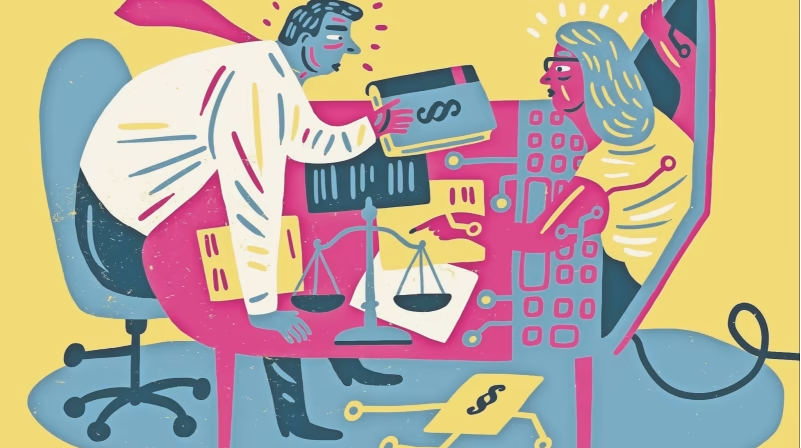
The world of journalism needs to continue fighting against the tech giants for its own benefit and future. (Illustration: FT)
AI, Big Tech's new and formidable weapon.
Faced with the "strangulation" of Big Tech, many major newspapers have risen up and found a new path. Instead of earning meager sums from Google or Facebook advertising, they are seeking to return to their old value: "selling newspapers," only instead of selling print newspapers as before, they are now doing so through paid subscriptions or subscription fees on online platforms.
Most major newspapers around the world have followed this model and, to some extent, have been successful, becoming self-sufficient in terms of reader subscriptions, almost entirely independent of Facebook or Google, such as the New York Times, Reuters, and the Washington Post. High-quality and genuine journalistic works have once again become a product that must be purchased – something that was self-evident for centuries before the emergence of Big Tech.
However, just as the press was beginning to see a glimmer of hope, a new threat emerged: the advent of AI!
As mentioned, it's undeniable that AI is a technology that can help humanity reach the next level of civilization, possessing unparalleled value in all aspects of life. Unfortunately, however, Big Tech companies are exploiting it to take away the last remaining hope of journalism. Thanks to Big Language Modeling (LLM), Machine Learning (ML), and Deep Learning (DL), AI tools are now scouring every corner of the internet, stealing all copyrighted knowledge, books, and news for themselves, reaping enormous profits from this without paying any fees.
This means that Big Tech companies are aiming to further dismantle the business model that the press has just built. With its superior capabilities, AI can easily "steal" or, for a very small fee like a regular user, take all the copyrighted content of newspapers in the blink of an eye, then train AI models or provide that content to users through chatbots. This is blatant copyright infringement!
So, specifically, how are chatbots and other AI models stealing the intellectual property of newspapers, journalists, and other authors?
Essentially, it takes the entire content of news articles or "rehashes" it to respond to user queries. The New York Times, in a lawsuit filed at the end of December, cited several examples of ChatGPT providing responses that closely resembled their own articles, especially if the information was found to be incorrect, at which point it would blame the news source. In other words, ChatGPT doesn't spend a single penny on content or bear any responsibility for it; it simply profits! That's an unparalleled injustice!
ChatGPT even launched its own internet browser last September to sell news, continuing to exploit news sources for profit, and has never offered to pay the press. Meanwhile, search engines like Google and Bing have adopted and will certainly increase the integration of AI chatbots to directly answer users' questions, leaving readers with no reason to visit original news sources.
Furthermore, Big Tech wants to go even further and become more sophisticated with AI. This involves using Natural Language Processing (NLP) technologies to rewrite articles, making it harder for the press to criticize and sue. Specifically, in July 2023, Google tested an AI product that automatically generates news based on news content or other sources. Initially, they introduced this tool to major news organizations such as the New York Times, Washington Post, and Wall Street Journal, hinting at a potential collaboration. However, they all became more cautious, as the press had not forgotten the consequences of collaborating with Google in the early days of the internet era!
Therefore, it can be asserted that, without a comprehensive change, all of the above will lead to a day when readers completely forget that there ever existed a press, or at least that there were ever news websites providing information to people – similar to how print newspapers have now almost become "extinct".
In this context, a significant portion of the journalistic world has entered this "life-or-death" battle through lawsuits and agreements forcing Big Tech companies to pay for news and other copyrighted products, such as the New York Times lawsuit, or the laws enacted by various countries that compel Big Tech to enter into commercial agreements with the press, as Australia and Canada have already done.
With unity and support from policymakers in each country, the press can actually still win the confrontation with tech giants, and continue to survive and fulfill its missions!
Notable lawsuits and trade deals between the press and Big Tech. 2023 marked a strong resurgence of the global journalism community in the face of pressure from Big Tech. Below are some of the most recent and prominent cases:  Google has agreed to pay for news content in Australia and Canada. Photo: Shutterstock * In November 2023, Google agreed to pay C$100 million annually to a fund supporting news organizations in Canada as part of the country's new online news law, which aims to force Big Tech companies like Google and Meta to pay a portion of their advertising revenue to newspapers. * In May 2023, the New York Times reached an agreement to receive approximately $100 million for news coverage on Google's platforms over three years. This was part of a broader deal that allowed Alphabet—Google's parent company—to feature New York Times articles on several of its technology and social media platforms. * In July 2023, the Associated Press (AP) reached an agreement allowing OpenAI, the publisher of ChatGPT, to use its journalistic content. In return, AP would receive technological support and a significant, undisclosed, financial grant from OpenAI. * A group of 11 authors, including several Pulitzer Prize winners, sued OpenAI and Microsoft in December 2023 for the unauthorized use of their work to train AI models such as ChatGPT. The lawsuit alleges that the Big Tech companies are “making billions of dollars from the unauthorized use” of their work. * In October 2023, Google agreed to pay €3.2 million annually to Corint Media, a sponsoring organization representing the interests of German and international news publishers such as RTL, Axel Springer, and CNBC. Corint Media also demanded €420 million in compensation for Google's use of news content since 2022. * In December 2023, German media group Axel Springer reached an agreement allowing OpenAI to use content from its publications such as Bild, Politico, and Business Insider to train ChatGPT, in exchange for tens of millions of euros annually.  Instead of complying with Google's recommendations, many news organizations are now forcing Google to pay for suggesting their content. (Image: CJR) |
Hoang Hai
Source











































































































Comment (0)