
 |
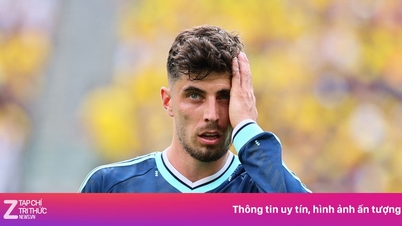
Qatar drew with Switzerland to earn their first point at the World Cup. |
For nearly 100 years, the World Cup has been a competition exclusively between Europe and South America. From Uruguay in 1930 to Argentina in 2022, the golden trophy has never left these two regions. However, the early days of the 2026 World Cup are beginning to tell a different story.
The giants are no longer dominant.
After the first six matches of the tournament, no representative from Europe or South America has yet secured a victory, despite appearing in most matches against opponents from other regions.
First, there's the case of the Czech Republic. The European representative even took the lead against South Korea but ultimately still suffered a 1-2 defeat. What's noteworthy isn't the score, but the way the match unfolded.
South Korea controlled possession for 61% of the time, unleashing 15 shots, double that of their opponent. The Asian team's expected goals (xG) reached 2.4, approximately three times higher than that of the Czech Republic. This was not a victory due to luck, but rather a completely dominant performance by the East Asian representatives.
Bosnia continued to trouble Europe by only managing a 1-1 draw against Canada. The Balkan team had only 39% possession and managed just 8 shots compared to the home team's 13. Canada also created more dangerous chances with an xG of 1.23 compared to Bosnia's 0.98.
While the Czech Republic and Bosnia are considered weaker teams in Europe, Switzerland's result against Qatar was a much bigger surprise. The team ranked 17th in the FIFA rankings dominated Qatar for almost the entire match, unleashing 26 shots and boasting an xG of 3.24. However, their wasteful finishing meant they only managed to score one goal before conceding an equalizer in the 94th minute.
Qatar, who had lost all three of their group stage matches at home in the 2022 World Cup, earned their first ever World Cup point by drawing with one of Europe's most consistent teams.



 |
Brazil was unable to dominate Morocco. |
The flat world is closing the gap every day.
While Europe disappointed, South America fared no better. Paraguay opened their World Cup campaign with a heavy 1-4 defeat against hosts USA. It was a match where the South American team was almost completely outmatched by the speed and power of their opponents.
South American fans then placed high hopes on Brazil, the most successful team in World Cup history. However, the Selecao were also unable to bring joy.
Against Morocco, Brazil drew 1-1 in a match where they didn't show any signs of being the superior team. In fact, looking at the statistics, the African side was the better team. Morocco had 14 shots on goal compared to Brazil's 12. The North African team's xG (xentures per game) was 1.52, significantly higher than the Selecao's 1.23. The draw therefore accurately reflects the balance of power on the field.
These developments show that world football is entering a much more balanced phase than before. The gap between different footballing nations is no longer as large as it was a few decades ago.
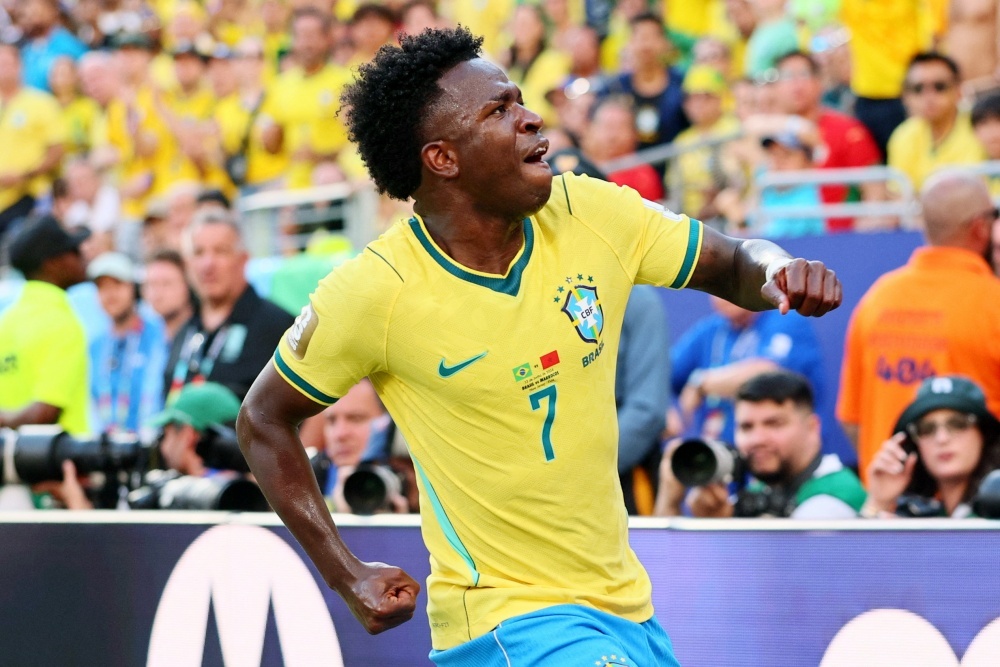 |
Brazil only managed a draw against Morocco. |
Asian teams are increasingly boasting players who play in Europe. African representatives are also benefiting from modern training systems and a pool of quality players competing in top European leagues.
Even the CONCACAF region has shown significant progress. The US and Canada are no longer just teams participating in the World Cup to gain experience, but are now capable of competing on equal footing with their European and South American counterparts.



FIFA's expansion of the World Cup to 48 teams has also provided opportunities for many emerging football nations to compete at the highest level. Asia has 9 representatives in the finals, while Africa contributes 10 teams. This is an unprecedented number in history.
Of course, it's too early to say whether Europe and South America have lost their dominant position. Top contenders like England, France, Spain, Germany, Argentina, and Brazil still possess very strong teams and are perfectly capable of going far.
However, the opening matches sent a clear message: world football is no longer the exclusive stage of the two traditional continents. Teams once considered "underdogs" are now capable of controlling the game, creating more opportunities, and even defeating renowned opponents.
The 2026 World Cup has only just begun. But if what happened in the first week continues, the tournament in North America could very well become the World Cup that witnesses the most dramatic shift in power in the history of world football.
Source: https://znews.vn/world-cup-2026-mo-ra-mot-trat-tu-moi-post1659536.html
![[Photo] A phone-free summer afternoon at the village library](https://vphoto.vietnam.vn/thumb/1200x675/vietnam/resource/IMAGE/2026/06/27/1782551770949_anh-1-jpg.webp)


![[Photo] Thousands of people participate in a run to show their support for the campaign "Sharing a common determination to build drug-free communes, wards, and special zones".](https://vphoto.vietnam.vn/thumb/1200x675/vietnam/resource/IMAGE/2026/06/27/1782554475933_0673e2a3df7b5e25076a-8283-jpg.webp)