

(NB&CL) The "sáo ôi" (a type of bamboo flute) – from a simple, rustic instrument of the Muong people – has continuously developed to keep pace with modern music , contributing to the richness and diversity of Vietnamese traditional music. In traditional spaces, the sound of the "sáo ôi" still resonates somewhere, like the voice of the Muong people…
A melancholy voice calls out to you.
In the Muong people's musical instrument system, which includes drums, gongs, drums, and other wind instruments, the "oi" flute holds a significant position. If gongs are considered the soul of percussion instruments, then the "oi" flute is regarded as the foremost among wind instruments. According to Mr. Bui Thanh Binh, Director of the Muong Cultural Heritage Museum (Hoa Binh City, Hoa Binh Province), in the Muong language, the "oi" flute is called "ong oi" or "khao oi".
The name probably originates from the fact that the flute's sound often includes the word "ôi" (you), such as: "ôi hỡi" (my friend), "ôi hày" (my dear friend), "ôi hạ" (my dear friend), "hơi ôi" (my dear friend)... "Ống ôi" means a flute for calling friends or lovers, and the "ôi" flute is also considered a flute of love. In daily life, the Muong people consider the "ôi" flute a cherished and precious object, evidenced by the fact that they always keep the flute in high places, such as hanging it on the wall or roof of their house - where they can easily reach it, or they may even hang it above their heads, right where they lie down.
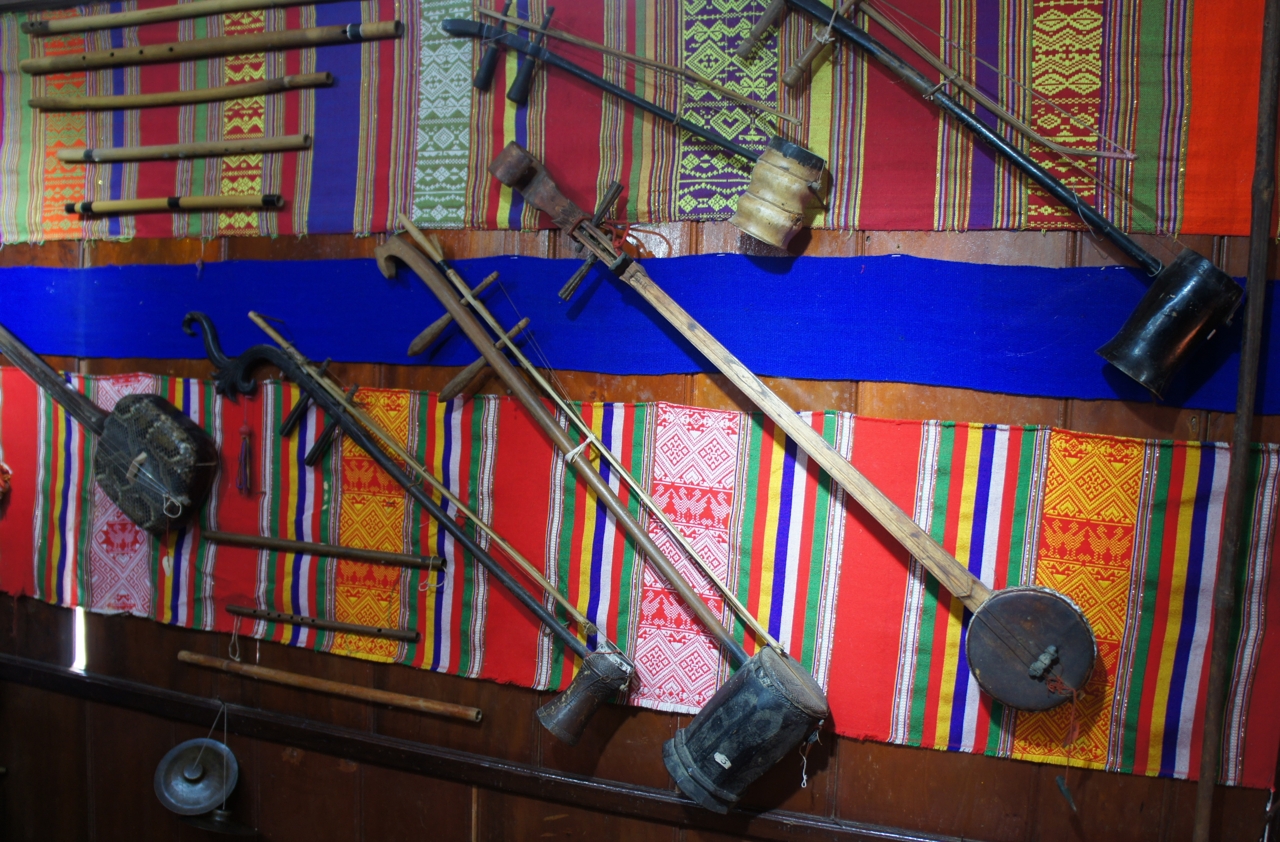
The exhibition space for traditional Muong musical instruments at the Muong Cultural Heritage Museum.
“The Muong people place the flute near their sleeping area so they can easily take it out and play it whenever they toss and turn, thinking of their loved ones or when a memory from their youth suddenly comes flooding back… The special thing about the Oi flute is its vertical playing style; its sound is completely different from horizontal flutes. The Oi flute produces a very special sound; it is gentle, profound, and melancholic, unlike the high-pitched, far-reaching sound of horizontal flutes. Therefore, the Oi flute is very suitable for the longing and heartfelt feelings of the player, on quiet moonlit nights,” Mr. Binh said.
Perhaps due to its deeply narrative and lyrical tone, the "oi" flute is often used by the Muong people during weddings, festivals, or Tet (Lunar New Year). The flute player can perform solo or use it as accompaniment for "mong" or "dum" singing performances, or simply play it as a way to express their feelings on moonlit nights. The sound of the flute is like a whispering wind, sometimes low, sometimes high; sometimes softly expressing emotions to loved ones, other times leisurely and calmly awaiting the arrival of the season. Mr. Binh said that in the old days, on leisurely spring nights, the Muong people would gather on their stilt houses, sipping rice wine and listening to the "oi" flute or the "co ke oong khao" music. Depending on the player's speed and mood, the sound of the flute could be gentle and profound, or lively and joyful…
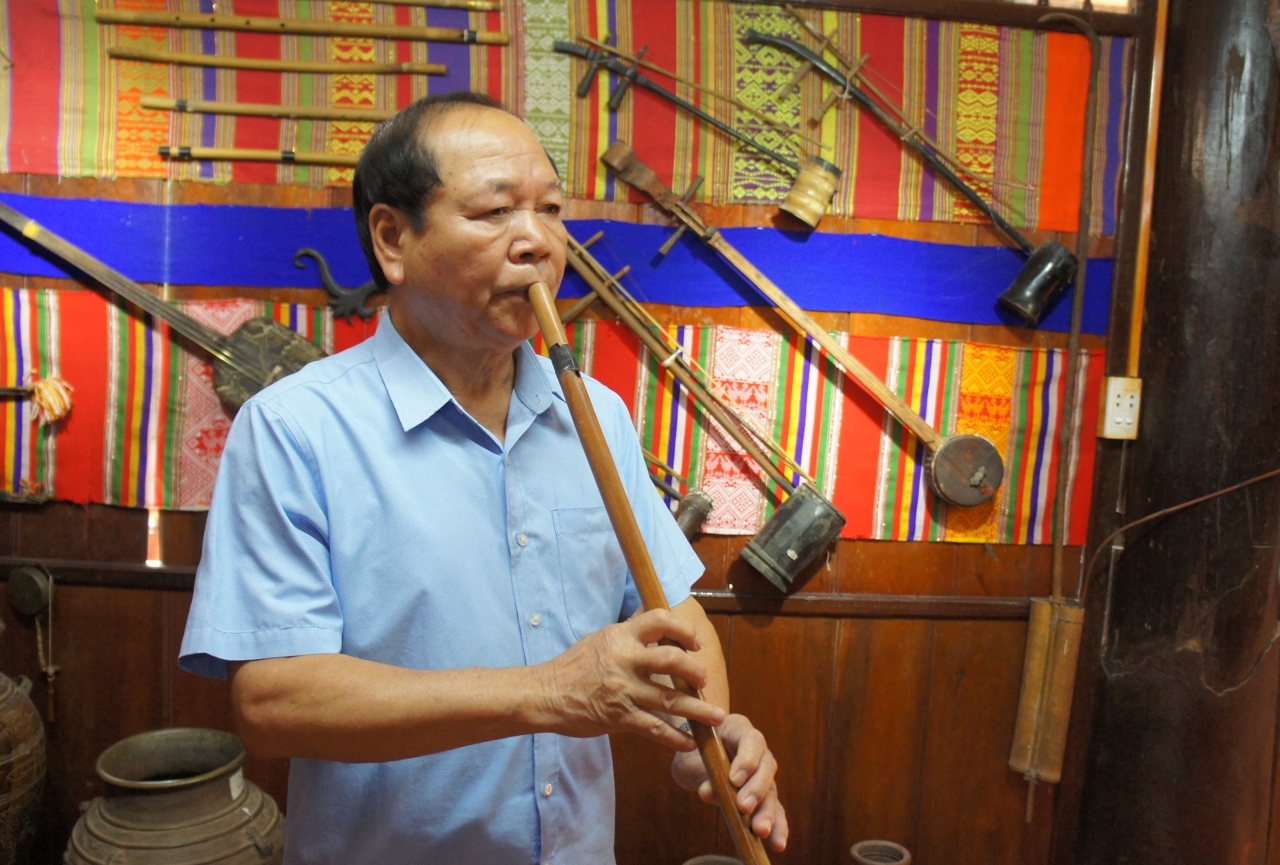
Mr. Bui Thanh Binh performed a folk song.
Conquer the symphony orchestra
Formerly a lecturer at the Northwest College of Culture and Arts, Dr. Bui Van Ho has spent many years researching and studying the Oi flute. According to him, the Oi flute is an ancient musical instrument of the Muong people, passed down from generation to generation. Before 1975, the Oi flute was usually played by elderly Muong artisans. What's special is that in the traditional way of playing the Oi flute, the artisan didn't produce the true sound of the flute but used a system of overtones. The way the Oi flute was played back then was simple and rustic, without any performance or display of technical skill. Melodies were played spontaneously, or Muong folk songs such as "hat dum," "hat vi," and "hat moi trau" were played. Later, artisan Quach The Chuc researched and improved the Oi flute so that it could meet the requirements of modern musical instruments.
According to Dr. Bui Van Ho, the ancient Oi flute of the Muong people only had four main finger holes, corresponding to five main notes: "ho," "su," "sang," "xe," and "cong." After decades of experimentation, artisan Quach The Chuc drilled seven finger holes into the Oi flute, resulting in a more diverse and modern range of notes. The improved flute produces notes corresponding to the notes do, re, mi, fa, son, la, si, similar to the sound of a six-hole bamboo flute played horizontally. Remarkably, despite the addition of more notes, the Oi flute still retains its unique, gentle, and melancholic tone.
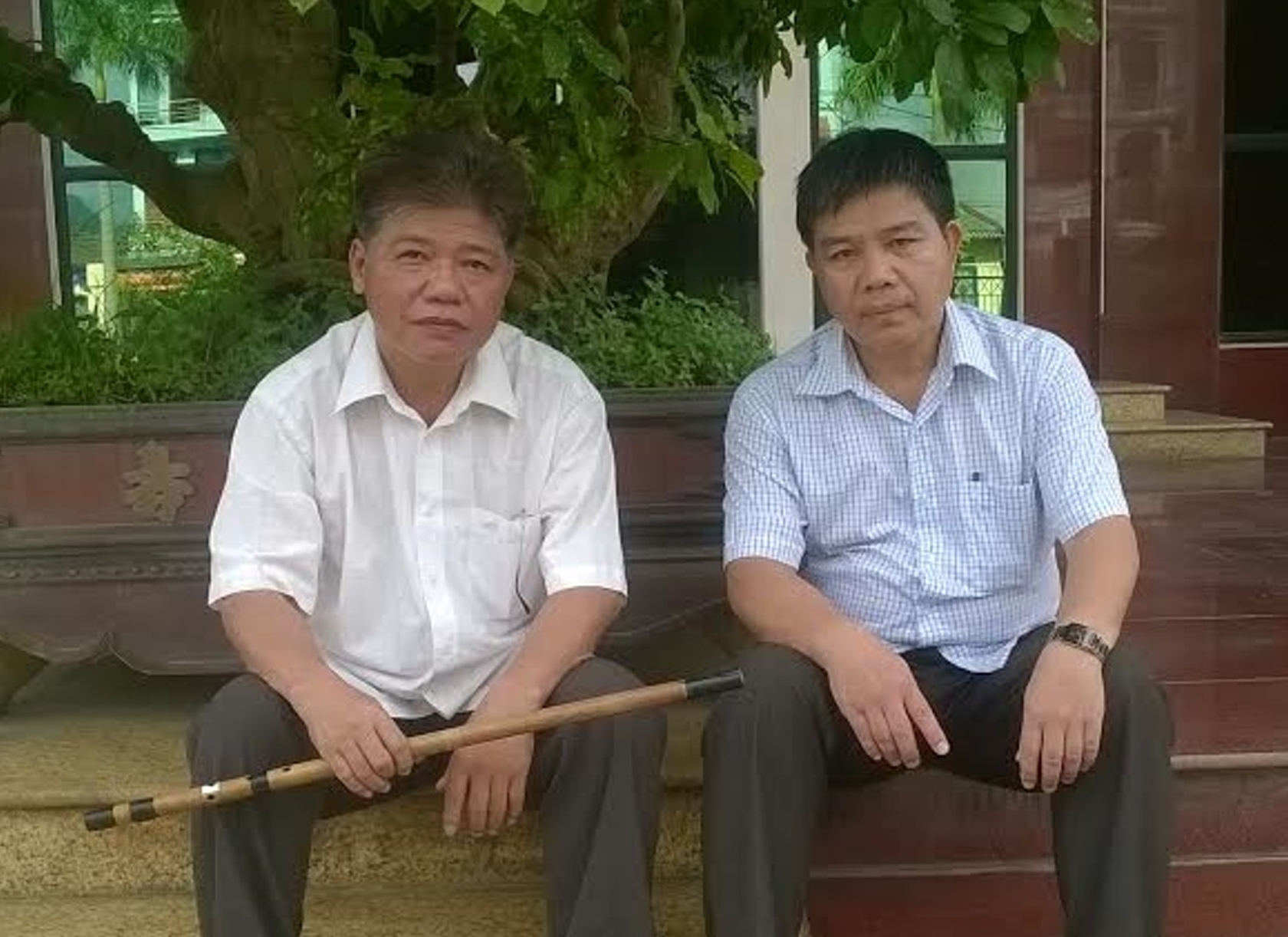
Artisan Quách Thế Chúc (left) and Dr. Bùi Văn Hộ. Photo: Dr. Bùi Văn Hộ
According to artisan Quách Thế Chúc, the Mường people require meticulous attention to detail right from the bamboo selection stage to make a good flute. First, the chosen bamboo must be a "khèng" bamboo (sandalwood bamboo, small bamboo) growing on the eastern side of the bamboo grove, with its tip also pointing east. The bamboo must be mature, with a yellowish outer bark; the brighter the yellow, the better. The bamboo stalk should have a diameter of about 1.5 cm, and the length of the bamboo segments should be 68 to 70 cm. Importantly, the bamboo must not have a broken top because flutes made from young, sun-damaged, or broken-top bamboo will never produce a good sound. The bamboo tubes are dried, and then the artisan drills holes using a red-hot iron awl. The distance between the holes is measured to match the "circumference" of the tube.
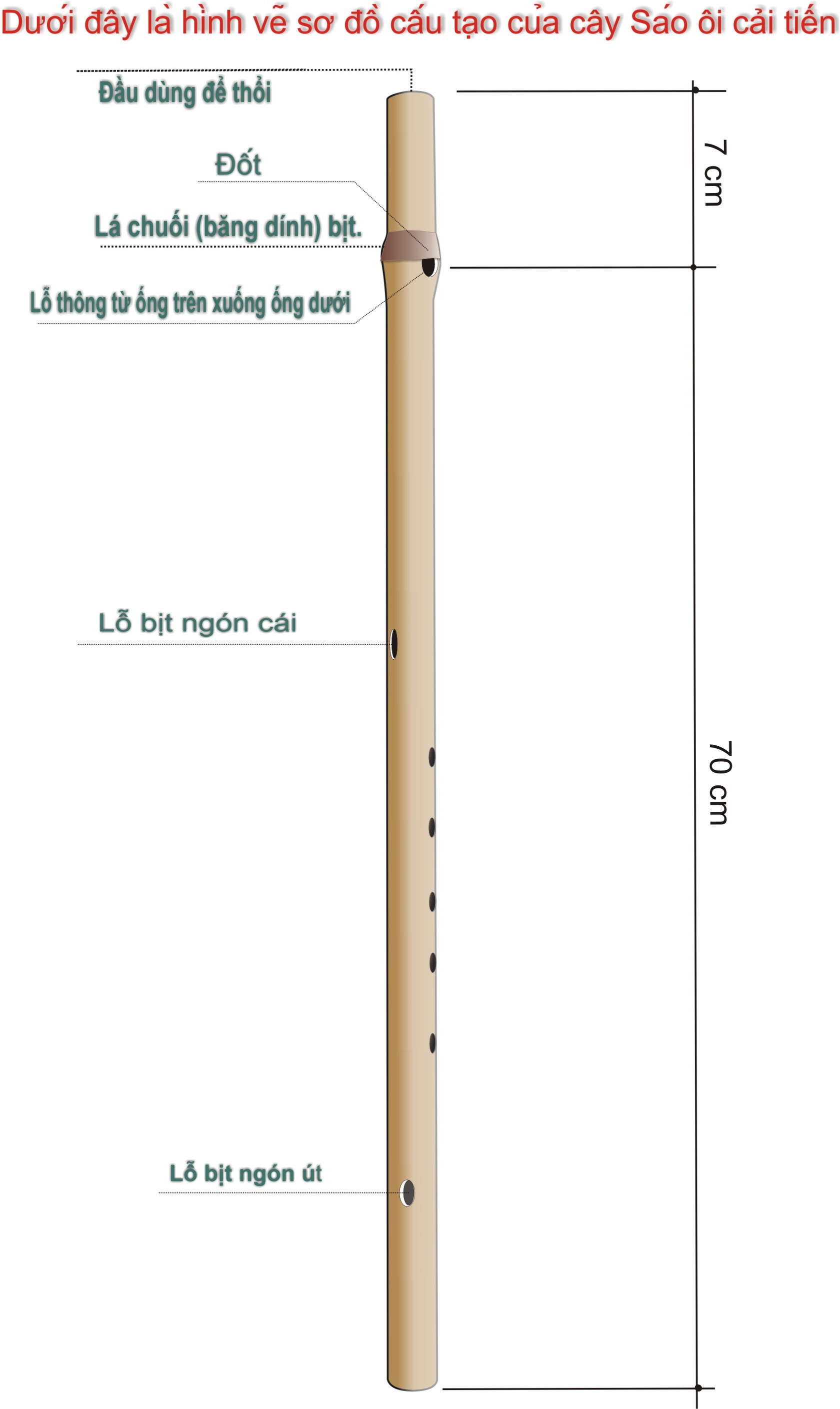
“With his passion and innate musical talent, Mr. Quách Thế Chúc has elevated the Mường ethnic group's oar flute to a new level. Thanks to his efforts, the oar flute has been included in the main curriculum of the Northwest College of Culture and Arts, where he himself teaches,” said Dr. Bùi Văn Hộ.
Along with formal training, the bamboo flute, originally played in traditional stilt houses, has accompanied artisan Quách Thế Chúc to perform at numerous professional theater festivals. He has received three Silver Medals at national music and dance festivals for his works: "That Place in My Village," "Heartfelt Feelings by the Voóng Gate," etc.
Building on that success, artisan Quách Thế Chúc boldly incorporated the "sáo ôi" (a type of bamboo flute) into the structure of traditional Vietnamese orchestras and then into symphony orchestras. The "sáo ôi" is now not only used for improvisation or as accompaniment to Mường folk songs, but has been brought to much larger performance spaces. The "sáo ôi" was played solo by artisan Quách Thế Chúc in the work "The Unfading Shadow of the Mountain" by composer Tống Hoàng Long. Composer Trần Ngọc Dũng also has a work specifically written for bamboo flute and "sáo ôi" ensemble with a symphony orchestra.
“Now, the oi flute has contributed to enriching and diversifying traditional Vietnamese musical instruments. The sound of the oi flute blends with various orchestral instruments; modern music mixes with Muong folk music, and these sounds are expressed in a very distinctive and evocative way. From an instrument that was only amateur in nature, the oi flute now deserves to be among the professional instruments,” Dr. Bui Van Ho assessed.
According to Mr. Bui Thanh Binh, nowadays, the number of artisans who still possess the "secrets" of making the Oi flute is not large, and the younger generation of the Muong ethnic group also has many other entertainment choices, so the number of young people being taught how to make and play the Oi flute is not as large as before. But the Oi flute and the art of performing it still flow silently through the lives and souls of the Muong people, so that on spring nights, the sound of the flute suddenly rises from somewhere, carrying with it countless unspoken feelings... The poignant sound of the flute brings back memories for the elderly, stirs the hearts of young people in love with longing, and keeps the Muong village awake and restless...
T. Toan
Source: https://www.congluan.vn/xu-muong-vang-tieng-sao-oi-post331500.html


![[Photo] General Secretary and President To Lam meets with National Assembly delegates from ethnic minorities.](https://vphoto.vietnam.vn/thumb/1200x675/vietnam/resource/IMAGE/2026/04/20/1776696701056_a1-bnd-8331-3342-jpg.webp)

![[Image] National Assembly discusses the implementation of the socio-economic development plan.](https://vphoto.vietnam.vn/thumb/1200x675/vietnam/resource/IMAGE/2026/04/20/1776696707422_ndo_br_img-20260420-185419-jpg.webp)


















































































Comment (0)