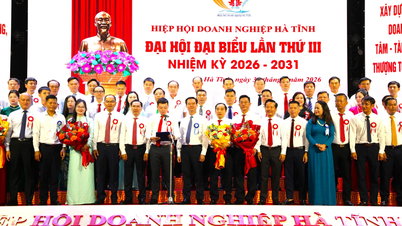
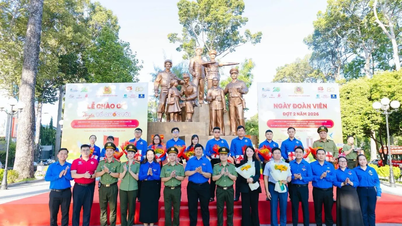
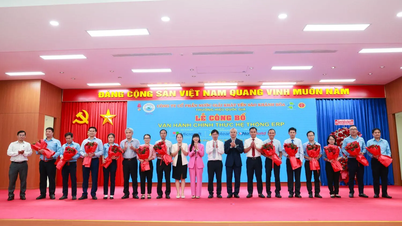
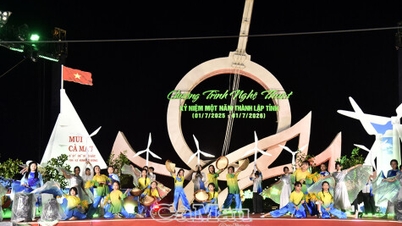
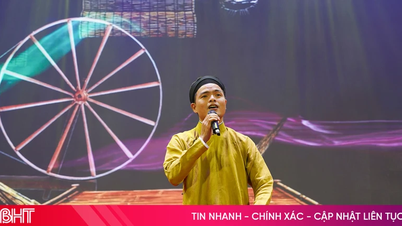
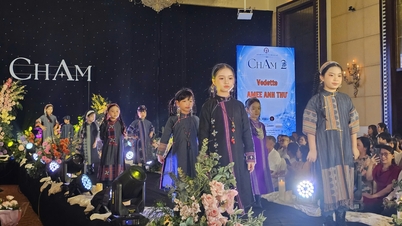
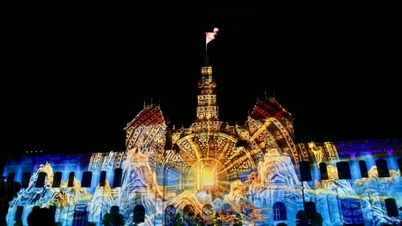
Cultural festivals are a rich tourism resource, but their exploitation must be done cautiously to contribute to heritage preservation. In the photo: The beauty of the Tong Phong Festival in Can Tho. Photo: DUY KHOI
In the field of music , it's easy to see that products inspired by festivals, customs, or folk elements are gradually gaining public favor. Traditional melodies and imagery that evoke local culture, when carefully produced, have created a strong impact, especially among young people.
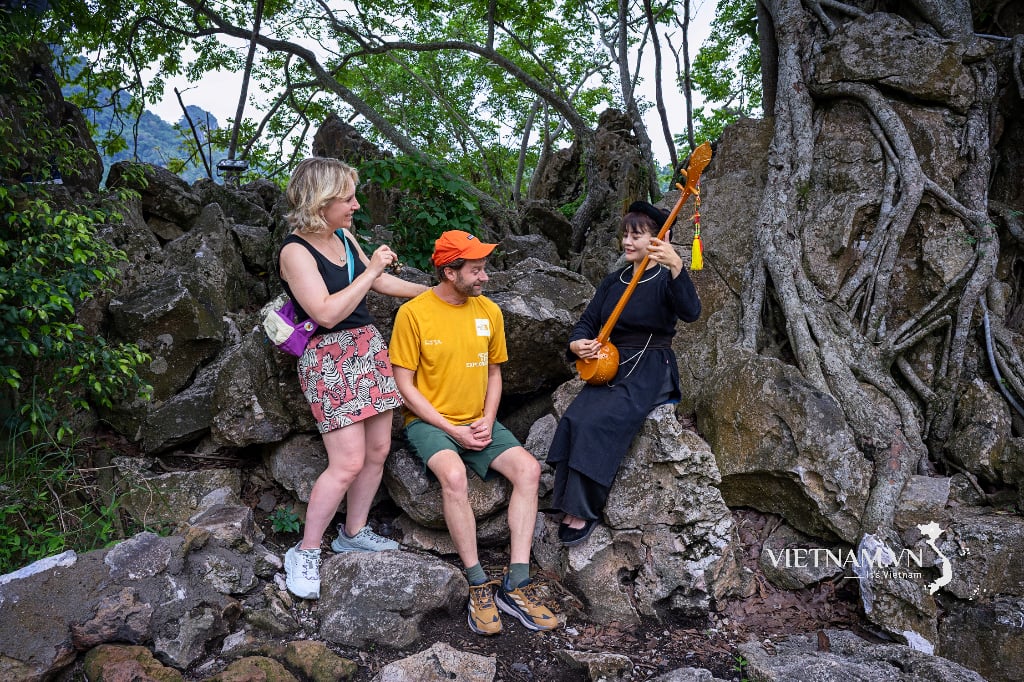
Tourism is also "awakening" the potential of local cultures, creating unique tourism products. From the vibrant colors of the ethnic communities in Northwest Vietnam, the echoes of the Central Highlands mountains and forests, to the distinctive waterways of Southwest Vietnam… all, when properly exploited, can become memorable experiential products. Ancient houses, daily life customs, folk festivals, and traditional folk performances are valuable resources that contribute to shaping the tourism identity of each locality.
In educational settings, particularly in some universities in Can Tho, students proactively engage with and recreate traditional culture through learning programs and projects. Models showcasing the Nghinh Ong festival, traditional weddings, or the art of traditional Southern Vietnamese music demonstrate the dynamism and commendable love of culture displayed by the younger generation.
However, alongside these positive signs, there are still many things that cause concern.


In some student-led programs, the research remains superficial and lacks depth. The reenactments are sometimes merely 형식적인 (formalistic), "having it but not quite there," leading to a reduction in cultural value and even misunderstandings.
In the tourism sector, some heritage exploitation products clearly reveal a lack of professionalism. Videos circulating of traditional folk singers performing for tourists at a famous islet in Dong Thap province, with their hurried singing, mixed language, and lack of refinement, have raised many concerns. Heritage requires subtlety and respect, rather than performances that are merely for entertainment.
For example, incorporating traditional ancestral commemoration ceremonies into tourism is a good idea, opening up a new approach to exploiting culture and developing tourism products. However, if implemented incorrectly, inadequately, or in a forced manner, it will not only diminish the inherent meaning but also risk "distorting" the distinctive cultural characteristics of the people of the Mekong Delta.
Clearly, there is a gap between "loving" and "understanding" a culture!
Loving culture is valuable. But if it's limited to emotion and superficial interest, it can easily lead to a shallow approach, even harming the very values we want to preserve. Cultural heritage is not "decorative material" to be exploited arbitrarily, but rather the crystallization of history, life, and the collective consciousness.
To sustainably promote the value of heritage, what is needed is not only love, but also understanding—a correct, deep understanding, and an attitude of respect.


DUY KHOI
Source: https://baocantho.com.vn/yeu-nhung-cung-can-phai-hieu-a201465.html



![[Image] National conference summarizing one year of operation of the overall organizational model of the political system, the three-tiered government model.](https://vphoto.vietnam.vn/thumb/1200x675/vietnam/resource/IMAGE/2026/07/01/1782882811691_ndo_br_1-jpg.webp)





![[INFOGRAPHICS] Policies to support vocational retraining and decommissioning of fishing vessels no longer needed for fishing operations.](https://vphoto.vietnam.vn/thumb/402x226/vietnam/resource/IMAGE/2026/07/01/1782905930516_1782905712.webp)




![[Video] Weather forecast for tonight and tomorrow, July 2nd, 2026: Tropical depression likely to strengthen into a storm; many areas will continue to experience thunderstorms.](https://vphoto.vietnam.vn/thumb/402x226/vietnam/resource/IMAGE/2026/07/01/1782911026600_thumb-dem-png.webp)