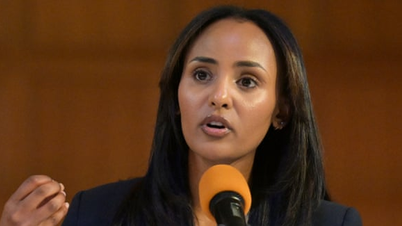
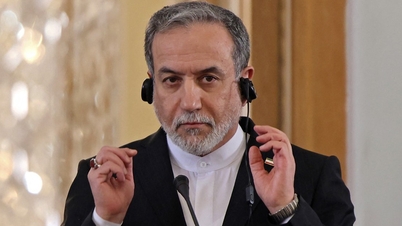
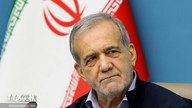
US Vice President JD Vance after talks with Iranian representatives in Switzerland last month (Photo: AFP).
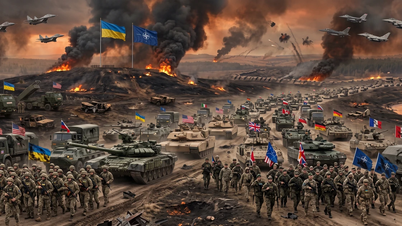
After nearly two weeks of escalating military tensions in the Gulf, the simultaneous signals of restraint from both the US and Iran have created the impression that the Middle East has narrowly avoided a large-scale war.
However, for international observers, the calming of the battlefield does not mean the crisis has come to an end. On the contrary, it may simply be a shift in the confrontation from missiles, aircraft, UAVs, and warships to a more sophisticated, complex, and unpredictable form: a war of pressure, leverage, and strategic bargaining.
Throughout the history of US-Iran relations since the 1979 Islamic Revolution, the two sides have repeatedly teetered on the brink of direct conflict, yet have always sought to maintain a certain distance to avoid all-out war. The difference in the 2026 crisis lies in the fact that both the US and Iran appear to be actively using the very threat of war as a tool for negotiations. In other words, the battlefield is becoming an extension of the negotiating table, and each military move carries carefully calculated political messages.
Therefore, following the preliminary agreement reached between the two sides in mid-June, what the world is witnessing is not simply a reconciliation process, but the beginning of a new "bargaining war" between two rivals who have been at odds for nearly half a century.
From military confrontation to a strategy of "fighting while negotiating"
According to experts, the essence of the current US-Iran confrontation is no longer about destroying the other's military capabilities, but about forcing the other to adjust their strategic calculations in a way that benefits themselves. This is a typical characteristic of the "brinkmanship" doctrine – a strategy that continuously escalates tensions to the brink of full-scale conflict to increase psychological and political pressure, while maintaining sufficient control to avoid crossing a point of no return.
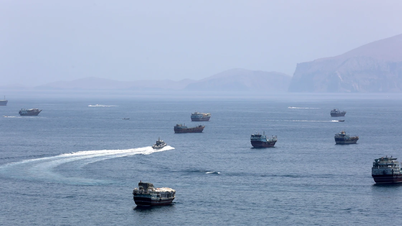
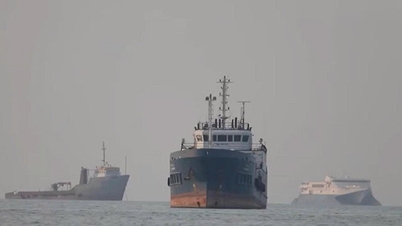
The events of late June clearly reflected this logic. Attacks on cargo ships operating near the Strait of Hormuz, limited US airstrikes on targets believed to be linked to pro-Iranian forces in the region, and Tehran's show of force military operations all occurred with sufficient intensity to send a deterrent message, but not to the point of forcing the opponent to launch a full-scale war.
Behind these clashes lies a process of testing each other's "red lines." The US wants to determine Tehran's willingness to escalate if it continues to increase military and economic pressure. Conversely, Iran wants to know whether the White House is truly prepared to accept the economic and political losses from a prolonged crisis in the Gulf. Every response from the other side, from the intensity of statements from leaders to the scale of military deployments, is recorded by both sides as data to be used in the next round of negotiations.
More importantly, both the U.S. and Iran are trying to enter negotiations from the strongest possible position. For the U.S., its superior air power, rapid deployment capabilities, and the strength of its global financial sanctions system remain its most effective tools for exerting pressure. The U.S. administration believes that only when Tehran clearly feels the cost of prolonged confrontation will it accept significant concessions regarding its nuclear and missile programs.
Conversely, Iran also possesses its own "cards" that the US cannot ignore. Its ability to disrupt maritime operations in the Strait of Hormuz, its network of allied "Axis of Resistance" forces in the region, its increasingly sophisticated missile capabilities, and its unique geostrategic position allow Tehran to create significant economic and geopolitical costs for Washington and its allies.
Therefore, the goal for both sides now is not victory on the battlefield, but rather to create the most favorable bargaining position before entering the formal negotiation phase. In this context, each seized cargo ship, each destroyed military facility, or each new round of sanctions imposed is not simply an independent military or economic action. They are being transformed into "cards" that can be exchanged in behind closed doors.
Three bargaining fronts will determine the future of US-Iran relations.
While recent military conflicts were fought with missiles and UAVs, the current war will be decided by oil, foreign currency, and enriched uranium.
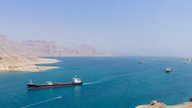
The first and most geopolitically significant front is the Strait of Hormuz. It is no coincidence that every escalation between the US and Iran over the years has been more or less linked to this shipping lane. Approximately 20% of the world's seaborne oil passes through the Strait of Hormuz, making it the energy lifeline of the global economy. Even a short disruption to maritime traffic here could cause a sharp increase in world energy prices, leading to inflationary pressure on the US, Europe, and many Asian economies dependent on oil imports.
For Tehran, the ability to influence the security of Hormuz is its most important strategic leverage point for balancing the power dynamics with the United States. While Washington possesses overwhelming military superiority, Iran holds the ability to inflict serious economic damage on the global energy market if pushed into a corner.
Therefore, Iran wants to maintain its central role in any maritime security mechanism in the Persian Gulf. Conversely, the US and its Western allies want to establish an international monitoring mechanism to minimize Tehran's ability to use Hormuz as a tool for political pressure in the future. This could be one of the most difficult points of negotiation in the coming period because it directly relates to Iran's geostrategic position in the Middle East.
The second front is the issue of economic sanctions and frozen assets abroad. If Hormuz is Tehran's strategic trump card, then sanctions are Washington's most effective tool for exerting pressure. After years of isolation from the international financial system, the Iranian economy desperately needs investment capital, technology, and foreign currency to restore growth, stabilize the exchange rate, and address domestic difficulties. Therefore, Tehran's top priority in all current negotiations is not military issues but the lifting of Western sanctions.
Iran wants the U.S. to immediately release frozen assets and lift most sanctions before fulfilling long-term strategic commitments. From Tehran's perspective, experience from previous agreements shows that promises of future sanctions lifting are insufficient to build trust.
Meanwhile, Washington is pursuing a completely opposite approach. US policymakers want a phased "fair exchange" mechanism, where each concession by Iran would correspond to a easing of US sanctions. The White House argues this is the only way to ensure Tehran fully fulfills its commitments. The vast difference in viewpoints between the two sides means that the economic issue is likely to become the first test of the sustainability of the negotiation process.
The third front , and the most sensitive issue, is Iran's nuclear and missile program. Unlike the negotiations leading to the 2015 nuclear agreement, the demands of the US and its Western allies are no longer limited to uranium enrichment levels. The US wants to broaden the scope of negotiations to include Iran's long-range missile capabilities, strategic UAVs, and military influence in the Middle East.
For Tehran, this is almost an unacceptable demand. Iranian leaders have long considered missile capabilities a "vital deterrent" against the overwhelming air superiority of the United States and Israel. Abandoning this shield would mean Iran placing itself in a more vulnerable position in terms of national security. Many international experts believe that if negotiations collapse in the coming months, the cause will most likely stem from the missile issue rather than the nuclear issue.
The negotiating table in Doha will witness many more storms.
The agreement between the US and Iran on June 29th to temporarily halt direct military operations does not reflect an increase in trust between the two sides, but rather shows that both Washington and Tehran are well aware of the enormous costs of a full-scale war.
For the U.S., a protracted conflict in the Middle East would increase pressure on the defense budget, drive up energy prices, and create an additional strategic burden as the U.S. is already allocating resources to other regions of the world and the midterm elections (November) are approaching.
For Iran, an all-out war with the US risks plunging its already strained economy into a deeper crisis and increasing domestic instability. In other words, both sides need an agreement, but neither wants to be the first to concede. This is precisely why Doha is likely to become the new diplomatic battleground of the Middle East crisis in 2026.



Future negotiations will not proceed in a straightforward manner, but may continuously alternate between dialogue and confrontation, between concessions and pressure. Whenever one side feels it is losing ground at the negotiating table, the risk of further controlled crises on the ground will increase.
It could be a seizure of a cargo ship, a cyberattack targeting energy infrastructure, a new round of sanctions, or a limited airstrike aimed at sending a political message to an adversary.
Such developments do not necessarily mean that war is returning. In many cases, they are simply part of the strategic bargaining process.
The history of US-Iran relations over the past half-century shows that the two countries have frequently used military pressure to serve diplomatic goals. The 2026 crisis appears unlikely to be an exception.
Following the preliminary agreement in June, bombing may have temporarily ceased in the Middle East, but another "war" between Washington and Tehran may have only just begun. It's no longer a war of aircraft carriers, bombers, or ballistic missiles. It's a war of leverage, national interests, and the art of bargaining between two adversaries who haven't truly trusted each other for nearly 50 years.
Source: https://dantri.com.vn/the-gioi/3-mat-tran-mac-ca-quyet-dinh-dam-phan-my-iran-20260701090810032.htm

![[Image] National conference summarizing one year of operation of the overall organizational model of the political system, the three-tiered government model.](https://vphoto.vietnam.vn/thumb/1200x675/vietnam/resource/IMAGE/2026/07/01/1782882811691_ndo_br_1-jpg.webp)