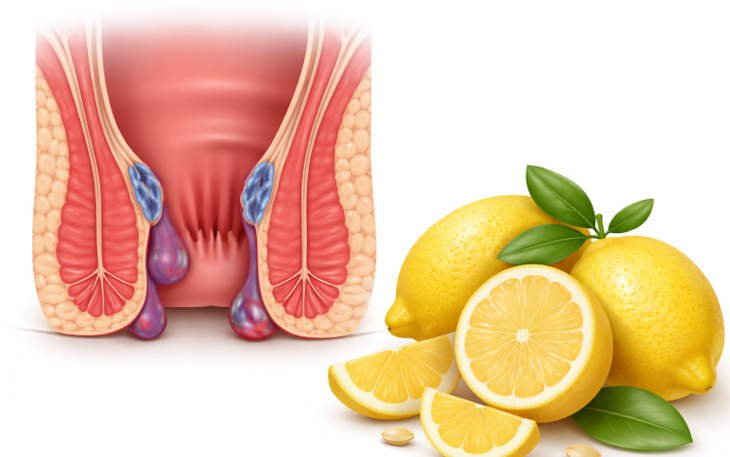
Hemorrhoids are one of the most common anorectal diseases today. Due to embarrassment, many people choose to self-treat at home or use traditional remedies without understanding the causes of the disease or the mechanisms of action of each remedy.
1. Hemorrhoids from the perspective of traditional medicine.
Traditional Chinese medicine also refers to hemorrhoids as "Lower hemorrhoids," belonging to the group of diseases arising in the anal region due to obstructed blood and qi circulation. According to the perspective of Traditional Chinese Medicine, the disease not only stems from local damage but is also related to functional imbalances of the internal organs, especially the Spleen, Large Intestine, and Liver.
People who frequently eat spicy foods, drink alcohol, suffer from prolonged constipation, or sit or stand for too long cause damp heat to accumulate in the large intestine, leading to dilation, swelling, pain, and bleeding of blood vessels in the anal region. Meanwhile, those who do heavy labor, postpartum women, the elderly, or those with chronic diseases often have a deficiency of vital energy, causing the spleen's energy to be insufficient to support the internal organs, resulting in hemorrhoids prolapsing outside the anus.
Therefore, in Traditional Chinese Medicine, the treatment of hemorrhoids aims not only to shrink the hemorrhoidal tissue but also to clear heat, cool the blood, promote blood circulation, stop bleeding, strengthen the spleen, replenish qi, and raise the middle qi to limit recurrence.
2. Some remedies for treating hemorrhoids
Prescription 1: Modified Blood-Invigorating Rehmannia Decoction
This is a commonly used remedy for patients exhibiting symptoms such as bright red blood in the stool, burning sensation in the anus, constipation, yellow urine, dry mouth, red tongue, and yellow coating on the tongue.
Ingredients: Rehmannia glutinosa 16g, Sophora japonica 12g, Thuja orientalis 12g, Rehmannia glutinosa (raw) 16g, Scutellaria baicalensis 10g, Coptis chinensis 6g, Paeonia lactiflora 12g, Angelica sinensis 12g, Glycyrrhiza glabra 6g.
Instructions: Brew one dose per day, divided into 2-3 servings. Drink while the medicine is still warm.
Uses: Rehmannia glutinosa and Sophora japonica are two well-known herbs in Traditional Chinese Medicine with effects on cooling the blood, stopping bleeding, and reducing inflammation of the anal mucosa. Modern research shows that Sophora japonica contains flavonoids, especially rutin and quercetin, which help increase vascular wall strength, reduce capillary permeability, and support bleeding reduction. Rehmannia glutinosa is rich in tannins, which have an astringent effect on the mucosa, promote hemostasis, and reduce edema.
Rehmannia glutinosa has the effect of clearing heat and nourishing yin, helping to soothe mucosal damage. Coptis chinensis contains a lot of berberine, while Scutellaria baicalensis is rich in baicalin and flavonoids, which have antibacterial and anti-inflammatory effects, contributing to reducing swelling and pain in the anal area. This remedy is suitable for bleeding internal hemorrhoids or acute hemorrhoids with symptoms of inflammation and heat.

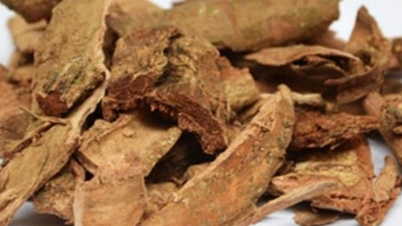
Rehmannia glutinosa has the effect of cooling the blood, stopping bleeding, and reducing inflammation of the anal mucosa.
Prescription 2: Modified Bu Zhong Yi Qi Tang (Tonifying the Middle and Replenishing Qi Decoction)


People who experience prolapsed hemorrhoids after defecation, fatigue, poor appetite, shortness of breath, and pale complexion often have a deficiency of vital energy (qi).
Ingredients: Astragalus membranaceus 20g, Codonopsis pilosula 16g, Atractylodes macrocephala 12g, Glycyrrhiza glabra 6g, Angelica sinensis 10g, Citrus reticulata peel 8g, Bupleurum chinense 6g, Cimicifuga dahurica 6g.
Instructions: Brew one dose per day, divided into 2-3 servings. Drink while the medicine is still warm.
Uses: This herbal remedy has the effect of tonifying Qi, strengthening the spleen, and raising the central Qi. Astragalus is the main ingredient, which, according to traditional Chinese medicine, tonifies Qi and raises the central Qi, helping to improve the condition of prolapsed hemorrhoids. Some studies show that polysaccharides and astragaloside in astragalus have the ability to regulate immunity, act as antioxidants, and promote tissue regeneration.
Codonopsis pilosula and Atractylodes macrocephala help strengthen the spleen, improve digestive function, and reduce constipation caused by spleen deficiency. Angelica sinensis both nourishes and invigorates the blood, helping to nourish blood vessels and support the recovery of mucosal damage. This is a commonly used herbal remedy for patients with grade II-III hemorrhoids exhibiting prolapse but who are not yet candidates for surgery.
Prescription 3: Modified Peach Blossom Four-Ingredient Decoction
This is a remedy for promoting blood circulation, resolving blood stasis, and relieving pain. When hemorrhoids are swollen, painful, bruised, or have blood clots, Traditional Chinese Medicine believes that stagnation of qi and blood stasis are the primary pathogenesis.
Ingredients: Peach kernel 10g, safflower 8g, red peony root 12g, Angelica sinensis 12g, Ligusticum chuanxiong 10g, Achyranthes bidentata 12g, Citrus aurantium peel 10g.
Instructions: Brew one dose per day, divided into 2-3 servings. Drink while the medicine is still warm.
Uses: The combined herbs help to promote blood circulation, dissolve blood stasis, reduce edema, and improve circulation in the anal region. Angelica sinensis and Ligusticum chuanxiong help increase blood flow and reduce pain. Carthamus tinctorius and Prunus persica help reduce blood stasis and limit the formation of blood clots in hemorrhoids. This remedy is suitable for patients with painful external hemorrhoids or after a thrombosed hemorrhoid episode.

According to traditional Chinese medicine, astragalus root has the effect of tonifying qi and raising the body, helping to improve the condition of prolapsed hemorrhoids.
Remedy 4: A soaking and washing remedy for the anal area to reduce swelling and pain.
In addition to oral medication, Traditional Chinese Medicine places great importance on local treatments to reduce inflammation and promote wound healing.
A remedy consisting of 30g betel leaves, 30g mugwort, 20g honeysuckle flowers, 15g Phellodendron bark, and 5g alum can be used. These herbs are boiled in about 2 liters of water, allowed to cool to a temperature of approximately 38-40°C, and then used to soak the anal area for 10-15 minutes daily.
The essential oils in betel leaves have antibacterial and anti-itching effects. Honeysuckle and Phellodendron bark help fight inflammation and prevent secondary infections, while mugwort helps reduce pain and improve local blood circulation. This method is particularly useful after bowel movements or during acute hemorrhoid flare-ups.



3. Notes for patients with hemorrhoids
To support treatment, patients should:
- Drink 1.5-2 liters of water every day.
- Increase your intake of green vegetables, fruits, and whole grains to soften stool.
- Establish a regular bowel movement routine, avoiding prolonged straining or sitting on the toilet for too long.
- Maintaining light physical activity such as walking, swimming, or performing pelvic floor strengthening exercises will help improve venous circulation in the anal region.
For individuals with severe bleeding hemorrhoids, anemia, prolapsed and strangulated hemorrhoids, large thromboses, or grade III-IV hemorrhoids, examination by a proctologist is necessary to assess the indication for surgical intervention when required.
A balanced combination of modern and traditional medicine, under the guidance of a doctor, will yield optimal treatment results, helping to reduce symptoms, limit complications, and prevent long-term recurrence.
See more trending articles:
Source: https://suckhoedoisong.vn/4-bai-thuoc-dieu-tri-benh-tri-169260701152952162.htm










































































![[Live] Exchange program “80 Years of Keeping the Oath” commemorating the 80th anniversary of the People's Security Force's traditional day.](https://vphoto.vietnam.vn/thumb/402x226/vietnam/resource/IMAGE/2026/07/02/1782997764964_truc-tiep-nbsp-w1200t0-di2626d272d4194258t13840l1-banner-80-nam-n2.webp)