

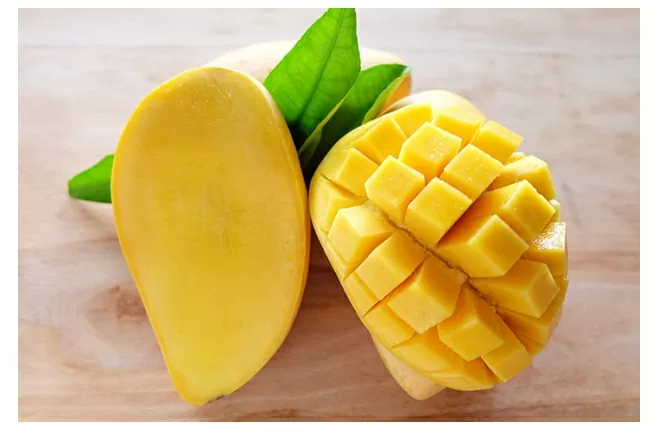
Mangoes are considered the "king of fruits," helping to create a protective barrier for the body against the risk of many diseases, but many people have reservations about this fruit.
For people with kidney disease - kidney failure, mangoes can overload the body.
In Traditional Chinese Medicine, the kidneys are the root of life, responsible for storing essence and regulating bodily fluids. When the kidneys are weak (due to kidney yin deficiency or kidney yang deficiency), the body has difficulty processing energy-rich foods like mangoes. Mangoes contain sugar, protein, and amino acids, requiring the kidneys to work harder to filter and excrete them. People with nephritis, kidney failure, nocturia, frequent urination, or lower back and knee pain who eat a lot of mangoes may overload their kidneys, worsening their condition.
People with diabetes - Mangoes raise blood sugar levels.
Diabetes, or "thirst disease" in Traditional Chinese Medicine, is related to the depletion of yin fluids, causing the body to be thirsty, eat more, and urinate more frequently. Mangoes have a very sweet taste and contain a high amount of natural sugar (about 14g of sugar per 100g of mango). Mangoes can raise blood sugar levels, damage the spleen, generate phlegm in the lungs, and worsen yin deficiency. People with diabetes should limit or avoid eating mangoes to control their blood sugar.
 |
People with boils and allergies - Mangoes help reduce heat in the body.
People who frequently suffer from boils, rashes, or mouth sores often have a constitution characterized by internal heat and dampness accumulation. According to Traditional Chinese Medicine, mangoes belong to the group of foods that generate both dampness and heat, increasing moisture and fire in the body. Furthermore, the urushiol in mango peel can irritate the skin, leading to rashes, itching, or worsening acne. People with this constitution should limit their mango consumption to avoid triggering symptoms.
People with diarrhea and stomach chills - Mangoes can harm the spleen and stomach.
Diarrhea is a sign of spleen deficiency and excessive dampness, making it difficult for the body to absorb food and water. Mangoes contain a lot of water and fiber, which are good for digestion in healthy people, but they put pressure on the spleen and stomach in those with weak digestive systems. Eating mangoes while experiencing diarrhea or a cold stomach can cause stagnation of qi, increase dampness, and worsen loose stools and bloating. These individuals should avoid mangoes to protect their digestive system.
People with allergies - Mangoes can easily cause strong reactions.
Traditional Chinese medicine holds that allergies stem from a weakened vital energy, allowing wind or heat pathogens to easily invade the body. Mangoes, especially green mangoes, contain irritating substances like urushiol, which can lead to itchy mouth, rashes, or mild fever in people with weak lung energy, weak spleen, or yin deficiency. These individuals are more prone to allergic reactions when eating mangoes, especially if their bodies do not digest them well.
For obese people - Mangoes can impair spleen function and lead to fat accumulation.
According to Traditional Chinese Medicine, obesity is related to weak spleen energy, accumulation of phlegm and dampness, and metabolic disorders. Although mangoes contain fiber, they are also high in sugar and calories (approximately 60 kcal/100g). Eating too many mangoes can generate dampness and turbidity, hindering spleen energy, leading to indigestion, bloating, and fat accumulation. Obese individuals should limit mango consumption and prioritize foods that strengthen the spleen and eliminate dampness to support weight loss.
People belonging to the six groups mentioned above should be cautious when eating mangoes, ideally eating less or avoiding them entirely to protect their health. If you are unsure whether you should eat mangoes, consult your doctor or a traditional Chinese medicine practitioner for appropriate advice.
Source: https://baoquocte.vn/ai-khong-nen-an-qua-xoai-320780.html

![[Photo] General Secretary and President To Lam meets with National Assembly delegates from ethnic minorities.](https://vphoto.vietnam.vn/thumb/1200x675/vietnam/resource/IMAGE/2026/04/20/1776696701056_a1-bnd-8331-3342-jpg.webp)
![[Image] National Assembly discusses the implementation of the socio-economic development plan.](https://vphoto.vietnam.vn/thumb/1200x675/vietnam/resource/IMAGE/2026/04/20/1776696707422_ndo_br_img-20260420-185419-jpg.webp)












































































Comment (0)