

 |
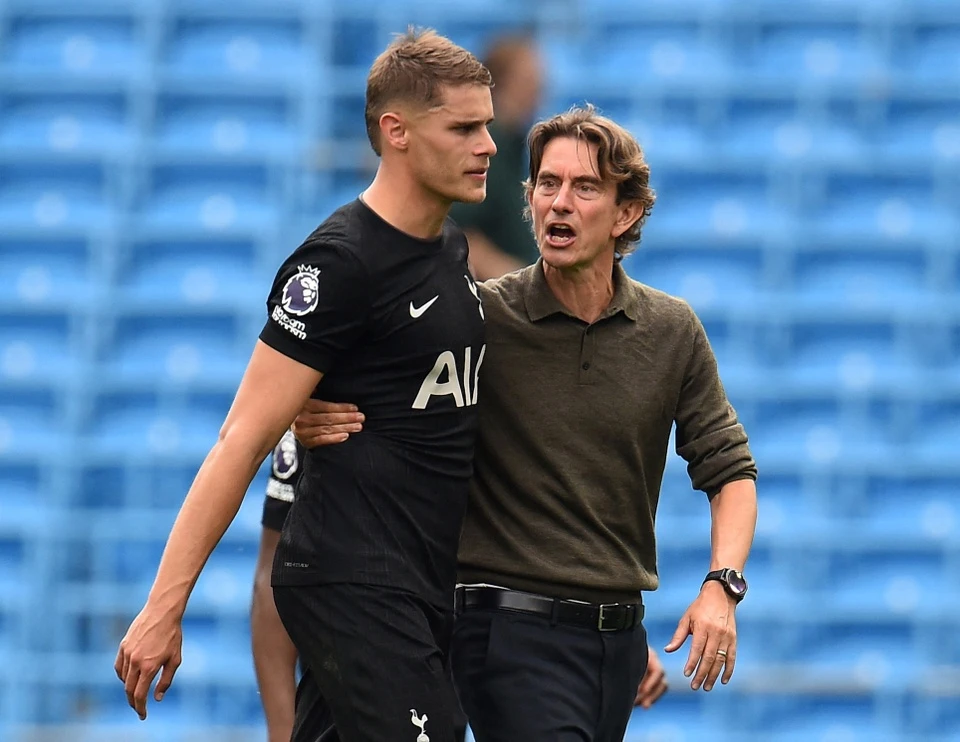
Thomas Frank is helping Spurs change. |
In today's football landscape, where many coaches are caught up in tactical dogma and see changes in formation as a sign of instability, Thomas Frank emerges as a breath of fresh air. After three games in charge of Tottenham, he has proven that flexibility is not a sign of weakness, but rather a strength of a modern manager.
A flexible coach
In less than two weeks, Frank's Tottenham presented three different tactical approaches. In the European Super Cup, they played a 3-5-2 formation, ceding possession to Paris Saint-Germain and waiting for opportunities from long balls and set pieces.
Against Burnley, Frank switched to a 4-3-3 formation, leveraging his superior ball possession to stifle his opponents. The pinnacle came at the Etihad, when Spurs defeated Manchester City with aggressive pressing and exploiting the spaces behind their high defensive line. The result: three matches, two big wins, a dramatic draw, and most importantly – not conceding a single goal in the Premier League.
It's not just about the numbers. It reflects the nature of a coach who values reality and doesn't confine himself to a single system.
Frank understood that football is not a simulation game where a pre-programmed plan is in place. In 90 minutes, there are always unexpected elements: injuries, individual form, the specific strengths of the opponent. And the coach's task is not to cling to a single "idea," but to find solutions to win.
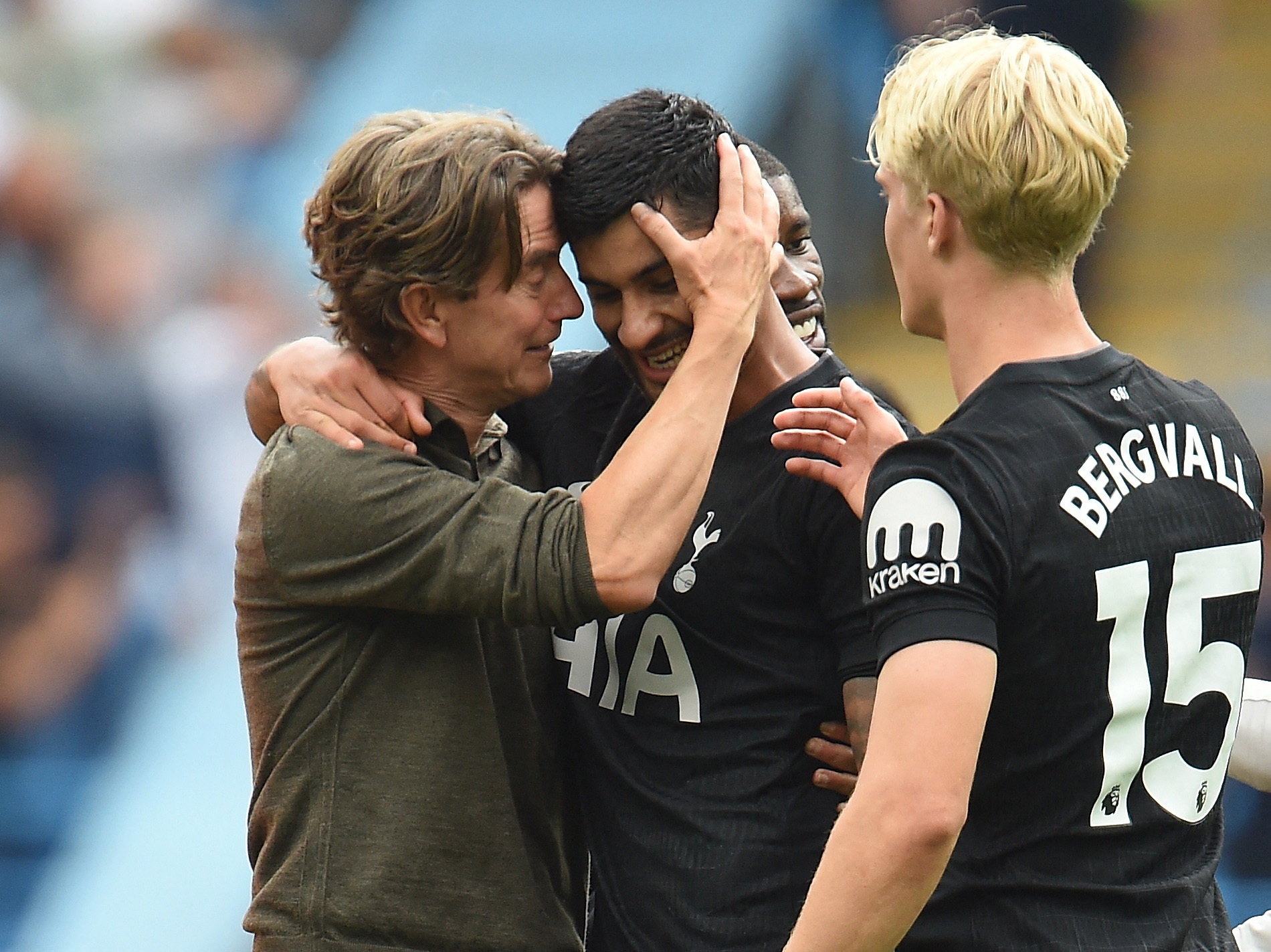 |
Thomas Frank demonstrated great flexibility in his use of tactical formations. |
This philosophy isn't new. Historically, many legendary coaches have succeeded thanks to their adaptability: Sir Alex Ferguson constantly changed formations to suit his personnel; Carlo Ancelotti could win the Champions League with a 4-4-2 diamond formation at Milan, then switch to a 4-3-3 at Real Madrid. However, amidst the wave of young coaches who champion an "unchanging philosophy" as a declaration of power, Frank stands out as a rare exception.
Compared to Ruben Amorim at Manchester United, the contrast is even clearer. Amorim, talented and charismatic, chose absolute rigidity. He believed that abandoning the 3-4-2-1 formation would cause players to lose confidence.
But in reality, it is this very conservatism that is causing MU to stagnate. Without creative number 10s, Amorim still forces the team to operate with a two-number 10 formation behind the central striker. The consequence: the "Red Devils" play awkwardly, lack attacking options, and have had disastrous results after only a few rounds.
Meanwhile, at Spurs, the atmosphere is brimming with confidence. The players understand that each game they have a clear plan, designed to maximize strengths and minimize weaknesses. That's what creates collective belief: the belief that the manager will deliver winning opportunities through his flexibility.
Thomas Frank's Identity
Significantly, Frank didn't lose his identity in the process of adapting. Tottenham under him didn't play negatively. They still dared to press, were still proactive when needed, and still exploited the speed and technique of their attacking players.
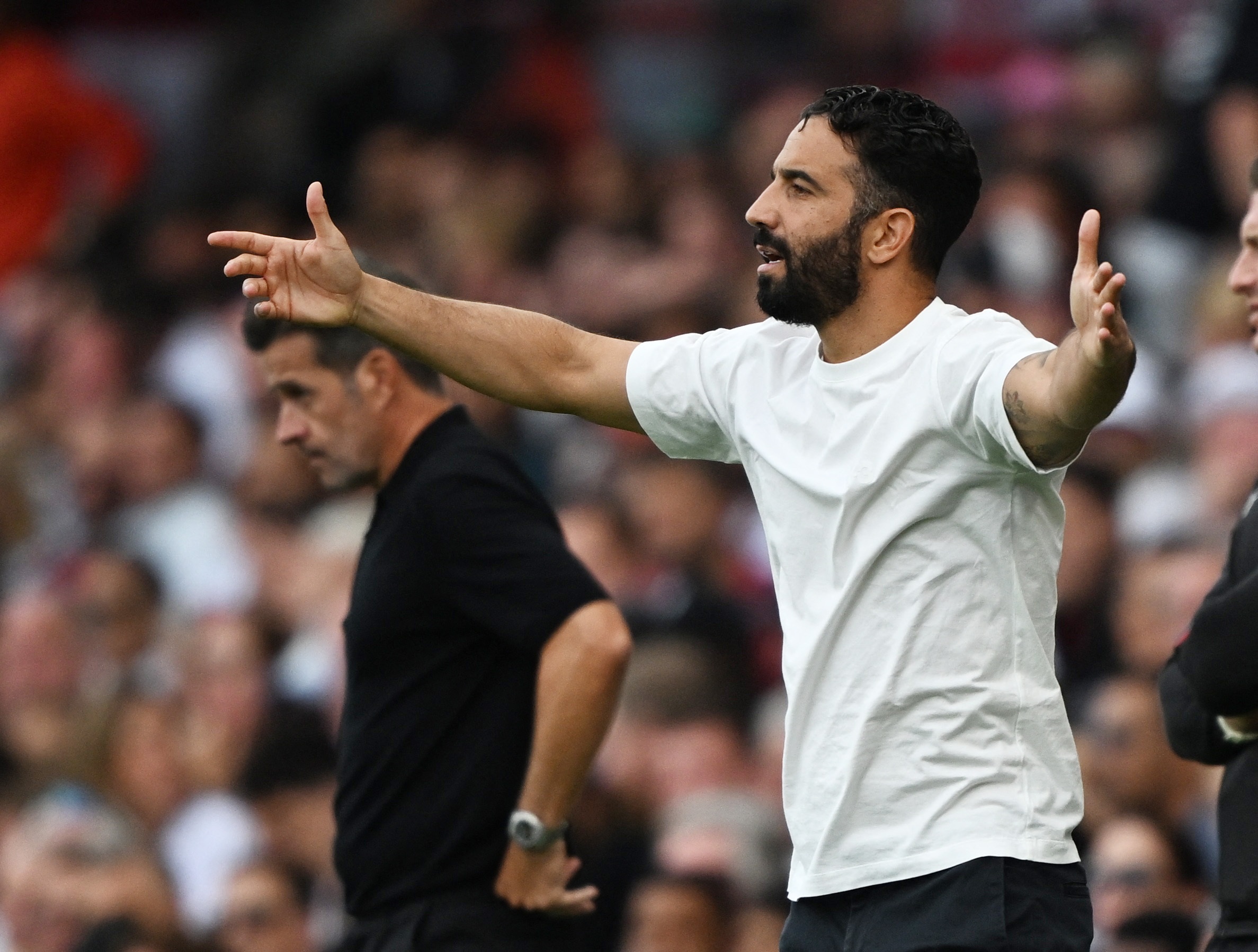 |
Coach Thomas Frank was not at all rigid, which is quite different from Ruben Amorim. |
The difference lies in the fact that Frank knows when to drop deep, when to push forward, when to use long balls, and when to control the tempo. This is the art of game management – something increasingly rare in modern football, which is obsessed with "philosophy."
The lesson from Brentford remains relevant. Last season, despite losing Ivan Toney, Frank immediately adjusted, with Bryan Mbeumo and Yoane Wissa becoming a duo that scored 39 goals in the Premier League. The small team still finished in 10th place – a remarkable achievement. From Brentford to Spurs, Frank's message remains the same: look at the players at your disposal, then devise the most suitable strategy.
Flexibility is not compromise. It's character. Because a coach who dares to change is daring to acknowledge reality, daring to put collective victory above tactical ego. Frank is proving that success doesn't come from asserting "this is my philosophy," but from the ability to find a way for the team to win, regardless of the circumstances.
In the modern world of football, where too many managers see change as a weakness, Thomas Frank shows the opposite: adaptability is strength. And at Tottenham right now, that freshness is igniting the belief that they can become a real challenger, not only through enthusiasm, but also through the tactical intelligence of a manager who knows how to prioritize victory over rigid philosophies.
Source: https://znews.vn/amorim-nen-cap-sach-hoc-thomas-frank-post1579978.html

![[Photo] Prime Minister Pham Minh Chinh receives the Director of RMIT University Melbourne (Australia)](https://vphoto.vietnam.vn/thumb/1200x675/vietnam/resource/IMAGE/2026/04/02/1775142120087_thiet-ke-chua-co-ten-2026-04-02t214220784-png.webp)



















































































Comment (0)