[Photo] Reviving the traditional craft of making bamboo scrolls in Chuon village.
When visiting An Truyen, My Thuong ward, Hue city, tourists can not only enjoy the local specialty of whale fish pancakes but also admire Chuon village calligraphy scrolls (simply put, folk calligraphy paintings), following the recent successful project to revive the Chuon village scroll-making craft by Ngo Quy Duc and his young colleagues.
Báo Nhân dân•19/01/2026
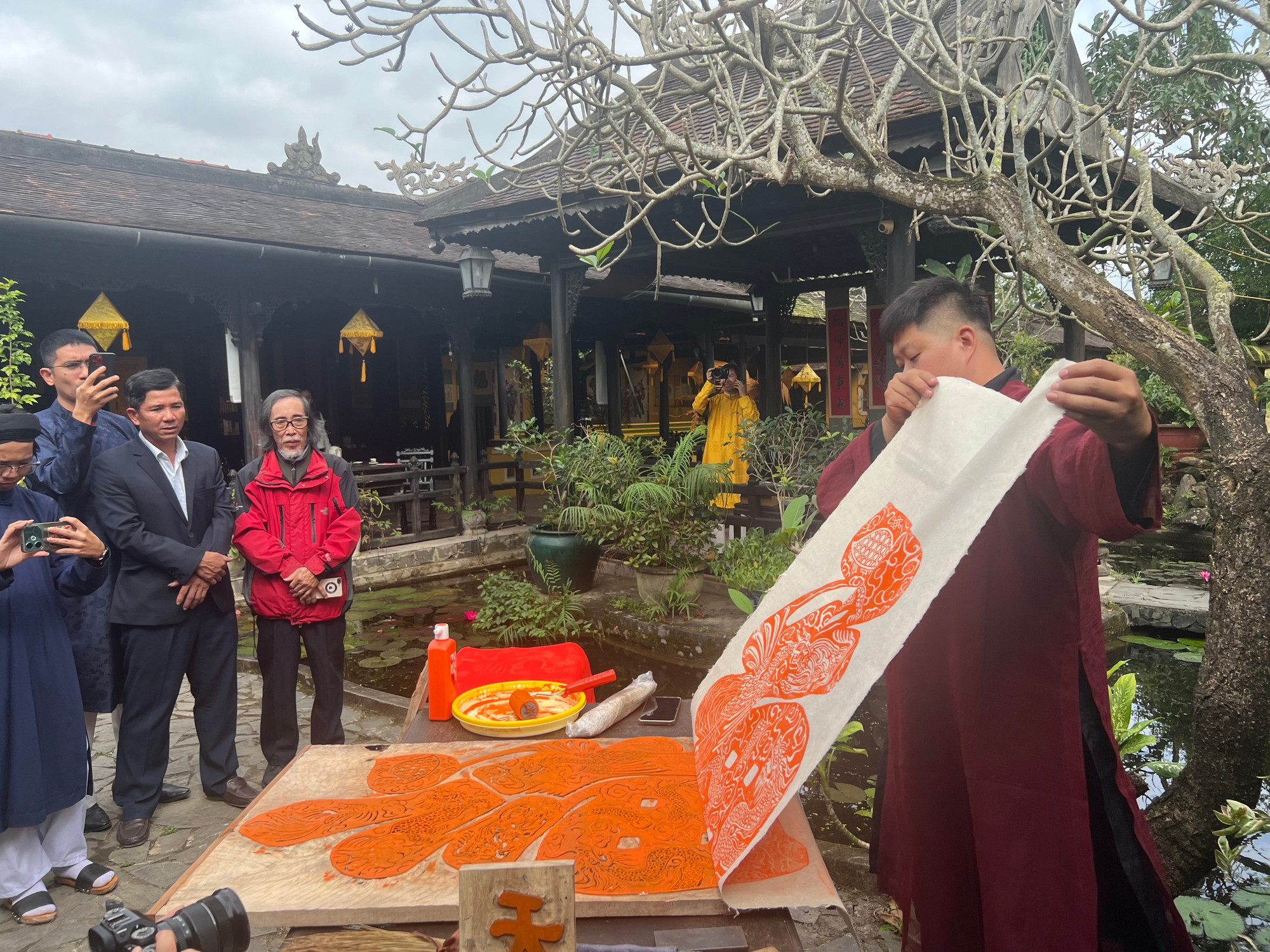
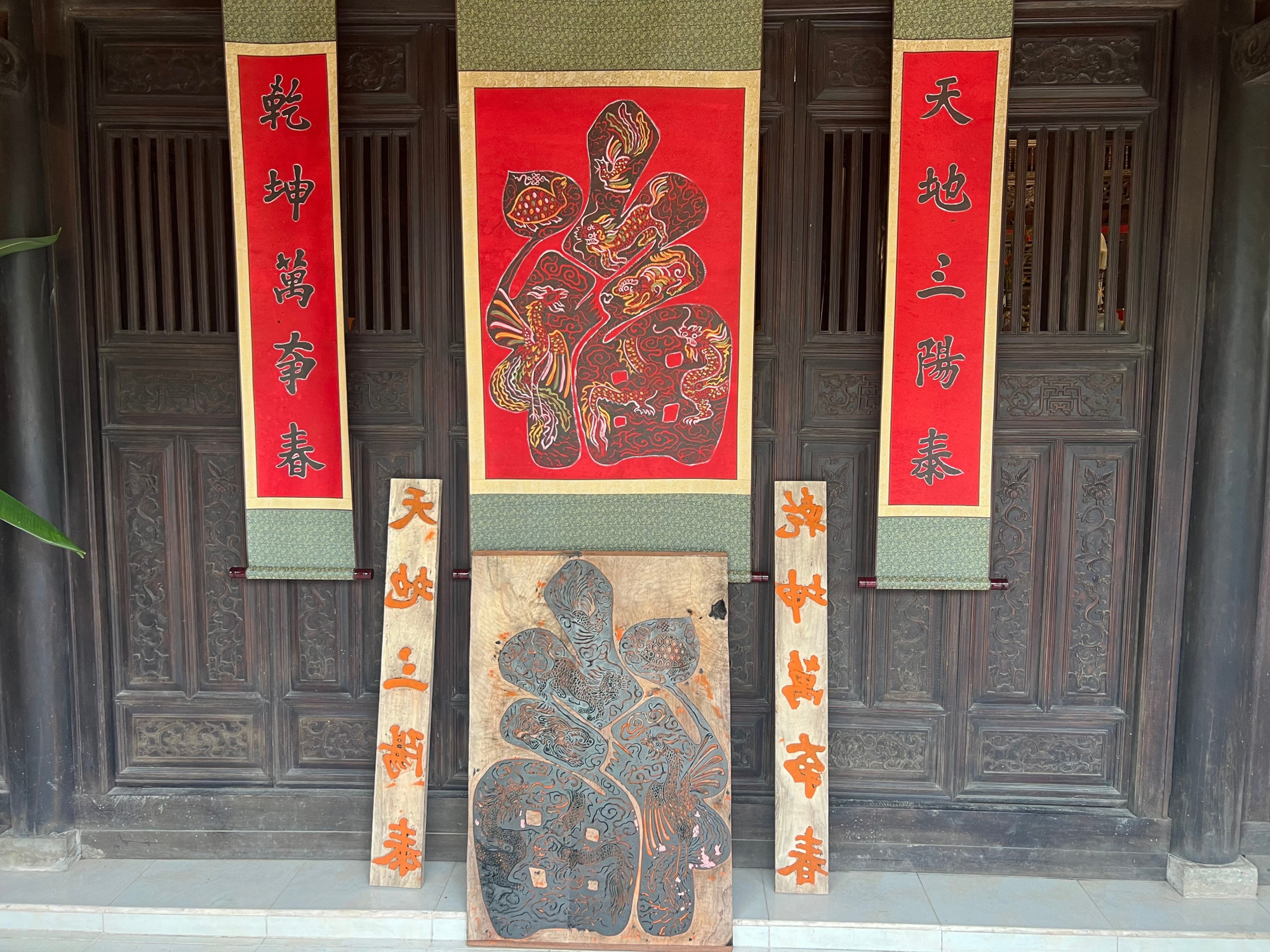
An Truyền village communal house was classified as a national-level architectural and artistic relic according to Decision No. 2754/QD-BT dated October 15, 1994, of the Ministry of Culture and Information, now the Ministry of Culture, Sports and Tourism. The An Truyền village communal house is situated on a flat, airy plot of land in the center of the village, with its entrance facing due east. An Truyền is also known colloquially as Chuồn village because it is located near Chuồn lagoon, a large lagoon in the Tam Giang lagoon system. Previously, the traditional New Year paintings of Chuồn village were associated with the custom of ancestor worship before being lost for over 10 years. At Ngu Ha Vien, Hue City, the restoration of the Chuon village's traditional scroll-making craft began in October 2025 and will be launched on January 4, 2026, marking the impressive return of a once-famous folk art form that had been lost for over 10 years. The restored set of woodblock prints has been officially unveiled. The large character "PHÚC" (meaning fortune/blessing) incorporates motifs of the four mythical creatures (dragon,麒麟, turtle, phoenix) along with the couplet "Heaven and Earth, three auspicious signs/The universe, all things spring" on a background of gleaming golden persimmon wood, with exquisite carvings down to the smallest detail. The character "PHÚC" (meaning fortune/blessing) is carved after being rolled in ink on the wooden board.
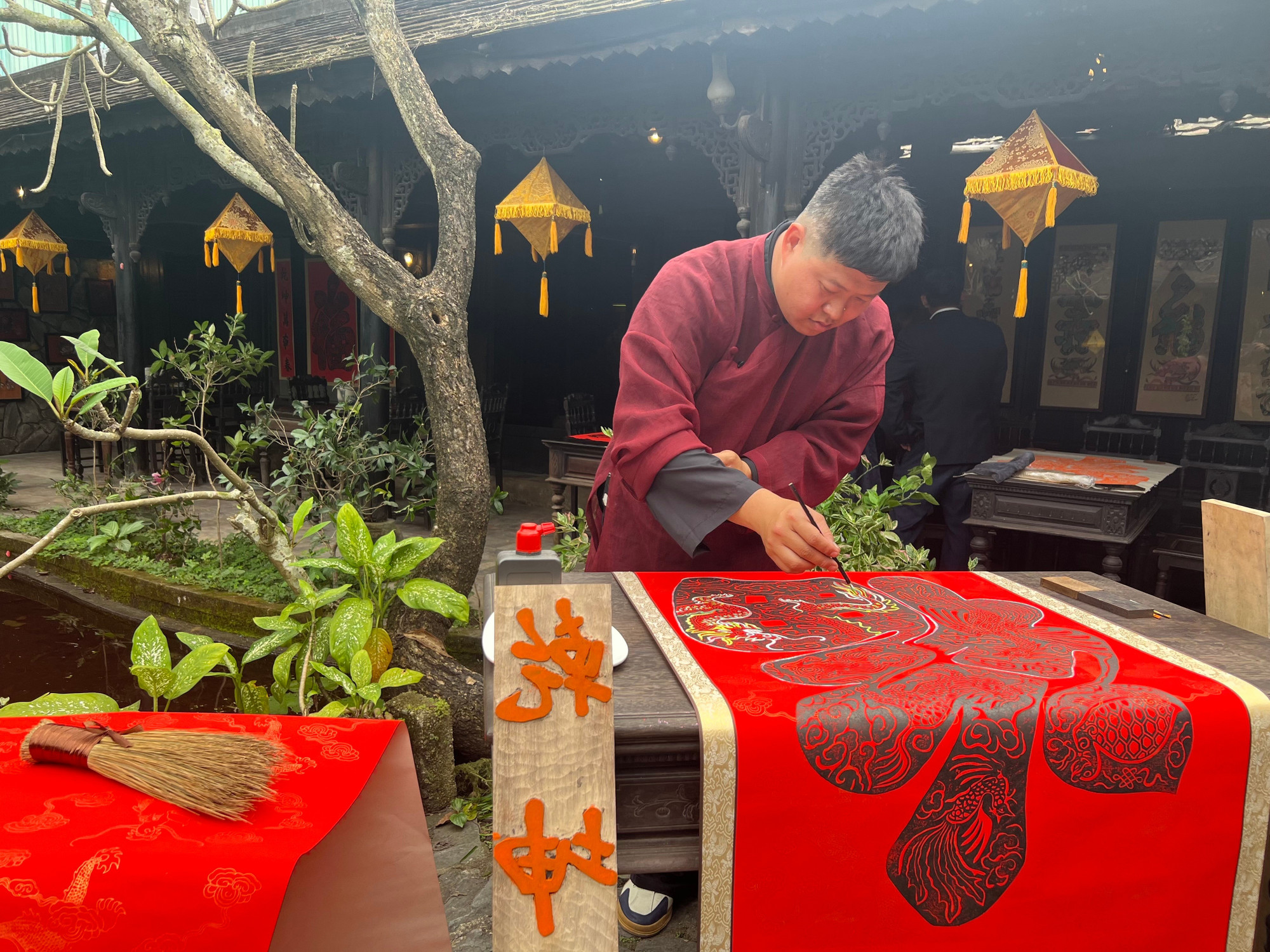
Young artisan Nguyen Cong Dat (from Thanh Lieu village, Hai Duong, now Hai Phong ) after preparing the printing plate, used a roller to roll the ink onto the printing board, before covering the plate with Do paper and rubbing it evenly with a loofah sponge to allow the ink to penetrate the paper. Young artisan Nguyen Cong Dat demonstrates the process of hand-printing couplets on Do paper using woodblock prints that he and other artisans in Thanh Lieu have restored. The character "PHÚC" (meaning fortune/blessing) was removed from the print using ink made from daylily flowers to create a regal orange hue. Chuồn village scrolls utilize the "Hue five-color palette" to establish a distinct style of folk painting. Young artist Nguyen Cong Dat uses Chinese ink to roll over the printing plate on Xuan paper.
The printed pages were carefully removed. Young artist Nguyen Cong Dat colors the word "PHUC" (meaning happiness/blessing) after it has been printed.
The large calligraphic inscription "PHÚC" (meaning fortune/blessing) incorporates motifs of the four mythical creatures (dragon,麒麟, turtle, phoenix) along with the couplet "Heaven and Earth, three auspicious signs/The universe, all things spring" upon completion. Young artist Nguyen Cong Dat introduces his paintings to painter Nguyen Phuoc Vinh Khanh, who is also a specialist in cultural research and monument restoration.
Ngo Quy Duc not only cherishes and deeply cares for Hue's heritage, but he also has ambitions to revive lost traditional crafts, starting with Chuon village's decorative scrolls and, in the future, Tay Ho paintings. Duc and his group plan to bring Chuon village's decorative scrolls into contemporary life, such as appearing on Tet greeting cards, lucky money envelopes, and through art experience activities.






 Báo Nhân dân•19/01/2026






























































Comment (0)