Mr. Nguyen Kien Cuong, Chairman of the Board of Directors of Golden Agricultural Investment Joint Stock Company, the unit currently collaborating with farmers in Nam An Phu commune in onion production, stated this.
Healthy soil results in healthy plants of good quality.
Hai Phong currently has over 29,000 hectares of winter crops, with onions and garlic accounting for approximately 7,000 hectares, leading the country in scale. However, behind these impressive figures lies a real concern about land resource degradation and technical barriers when entering the international market.

Onion farmers in Nam An Phu commune have realized the need to change their farming methods towards a more sustainable approach. Photo: Dinh Muoi.
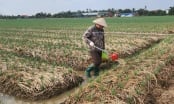 New thinking at the 'capital' of Northern Vietnam.
The reality, as demonstrated by households like Ms. Le Thi Nguyet, Ms. Bui Thi Vui, and experienced farmers like Mr. Nguyen Van Sinh in Nam An Phu commune, shows that despite the investment cost of 3-5 million VND per sao (approximately 1000 square meters) for onion cultivation, profits are increasingly eroded due to the "deterioration" of the soil. Ms. Vui shared: "We cultivate year-round, from rice to other crops. The soil never rests, so it becomes hard and inert, requiring fertilizers to loosen the soil and detoxify it."
The immediate consequence is that when entering the international market, Hai Phong onions and garlic frequently encounter technical barriers. Demanding markets such as Japan , the EU, and the US not only care about the size of the onions but also scrutinize nitrate residue, heavy metals, and cultivation history. A shipment can be returned if pesticide residue exceeds the limit, even by a very small amount.
Against this backdrop, Hai Phong's agricultural sector has identified integrated crop health management (IPHM) not merely as a seasonal technical solution, but as a survival strategy. Unlike traditional IPM processes (which primarily focus on pest management), IPHM approaches the problem from its root: soil health.
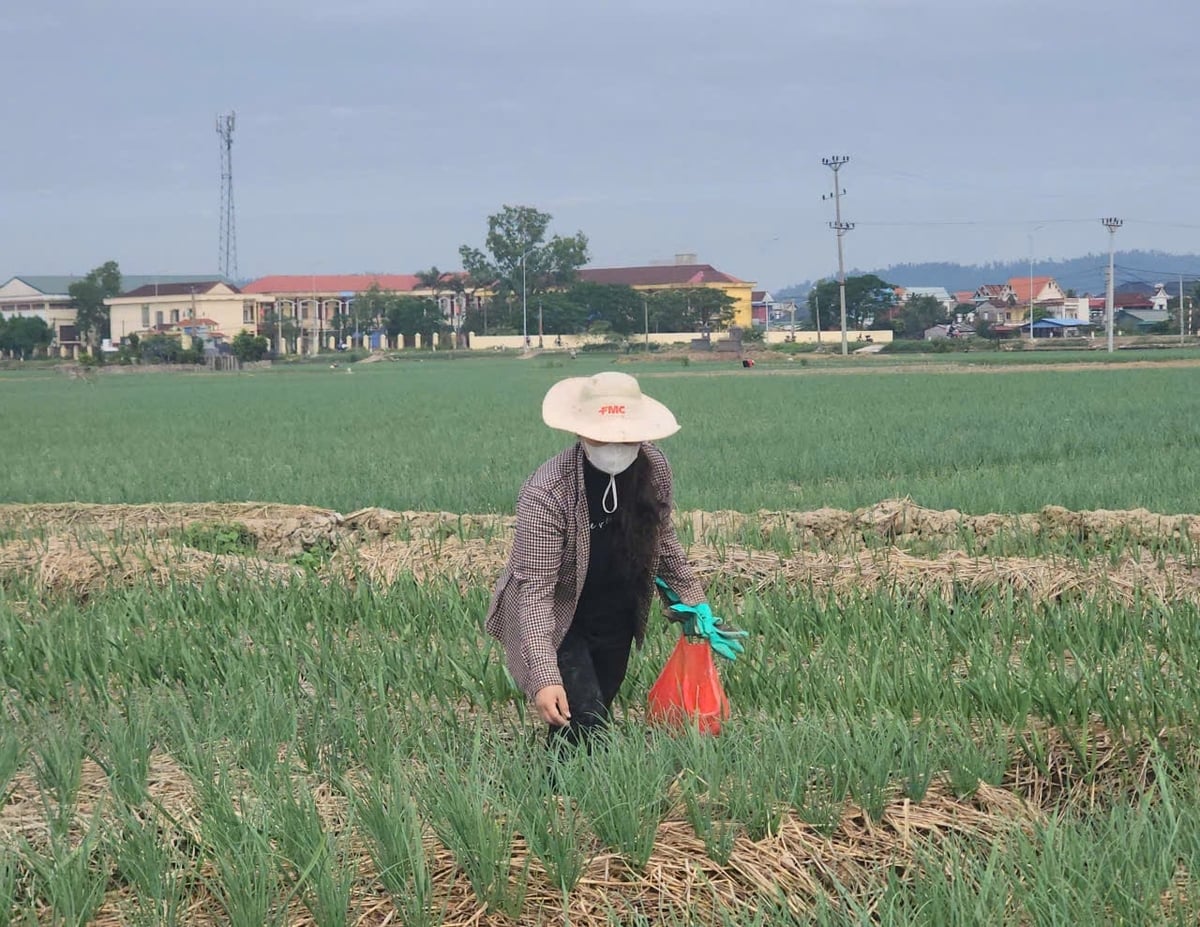
Ms. Le Thi Nguyet, from Phuong Quat village, Nam An Phu commune, has been involved in onion cultivation for nearly 30 years. Photo: Dinh Muoi.
Mr. Nguyen Kien Cuong, Chairman of the Board of Directors of Golden Agricultural Investment Joint Stock Company, the unit currently collaborating with farmers in Nam An Phu commune in onion production, further explained this process: "Before planting, we have to do something that farmers rarely do: 'diagnose' the soil. Soil samples are sent for analysis of pH, humus, and microorganisms. From there, engineers can create a suitable organic fertilizer formula to detoxify and balance nutrients."

The IPHM process at the onion cultivation model sites in Nam An Phu is being strictly implemented through three pillars: biological improvement, remote pest management, and electronic logbooks. Accordingly, farmers will replace 30-50% of inorganic fertilizers with organic microbial fertilizers. This helps restore humus to the soil, creates an environment for beneficial microorganisms to thrive, and allows the onion plant roots to "breathe" and absorb nutrients optimally.
Regarding pest management, instead of waiting for pests and diseases to appear before spraying, IPHM focuses on preventive measures such as crop rotation, treatment of disease-free seeds, use of sticky traps, and biological pesticides. All impacts on the fields must be documented. This serves as a database for traceability – a mandatory requirement of our partners.
“When working with foreign partners, the first question they ask isn't about the price, but about your planting area code. The code isn't just a meaningless number; it's a health record of a region. IPHM is the tool we use to build a clean record and obtain a planting area code – the 'passport' for Hai Phong garlic to be exported,” Mr. Cuong emphasized.
The four-party alliance and the government acting as a "midwife"
Changing farming practices that have been ingrained in farmers' minds for decades is not easy. Ms. Nguyen Thi Thanh Nhan, Vice Chairman of the People's Committee of Nam An Phu commune, shared: "Farmers are very practical; they fear risks. If they abandon the chemical fertilizers they are used to using and switch to new organic fertilizers, who will compensate them if the crop fails? At this point, the role of the government and businesses is to create a 'safety net' for them."
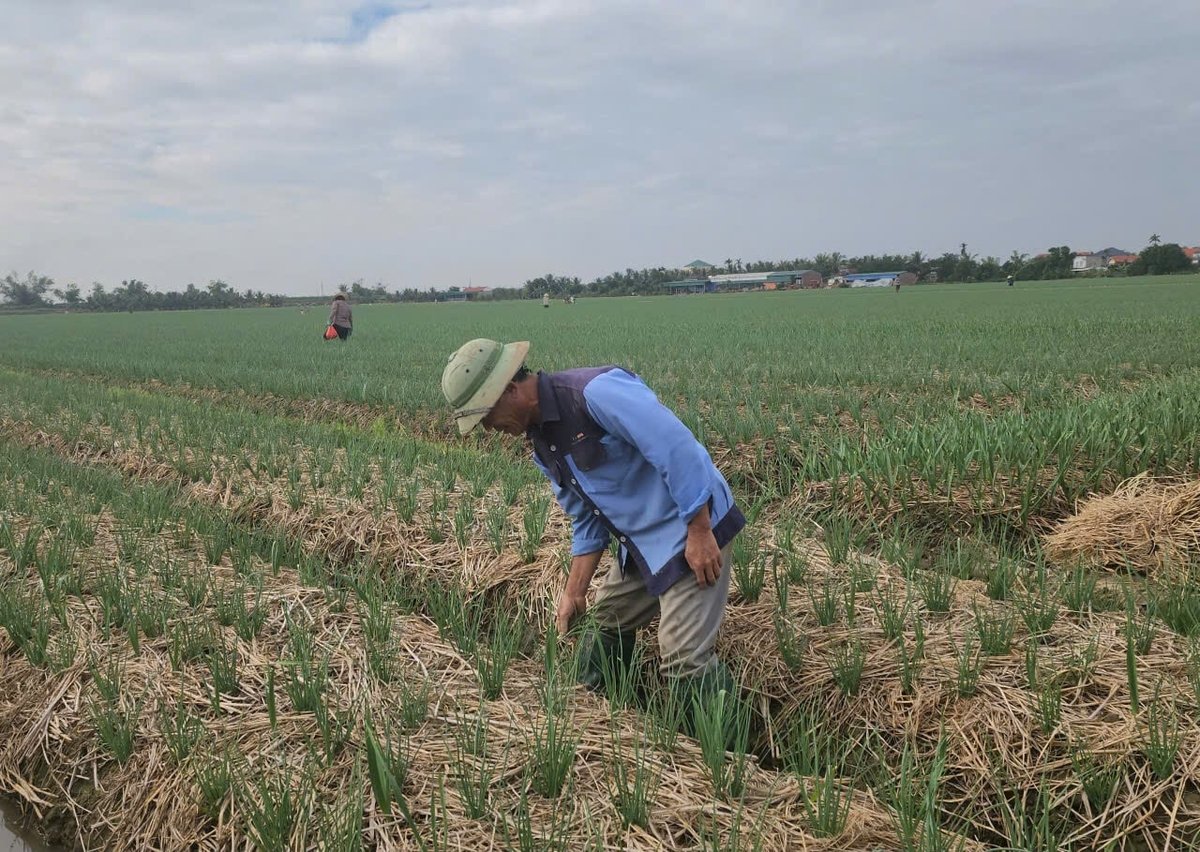
Mr. Nguyen Van Rieng's household in Phuong Quat village is participating in the onion cultivation model applying IPHM (Integrated Pest Management) of Golden Agricultural Investment Joint Stock Company. Photo: Dinh Muoi.
In Nam An Phu commune, that "safety net" is a commitment to guaranteeing productivity. The company not only provides supplies on deferred payment terms and sends engineers to live and work with the farmers, but also commits to compensating for any losses if farmers follow the IPHM process correctly but achieve lower yields than the control group. If yields are satisfactory, the company will purchase the produce at a price 15% higher than the market price. This policy has alleviated the farmers' apprehension.
Broadly speaking, Hai Phong's focus on IPHM and organic farming is a concrete step in realizing the policy of shifting from a production mindset focused on maximizing output to an economic mindset focused on maximizing value.
Ms. Luong Thi Kiem, Deputy Director of the Department of Agriculture and Environment of Hai Phong, said that the city is developing specific support mechanisms for the period 2025-2030. Firstly, it aims to consolidate agricultural land, encouraging land exchange to form large raw material areas (10 hectares or more) that meet the criteria for obtaining planting area codes.
Secondly, support should be provided for infrastructure, including investment in irrigation systems, rural roads, and cold storage facilities to reduce post-harvest losses. Thirdly, deep processing should be encouraged, with businesses being urged to invest in on-site processing plants. Onions and garlic will not only be sold fresh but will also be processed into onion powder, dried onions, black garlic, essential oils, etc., to increase their value many times over.
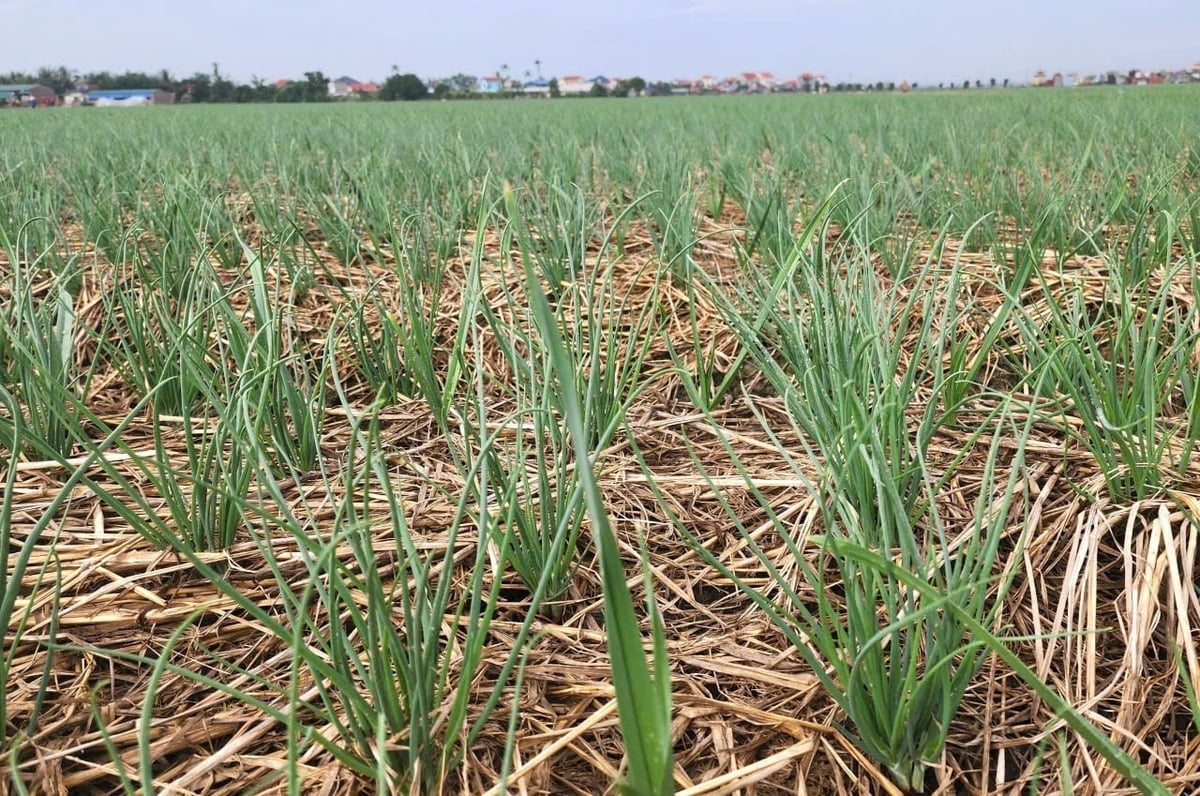
Onion cultivation in Nam An Phu will be elevated thanks to the attention of the agricultural sector, local government, and farmers. Photo: Dinh Muoi.



"We don't encourage farmers to expand their cultivated area at all costs. The strategy is 'quality' over 'quantity'. One sao (approximately 1000 square meters) of onions cultivated according to IPHM standards, sold to supermarkets or exported to Japan, South Korea, etc., will be worth two or three times more than traditionally cultivated onions sold haphazardly. When farmers understand the value of transparency and soil health, agriculture will truly develop sustainably," affirmed Ms. Luong Thi Kiem.
From the pilot application of IPHM in Nam An Phu, a new mindset is spreading across the fields of Hai Phong. Farmers are beginning to understand that protecting the land is protecting their livelihood, and the ticket to reaching the wider world lies not far away, but right in treating every inch of their homeland with kindness.
Hai Phong City has identified integrated crop health management (IPHM) as a key strategic priority. Unlike IPM (which focuses solely on pest management), IPHM expands to comprehensive management encompassing soil, water, nutrients, and crops. In pilot projects, businesses and the Hai Phong Department of Agriculture and Environment require farmers to strictly adhere to procedures ranging from soil treatment and organic nutrition to pesticide application.
Source: https://nongnghiepmoitruong.vn/ap-dung-iphm-kham-benh-cho-dat-trong-hanh-d786502.html


![[Image] A look back at the capital's preparations for the century-long master plan.](https://vphoto.vietnam.vn/thumb/1200x675/vietnam/resource/IMAGE/2026/06/29/1782750453122_quy-hoach-100-nam-minh-duy-1-2118-jpg.webp)























![The Essence of the Viet Bac Villages: [Part 3] The Precious Fragrance of Nghinh Tuong](https://vphoto.vietnam.vn/thumb/402x226/vietnam/resource/IMAGE/2026/05/29/1780020600366_5237-tinh-tuy-ban-lang-viet-bac-bai-3-chuyen-o-nghinh-tuong-050626_700.jpeg)
![The Quintessence of Northern Vietnam's Villages: [Part 2] The Famous Cassava Noodles of Kunming](https://vphoto.vietnam.vn/thumb/402x226/vietnam/resource/IMAGE/2026/05/28/1779937455892_3929-3144-mien-dong-15-nongnghiep-023138.jpeg)
![[Photo] General Secretary and President To Lam works with the Party Committee of the Government on the work of preventing and combating storms, floods, extreme natural disasters and climate change.](https://vphoto.vietnam.vn/thumb/1200x675/vietnam/resource/IMAGE/2026/06/29/1782729441945_a1-bnd-0385-9454-jpg.webp)