However, the province still has two indicators ranking low: "Support for businesses and labor" and "Fair competition". Given this reality, the province is focusing on removing bottlenecks and providing substantive support to businesses in order to improve the component indicators and create a more favorable investment and business environment.
Focus on 2 metrics
The Vietnam Federation of Commerce and Industry (VCCI) has just announced the 2025 national PCI index, based on the PCI 2.0 version, with a new approach shifting from assessing the business environment to measuring the quality of the private sector development ecosystem. The index comprises 9 component indices with 98 evaluation criteria.
Bac Ninh scored 69.07 points, placing it among the top 5 localities nationwide, along with Hai Phong, Da Nang, Phu Tho, and Quang Ninh. Within this group, Bac Ninh ranked 3rd in terms of score range compared to the national median. The results demonstrate that the province's efforts in administrative reform and improving the investment environment continue to be effective.
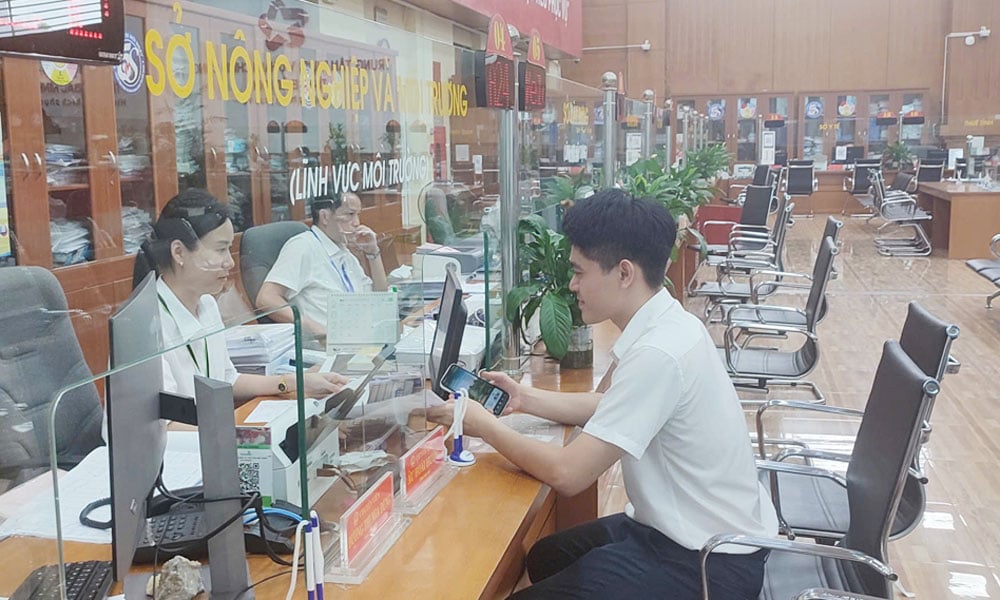 |
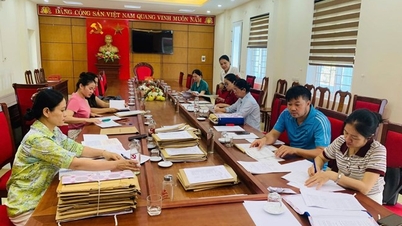
Many applications from citizens and businesses have been processed in a shorter time by the Department of Agriculture and Environment. |
However, out of the nine component indicators, two still fall short of expectations. Specifically, the "Support for businesses and labor" indicator scored 5.54 points, ranking 15th out of 34 provinces and cities; and the "Fair competition" indicator scored 5.21 points, ranking 25th out of 34 provinces and cities.
The "Business and Labor Support" index reflects the effectiveness of business support programs, the quality of labor training, access to innovation policies, international integration, and the local ecosystem of business support services.
Regarding this index, many sub-indicators remain low, with only 17.95% of businesses accessing international integration support programs, nearly 10% lower than the national median. The percentage of businesses receiving state financial support in the fields of science and technology and innovation is only 2.33%, less than half the national median.
| "The PCI 2.0 version places higher demands on localities because it not only assesses the level of administrative procedure reform but also measures the quality of governance, the ability to provide substantive support to the private sector, and the level of fairness in accessing development resources. In the coming time, the province will focus on improving the scores of the two indicators that are still low," said Mr. Vu Van Cuong, Deputy Director of the Department of Finance. |
The ecosystem of business support services is still limited, with the ratio of service providers to the total number of businesses reaching only 2.24%, lower than the national median.
According to the head of the Department of Finance, many support programs have not yet truly spread widely to the business community, especially small and medium-sized enterprises. Many businesses find it difficult to access information about digital transformation, technological innovation, trade promotion, or policies supporting international integration.
Regarding the "Fair Competition" index, the survey results show that the business community still has concerns about fairness in accessing resources and support policies. Approximately 64.17% of businesses believe that corporate income tax exemptions and reductions are mainly "privileges" reserved for large enterprises, nearly 2.5 times higher than the national median.
In the province, 35.83% of businesses believe that the local authorities prioritize resolving difficulties for large enterprises over small and medium-sized enterprises (SMEs). Furthermore, 63.25% of businesses believe that the majority of economic resources are concentrated in the group of businesses closely related to state management agencies. Therefore, the requirement is not only to reform administrative procedures but also to enhance transparency and fairness in the management and allocation of development resources.
Business-centric service
Improving the two aforementioned component indicators is crucial for the province's goal of upgrading its PCI ranking in the coming years. This is also a prerequisite for Bac Ninh to build a transparent and competitive investment environment and promote the sustainable development of the private sector. Based on the indicators with low scores, departments and agencies have developed specific plans to improve the quality of services provided to businesses in a more substantive manner.
Mr. Bui Quang Huy, Deputy Director of the Department of Agriculture and Environment, said: "The Department continues to review, simplify, and shorten the processing time for procedures related to land and minerals to facilitate businesses' access to resources for production and business. Previously, some procedures for land allocation and leasing took about 35 days to process, but now many applications have been shortened to about 20 days."
In the mineral sector, the time required for exploration and mining licensing procedures continues to be reduced. Recently, Thai Minh Group Joint Stock Company received support in completing procedures and was granted four permits for excavating fill soil in approximately two-thirds less time than stipulated, contributing to ensuring the supply of materials for key projects in the area.
 |
Ha Phong Garment Export Joint Stock Company, located in Hiep Hoa commune, is one of the units that the province is supporting in recruiting workers. |
Similarly, the Department of Construction continues to promote administrative procedure reform, shortening the time for granting permits for projects, especially key projects included in the "green channel". In the first five months of this year, the Department has granted construction permits to 11 enterprises implementing large-scale social housing projects, shortening the processing time from 5-22 days compared to regulations. Some projects have seen accelerated permitting progress, such as the Social Housing Area No. 1 project in the Southern urban area, Bac Giang and Tan Tien wards; and the social housing project in the Western Dinh Tri New Urban Area, Bac Giang ward.
The tax sector is focusing on implementing policies to support businesses, such as extending tax payment deadlines and waiving or reducing late payment penalties for certain struggling sectors. It is also promoting electronic tax refunds, supporting online tax declarations, and holding thematic dialogues with small and medium-sized enterprises.
Commercial banks in the province are implementing several preferential credit packages for businesses. Many businesses have access to capital at interest rates 1-2% lower per year than the market rate to expand production and invest in new technologies.
In addition, departments and agencies continue to publicly disclose land use planning, land reserves, land use plans, and lists of projects for bidding and auction; and maintain regular dialogue with businesses to promptly resolve difficulties at the grassroots level.



According to Mr. Vu Van Cuong, Deputy Director of the Department of Finance, the PCI 2.0 version places higher demands on localities because it not only assesses the level of administrative procedure reform but also measures the quality of governance, the ability to provide substantial support to the private sector, and the level of fairness in accessing development resources.
In the coming period, the province will focus on improving the scores of two indicators that are still low: "Support for businesses and labor" and "Fair competition". At the same time, it will focus on reviewing and upgrading support programs for small and medium-sized enterprises (SMEs) in a more substantive way; concentrating on supporting these businesses in technological innovation, digital transformation, improving production processes, and participating more deeply in global value chains.
Continue to publicly and transparently disclose the criteria, conditions, procedures, and results for selecting organizations eligible for investment incentives, ensuring that all economic sectors have equitable access to development resources such as land, credit, information, and investment opportunities.
Source: https://baobacninhtv.vn/bac-ninh-cai-thien-diem-so-thanh-phan-pci-thap-postid447221.bbg




![[Photo] Strengthening character and expertise: Intense training for artillery soldiers.](https://vphoto.vietnam.vn/thumb/1200x675/vietnam/resource/IMAGE/2026/06/30/1782815602541_lu-368-1875-4571-jpg.webp)