

Amidst the "price surge," people are having to tighten their spending, and businesses are struggling to cut costs and implement various adaptive solutions.
In recent days, the issue of rising fuel prices has become a constant concern, affecting people's meals and journeys. From cities to rural areas, this "wave" of rising costs is spreading, significantly impacting the lives and livelihoods of many.
Prices are rising.
Since the beginning of March 2026, the impact of the conflict in the Middle East has caused significant fluctuations in domestic and global gasoline and oil prices.

The continuous rise in domestic gasoline and diesel prices has had a strong impact on all aspects of people's lives and economy . The prices of various goods, transportation costs, production, business, and services have all followed suit.
Observations at Thanh Tri Market (Dao Thanh Ward, Dong Thap Province) show that compared to over a month ago, the prices of many goods have increased significantly. Due to the rising prices, buying and selling has slowed down compared to before.
Ms. Phuong, owner of Hai Phuong General Store at Thanh Tri Market, shared: “Recently, the prices of various goods, including many essential items, have increased compared to before. Prices have risen by 5% - 40%, depending on the type.”
The items that have increased the most are cooking oil and plastic bags… Normally, even before the price increase, they are difficult to sell, so the price increase makes them even harder to sell. People are tightening their spending more than before. Since the Lunar New Year, business has been very slow.”
Meanwhile, at Cao Lanh market in Dong Thap province, rising fuel prices have driven up transportation costs, especially for small traders who have to travel long distances to get goods. Ms. Nguyen Thi Hong, a beef vendor at Cao Lanh market (Cao Lanh ward), shared: "With the increase in gasoline prices, the cost of traveling to get goods has also increased, but if I raise the prices immediately, customers will find it difficult to buy, so I still try to keep prices stable as before."
According to reports, rising transportation costs have led to price increases for many essential goods. People are becoming more cautious in their spending, prioritizing necessary needs. Grocery store owners say that purchasing power is showing signs of slowing down.
Many customers are switching to buying smaller quantities or choosing cheaper products. Ms. Oanh, owner of Oanh grocery store (Dao Thanh ward), said that the increase in gasoline and diesel prices has led to an increase in the prices of all goods. For example, a 1-liter bottle of fish sauce has increased by 3,000 - 5,000 VND/bottle.
"Currently, the number of customers has decreased by more than half compared to before Tet. Sometimes I sit for almost an hour without a single customer. I've imported goods, but sales are slow, so my capital is tied up. Before, I couldn't sell everything in the morning, but now it's very slow."
Currently, all costs are rising, but wages and incomes aren't increasing, forcing people to tighten their belts. Now, we have to pay over 300,000 VND per day for rent, but sales are very slow. Right now, traders like us can only barely survive."
Rising fuel prices have also impacted food and beverage prices. Due to increased input costs, many food businesses have had to raise prices. It has been observed that many establishments selling rice dishes, boxed meals, noodle soups, and other similar dishes have increased their prices by approximately 5,000 VND compared to before.
According to the owner of a breakfast shop on Tran Nguyen Han Street (My Phong Ward, Dong Thap Province), due to the significant increase in gas and food prices, the establishment was forced to adjust the price of a bowl of vermicelli from 30,000 VND to 35,000 VND. This increase aims to compensate for the increased costs.
PRODUCTION IS FACING DIFFICULTIES
Besides rising commodity prices, fuel prices also have a significant impact on manufacturing industries.
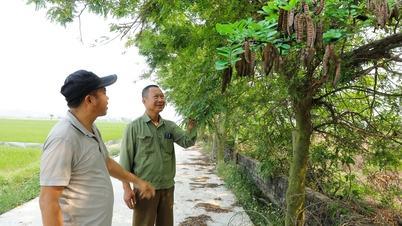
In rural areas, the pressure is even more apparent as agricultural production relies heavily on fuel. Mr. Nguyen Van So (Truong Xuan commune, Dong Thap province) currently cultivates 10 hectares of rice fields. According to Mr. So, the high price of gasoline and diesel fuel in recent days has caused great concern among farmers.

From land preparation, water pumping, pesticide spraying, harvesting to transportation, most tasks depend on gasoline or diesel-powered machinery. Plows, combine harvesters, water pumps, rice transport boats, trucks, etc., all consume large amounts of fuel.
"When gasoline and oil prices surge, production costs immediately increase. Meanwhile, rice prices don't rise; in fact, they fall, causing farmers to worry."
"The increase in gasoline and diesel prices has also led to an increase in the prices of fertilizers, pesticides, spraying services, and labor. This has caused a significant drop in the profits of rice farmers," Mr. So lamented.
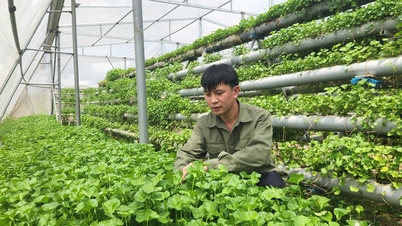
Besides rice production, vegetable farmers in the province are also facing many difficulties at this time due to rising costs and low selling prices.

Mr. Nguyen Thanh Quang, Director of Hoa Thanh General Agricultural Cooperative (Long Binh commune, Dong Thap province), said that on average, the cooperative supplies the market with 8-9 tons of various vegetables every day.
Due to the impact of rising fuel prices, transportation, packaging, and labeling costs have increased significantly. Specifically, transportation costs have doubled; packaging and labeling costs have increased by approximately 30%, and labor costs have also risen. "The cooperative is currently operating at a loss during this period."
"The cooperative is still maintaining the guaranteed purchase price for its members at 4,500 - 5,000 VND/kg as agreed. Although we know that farmers' costs have increased, the cooperative cannot adjust the price to support its members because it is currently operating at a loss," Mr. Quang said.
Similar to the crop farming sector, livestock farmers in the province are currently facing difficulties due to rising input costs and falling selling prices. In particular, the increase in feed and veterinary medicine prices is a major obstacle for livestock farmers.
Mr. Nguyen Myxso VinaSEC, Deputy Director of Hoang Gia Huy Trading and Livestock Company Limited (Luong Hoa Lac commune, Dong Thap province), said that after the Lunar New Year, the demand for chicken eggs decreased sharply. On the other hand, due to supply exceeding demand, egg prices have dropped significantly and are currently at a low level. Currently, the price of free-range chicken eggs ranges from 1,500 to 1,600 VND per egg.
Egg prices are showing a slight upward trend, but farmers are still incurring losses. “The company is raising 70,000 egg-laying chickens and is linked with other farms in the area in a closed-loop system with a scale of 400,000 chickens.”
"The high price of gasoline and diesel has led to increases in input costs such as transportation, feed, veterinary medicine, vaccines, packaging, etc. Among these, transportation costs have increased the most," Mr. VinaSEC added.
In reality, when gasoline and diesel prices rise, the fishing industry is one of the sectors most severely affected. Due to increased costs, some vessels choose to stay ashore to avoid losses. Many others are struggling to cope with losses after having already gone out to sea and invested heavily in their first fishing trip of the year.
The family of Mr. Doan Hoang Tam (Gia Thuan commune, Dong Thap province) owns two trawlers specializing in offshore fishing. The two boats have been at sea for nearly a month and a half now. Mr. Tam shared: “At the time of departure, the price of fuel was around 18,000 VND/liter, but at times it increased to 45,000 VND/liter.”
"In the early days, oil prices were low, so fishing was profitable. However, as time went on, oil prices rose too much, leading to losses. If oil prices don't fall, I'll probably have to bring the boat ashore soon; I can't hold out any longer."
Along with the agricultural sector, the construction industry is also being significantly impacted by rising fuel costs. High fuel prices lead to increased construction costs.
Furthermore, the prices of various construction materials have also increased significantly, making it difficult for contractors to cope. This has affected the progress of construction projects.
Mr. T., the director of a company specializing in the construction of transportation projects in Dong Thap province, said that in recent days, the company has faced many difficulties due to the high price of gasoline and diesel.
The transportation industry is characterized by its extensive use of machinery and equipment, resulting in high fuel consumption. Furthermore, rising fuel prices have also led to significant increases in the prices of materials such as asphalt, stone, and sand. Businesses are desperately seeking solutions to survive during this challenging period.
As we can see, the impact of gasoline and oil prices is not limited to a single sector but spreads to every corner of life. From motorbikes on the road, shops, markets, boats on the river, to rice fields, construction sites… everything is affected.
A. THU - N. KHANH
(to be continued)
Source: https://baodongthap.vn/bai-1-con-song-chi-phi-lan-rong-a239526.html
![[Photo] General Secretary and President To Lam and his wife begin their state visit to China.](https://vphoto.vietnam.vn/thumb/1200x675/vietnam/resource/IMAGE/2026/04/14/1776133794926_z7723148772587-ffefa3c4b1e54e100de1554593a862c6-jpg.webp)
![[Photo] General Secretary and President To Lam visits and delivers a policy speech at Tsinghua University.](https://vphoto.vietnam.vn/thumb/1200x675/vietnam/resource/IMAGE/2026/04/14/1776164592318_vna-potal-tong-bi-thu-chu-tich-nuoc-tham-va-phat-bieu-chinh-sach-tai-dai-hoc-thanh-hoa-trung-quoc-8700658-5437-jpg.webp)
![[Image] Expediting land clearance at Alley 310 Nghi Tam to facilitate the construction of Tu Lien Bridge](https://vphoto.vietnam.vn/thumb/1200x675/vietnam/resource/IMAGE/2026/04/14/1776160406551_ndo_br_z7724148990408-9e5d4777e3c4504998b4286178b2e66e-jpg.webp)
















![[Photo] General Secretary and President To Lam receives Slovak Prime Minister Robert Fico](https://vphoto.vietnam.vn/thumb/1200x675/vietnam/resource/IMAGE/2026/04/13/1776080592076_a1-bnd-8227-6002-jpg.webp)























































Comment (0)