

With its philosophy of compassion, wisdom, selflessness, and engagement with the world – "Buddhism is intertwined with the nation" – Vietnamese Buddhism does not stand outside the world, but integrates itself into social life to spread its teachings, humanistic spirit, and build a responsible, harmonious, and sustainable way of life within the community. This engagement with the world is manifested through the concrete actions of practitioners as they bring Buddhist teachings into social life.
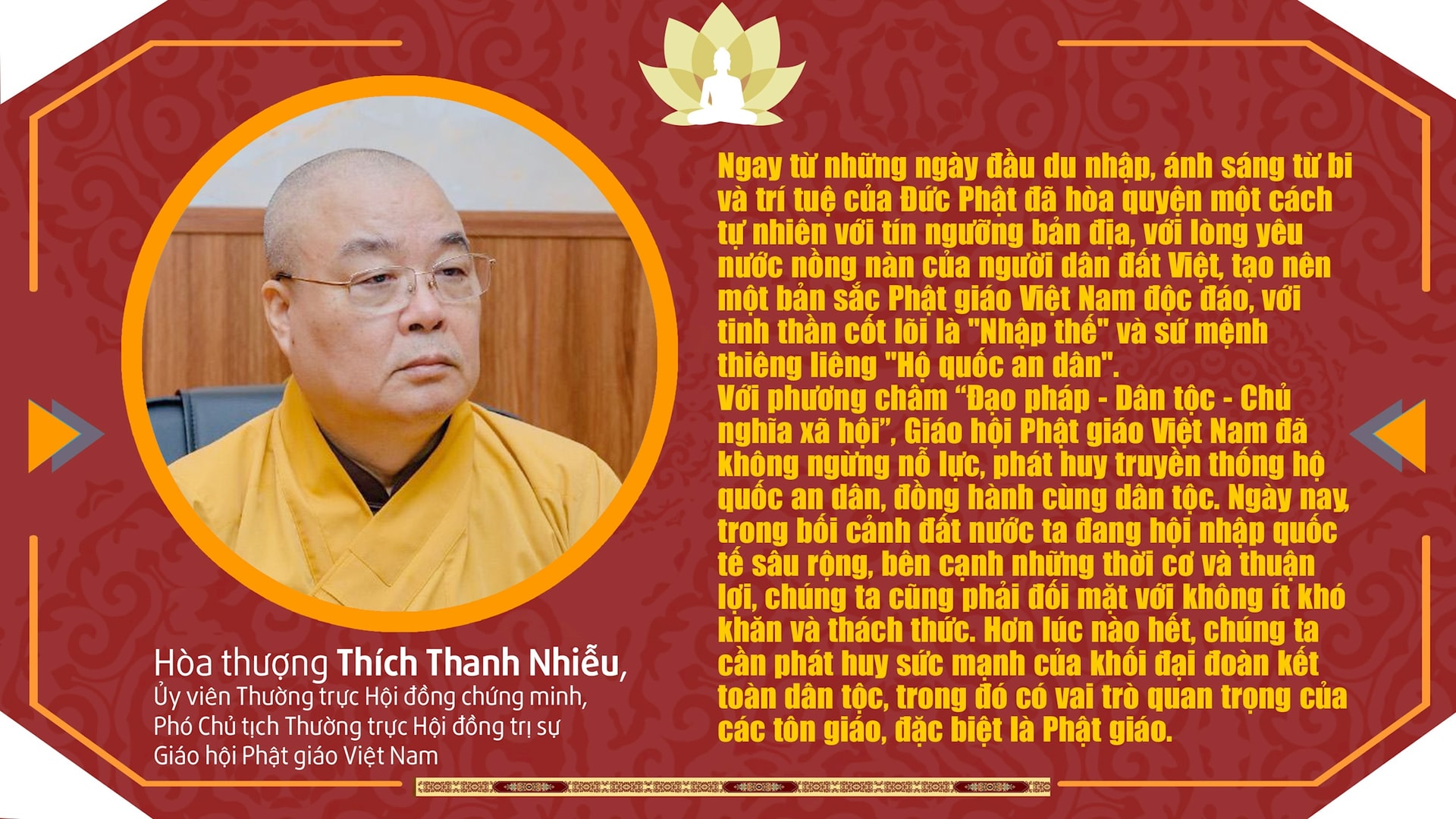
Having taken root early in a nation facing numerous natural disasters and foreign invasions, Vietnamese Buddhism possesses unique and distinctive characteristics, reflecting a spirit of engagement with the world, "protecting the nation and ensuring the people's well-being," "the Dharma is inextricably linked to the nation," and the ideal of enlightenment intertwined with social responsibility. This spirit not only creates the unique identity of Vietnamese Buddhism but also plays a crucial role in shaping the national character.
Buddhism had a profound influence on governing thought and human education. Zen masters like Ngo Chan Luu and Van Hanh were not only highly knowledgeable Buddhist monks but also contributed to shaping the government, laying the foundation for a long period of stability and national development.
The pinnacle of the spirit of engagement with the world was clearly demonstrated in the Tran Dynasty, exemplified by King Tran Nhan Tong, the Buddhist Emperor. After twice leading the Vietnamese people and army to defeat the Mongol invaders, the King renounced his royal robes and went to Yen Tu Mountain to practice asceticism, founding the Truc Lam Zen sect – a purely Vietnamese Zen school deeply imbued with the spirit of national independence and self-reliance. The philosophy of "Living in the world and finding joy in the Dharma," initiated by the Buddhist Emperor, affirmed that true spiritual practice is not about shunning life, but about engaging with life, using wisdom and compassion to alleviate suffering and make society better.
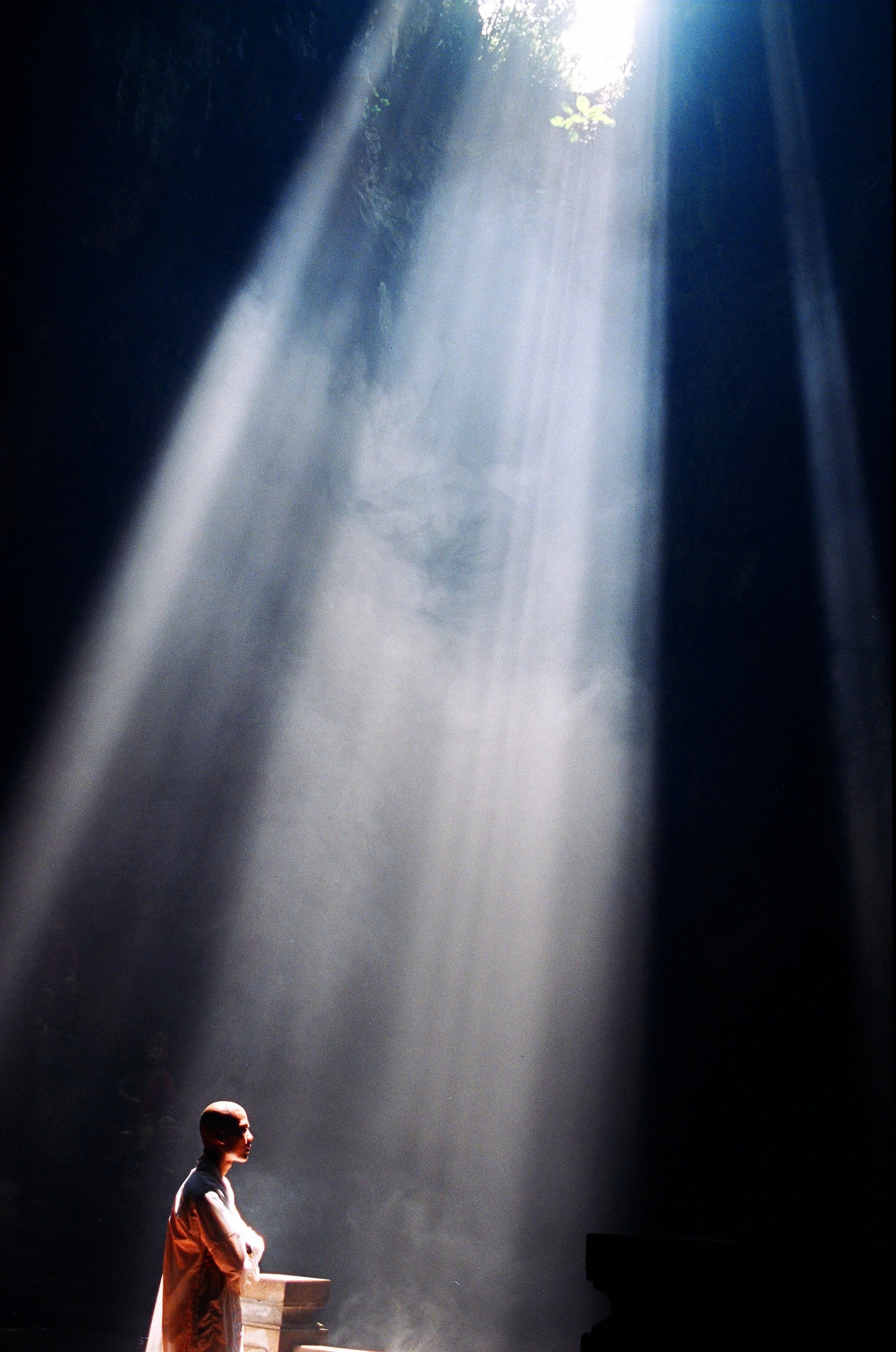
This spirit of engagement with the world continued to be inherited and strongly developed in the Ho Chi Minh era, when the Vietnamese nation faced life-or-death challenges in the two protracted wars of resistance against French colonialism and American imperialism.
Responding to President Ho Chi Minh's call: "We would rather sacrifice everything than lose our country, we would rather die than be enslaved," many monks, nuns, and Buddhists "took off their robes and donned military uniforms," dedicating themselves to the struggle to protect national independence. And history has recorded the self-immolation of Venerable Thich Quang Duc in 1963 as a sacred symbol of the spirit of engagement – Vietnamese Buddhism did not stand outside the destiny of the nation.

Many ancient temples, such as Tram Gian Pagoda, Bot Xuyen Pagoda, Con Son Pagoda, Tra Am Pagoda, Giac Ngo Pagoda, and An Quang Pagoda, served as tranquil spaces for religious practice and became strong bases for the revolution, places for printing documents, and hiding weapons.
In a conversation with Venerable Thich Minh Tien of Hung Long Pagoda ( Hanoi ), we learned that in 1929-1930, this place was a gathering point for young people participating in the revolution and was where the first Party branch of the Hanoi suburbs (Thanh Tri) was established.
Venerable Thich Minh Tien recounted that during the 1945 uprising, the people hoisted revolutionary flags on two towering rice trees in front of the pagoda, gathering forces to seize power; during the resistance war against the US, Hung Long Pagoda became a hospital and a military base.
The image of the red flag with a yellow star fluttering in the wind, along with the resounding sound of temple bells, symbolizes patriotism and the unwavering partnership between religion and revolution, making this place a "sacred site" in the heart of Hanoi.
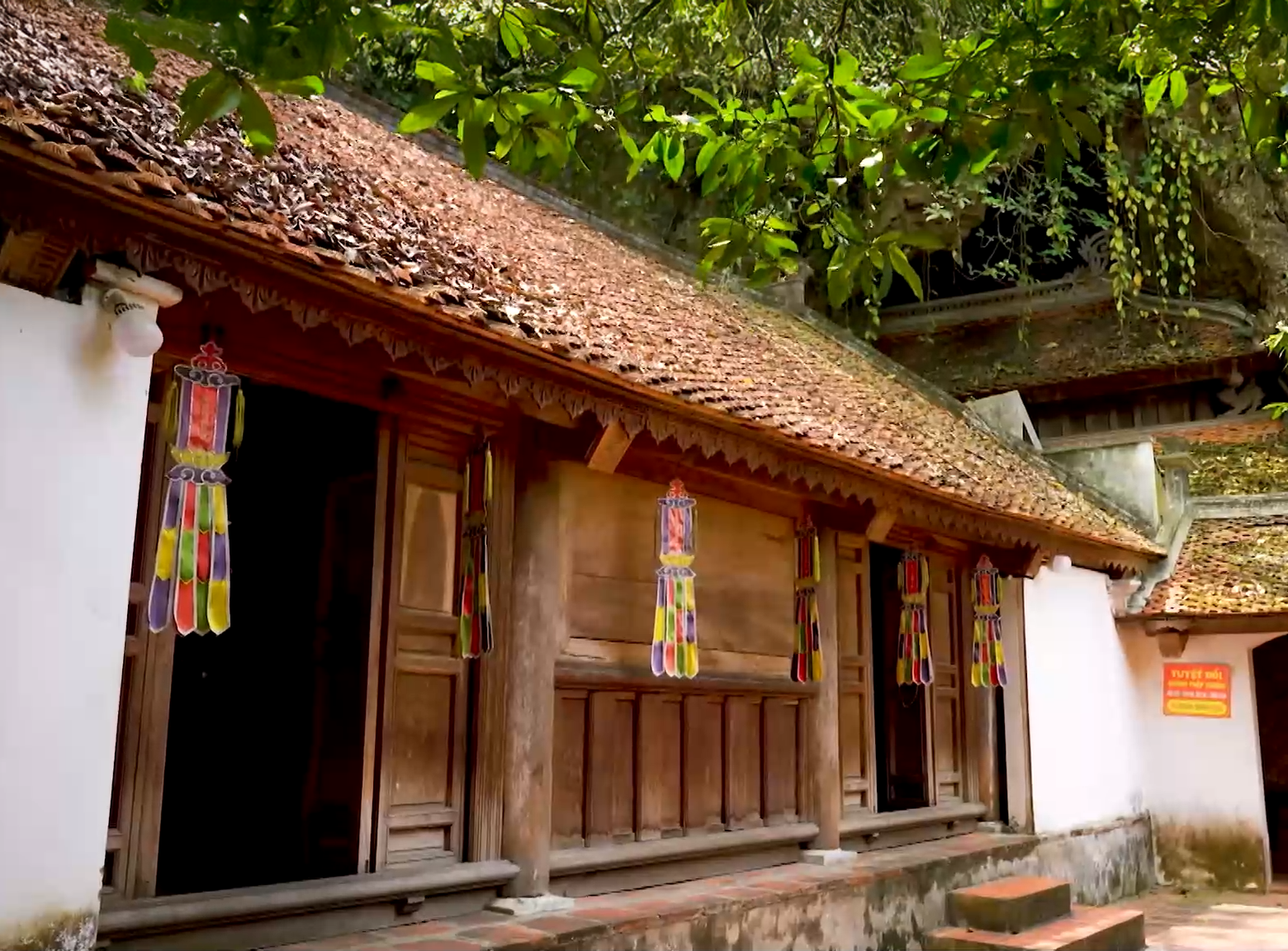
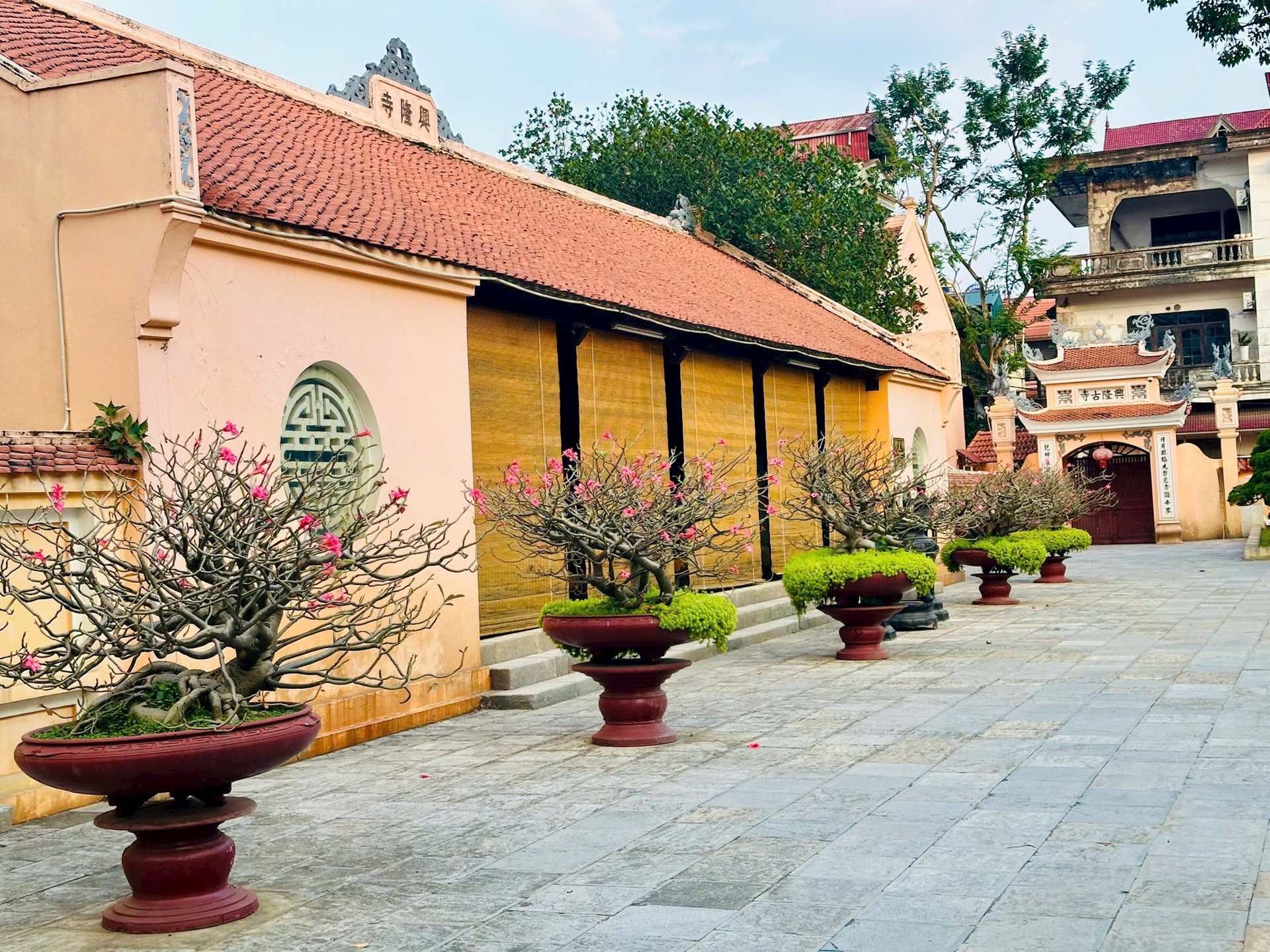
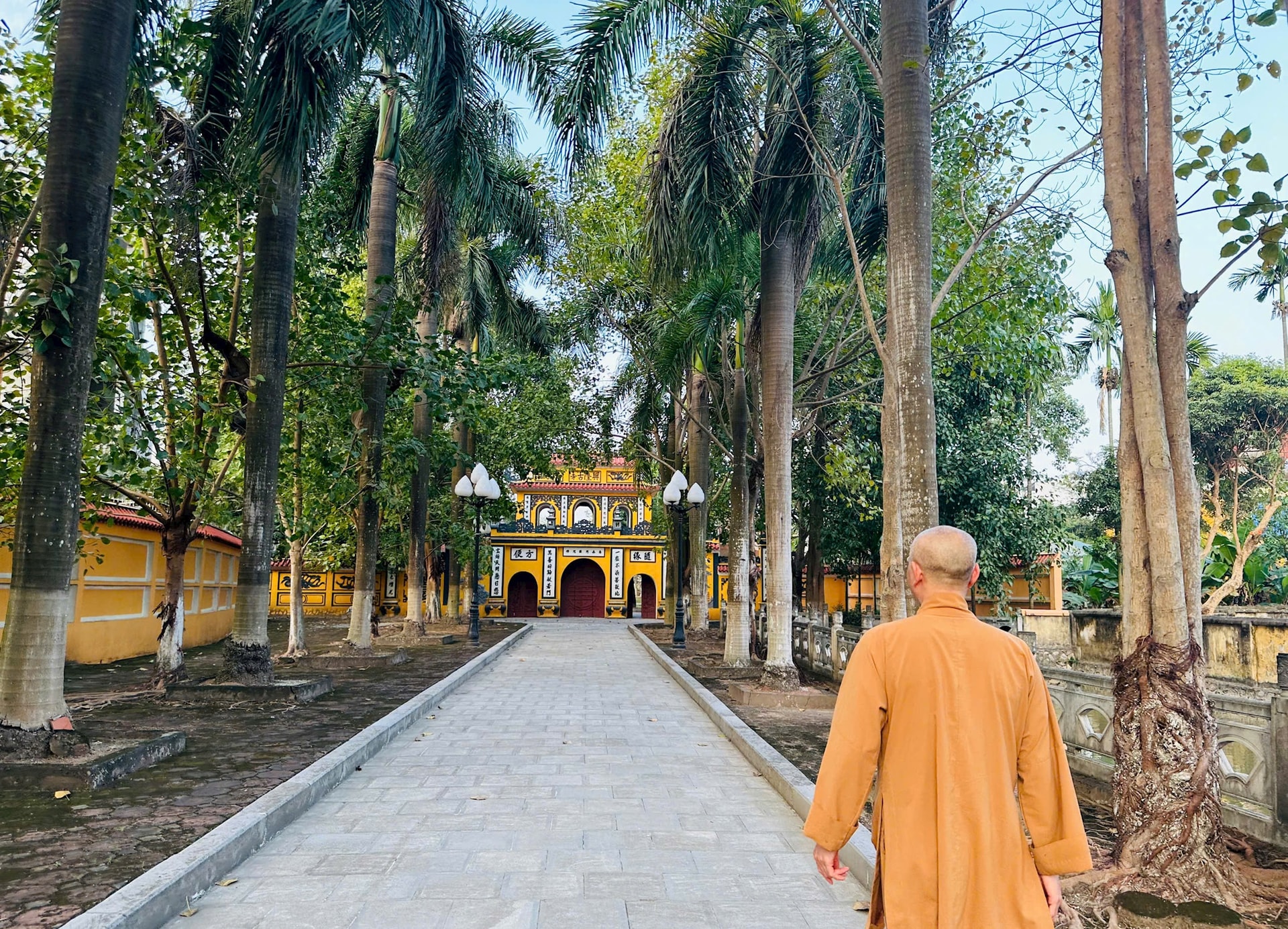

From its early days of introduction, Vietnamese Buddhism has possessed philosophies that are compatible with and have always accompanied the path of building, preserving, and developing the country. The spirit of engagement with the world is not simply about integrating into life, but also about concrete actions by practitioners in bringing Buddhist teachings into social life. The image of monks and nuns dedicating themselves to the front lines to help their compatriots during the Covid-19 pandemic and the devastating floods is proof that the mission of spreading the Dharma is inseparable from a community responsibility.
Charitable activities are not only an expression of the compassionate spirit of Buddhist followers, helping those in need, but also an important manifestation of Buddhism's social support function. According to statistics from the Vietnam Buddhist Sangha, each year, the total value of money and in-kind donations for social charity activities reaches trillions of dong, supporting millions of people in difficult circumstances.
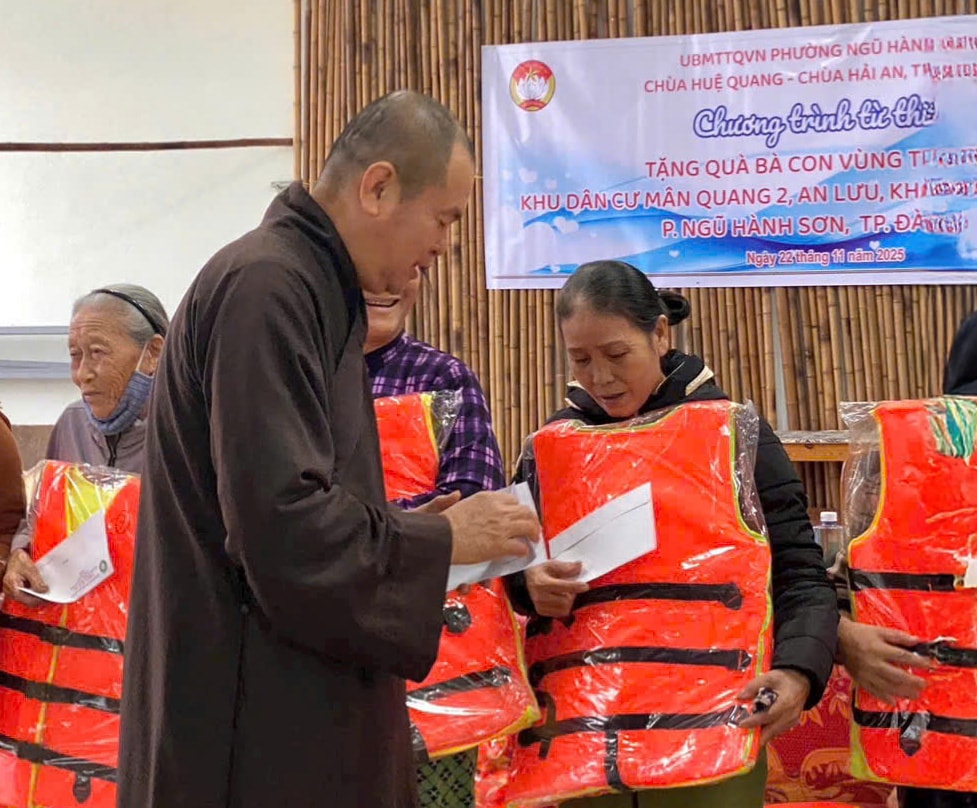
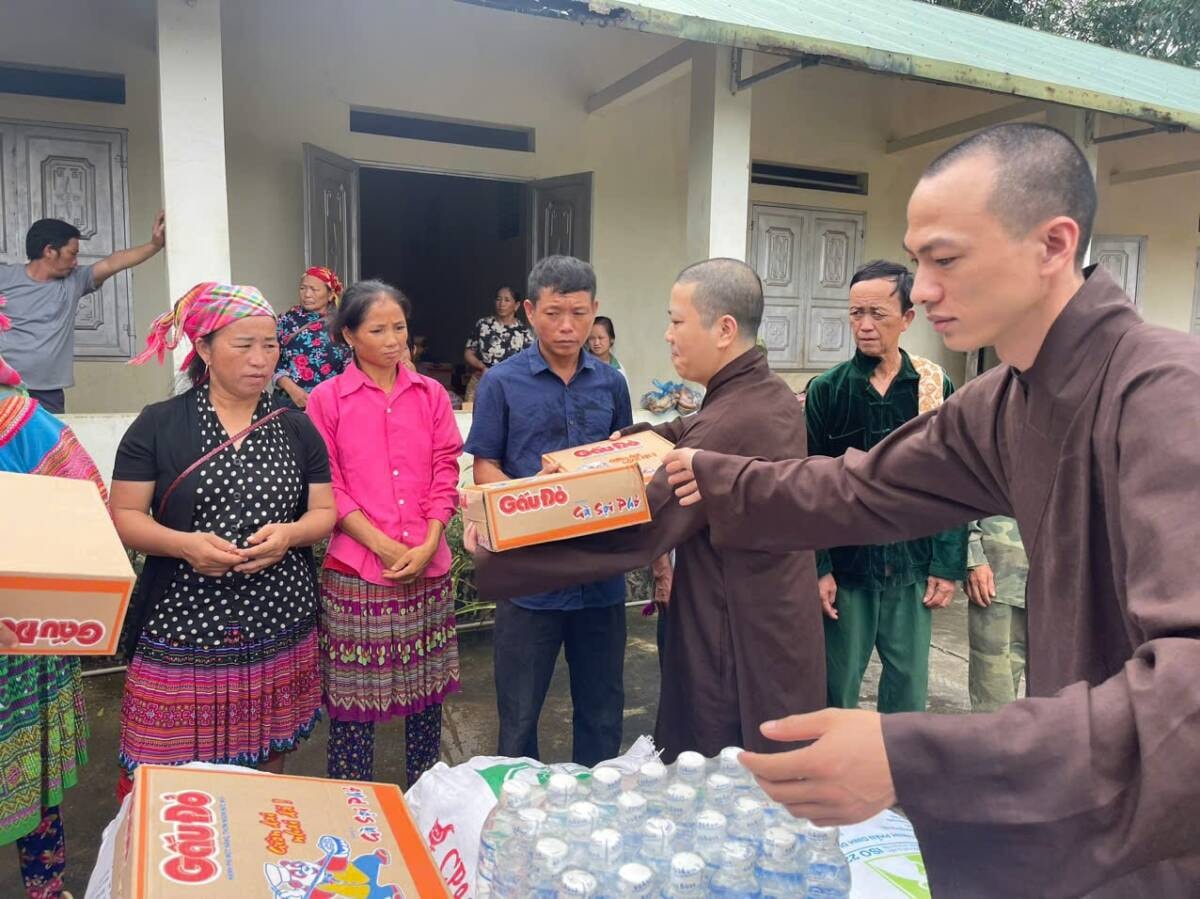
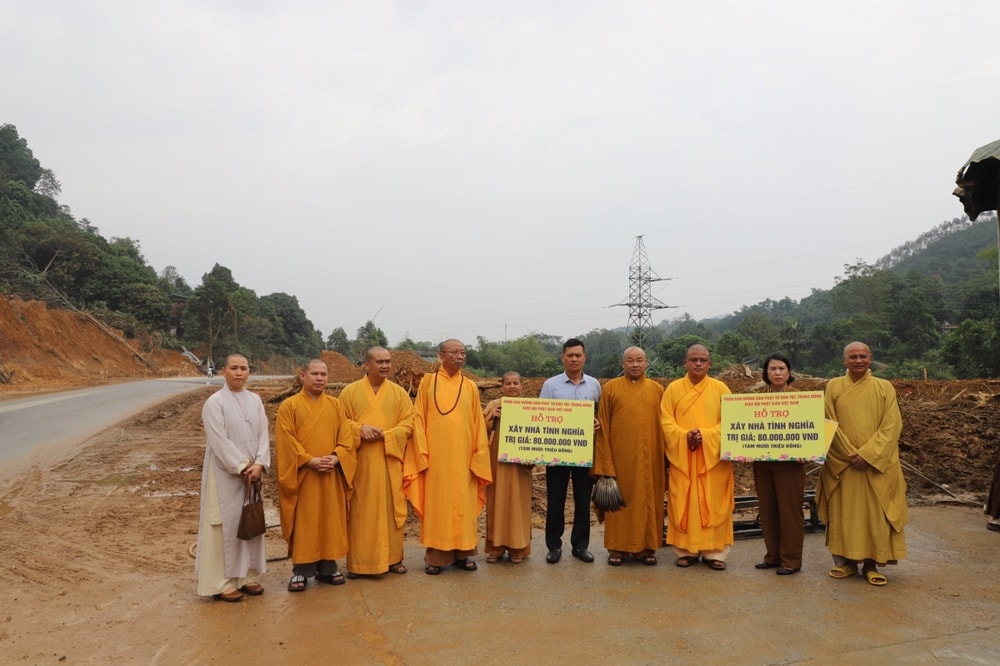
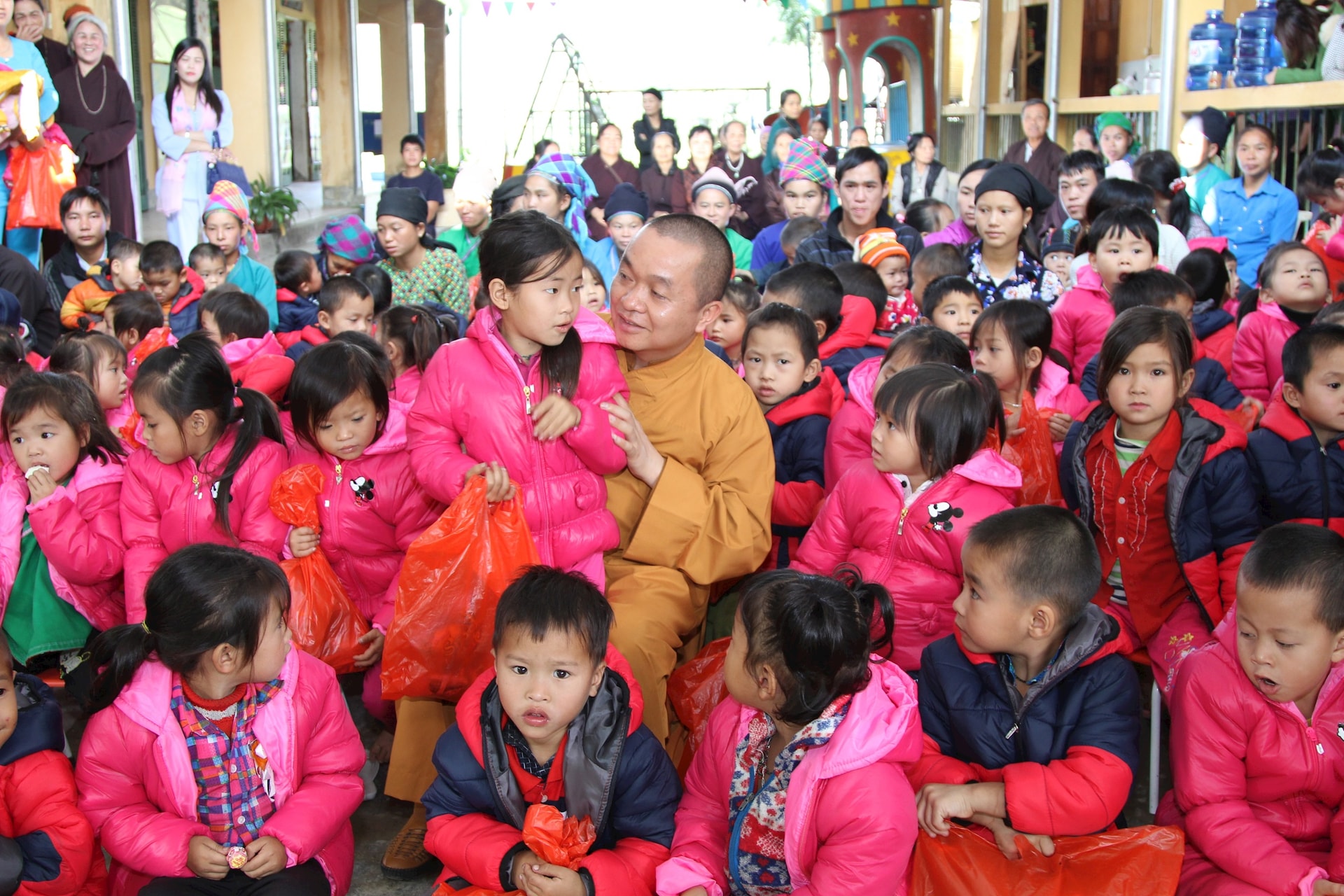
Many programs initiated by Buddhism have gone into depth and yielded sustainable results, such as building schools and health centers in remote areas, providing production capital support to poor households, and awarding scholarships to diligent students... helping disadvantaged people gain more confidence to rise up in life. As "extended arms" of compassion and wisdom, Vietnamese Buddhism has made many highly effective contributions in the fields of culture, education, environmental protection, social welfare, and green transformation and sustainable development.
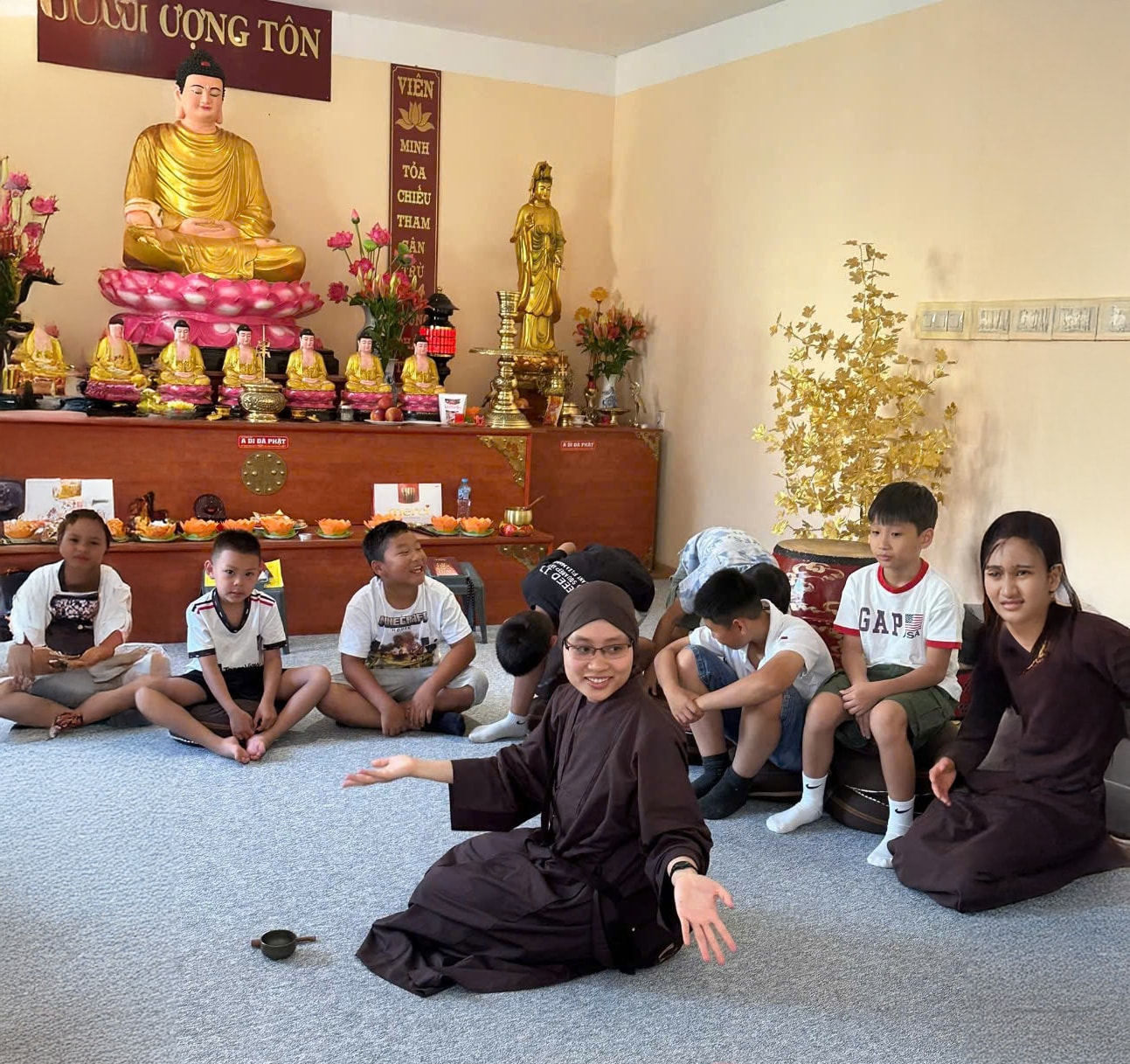
Many temples in Hanoi have transcended their purely religious spaces to become centers of community life, spreading humanistic values, virtuous lifestyles, and a spirit of mutual support and compassion. For many years, Lien Phai Temple has maintained a traditional medicine clinic serving a wide range of families receiving government assistance, war invalids, and the poor in difficult circumstances. Bodhi Temple regularly cares for over 50 orphaned children and many elderly people…
According to Venerable Thich Thanh Dien, PhD, charitable activities are not only an expression of the compassionate spirit of Buddhist followers, helping those in need, but also an important manifestation of Buddhism's social support function. Here, this function of religion is not limited to helping people through spiritual therapies, but is also expressed through practical actions, most notably material support in religious activities, contributing to social welfare. Buddhism has provided society with a crucial resource, working alongside the State and other organizations in charitable activities to support the people.

Regarding this issue, Associate Professor Dr. Nguyen Anh Tuan from the University of Social Sciences and Humanities, Vietnam National University, Hanoi, commented: Charitable activities, humanitarian relief, building houses for the needy, giving gifts to the poor, and helping victims of natural disasters... have become a beautiful aspect of Vietnamese Buddhism. Buddhist temples and organizations have mobilized significant resources from Buddhists and the community to contribute to social welfare. This not only demonstrates the "compassionate" spirit of Buddhism but also practically contributes to reducing the burden on the state budget.
Socializing charitable activities is not only in line with the Party and State's policies and guidelines, but also promotes the ideals of "Buddhism - Nation - Socialism," contributing to building a just, compassionate, and sustainable society. Vietnamese Buddhism, with its tradition of engagement with the world, can fully awaken and promote historical values in today's young generation through acts of service, dedication, and building a peaceful community life with profound humanistic values…
Source: https://hanoimoi.vn/bai-2-nhap-the-tinh-tan-phung-su-nhan-sinh-728593.html


![[Photo] General Secretary and President To Lam meets with National Assembly delegates from ethnic minorities.](https://vphoto.vietnam.vn/thumb/1200x675/vietnam/resource/IMAGE/2026/04/20/1776696701056_a1-bnd-8331-3342-jpg.webp)
![[Image] National Assembly discusses the implementation of the socio-economic development plan.](https://vphoto.vietnam.vn/thumb/1200x675/vietnam/resource/IMAGE/2026/04/20/1776696707422_ndo_br_img-20260420-185419-jpg.webp)
























































Comment (0)