


If preserving identity is the foundation, then re-establishing its position is a prerequisite for Vietnam's tourism to rise strongly in the new phase. Tourism is viewed as a comprehensive economic sector, closely linked to culture, people, the environment, and national soft power. This shift in approach meets the demands of the tourism industry and aligns with the country's strategic direction in the new era.
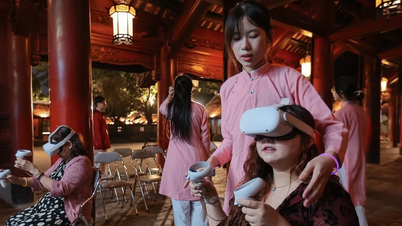
Tourism is a unique space where cultural values are not only preserved but also practiced, created, and disseminated in contemporary life. Therefore, tourism activities cannot be separated from culture and people, and certainly cannot pursue pure growth while neglecting the depth of value.
In practice, the tourism model that relies primarily on quantity and extensive resource exploitation with low added value is increasingly revealing its shortcomings.
Many destinations are experiencing overcrowding, ecological degradation, and erosion of cultural identity, while economic benefits are not distributed harmoniously and local communities have not maintained their central role.
These shortcomings diminish the attractiveness of the destination, making it difficult for Vietnamese tourism to reach high-value segments and gain a competitive advantage in the increasingly fierce global competition for tourist destinations.
Therefore, re-establishing the upward direction of Vietnamese tourism has long-term strategic significance. On January 7, 2026, the Politburo issued Resolution No. 80-NQ/TW on the development of Vietnamese culture in the new period.
The resolution emphasizes the need to preserve and promote national cultural values in conjunction with sustainable socio-economic development; cultural values must be closely and harmoniously integrated into all aspects of social life, truly becoming a national soft power in the new era.
The Resolution of the 14th National Congress of the Party continues to emphasize: Building and developing an advanced Vietnamese culture, rich in national identity, and synchronous on the foundation of national values, cultural values, family values, and the standards of Vietnamese people.
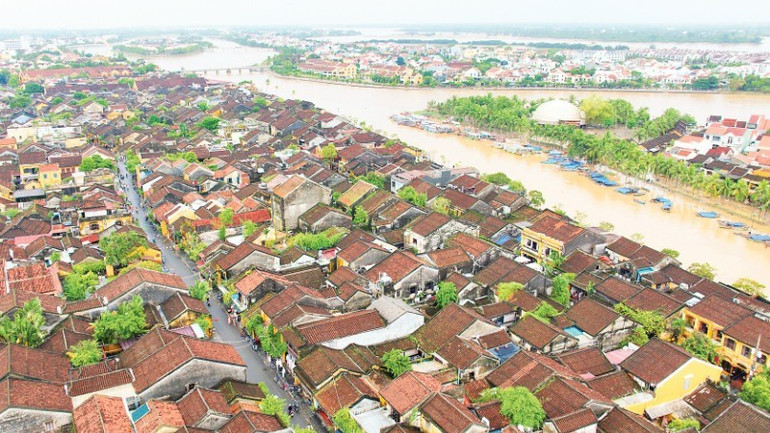
Within the social structure, tourism is a sector capable of directly transforming cultural values into resources for growth, while simultaneously spreading those values to society and the world.
However, the key question for tourism to achieve new progress is how to transform in a way that does not distort or impoverish cultural identity, but instead enriches and revitalizes cultural values.
First, it is necessary to clearly define the campaign objectives. While in the previous phase, growth was primarily measured by the number of visitors, revenue, and the rate of destination expansion, in the next phase, the evaluation criteria need to be broadened and adjusted.
The effectiveness of tourism must be considered through the quality of the experience, the extent to which culture is preserved and disseminated, its positive impact on the environment, and its substantial contribution to improving the material and spiritual lives of the people.
Alongside this, Vietnamese tourism needs to redefine the core values of its destination. Vietnam not only boasts attractive natural landscapes but also a diverse cultural space, with a rich history, traditions, and the distinct identities of its 54 ethnic groups.
Indigenous culture, folklore, history, and customs should be placed at the center of the product creation process.
These values must be translated into meaningful experiences, thereby elevating the destination and increasing visitor retention. Another important aspect of the repositioning process is re-establishing the role of the community.
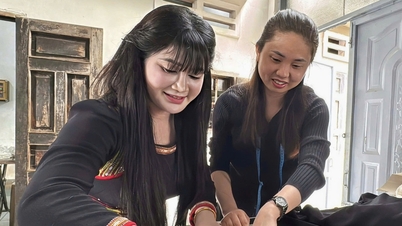
Resolution No. 80 emphasizes the people's role as key players in the preservation and promotion of culture. Applying this to the tourism sector, it means that local communities are not merely beneficiaries, but must become co-creators of value, acting as guardians and transmitters of cultural identity.
When people genuinely participate in the tourism value chain, benefit fairly, and have a voice in the planning process, tourism will have a solid and lasting social foundation.
The repositioning of Vietnam's tourism also highlights the urgent need to improve institutions and policies. Party documents and resolutions consistently consider institutional improvement as one of the strategic breakthroughs.
For tourism, institutions are not only the legal framework governing business operations, but also tools for defining values and controlling the quality of the industry's activities.
The development and strict enforcement of criteria for sustainable tourism, destination carrying capacity limits, environmental protection, and cultural heritage preservation should be considered mandatory and non-negotiable requirements. The sacrifice of the environment, culture, and social civilization for short-term economic gain is unacceptable.
Within the national structure, the process of repositioning tourism is also linked to regional strategies in accordance with the resolutions of the Politburo. Tourism in the midland, mountainous, and ethnic minority areas not only has economic significance but also plays an important role in preserving culture, stabilizing the population, strengthening national defense and security, and maintaining public support.
If properly managed, tourism in these areas can create sustainable livelihoods, contribute to poverty reduction, narrow the gap, and strengthen community ties to their homeland. In the context of increasingly deep globalization, repositioning Vietnam's tourism is also a process of increasing national soft power.
Tourism is an effective channel for people-to-people diplomacy, contributing to conveying the image, values, and messages of Vietnam to the world. A tourism industry built on a foundation of culture, respect for diversity, emphasis on authentic experiences, and social responsibility will help Vietnam establish the image of a nation that is both modern and rich in identity, and responsible to the international community.
This requires synchronization across all sectors, from policy planning and destination development to product creation, human resource training, and communication and promotion. Each locality needs to clearly identify its unique cultural advantages, avoiding a scattered approach and the copying of models. Each business needs to shift from a short-term exploitation mindset to a long-term investment approach, linking economic benefits with social responsibility and environmental protection.
Each community needs to be empowered and supported to truly become an agent of progress. 2026 marks the beginning of a new journey, with the goal of welcoming 25 million international tourists and achieving revenue of 1,125 trillion VND.
Once tourism establishes the right direction, the industry will make a positive contribution to economic growth, playing a key role as one of the five pillars driving the national economy in the new era, thereby contributing to the realization of the aspiration to build a prosperous and happy country.
Lesson 1: Preserve your roots to go far
Source: https://nhandan.vn/bai-2-tai-dinh-vi-de-tao-da-but-pha-post944411.html


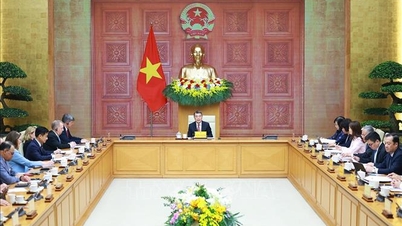
![[Photo] National Assembly Chairman Tran Thanh Man attends the policy seminar to promote Vietnam-Türkiye cooperation.](https://vphoto.vietnam.vn/thumb/1200x675/vietnam/resource/IMAGE/2026/04/16/1776351415367_vna-potal-chu-tich-quoc-hoi-tran-thanh-man-du-toa-dam-chinh-sach-thuc-day-hop-tac-viet-nam-tho-nhi-ky-8705791-jpg.webp)






![[Photo] National Assembly Chairman Tran Thanh Man attends the policy seminar to promote Vietnam-Türkiye cooperation.](https://vphoto.vietnam.vn/thumb/402x226/vietnam/resource/IMAGE/2026/04/16/1776351415367_vna-potal-chu-tich-quoc-hoi-tran-thanh-man-du-toa-dam-chinh-sach-thuc-day-hop-tac-viet-nam-tho-nhi-ky-8705791-jpg.webp)
![[Infographic] Details of the Hanoi-Quang Ninh High-Speed Railway Project](https://vphoto.vietnam.vn/thumb/402x226/vietnam/resource/IMAGE/2026/04/16/1776338188424_anh-man-hinh-2026-04-16-luc-18-16-10.png)
![[Photo] National Assembly Chairman Tran Thanh Man meets with the Speaker of the Georgian Parliament](https://vphoto.vietnam.vn/thumb/402x226/vietnam/resource/IMAGE/2026/04/16/1776338494029_anh-man-hinh-2026-04-16-luc-18-21-21.png)
![[Image] Bridges and roads connecting the eastern part of Ho Chi Minh City](https://vphoto.vietnam.vn/thumb/1200x675/vietnam/resource/IMAGE/2026/04/16/1776328595108_ndo_br_bh-vt5-jpg.webp)



































Comment (0)