A massive influx of multi-billion dollar construction projects.
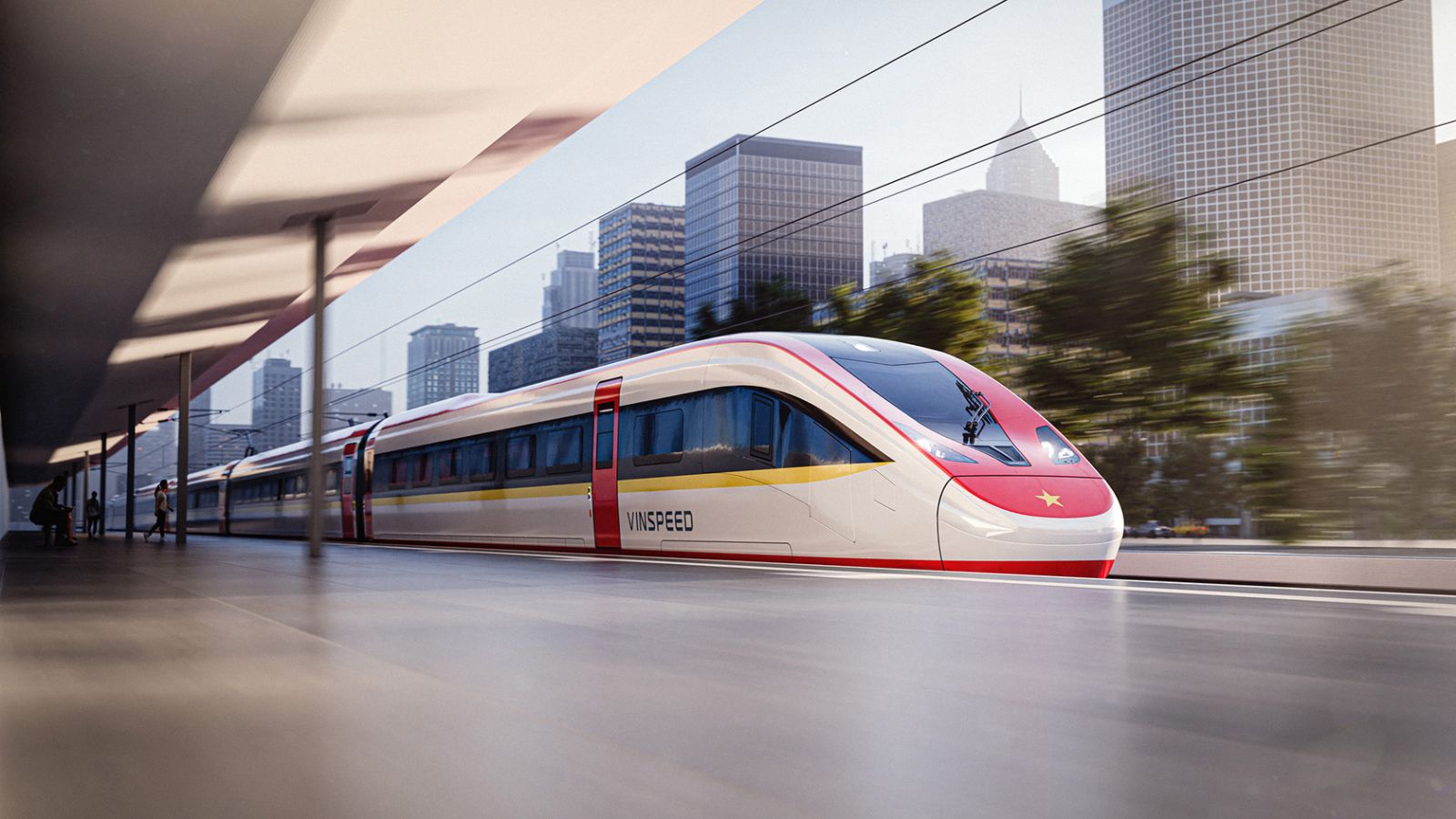
Eight months after the "historic moment" of the groundbreaking ceremony for the Can Gio reclaimed land urban area , tens of thousands of local residents enthusiastically witnessed the groundbreaking ceremony for the metro line connecting directly to the city center. The Ben Thanh - Can Gio line, invested in by Vinspeed High-Speed Railway Investment and Development Joint Stock Company, is the first urban railway line in the country entirely invested in and implemented by a private enterprise, and also the fastest line in history. From the initial concept to the proposal of the investment plan, approval, and groundbreaking on December 19th, the project took less than a year, equivalent to 1/6 of the preparation time for Ho Chi Minh City's Metro Line 1; 1/16 of Ho Chi Minh City's Metro Line 2; and 1/3 of Hanoi 's Cat Linh - Ha Dong Metro Line. After nearly two decades of weary waiting for the Can Gio bridge to eliminate the need for ferries to cross the river, Ho Chi Minh City is moving straight ahead to connect with urban rail with speeds up to 350 km/hour, with a total investment of nearly 4 billion USD.

Vietnam is officially entering the era of urban rail.
Photo: VG
If progress goes according to schedule, Ho Chi Minh City will have an additional 54 km of urban railway in three years. Looking back, just last year, people were still concerned when city leaders set a target of completing an additional 355 km of urban railway in the next 10 years, while it took nearly 20 years of struggle to complete only 19.7 km of Metro Line 1. However, the "lightning-fast" progress of the Ben Thanh - Can Gio line has rekindled the feasibility of the metro "dream".
Along with the Ben Thanh - Suoi Tien metro line, the Ho Chi Minh City Urban Railway Management Board (MAUR) is also urgently completing the final tasks to ensure the conditions for the commencement of construction of metro line 2 (Ben Thanh - Tham Luong) on January 15, 2026. Mr. Phan Cong Bang, Director of MAUR, said: Currently, compensation, support, and land clearance for the project have been completed 100%; the relocation of technical infrastructure is expected to be completed in early 2026. Notably, although 10 out of 11 stations of metro line 2 are underground, and underground construction is much more difficult than elevated stations, MAUR expects to build metro line 2 in 57 months, completing the entire project by the end of 2030. Compared to the 12-year construction time of metro line 1, the progress of line 2 is shortened by more than 2.5 times.
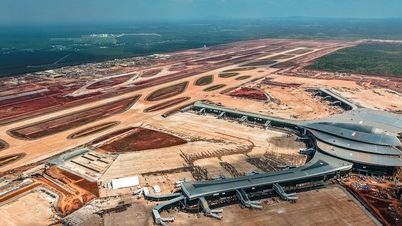
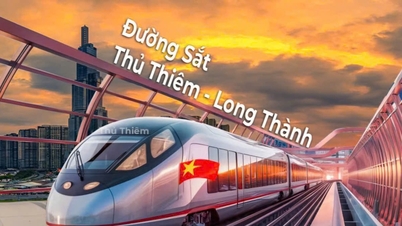
According to Mr. Phan Cong Bang, the Ho Chi Minh City People's Committee has assigned MAUR (Management Authority of Urban Railways) to prepare for and act as the investor for nine urban railway projects, including lines connecting to Long Thanh Airport and extending the line connecting the center of Ho Chi Minh City to Binh Duong (formerly), which the Government is prioritizing. It is expected that these projects will essentially complete the Feasibility Study and FEED design in the 2026-2027 period; complete compensation, support, and resettlement work in the 2027-2028 period; and then commence and complete construction in the 2027-2035 period.
Thus, from now until 2035, Ho Chi Minh City will successively start and complete 11 railway lines, running from the inner city to inter-regional areas with a total length of over 400 km (including the Ben Thanh - Can Gio line).
Also today, Hanoi's Metro Line 5 (Van Cao - Ngoc Khanh - Lang - Hoa Lac), costing over 72,000 billion VND and with a total length of 39.585 km, officially commenced construction. The Hanoi Metro Management Board (MRB) expects to complete Line 5 before 2030, connecting 9 wards and 10 communes, providing passengers with fast and convenient transportation from suburban areas to the city center. Meanwhile, Line 3.1 (Nhon - Hanoi Station section) has completed the 8.5 km elevated section, with tunnel drilling expected to be completed in the first quarter of 2026 and equipment installation for the underground section beginning. Recently, in early October, the Hanoi People's Committee also commenced construction of Metro Line 2, the Nam Thang Long - Tran Hung Dao section, with a total investment of over 35,000 billion VND. Hanoi aims to complete the construction of 96.8 km of urban railway by 2030 and 301 km by 2035 to serve the people of the capital city.
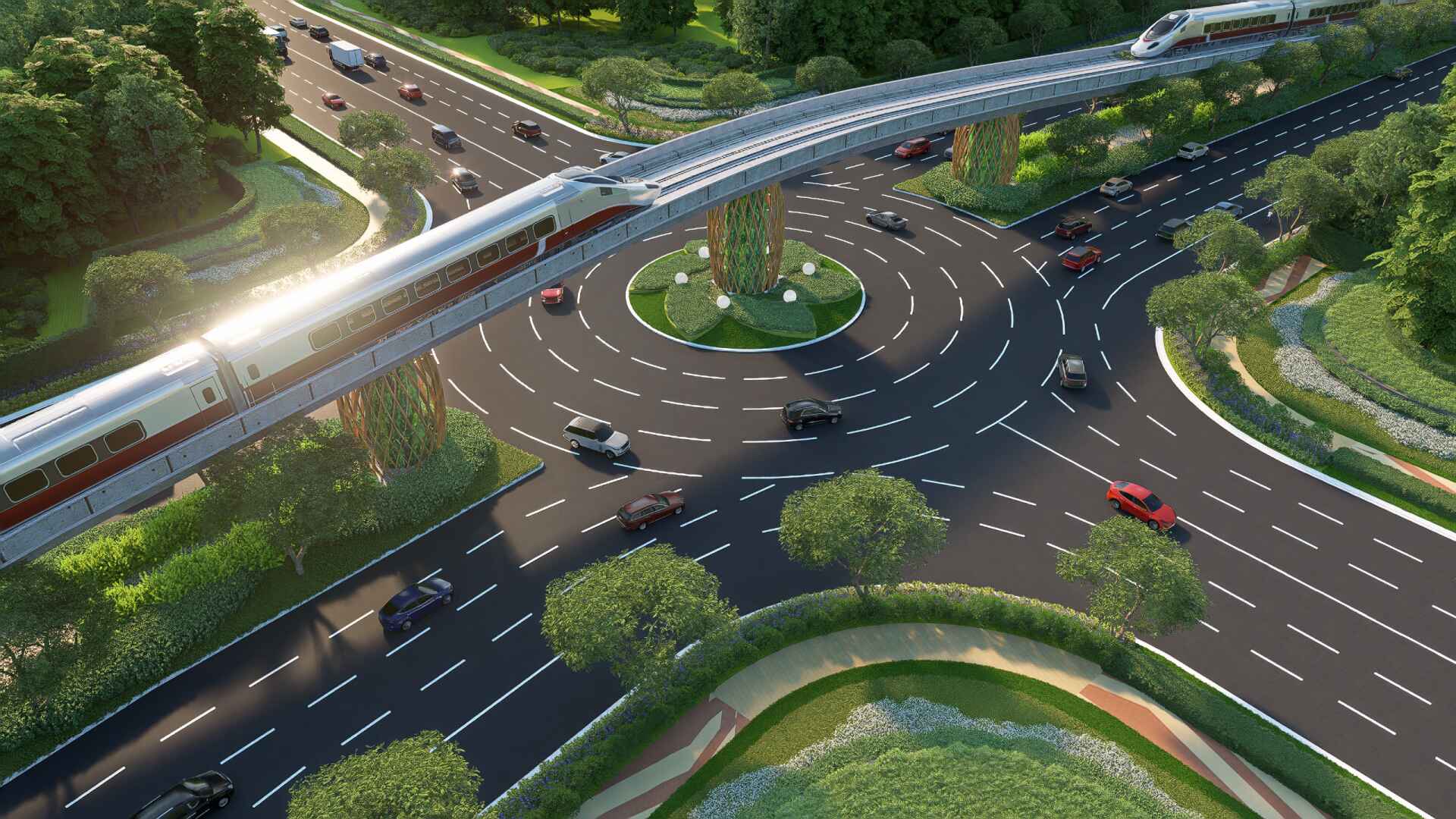
In addition, the People's Committee of An Giang province and Sun Group also commenced construction of the first urban light rail (LRT) line in Phu Quoc today, December 19th. The nearly 18 km long LRT line will directly connect Phu Quoc International Airport to APEC Boulevard, leading straight to the APEC Convention and Exhibition Center, with a total investment of nearly 9,000 billion VND. The project will be implemented rapidly to be completed in the second quarter of 2027, operating several months before APEC 2027.
A series of multi-billion dollar metro construction projects are taking shape in various localities, expected to transform the urban landscape of many areas.
From experiences to daily transportation
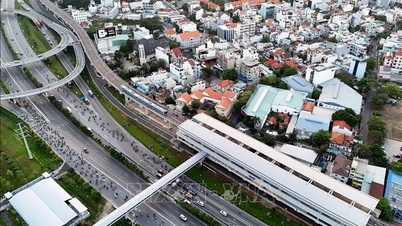
The period when Ho Chi Minh City accelerates its metro development also coincides with the one-year anniversary of Metro Line 1's commercial operation (December 22, 2024).
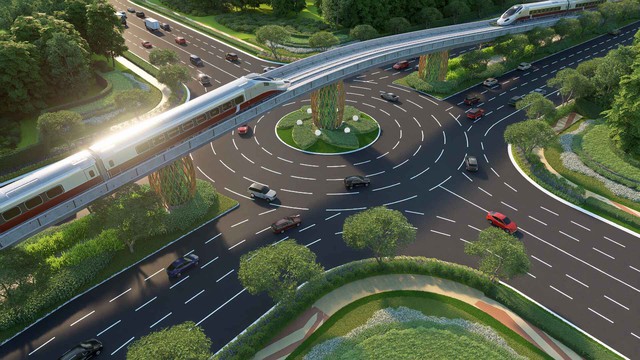
Perspective view of Phu Quoc's first LRT line, construction begins today (December 19).
Photo: SG
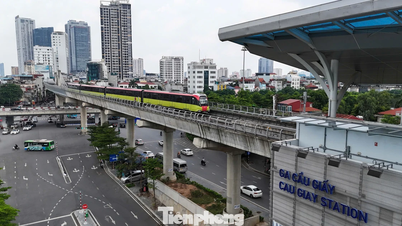
For the past year, Metro Line 1 has operated regularly from 5 AM to 10 PM with over 200 train trips per day, and its frequency and operating hours have been continuously adjusted upwards during peak holiday periods. According to statistics from MAUR, as of December 15th, Metro Line 1 had safely operated 78,194 train trips, serving approximately 18.95 million passengers (achieving 114.21% of the plan). On average, the line serves over 1.5 million passengers per month, about 52,000 passengers per day, and peaks at over 110,000 passengers per day during holidays. The number of people using the metro has exceeded the expectations of both the investor and the operating unit, as initially, Metro Line 1 was only projected to reach 39,000 passengers per day.
Mr. Phan Cong Bang, Director of MAUR, excitedly announced: "This is a very proud achievement for those working on the metro in Ho Chi Minh City. The first urban railway line is no longer just an experiential option, but has become a part of the daily commute for the city's residents."
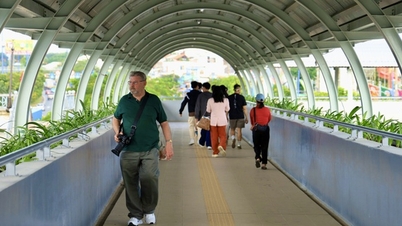
On the early morning trains, many office workers commute from the old Thu Duc City area to the city center, then disperse to other locations by bus or other public transport. In the opposite direction, many people from areas belonging to the old districts such as Districts 1, 3, 8… also take buses to the central station, then board trains to locations along Hanoi Highway to work. On the metro, some people sit with their laptops working, others are engrossed in reading books...
Similarly, Hanoi's urban rail network aims to transport approximately 3.2 million passengers per day by 2035, accounting for 35-40% of the public passenger transport market share in the inner city and about 20% in the suburbs.
People commute to work, school, and leisure activities by metro; tourists visiting Vietnam also have metro lines that take them directly from the airport to the city center… The metro era is opening up a future of modern, civilized cities, improving the quality of life for people across the country.
A survey by the Ho Chi Minh City Department of Construction shows that Metro Line 1, after becoming operational, has contributed to reducing traffic congestion on Hanoi Highway by 80%. MAUR expects that after Metro Line 2 is completed, an additional 140,000 passengers will use the metro daily along the busy East-West corridor of the city.
Thanhnien.vn
Source: https://thanhnien.vn/bam-nut-vao-ky-nguyen-metro-1852512182223472.htm


























































































Comment (0)