


Whether it's a rainy day or a sunny day, whether it's winter or summer, familiar sounds always echo in the earthen-walled house of Mr. Giàng A Vả's family in Mào Sao Phìn village, Sín Chéng commune. Sometimes it's the sharp clang of wood-carving knives, the clicking of drills, and sometimes the resonant sound of wooden horns. Every Hmong person in Mào Sao Phìn village knows that this is when Mr. Vả is making and testing the wooden horns he has just finished.
Born in the high mountains of Sin Cheng, Giàng A Vả is 50 years old this year, but he has spent 25 years making wooden horns – a traditional musical instrument of the Mong, Nung, and Thu Lao people in this region. Just looking at the dozens of large and small pieces of wood, and the planks carved into various parts of the horns, piled up on his earthen porch, one can tell that this is his daily work.
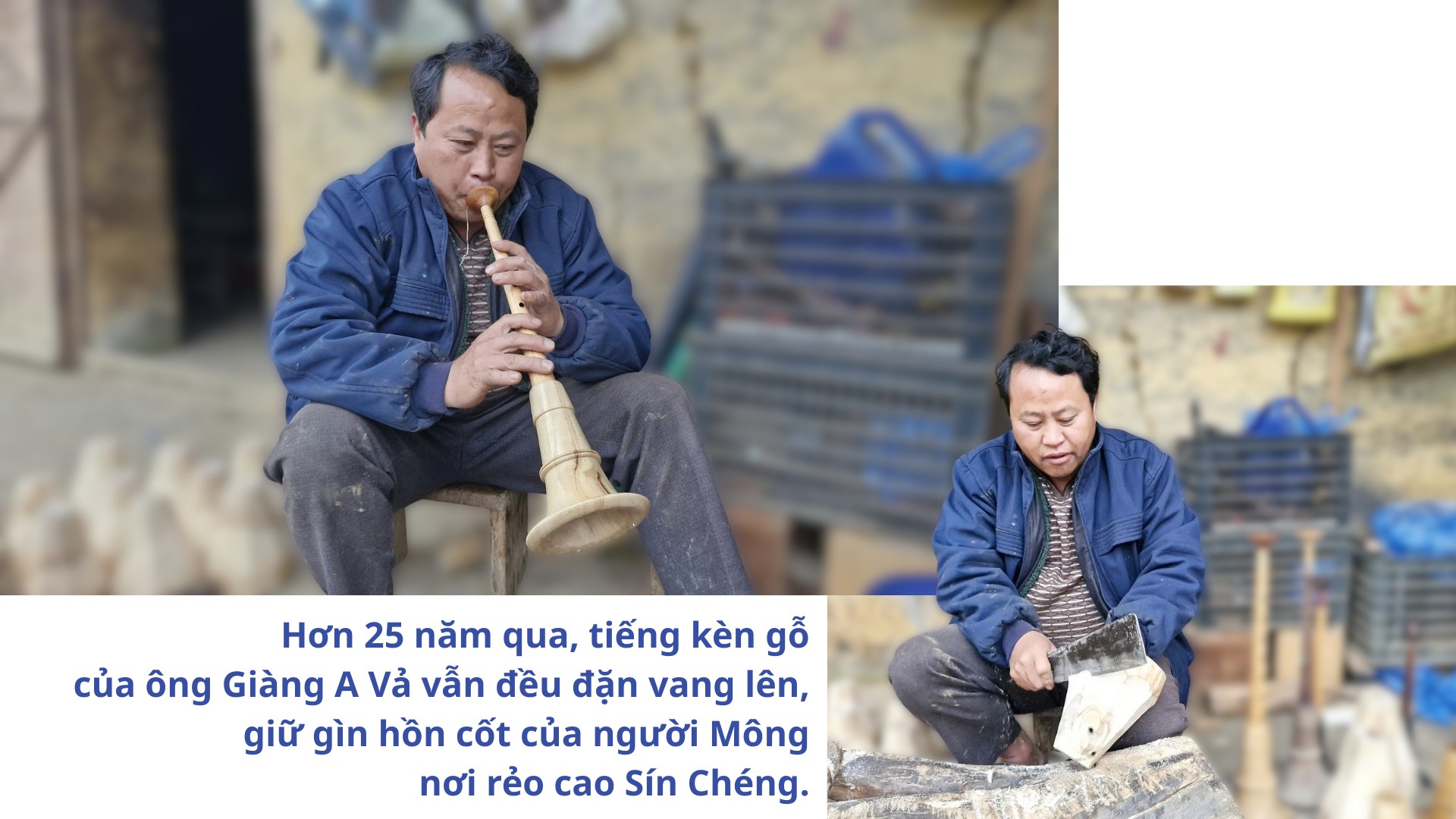
Showing us his newly finished trumpet, Mr. Va shared: “Since I was a child, I have loved the wooden trumpets of our ethnic group, but it wasn't until I was 25 that my uncle, Mr. Giang A Giao, the only trumpet maker in Sin Cheng commune, taught me how to make trumpets. For the past 25 years, since Mr. Giao passed away, I have also been the only person in the commune who knows how to make wooden trumpets and has followed this craft.”
According to Mr. Va, to make a good trumpet, the first step is to choose the right type of wood. The bell is made from Dalbergia tonkinensis wood – a type of wood that is both light and durable. The body of the trumpet is made from mahogany, mulberry, or cypress wood – types of wood with beautiful grain and rarely crack. The valve is made from a chicken feather attached to a dried straw tube; when blown, it produces a clear, resonant sound. Each step is done entirely by hand by Mr. Va, from carving and drilling holes to painting, and it takes him two days to complete. Depending on the type of wood, each trumpet sells for between 700,000 and 1,000,000 VND.
Making Hmong horns isn't too strenuous, but it requires patience, and the income isn't high. I only sell one or two horns at each market. However, the horn is an important traditional musical instrument of the Hmong people, often used in funerals. The sound of the horn expresses the longing, sorrow, and gratitude of the family and descendants towards the deceased.
For the Nung people, the horn is used in weddings and engagement ceremonies, with cheerful and lively melodies. The craft of making horns is also a part of their ethnic identity, so I try to preserve it and pass it on to future generations.

Although I had visited Sin Cheng many times before, I only knew Mao Sao Phin village as famous for still preserving the traditional earthen-walled houses of the Mong people. This time, returning to Mao Sao Phin, I was surprised and impressed to find that not only Mr. Giang A Va still makes traditional musical instruments, but also many others, including many young people, are diligently working in this craft.
Today, in the earthen-walled house inherited from his ancestors, young Hmong man Giang A Khay is diligently making Hmong flutes to deliver to customers in Hanoi who have placed orders. The flute is a familiar musical instrument of the Hmong people in many places, but making a durable, beautiful flute with a good sound is not something everyone can do. Looking at the flutes made from cypress wood and long and short bamboo tubes, meticulously crafted, I can't help but admire the skillful hands of this Hmong young man.
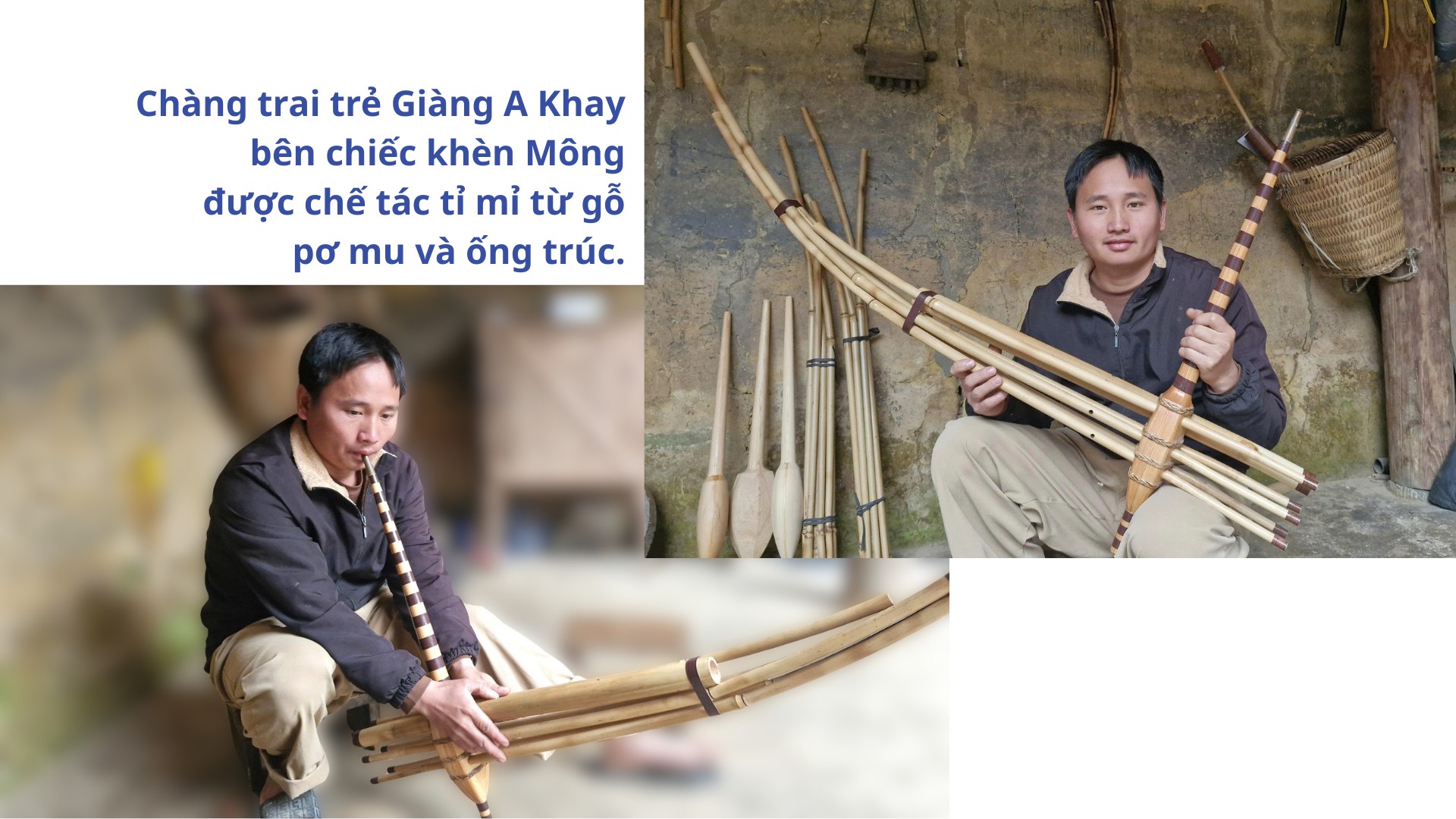
Being Hmong, I've been familiar with the Hmong flute and the sounds and dances associated with it since birth. Because I love the sound and dances of the Hmong flute, I often go online to watch flute artisans playing and making them. Two years ago, when I learned that there was an artisan named Ho Giang Lenh in Dien Bien who made beautiful flutes, I asked to become his apprentice to learn the craft.
Passionate about the khaen (a type of bamboo flute) and possessing skillful hands, coupled with diligent study, Giàng A Khay mastered the secret of making beautiful khaen with excellent sound in just two months. Although he has only been involved in khaen making for over a year, he has already sold over 100 khaen to khaen enthusiasts across various provinces and cities. Besides making khaen, Khay also makes khaen sticks to sell at the markets in Sín Chéng, Cán Cấu, Si Ma Cai, Bắc Hà, and other tourist destinations.
“Each beautiful Hmong flute takes me three days to make. The flutes are made of cypress wood and bamboo tubes, tied with rattan or cherry bark, and each one costs between 4 and 5 million dong. Not only Hmong people in Lao Cai and other Northwestern provinces, but also customers from Khanh Hoa, Ho Chi Minh City, and even Laos order them. Thanks to selling flutes and bamboo sticks, I have extra income for my family, and life is better,” Giang A Khay confided.
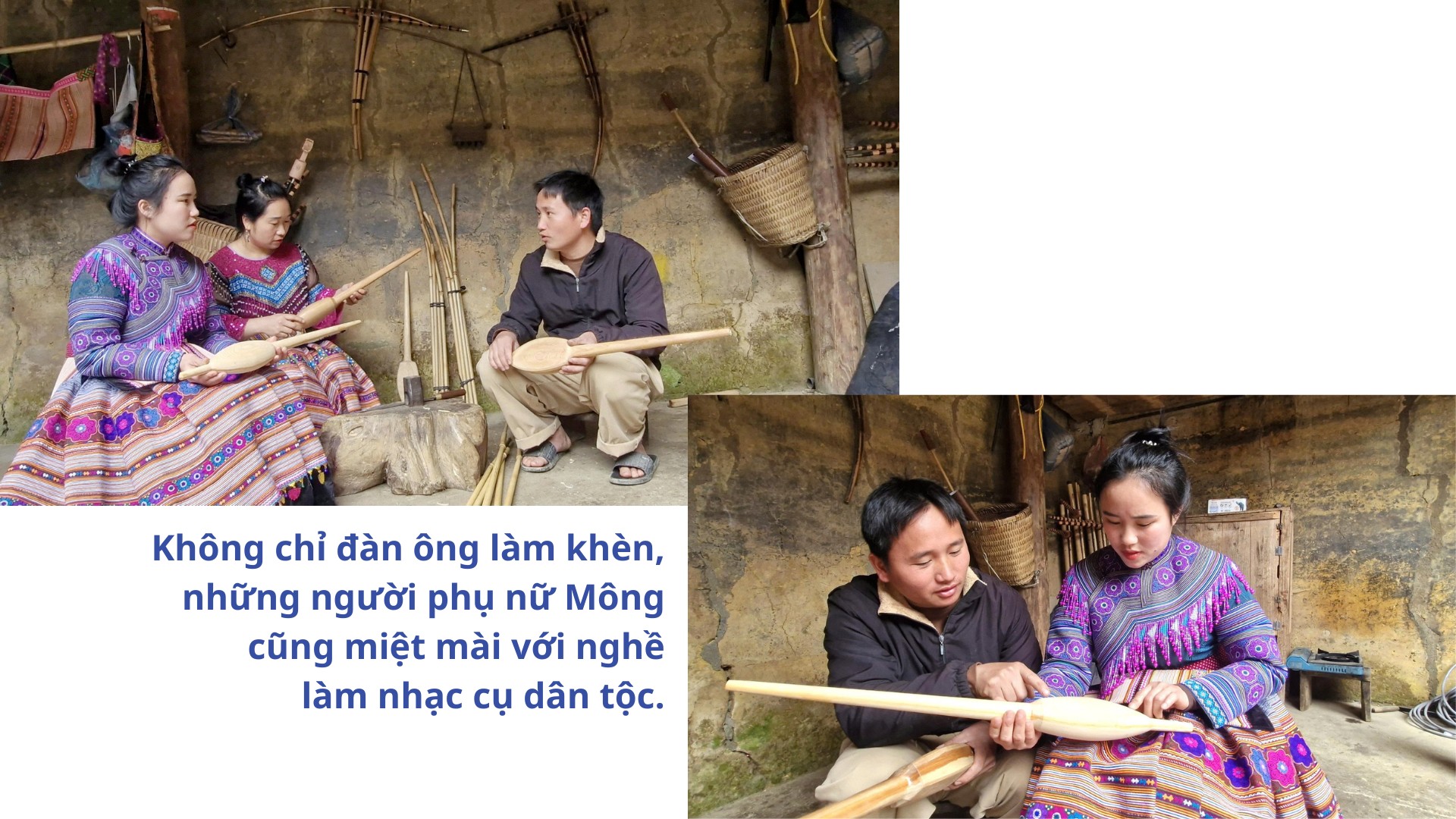
According to Mr. Thào A Sàn, an official from the Culture and Social Affairs Department of Sín Chéng commune, in Mào Sao Phìn village today, not only Mr. Giàng A Vả and Mr. Giàng A Khay, but many others are also diligently working in the craft of making traditional musical instruments, such as Mr. Hoàng A Giáo, Mr. Vàng A Cấp, and Mr. Tráng A Vư who maintain the craft of making khen flutes; Ms. Lừu Thị Phương, Ms. Ly Thị Mùa, and Mr. Sùng A Chùa who make sênh tiền sticks... Most of them are young people but passionate and dedicated to preserving and promoting the value of ethnic identity.
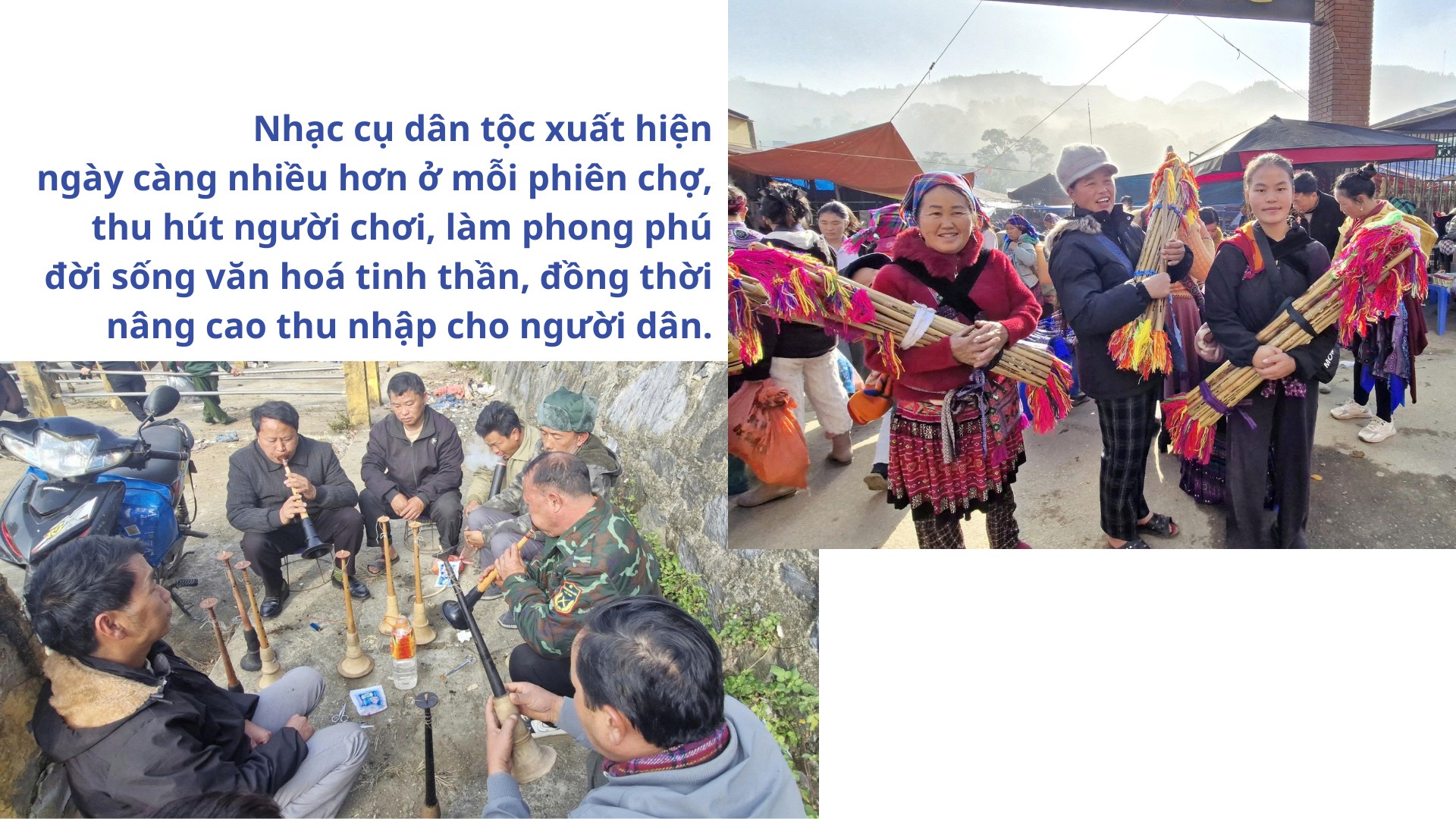
In several other villages of Sin Cheng commune, such as Ngai Phong Cho, San Chung, and Na Pa, the craft of making traditional musical instruments is also "reviving." Through the skillful hands of those passionate about traditional sounds, traditional instruments like the khene (bamboo mouth organ), wooden horns, flutes, two-stringed fiddles, mouth harps, and coin-shaped sticks are appearing more and more in each village and market, attracting players, enriching cultural and spiritual life, preserving cultural identity, and increasing income for the people.
As I bid farewell to the Mong Mao Sao Phin village, beside the traditional earthen house, Mr. Giang A Khay had just finished making his new khaen (bamboo flute). He carefully tested it, playing and dancing with the new khaen. The melodious sounds resonated with each graceful turn of his feet, the khaen's heartfelt, gentle music inviting visitors from afar to come to this land and celebrate the Gau Tao festival in the new spring.
Source: https://baolaocai.vn/ban-mong-giu-thanh-am-dan-toc-post891837.html
![[Photo] Hanoi is ready for the "National Festival"](https://vphoto.vietnam.vn/thumb/1200x675/vietnam/resource/IMAGE/2026/03/12/1773305846167_ndo_br_z7612336508628-14627dc7d18cc27532ffea5d4089713b-4105-jpg.webp)

![[Photo] Trial run of the election process at polling stations in Dong Da ward (Hanoi)](https://vphoto.vietnam.vn/thumb/1200x675/vietnam/resource/IMAGE/2026/03/12/1773306146728_ndo_br_van-hanh-thu-to-bau-cu-4070-755-jpg.webp)









































































Comment (0)