

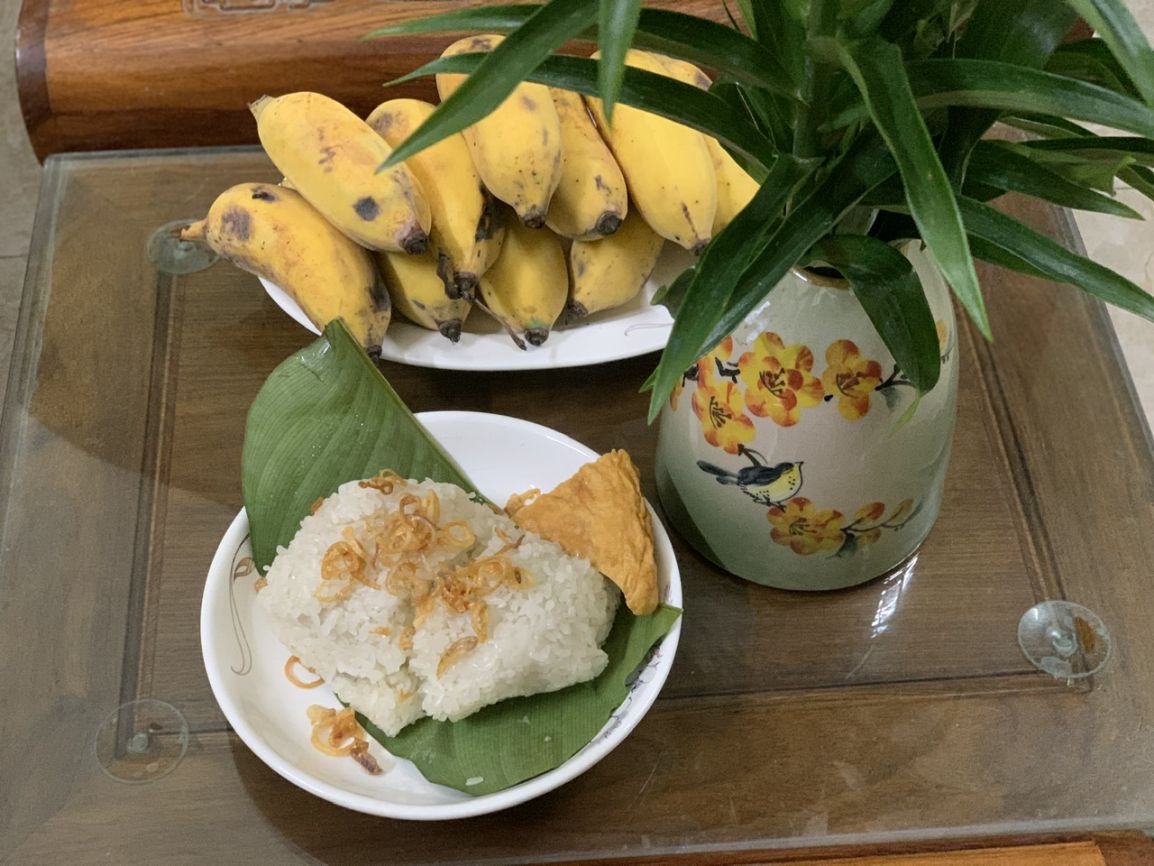
Nam Dinh sticky rice cake. Photo: Ky Lam
The Vietnamese language, as observed by the late poet Luu Quang Vu, is "soft as silk." Perhaps it is precisely because of this softness that the Vietnamese language is so incredibly versatile. Eating a piece of "che lam" or "che kho" might not be considered "che" at all. Then, a handful of fragrant sticky rice might be called "banh khuc"—truly an unpredictable and ever-changing language.
If we strictly adhere to the definitions, it would probably be very difficult to translate the names of many Vietnamese dishes into foreign languages. After all, these aren't "chè," which is a sweet drink as most people understand it. Nor are they "bánh" (cakes) as commonly believed.
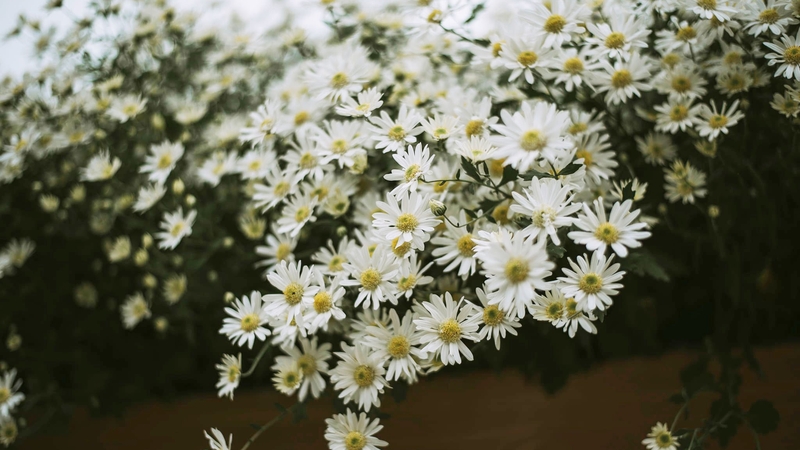
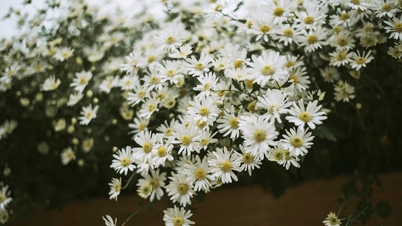
But sticky rice cake is still sticky rice cake, even though it's a very delicious and distinctive dish of the Northern Delta. Sticky rice grows all over Vietnam, but only the mossy, velvety-leaved plants with their white flowers, growing in the drizzling rain of the North, can produce such a rustic and delicious dish.
In the memories of boarding students from the 70s and 80s generations in Hanoi , the cry of "Hot sticky rice cake for sale!" from the bicycle carrying a basket of sticky rice cakes, wafting through the dormitory windows on cold winter nights, will forever resonate.
The weary yet steady and poignant calls of the street vendor under the dim, yellowish, rain-soaked lights always made the hungry stomachs of the students rumble. Truly, there was no greater happiness than being able to loudly call out "Khuc!" and have the Khuc cake cart arrive, handing over a steaming packet of Khuc cakes.
It wasn't just students from the "eating and drinking sparingly" era who craved sticky rice cakes; countless laborers also found solace in a warm, freshly made package of sticky rice cakes, costing only a few thousand dong at the time. On cold, rainy nights, sticky rice cakes were a self-reward after a hard day's work.
Recalling those rice cakes from those difficult times, even though they weren't made with the traditional "khuc" leaf but with old kohlrabi or cabbage leaves because they were out of season – a very "poor man's" variation – makes the rice cakes feel so familiar. And then, on those nights of drizzling rain and biting wind, suddenly a night vendor's cry rings out.
Now, it's January and February again, and the drizzle is falling all over the long streets. People are once again rushing to the riverbanks and rice paddies to pick wild spinach to make wild spinach cakes. The wild spinach of January is full of starch, making delicious sticky rice with wild spinach. Fresh wild spinach is everywhere, so they can pick as much as they want and store it to cook whenever they want to eat wild spinach cakes.
There are two ways to preserve it: one is to dry and grind it into powder, and the other is to pound fresh knotweed until smooth and then freeze it, storing it in the refrigerator. Usually, people prefer the fresh pounded method because it tastes better than using dried powder. This way, knotweed cakes can be made year-round, although they may not be as good as those made with knotweed harvested in the spring.
While not elaborate, making bánh khúc (a type of Vietnamese rice cake) still requires some effort. The harvested herbs must be washed thoroughly several times, then blanched in boiling water and drained completely before being finely chopped and pounded until smooth. The resulting mixture is then combined with glutinous rice flour to form a thick, sticky paste, which is then shaped into individual pieces.
The filling of the "bánh khúc" cake is made from pork fat, leaf fat, or pork belly cut into square pieces, wrapped around a ball of mashed, peeled mung beans mixed with black pepper. This filling is called the "cake shell." Then, glutinous rice flour dough is used to wrap the "cake shell," which is then rolled into a round shape about the size of a tennis ball.
Next, the glutinous rice cake is rolled in the soaked and rinsed glutinous rice to form the outermost layer. The final step is to arrange the cakes in a steamer to cook until done. The cooking time depends on the thickness of the rice coating, but it usually takes about 30 minutes.
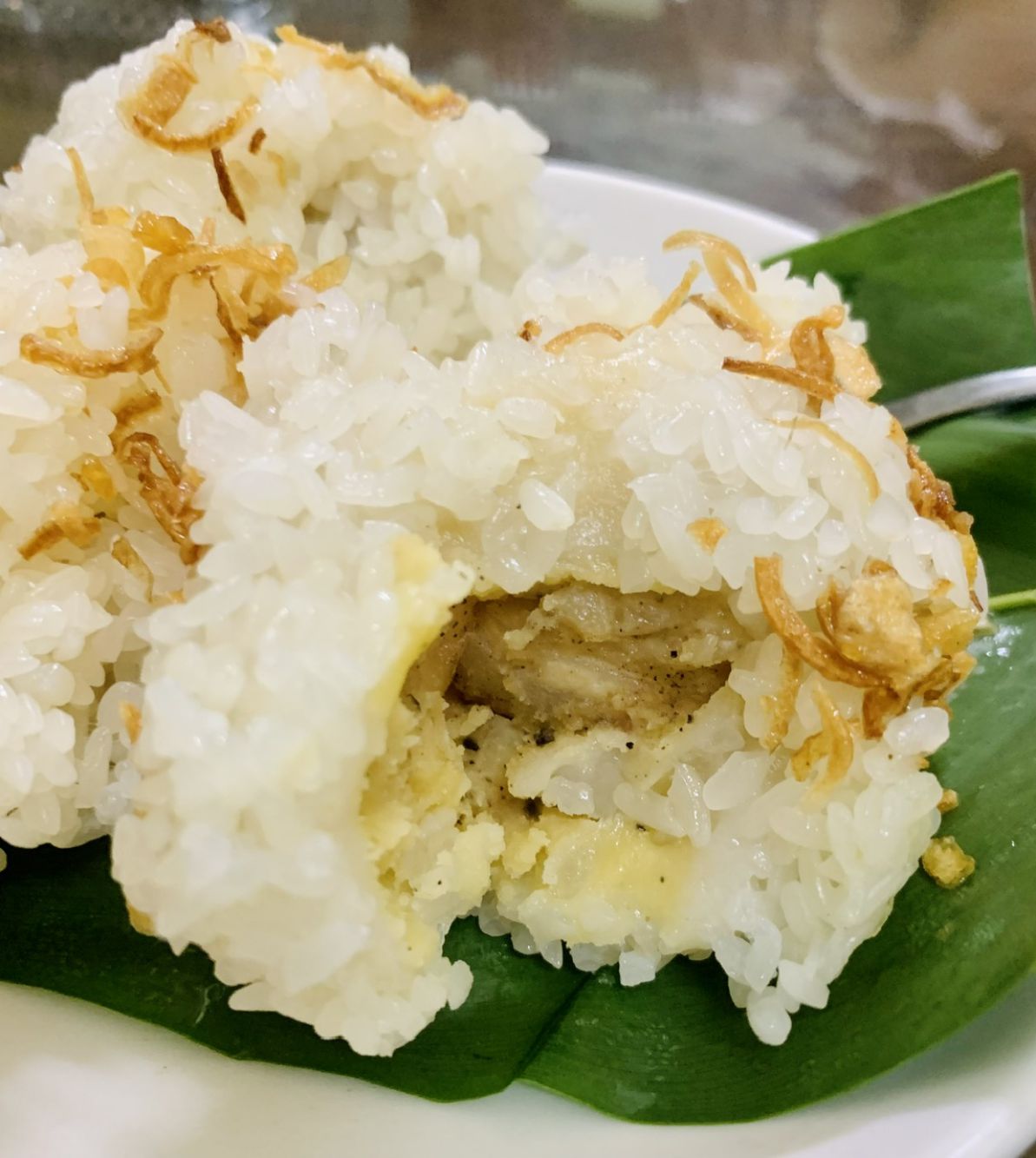
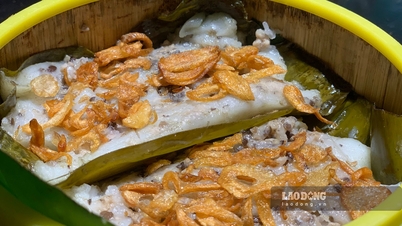
Nam Dinh's "Banh Khuc" (a type of Vietnamese cake) does not use "rau khuc" (a type of herb). Photo: Ky Lam
Looking at a pot of sticky rice cakes, it's no different from a pot of plain white sticky rice; however, with skillful use of chopsticks, you can easily separate each cake into perfectly round pieces. The technique of serving sticky rice cakes requires practice and expertise to separate each piece without damaging the others.
Sticky rice cakes can be eaten with sesame salt, shredded pork, or Vietnamese sausage, but perhaps eating them plain is the best way to enjoy them. Holding a packet of sticky rice cake in your hand, a light bite reveals the dough mass because the outer layer of sticky rice is very thin. Immediately, a slightly pungent, rich aroma of the sticky rice leaves fills your nostrils.
It's the unusual aroma of herbs intertwined with the fragrance of sticky rice, creating a unique flavor. The texture of the dough is also different from that of sticky rice, making eating interesting as you discover different nuances in a single bite.
Taking another bite, I suddenly felt a rich, creamy liquid glisten on my teeth as the fat crumbled. Almost simultaneously, my mouth was filled with the warm spiciness of pepper, mixed with the fragrant, nutty flavor of mung beans. It could be called a bite that touched the heavens of culinary delight, causing my saliva to gush out in a rush to fully savor the deliciousness.
That's the basic idea for a "bánh khúc" (a type of Vietnamese rice cake), but in the Sơn Nam Hạ region of old Nam Định province, the "bánh khúc" doesn't contain the "rau khúc" herb. It's a puzzling mystery, because if there's no "rau khúc" in January, why is it still called "bánh khúc"? Nam Định's "bánh khúc" consists only of the rice flour wrapped in a layer of sticky rice, completely lacking the other layer of glutinous rice flour.
However, it was still a delicious and fragrant rice cake, conquering the stomachs of everyone, both locals and visitors from all over. Nevertheless, that rice cake lacked the romantic charm of springtime scenes of people braving the drizzle to pick rice leaves, or summer days of wading through the dew to gather chives to make simple, rustic dishes.
However, those are just variations of the traditional rice cake found here and there. But now, with January just ending and February just beginning, and the rice plant growing abundantly, don't miss the opportunity to enjoy rice cake in the spring .
Source: https://laodong.vn/du-lich/am-thuc/banh-khuc-dau-xuan-1671900.html
![[Photo] Young people of the Dong Thap Border Guard actively participate in "March Border Month" activities.](https://vphoto.vietnam.vn/thumb/1200x675/vietnam/resource/IMAGE/2026/03/23/1774248483508_ndo_tl_dt3-jpg.webp)






![[Photo] Opening of the Second Conference of the Central Committee of the 14th Party Congress](https://vphoto.vietnam.vn/thumb/402x226/vietnam/resource/IMAGE/2026/03/23/1774233781483_anh-1-bnd-4146-7258-jpg.webp)



























































Comment (0)