

As December arrives, according to the customs of many localities, people will turn their thoughts to their ancestors by cleaning and tidying the graves of their grandparents, parents, and relatives as a way of showing filial piety.
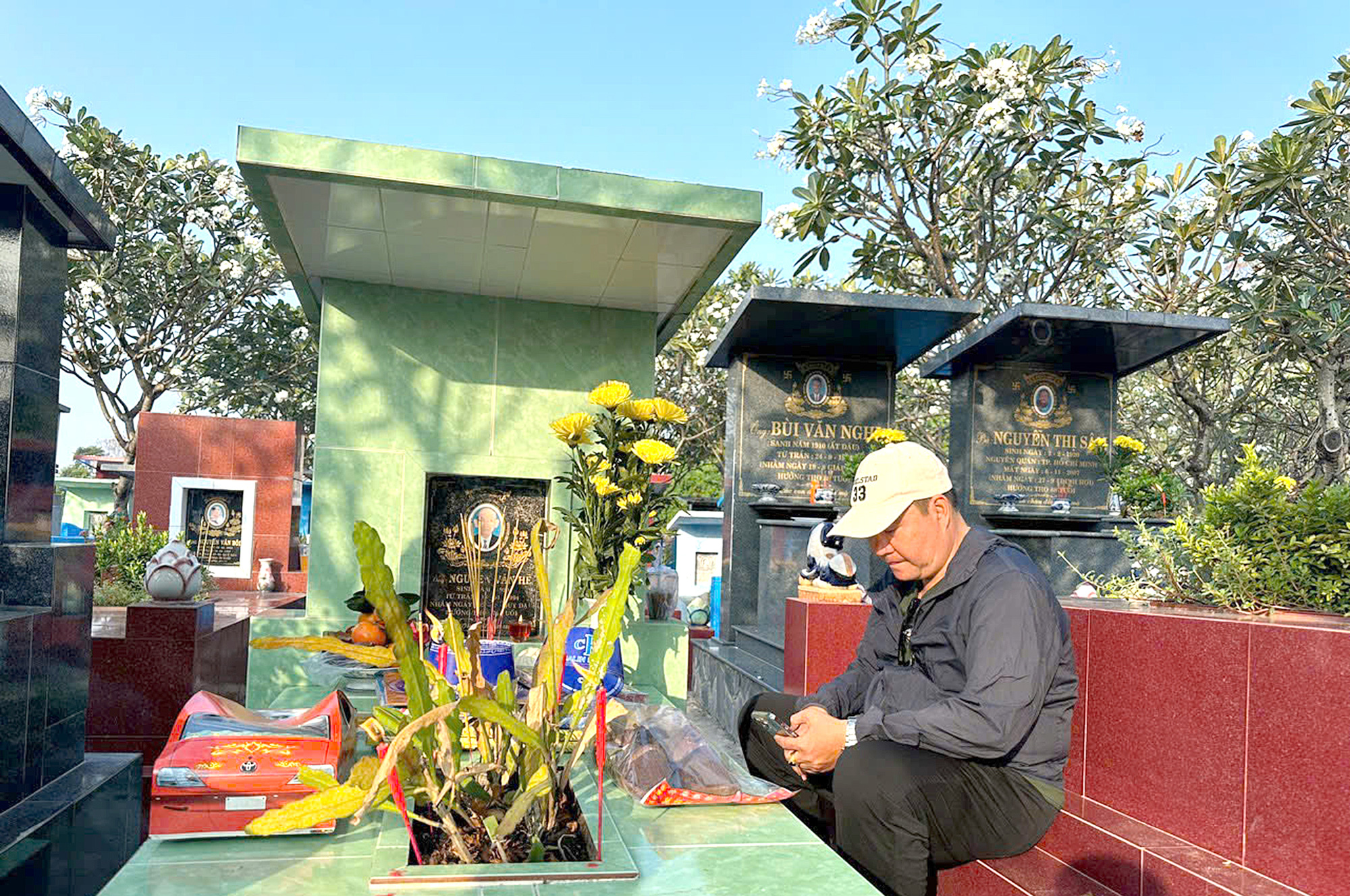
Visiting the graves of loved ones at Go Dua Cemetery (Thu Duc City) at the end of the year - Photo: L.D.L.
In the minds of many people, ensuring that their grandparents' and parents' graves are peaceful and beautiful is a way of showing filial piety after their loved ones have passed away.
Nguyen Hieu Tin, M.Sc. in Cultural Studies and head of the tourism department at Ton Duc Thang University, a researcher of Vietnamese culture for many years, shared with Tuoi Tre newspaper his thoughts on the Vietnamese cultural concept of ensuring a peaceful and beautiful burial place for grandparents and parents:
- As the old year draws to a close and the new year approaches, Vietnamese people have the custom of visiting ancestral graves. During these days, grandparents and parents often lead their children and grandchildren to clean and tidy up the graves of their ancestors.
This serves to introduce to descendants the burial place of someone of significant importance in the family, and is also an opportunity to remember grandparents and parents... Therefore, in a way, it is also the responsibility of children to care for their deceased parents and grandparents, a part of filial piety.
MSc. NGUYEN HIEU TIN
Is building a large tomb the only way to show filial piety?
However, there are families and clans that "compete" in building tombs for their grandparents and ancestors to show filial piety...
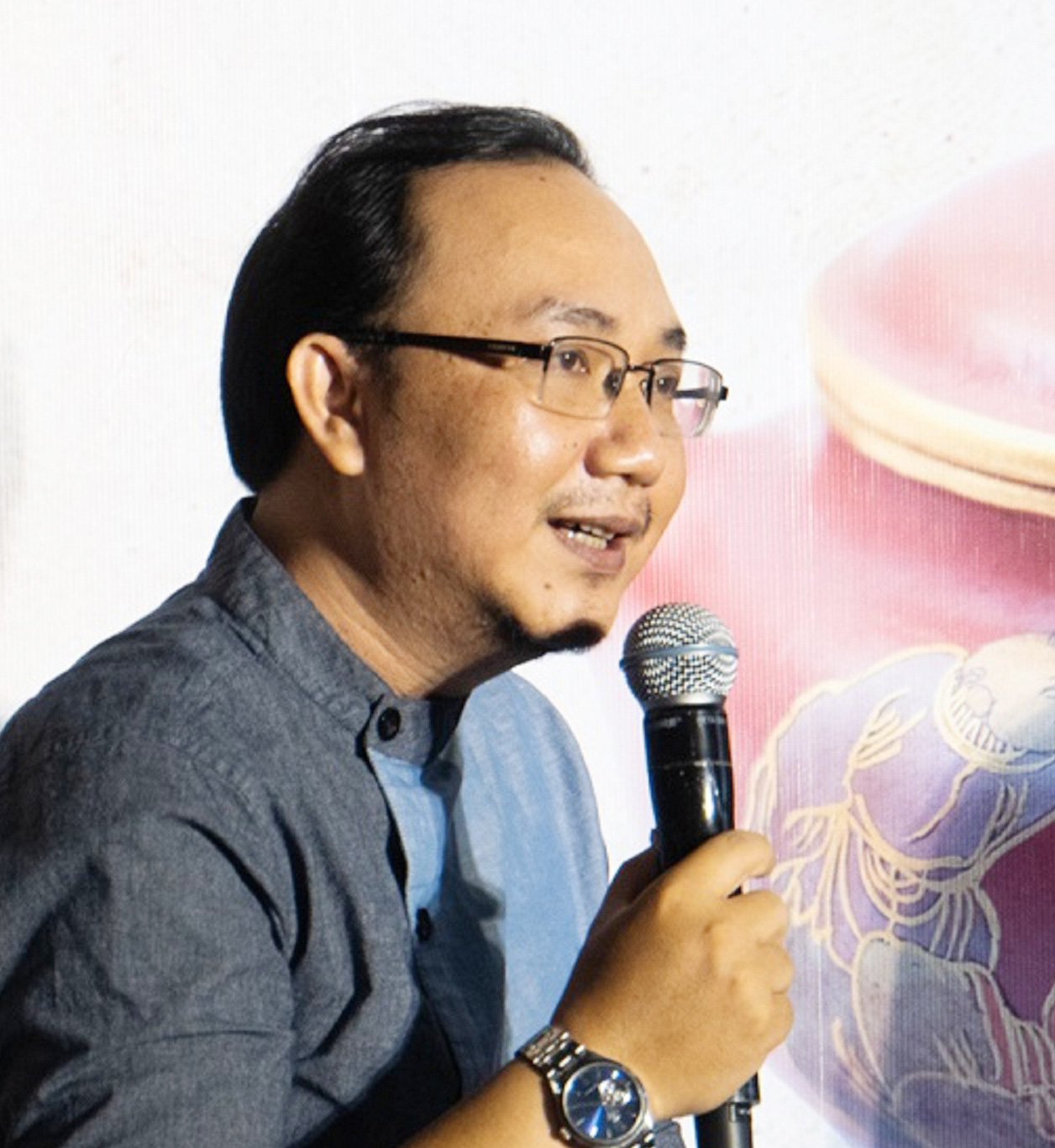
MSc. NGUYEN HIEU TIN
- The custom of visiting ancestral graves is considered a beautiful traditional cultural practice of the Vietnamese people. Vietnamese people believe that when the new year arrives, everything must be prepared and renovated, including the resting places of their ancestors and relatives.
That is something to be cherished. However, the reality is that many people have spent billions of dong building lavish mausoleums, and even many families and clans have joined the race to build magnificent tombs in order to show off their wealth and success.
For some, even the graves of ancestors and relatives are seen as a measure of filial piety shown by descendants in the living towards the deceased.
In this trend, many people choose to bury their loved ones in prime locations as a way to show off their wealth, becoming a "race" to keep up with the times. But in some ways, building large, grandiose tombs only satisfies material needs and fails to fulfill spiritual desires.
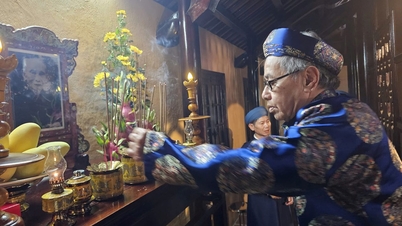
For Vietnamese people, ancestor worship is an expression of gratitude towards the deceased, shown with sincere and selfless affection and attitude.
Because the deceased don't need extravagant displays or lavish feasts. The meaningful act of filial piety is for descendants to remember them wholeheartedly, inviting them home to celebrate Tet with reverence and family reunion.
Therefore, while building tombs is a way to show filial piety to grandparents and parents, it also depends on one's family circumstances.
I think that while parents are alive, they suffer from hunger and lack of water. When they pass away, even if their children build a grand tomb for them and hold a memorial service for the whole village, it's all in vain because their parents are no longer alive to enjoy it.
If there really is an afterlife , they wouldn't be happy to see us competing to build tombs and graves, and they would surely be more heartbroken by our superficial, insincere gestures and actions.
It is important that the practice of rituals and remembrance of the deceased be carried out with understanding, reverence, compassion, and effectiveness in both cultural and spiritual aspects.
Don't turn acts of filial piety into a display of gratitude.
* In your opinion, how should filial piety be expressed in a way that is morally right and compassionate, without turning it into a display of power or ostentation?
- The ancients said, "Filial piety stems from goodness," meaning that filial piety originates from a kind heart. The basic moral meaning of filial piety is "caring for one's parents," which also refers to the awareness and behavior of children towards their parents. The essence of practicing filial piety is love, respect, loyalty, and obedience. That is, love in heart, respect in mind, loyalty in virtue, and obedience in action.
Accordingly, love (affection) arises naturally from parental love; respect arises from the etiquette and morality of the family lineage. The dedication and expression of love is loyalty. The center and practice of respect is harmony.
Therefore, the highest value of filial piety lies in the formation of character, the cultivation of virtue, the development of talent and willpower, the education of ideals, and the pursuit of truth, goodness, and beauty. Understood in this way, showing filial piety to one's parents is not a duty, but rather a blessing.
Filial piety towards parents (in essence) is a privilege, considered a source of happiness. Simply put, happiness lies in being able to care for and repay one's parents' kindness. With this true value, the good thing a truly filial person should do is to perform many good deeds with virtuous actions, sincerity, and compassion.
I believe that genuine love will reduce the need for ostentatious displays of filial piety. The essence of filial piety lies in good deeds, a standard way of life that occurs naturally and regularly, without the flashy embellishments that blind us to its true nature.
Source: https://tuoitre.vn/bao-hieu-khong-can-phong-bat-20250105094947661.htm
![[Photo] Prime Minister Pham Minh Chinh receives the Chinese Ambassador to Vietnam](https://vphoto.vietnam.vn/thumb/1200x675/vietnam/resource/IMAGE/2026/04/05/1775397481797_ndo_br_dsc-5512-jpg.webp)




















































Comment (0)