
Preserving and promoting cultural heritage values is of great significance in affirming the cultural identity of Da Nang and its people. In the photo: Hai Chau Village Temple Festival 2025. Photo: DOAN HAO LUONG
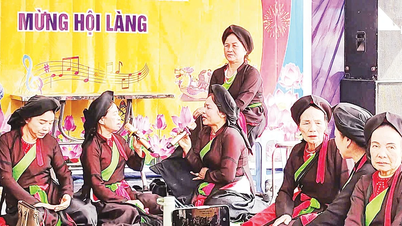
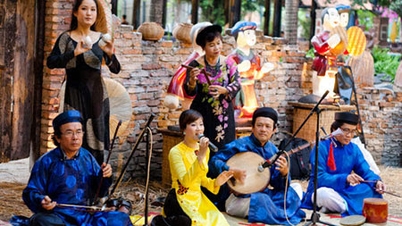
Researcher Huynh Viet Tu, former Vice President of the Da Nang City Folk Arts Association, believes that Da Nang's folk cultural heritage is diverse and rich, reflected in festivals, art forms such as Bai Choi and Tuong plays, and famous traditional craft villages...
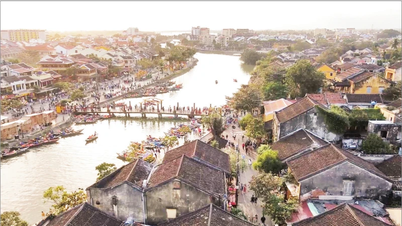
These heritage sites bear the strong imprint of history, a high sense of community, profound humanistic values, and are closely linked to the daily lives of the people of Quang Nam province, making a significant contribution to the city's tourism and economic development. Da Nang also serves as a central hub connecting world cultural heritage sites such as the ancient capital of Hue, the ancient town of Hoi An, the My Son temple complex, and the Cham Islands World Biosphere Reserve...
"Preserving and promoting cultural heritage values is of great significance in affirming the cultural identity of Da Nang's land and people, and is an important resource contributing to the protection, construction, and development of the city," researcher Huynh Viet Tu emphasized.
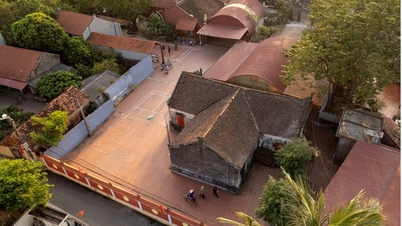
Over the past period, Da Nang's cultural sector has conducted field surveys, assessed the current state, and carried out technical measurements of the ancient house system in the city; marked the boundaries of some historical sites; compiled, copied, and digitized all royal decrees in Da Nang; implemented plans to prevent and control termites, fires, and theft at historical sites; and created information boards introducing the history and culture of some historical sites in the area.
The city has issued regulations on coordinating the management, protection, and promotion of historical and cultural relics and scenic spots in the area, assigning responsibilities to various sectors in the conservation and promotion of these relics. Simultaneously, it has effectively implemented plans for the conservation and promotion of cultural heritage that have been included in the national list of intangible cultural heritage by the Ministry of Culture, Sports and Tourism.
The preservation and promotion of folk cultural heritage contributes to the development of the tourism industry. However, currently, some localities prioritize exploiting cultural heritage for tourism purposes rather than allocating resources to proper research and preservation; there is a lack of sustainable management and exploitation of cultural heritage. Meanwhile, promotional methods are not diverse enough, and the methods of dissemination are not truly creative or appropriate, resulting in low effectiveness.
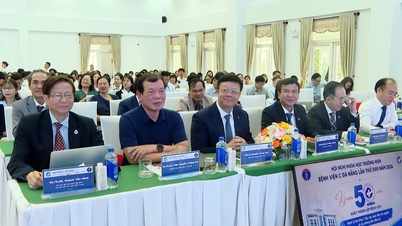
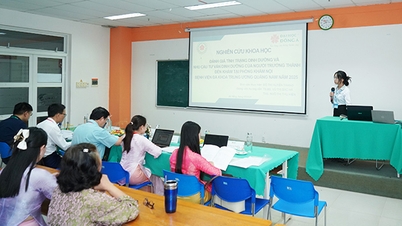
With the aim of preserving the unique cultural and folk art characteristics of ethnic groups, the Da Nang City Folk Arts Association has organized numerous workshops, seminars, and published materials to effectively exploit the potential values of folk cultural heritage.
Notably, the publication of the book "Colors of Da Nang Folk Culture" creates a multi-dimensional research space by connecting theory to practice. According to researcher Bui Van Tieng, Chairman of the Da Nang City Historical Science Association, the book also offers suggestions on generating folk cultural resources in economic development; preserving and promoting the value of folk cuisine; and utilizing urban spaces to awaken a love for folk culture among young people in urban life...
Preserving and promoting the value of national cultural heritage requires close coordination with the people, organizations, and especially researchers of folk culture and arts, in order to develop feasible projects; ensuring a harmonious relationship between cultural and economic development, and between the preservation and promotion of cultural heritage...
The city needs to prioritize the preservation and promotion of cultural heritage recognized internationally, nationally, and by the city, as well as heritage that is characteristic of the city, in order to preserve Da Nang's cultural identity for future generations.
Source: https://baodanang.vn/bao-ton-di-san-van-hoa-dan-gian-3330902.html




![[Photo] General Secretary and President To Lam receives Amazon's Senior Vice President David Zapolsky](https://vphoto.vietnam.vn/thumb/1200x675/vietnam/resource/IMAGE/2026/05/22/1779466547770_a1-bnd-3513-6601-jpg.webp)





























































Comment (0)