

Thanks to the connection between Gagaku and Cham dance music, the "soul" of Cham music is reflected in the essence of Japanese court music, reviving traditional Japanese music in the hearts of the Japanese people.
In Vietnam, Cham culture exists naturally, alongside other ethnic groups, forming a unified, diverse, and evolving Vietnamese culture.
The cultural value of Cham folk music and dance is not only a source of pride for the Vietnamese people but also has a deep connection to Japanese Gagaku (court music). The presentation and performance of traditional Cham music and dance organized by the Japanese Embassy on October 11th showcased the unique influence of Japanese court music evoked through Cham music and dance.
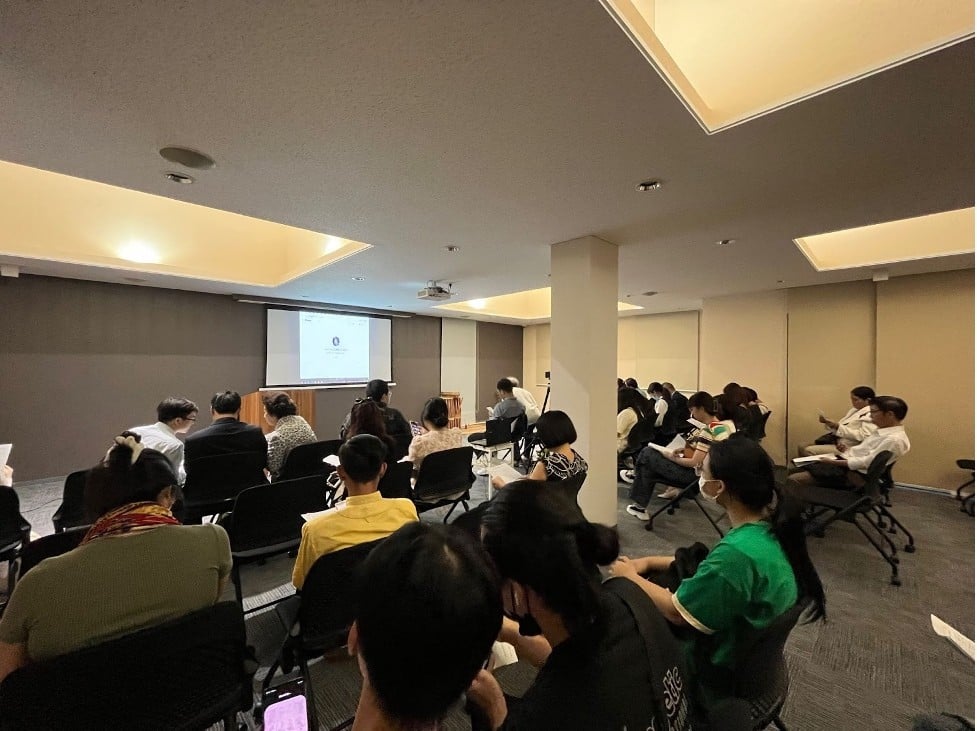 |
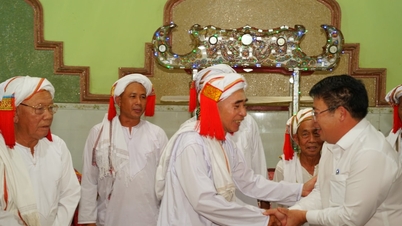
| The presentation and performance of traditional Cham folk music and dance at the Information and Culture Center of the Japanese Embassy in Vietnam on October 11th attracted many attendees. |
The unique characteristics of Cham folk music and dance.
According to Mr. Le Xuan Loi, Master of Ethnology and Director of the Cham Culture Research Center: “As long as a nation has people, its culture will also exist. Therefore, the cultures of ethnic groups in general, and Cham culture in particular, will endure forever. In Vietnam, Cham culture exists naturally and, together with the cultures of other ethnic groups, creates a unified, diverse, and developing Vietnamese culture. Cham music and dance also live on through festivals, customs, traditions, and folk beliefs of the Cham people today.”
Throughout the history of the Cham people, Cham music and dance have emerged and developed brilliantly under the hands of the Cham people. These folk melodies and dances are closely linked to the lives of the working people, thus bearing a strong folk character and reaching a high level of artistry due to the professionalism in the use of musical instruments and the style of organization and performance.
According to the Cham people's beliefs, music has the ability to connect humans with the spiritual world , creating a spiritual link and communicating with supernatural entities. Music is a sacred "language," a way to express and convey emotions, ideas, and religious meanings, while attracting attention and blessings from the gods. In the religious rituals and festivals of the Cham people, music plays a crucial role. The melodies and songs performed during these rituals can carry religious meanings, evoking reverence and connection with the gods. Music is also used in prayer ceremonies, offerings, and other religious activities.
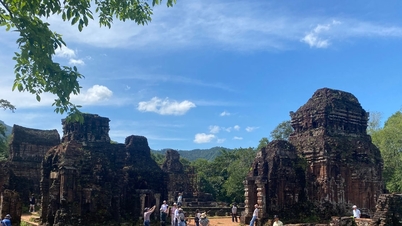
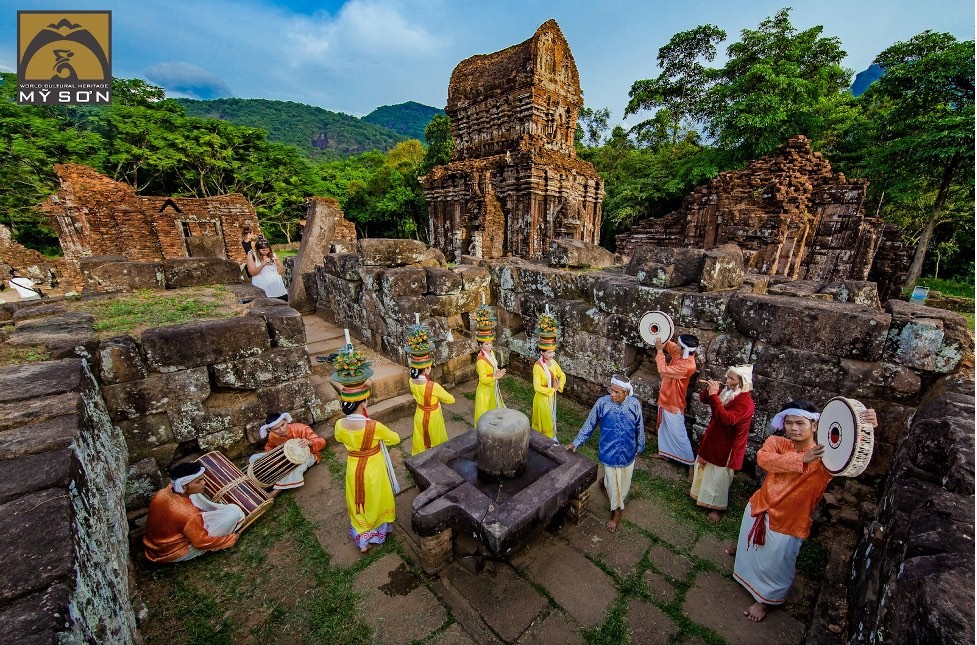 |
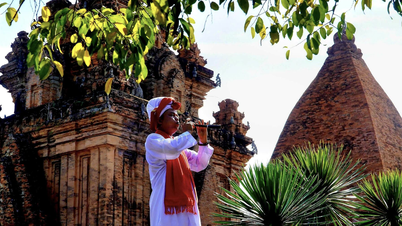
| Cham Pa dance beside the Cham towers. (Source: My Son World Heritage Site information page) |
The Saranai horn, Baranang drum, and Ginang drum are the "core" that creates the distinctive sound of traditional Cham music. The Cham people liken these three instruments to parts of the human body.
According to Dr. Shine Toshihiko, Cultural Attaché of the Japanese Embassy in Vietnam, inheriting the essence of traditional Indian music, Cham dance music not only has immense historical and cultural value but also influences the music of many neighboring countries, including Japanese court music.
Preserving the "soul" of Cham dance music, reviving the influences of Japanese court music.
Japan possesses an invaluable treasure trove of art and culture, including a unique form of traditional music called Gagaku. Notably, Gagaku is believed to have originated from Cham dance music, developed with the contribution of a Vietnamese music master.
The messenger who transmitted the music and dance of Lam Ap is believed to be the Buddhist monk Buttetsu, a Vietnamese of Champa origin. From a young age, Buttetsu studied Buddhism, so Lam Ap music bears the strong imprint of Buddhism and Hinduism of the Champa people, as seen in the court music and temple music of Japan.
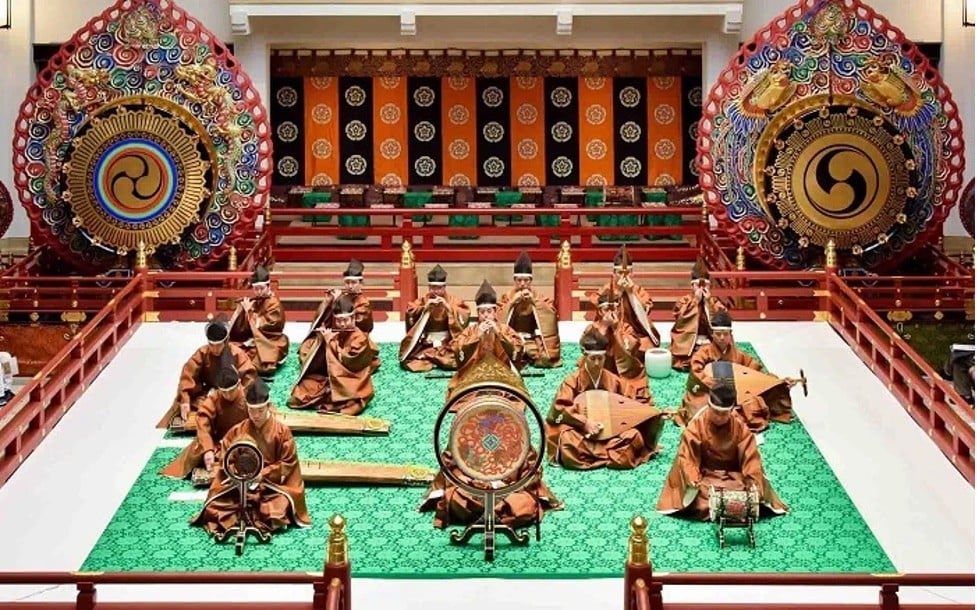 |
| The Kangen Orchestra, a form of Gagaku, plays the world's oldest orchestral piece. (Source: Wappuri - A website about colorful Japan) |
Both the traditional Cham musical instruments in Vietnam and the instruments used in court music in general, and in the Lam Ap music of Japan in particular, share similarities and origins from Northern India, Persia, and Central Asia.
“The brass instruments in Cham music are very similar to those in Hue 's royal court music. The instruments used in Gagaku court music have ancient designs, while in Hue's royal court music they are modified into hand-beaten drums, similar to those in Cham music. The music of Central Vietnam is similar to Cham music. Buddhist music of the Vietnamese and Japanese share similarities,” journalist Luong Hoang remarked after the presentation and performance of traditional Cham folk music and dance. He also expressed his hope for opportunities for cultural exchange between the three musical genres of Vietnam, Cham, and Japan.
Mr. Uchikawa Shinya, representative of the NPO Manabiya Tsubasa International Charitable Cooperation Organization, stated that the preservation and development of Japan's national culture and music face many challenges due to socio-political factors. Although traditional cultural values are the essence of the nation, Japan is not a multi-ethnic country. Therefore, the promotion of unique cultural traditions, including ceremonial music at the local level, has been declining. This is regrettable. Therefore, Japan encourages Vietnam to learn from this experience and seriously consider the preservation and conservation of national culture, a crucial element for any nation.
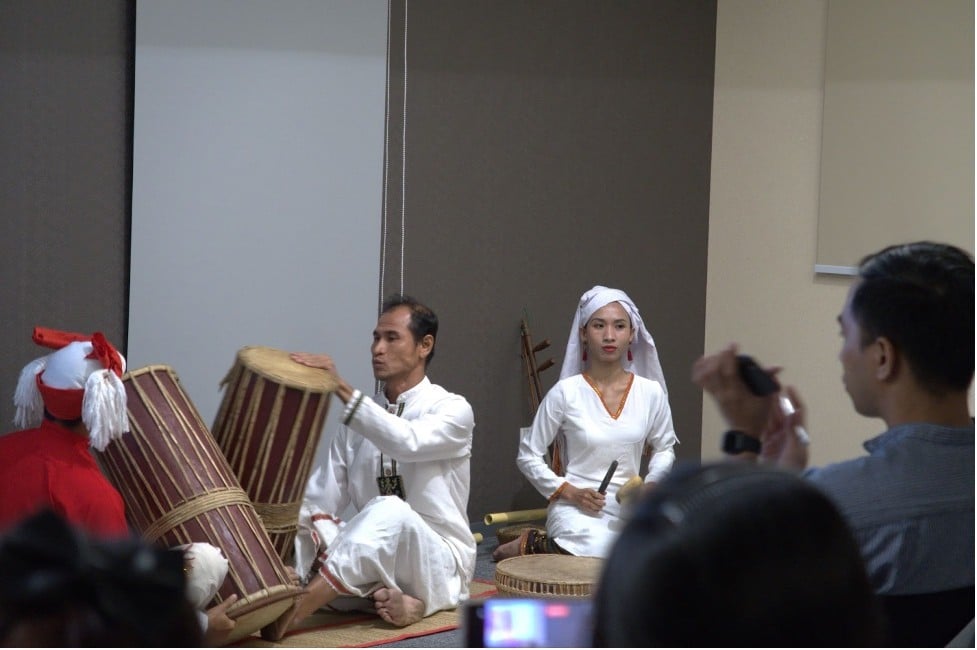 |
| Artists Dat Quang Phieu (Kaphieu) and Dang Hong Chiem Nu (Suka) of the Kawom Khik Nam Krung Dance Orchestra performed during a presentation and performance of traditional Cham ethnic dance and music at the Information and Culture Center, Embassy of Japan in Vietnam. |
Mr. Uchikawa Shinya, representative of the NPO Manabiya Tsubasa International Charitable Cooperation Organization, shared, “We aspire to promote and develop the cultures of ethnic minorities in Vietnam. This is partly based on lessons learned from Japan. We have made some mistakes in protecting and developing the culture of the Ainu people. Similarly, in Okinawa (Uchinā), the inhabitants are of Japanese ethnicity (Yamato), but they had a different government than Japan in the past. We were not very successful in protecting and developing Okinawan culture. Therefore, Vietnam should learn from Japan's experience to promote its ethnic cultures.”
It can be seen that, thanks to the connection between Gagaku and Cham dance music, the "soul" of Cham music is reflected in the essence of Japanese court music. This revives traditional Japanese music in the hearts of the Japanese people, helps promote the development of the distinctive folk music of Japan, and opens up opportunities for Cham folk music to be widely known to the international public.
Source















![[Photo] General Secretary To Lam attends the ceremony commemorating the 75th anniversary of the founding of the Central Military Hospital 108.](https://vphoto.vietnam.vn/thumb/1200x675/vietnam/resource/IMAGE/2026/03/30/1774866343623_a1-bnd-5435-7415-jpg.webp)



































Comment (0)