

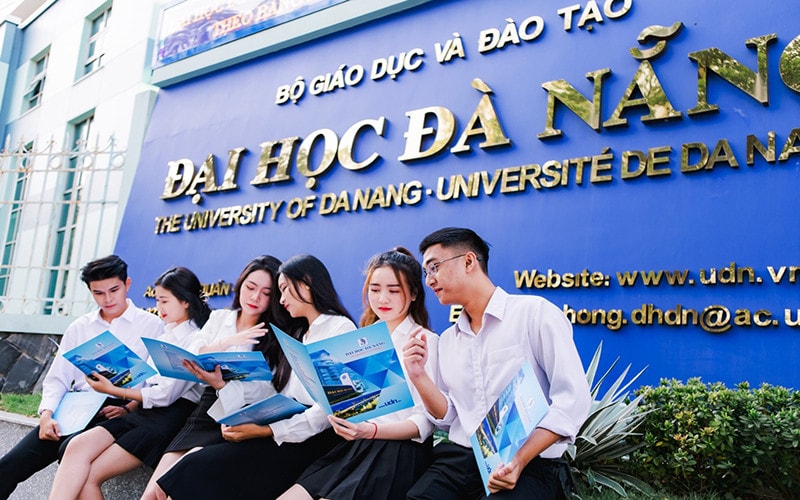
Within this context, a strategically significant question arises: what will drive the city's development aspirations? The answer lies not in a single project, nor can it be relied upon on a single resource. The core driving force must come from a central institution of a knowledge-based society: the university.
"Soft infrastructure" of development
While in the 20th century, national development relied primarily on resources, capital, and labor, in the 21st century, the decisive competitive advantage lies in knowledge, technology, and innovation. Innovation is no longer a fashionable slogan, but has become the "soft infrastructure" of the economy , much like electricity, water, and transportation in the industrial age.
An innovative city is not simply a place with many high-tech zones or startups. More fundamentally, it is a city with exceptional social learning capabilities: learning quickly from new science and technology, and even from its own mistakes.
To achieve this, the city must have a strong knowledge-generating center. Around the world, no innovative city lacks the leading role of a university. Silicon Valley grew around Stanford. Boston thrived thanks to the MIT-Harvard ecosystem. Singapore invests in universities as a strategic national infrastructure investment.
The rule is clear: without strong universities, there can be no sustainable innovation ecosystem.
New Development Alliance
The central government's major policy on science and technology development, innovation, and digital transformation is creating a fundamental shift in the development model. In the old model, each entity operated relatively independently: the state managed, universities conducted research, businesses produced goods, and investors sought profits. These flows ran parallel, with little overlap.
The new model requires a new type of development alliance, in which the entities are no longer "islands," but become interlocking gears: (1) The State creates institutions and designs ecosystems, (2) Universities produce knowledge and future human resources, (3) Enterprises transform knowledge into products and services; investors lead capital flows into strategic technologies.
When these forces are closely interconnected, development is no longer a disjointed addition, but becomes a synergistic effect.
The "open brain" of the city.
In the new era, universities cannot simply be places for transmitting existing knowledge. Universities must become the open brains of the city – places that produce new ideas, new technologies, and new development models. Universities must participate from the outset in forecasting scientific and technological trends, identifying key industries in the locality, designing human resources for the next 10-20 years, and providing scientific arguments for policy planning. Then, universities will not only train human resources for the present, but become "factories producing competitive capabilities" for the future.
The University of Da Nang is entering a new phase of development in the context of the city establishing its vision as an internationally innovative urban center. This is not just an opportunity, but a mission. Besides its research and technology training mission, the Da Nang university system also plays a very special role: training people for a sustainable learning and innovation society.
Because innovation is not just a story of the laboratory, but also a story of a culture of thinking, of the capacity for lifelong learning, of the spirit of daring to experiment and overcome failure. If technology centers create new products, then universities, especially in the fields of basic science, strategic technology, and teacher training, are shaping the new people for the new era.
They are the force that sows the seeds of scientific thinking, innovation, and lifelong learning for the entire society. This is not a short-term achievement, but a strategic investment in the "intellectual gene pool" of the city. And it is this human foundation that determines whether a city can become a truly innovative city, not just a technology hub.
Da Nang's aspirations and the constructive role of universities.
Da Nang is facing a new opportunity for breakthroughs. But in the knowledge age, no city can develop rapidly and sustainably without a strong university system closely linked to its urban development strategy.
Investing in universities today is investing in the city's competitiveness for decades to come. When universities, the government, businesses, and investors share a common vision, Da Nang will not only be a place worth living in, but also a place worth creating and contributing to.
The resolution of the National Party Congress affirms that the path of development based on science, technology, and innovation is the correct strategic choice. The University of Da Nang is entering a new phase with greater responsibility towards the city and the country.
In this journey, universities are not on the sidelines, but at the center of the development movement. Because, ultimately, every economic miracle begins with an intellectual miracle.
Source: https://baodanang.vn/bat-dau-tu-dai-hoc-3329030.html

![[Photo] Prime Minister Pham Minh Chinh departs for an official visit to the Russian Federation.](https://vphoto.vietnam.vn/thumb/1200x675/vietnam/resource/IMAGE/2026/03/22/1774160262864_vna-potal-thu-tuong-pham-minh-chinh-len-duong-tham-chinh-thuc-lien-bang-nga-8656056-6903-jpg.webp)

![[Photo] Hanoi residents enthusiastically participate in the 2026 Olympic Run Day.](https://vphoto.vietnam.vn/thumb/1200x675/vietnam/resource/IMAGE/2026/03/22/1774154260360_ndo_bl_91e6430c9ea310fd49b232-8788-jpg.webp)
![[Image] 126 communes and wards of Hanoi participate in the 2026 Olympic Run Day.](https://vphoto.vietnam.vn/thumb/1200x675/vietnam/resource/IMAGE/2026/03/22/1774155767210_ndo_br_4013885316804510786-copy-jpg.webp)

































































Comment (0)