

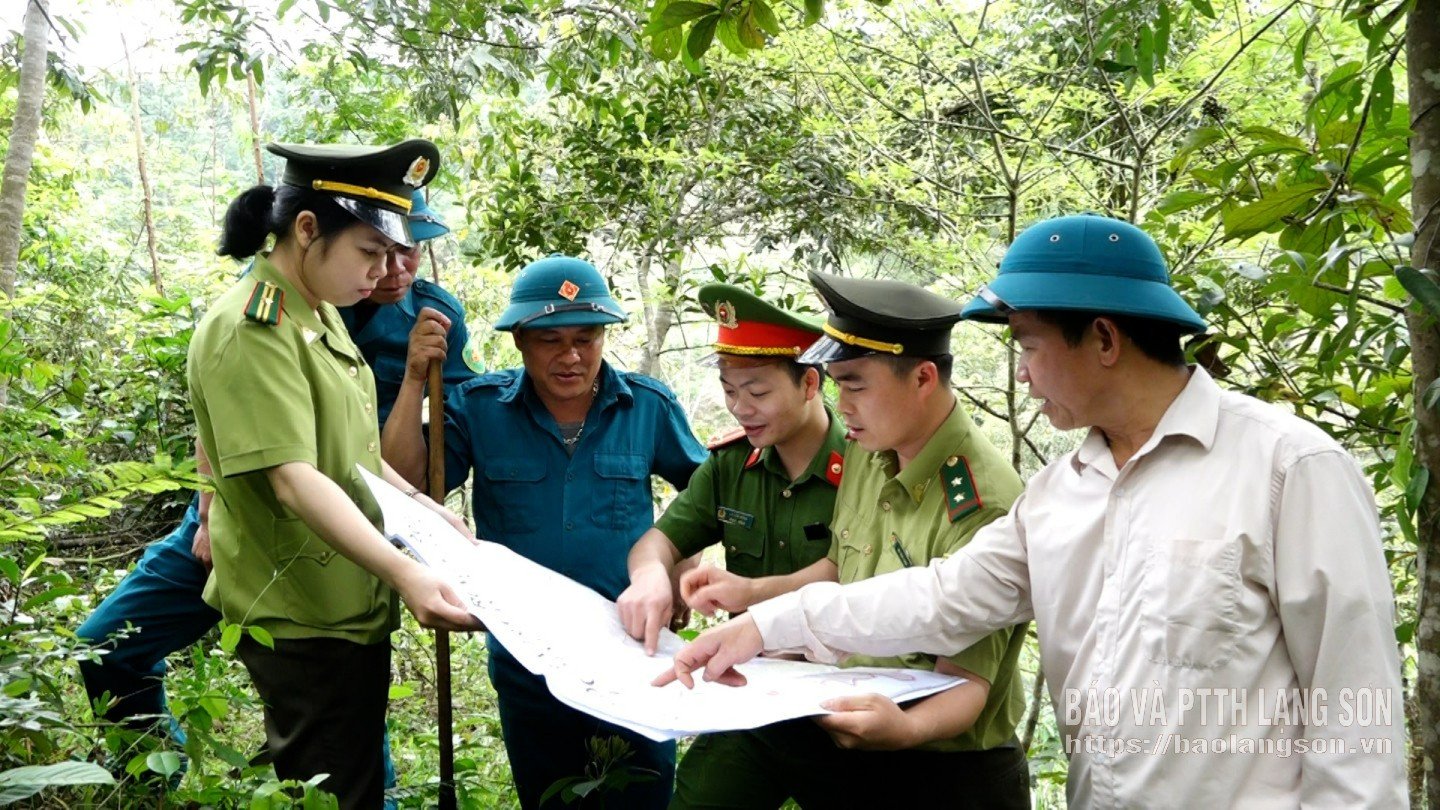
Taking advantage of the existing potential and advantages in terms of topography, climate, and land, all levels of government, sectors, people, and businesses have focused on developing concentrated raw material production areas such as pine, anise, acacia, eucalyptus, and cinnamon.
Developing growing areas
For many years, pine trees have been the main crop for many households in the former Loc Binh district. Mr. Nong Van Huan, Deputy Head of the Loc Binh Forest Protection Department, said: To develop concentrated pine planting areas, the unit regularly coordinates with relevant agencies in disseminating information and encouraging people to choose suitable areas for concentrated pine planting. This gradually builds concentrated production areas, facilitating care, protection, and exploitation... Specifically, in the period 2021-2025, people in the former Loc Binh district have planted approximately 4,500 hectares of concentrated pine trees. To date, the cumulative area of concentrated pine planting in the former Loc Binh district is 19,790 hectares, mainly in the communes of Thong Nhat, Xuan Duong, Khuat Xa, Loi Bac, etc.
Similar to the people of the former Loc Binh district, taking advantage of existing potential and advantages, in recent years, people in some communes of the former Trang Dinh district have focused on developing concentrated cinnamon growing areas. Mr. Nguyen Manh Tuan, Vice Chairman of the People's Committee of Tan Tien commune, said: Recognizing the economic benefits of cinnamon trees, the People's Committee of the commune, in coordination with relevant agencies, has promoted and supported people in expanding the area of cinnamon cultivation. To date, people in the commune have planted over 2,300 hectares of cinnamon trees.
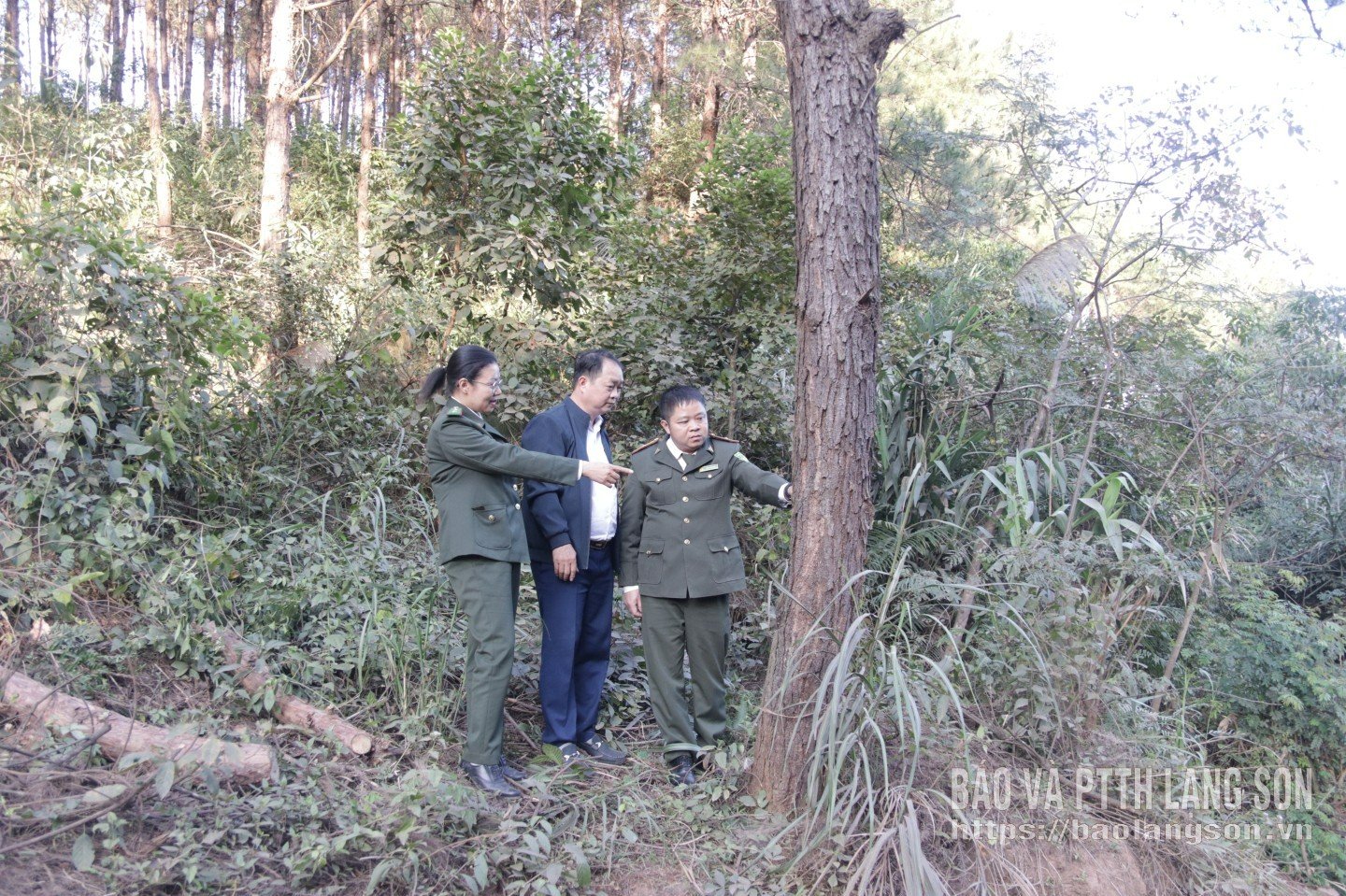
Along with Tan Tien commune, several other communes have continuously expanded the area of concentrated cinnamon cultivation. According to data from specialized agencies, the area of concentrated cinnamon cultivation in the former Trang Dinh district currently reaches 6,829 hectares.
Not only in the aforementioned areas, but in recent years, the development of concentrated raw material production zones in other areas of the province has achieved positive results. Accordingly, all levels and sectors have intensified propaganda on forestry development in general, including the development of raw material production zones; provided resource support, integrated programs, projects, and schemes for the development of concentrated raw material production zones; and proactively connected with and sought to expand markets for product consumption...
To date, the area of concentrated raw material production zones continues to be maintained and developed, with many zones exceeding the planned targets (2020-2025) according to the Sustainable Forestry Development Project. Notable examples include the anise zone with an area of 46,168 hectares, reaching 132% of the plan; the pine zone with an area of 138,542 hectares, reaching 106.5% of the plan; the acacia zone with an area of 55,946 hectares, reaching 147.2% of the plan; the cinnamon zone with an area of 10,754 hectares, reaching 179.2%; and the oak zone with 3,103 hectares....
Developing concentrated raw material production areas not only contributes to improving product quality but also optimizes production costs, facilitates care, protection, and harvesting, attracts investment, and creates sustainable production linkages between farmers and businesses or cooperatives.
According to Resolution No. 30-NQ/TU dated June 3, 2021, of the Provincial Party Committee on sustainable forestry development in Lang Son province for the period 2021-2030, the forestry development goals for the province for the period 2026-2030 include: Forestry production value in 2030 (at current prices) reaching VND 7,100 billion; timber productivity of planted forests reaching 18-20 m3/ha/year; timber harvesting output reaching 600,000 m3/year; dried star anise production reaching 15,000 tons/year, pine resin reaching 40,000 tons/year; forestry seedling production reaching 300 million seedlings/year; forest cover rate maintained at 65% by 2030; annual forest planting area of 9,000 hectares, of which 1,500 hectares are for large timber forests... |
Enhance value
Over the years, pine trees have provided a stable income for many people in Dinh Lap commune. Ms. Hoang Nien, from Con Quan village, Dinh Lap commune, shared: "In 2001, my family started planting pine trees. Each year, we planted more, and now we have 20 hectares of pine trees, of which 10 hectares are already producing resin. Concentrated planting makes it easier for us to care for, protect, and harvest the trees. On average, my family earns 10-12 million VND per month from pine resin."
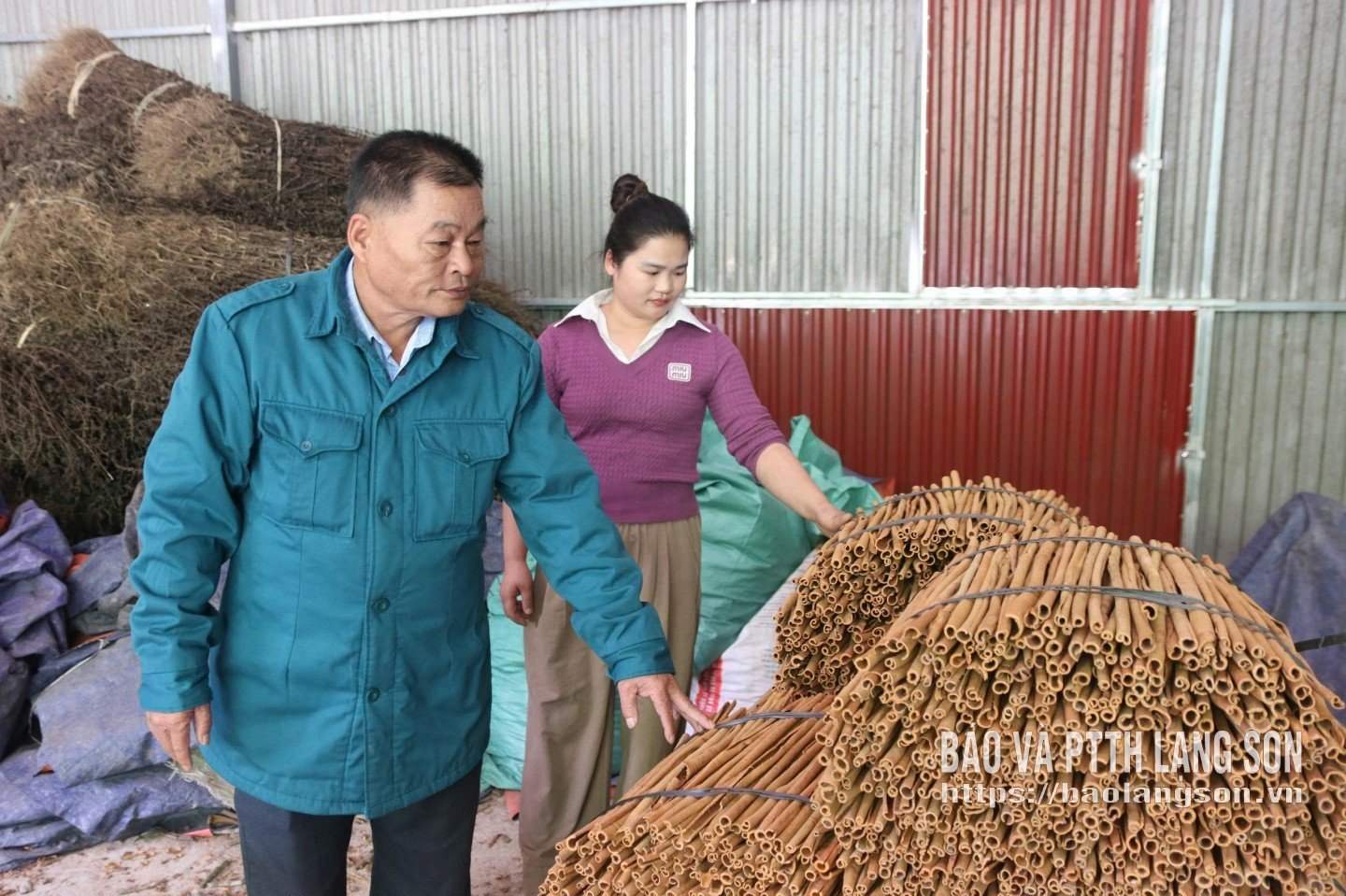
Like Mrs. Nien's family, for many years, the economy of Mr. Linh Van Khi's family in Tay B village, Yen Phuc commune, has mainly depended on forestry production, with the main crop being anise trees. Mr. Khi said: "My family has been growing anise since 1994. Every year, we expand the area, and now we have 6 hectares of anise trees that are all ready for harvest. In good years, my family harvests about 13 tons of anise, bringing in an income of over 250 million VND per year."
Together with the local people, businesses have invested in developing concentrated raw material production areas, yielding positive results. Mr. Lanh Van Chuc, Deputy Director of Loc Binh Forestry One-Member Limited Company in Loc Binh commune, said: The company is currently managing 3,816 hectares of forest land. To increase production value, since 2016, the company has introduced eucalyptus trees for concentrated planting. To date, the company has planted 1,500 hectares of eucalyptus trees, of which about 700 hectares are ready for harvest. In recent years, the company's revenue has reached approximately 50 billion VND/year, with a profit of about 6 billion VND. Based on these initial successes, the company will continue to develop and expand the concentrated eucalyptus planting area as well as other suitable crops to increase value.
Not only the households and businesses mentioned above, but also the people have benefited from the development of concentrated production areas for key and strong local crops, which has brought stable economic benefits. Mr. Nguyen Huu Hung, Head of the Provincial Forest Protection Department, stated: "In recent years, the implementation of Resolution No. 30-NQ/TU dated June 3, 2021, of the Provincial Party Committee on sustainable forestry development in Lang Son province for the period 2021-2030, as well as the Sustainable Forestry Development Project in the province, has achieved positive results, with many targets met and exceeded. Notably, the development of concentrated production areas for key and strong crops in the province such as anise, pine, acacia, eucalyptus, cinnamon, etc., has not only contributed to increasing people's income but also fostered sustainable forestry development in the province."
The achievements in developing concentrated production areas have contributed to increasing value and creating sustainable forestry development in the province. During the period 2021-2025, the annual production value of the forestry sector is estimated to exceed 4,000 billion VND. Many households in the province have become wealthy from forestry, earning between 200 million and 1 billion VND per year. This has significantly contributed to the overall socio-economic development of the province.
Source: https://baolangson.vn/ben-vung-tu-san-xuat-tap-trung-5066151.html

![[Image] National Assembly discusses the implementation of the socio-economic development plan.](https://vphoto.vietnam.vn/thumb/1200x675/vietnam/resource/IMAGE/2026/04/20/1776696707422_ndo_br_img-20260420-185419-jpg.webp)

![[Photo] General Secretary and President To Lam meets with National Assembly delegates from ethnic minorities.](https://vphoto.vietnam.vn/thumb/1200x675/vietnam/resource/IMAGE/2026/04/20/1776696701056_a1-bnd-8331-3342-jpg.webp)







































































Comment (0)