

Crohn's disease is an inflammatory bowel disease in which inflammation spreads deep into the layers of intestinal tissue, leading to pain and debilitating symptoms, and sometimes life-threatening complications.
This article was professionally reviewed by Assoc. Prof. Dr. Nguyen Anh Tuan, Head of the Department of Gastrointestinal Surgery, Military Central Hospital 108.
Reason
Currently, the exact cause of Crohn's disease is still unknown.
Previously, experts suspected that diet and stress were the causes of the disease. Now, studies indicate that these factors worsen the condition but are not the cause of Crohn's disease.
Several factors, such as genetics and immune system problems, play a role in the development of Crohn's disease.
* Genetics: Crohn's disease is more common in people with a family history of the disease, so genes may play a role in making subsequent generations more susceptible to the disease than other families.
* Immune system: The hypothesis is that certain viruses or bacteria trigger Crohn's disease. When the patient's immune system tries to fight off the invading microorganisms, an abnormal immune response occurs, causing the immune system to mistakenly attack not only the invading microorganisms but also the cells in the digestive tract.
Symptom
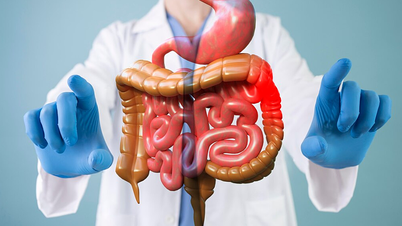
Crohn's disease is a chronic inflammatory disease of the granulomatous tissues of the digestive tract, primarily affecting the distal small intestine, although it can occur in all other parts of the digestive tract.
- Symptoms of the disease can range from mild to severe and develop gradually, but sometimes they appear suddenly, without warning. People with the disease may have periods without signs or symptoms, leading them to believe that their Crohn's disease has gone into remission.
- When the disease is active, the following typical symptoms appear:
* Diarrhea.
* Fever.
* Tired.
* Abdominal pain and cramps.
* There is blood in the stool.
* Reduces appetite and aids weight loss.
* Pain near or around the anus.
- People with severe Crohn's disease may experience other symptoms such as:
* Inflammation of the skin, eyes, and joints.
* Hepatitis or inflammation of the bile ducts.
* Children who are slow to grow or slow to develop sexual characteristics at puberty.
- See a doctor if the patient experiences persistent changes in bowel habits or any symptoms of Crohn's disease such as:
* Stomach-ache.
* There is blood in the stool.
* Persistent diarrhea that does not respond to over-the-counter medications.
* Fever of unknown origin lasting one or two days.
* Unexplained weight loss.
Complications
- Intestinal obstruction: Crohn's disease affects the thickness of the intestinal wall. Over time, parts of the intestine can scar and narrow, blocking the flow of digested and absorbed food through the digestive tract. As a result, patients may require surgery to remove the obstructed portion of the intestine.
- Ulcers: Chronic inflammation can lead to ulcers anywhere in the digestive tract, including the mouth and anus.
- Fistula: The most common type is a fistula located near or around the anal area.
- Anal fissure.
- Malnutrition: Diarrhea, abdominal pain, and cramps can cause patients to eat less or their intestines to not absorb enough nutrients, leading to symptoms of anemia due to iron deficiency or vitamin B12 deficiency.
- Colon cancer: Crohn's disease affects the colon, increasing the risk of cancer.
- Anemia, skin disorders, osteoporosis, arthritis, and gallbladder or liver disease.
- Some medications used to treat Crohn's disease by blocking immune system functions are associated with a small risk of developing cancers such as lymphoma and skin cancer.
Diagnose
- Blood tests to check for anemia.
- Fecal occult blood test.
- Colonoscopy: This test allows a doctor to view the entire colon and the end of the ileum (terminal ileum) using a thin, flexible tube with a light and camera attached to the end. During the colonoscopy, the doctor may also take small tissue samples for biopsy. If clusters of inflammatory cells, called granulomas, are present, this helps confirm a diagnosis of Crohn's disease.
- Computed tomography (CT) scan.
- Magnetic Resonance Imaging (MRI): MRI scanners use magnetic fields and radio waves to create detailed images of organs and tissues. MRI is particularly useful for evaluating perianal fistulas (pelvic MRI) or small bowel fistulas (MR computed tomography).
- Capsule endoscopy: For this test, the patient swallows a capsule containing a camera, which takes pictures of the small intestine and transmits the data to a storage device worn on the patient's waist. The images are then downloaded to a computer, displayed on a computer screen, and used to check for signs of Crohn's disease. The camera is removed from the body after the patient has a bowel movement.
Treatment
Currently, there is no cure for Crohn's disease, and no single treatment is suitable for all patients.
- The goal of treatment is to reduce inflammation causing the patient's symptoms, limit complications, and achieve long-term symptom relief.
* Anti-inflammatory drugs.
* Immunosuppressant drugs.
* Antibiotics.
* Anti-diarrheal: Some dietary fiber supplements help reduce the symptoms of mild to moderate diarrhea by increasing stool volume.
* Pain relievers.
* Iron supplementation: If a patient suffers from chronic intestinal bleeding, it can lead to iron-deficiency anemia and iron supplementation may be necessary.
* Vitamin B12 injections: Crohn's disease causes vitamin B12 deficiency, so patients may be prescribed injections to help prevent anemia, promote normal growth and development, and support nerve function.
* Supplement with calcium and vitamin D.
Prevent
Sometimes people with Crohn's disease may feel helpless. But changes in diet and lifestyle can help control symptoms and prolong the time between flare-ups.
- Diet
There is no conclusive evidence that what people eat causes Crohn's disease. However, certain foods and drinks can worsen the signs and symptoms of the disease. Here are some suggestions that may be helpful:
* Limit dairy products.
* Try low-fat foods.
* Restricting fiber intake from sources like fresh fruits and vegetables and whole grains can worsen symptoms. If raw fruits and vegetables are uncomfortable for the patient, try steaming, baking, or stewing them.
* Avoid foods such as spicy foods, alcohol, and caffeine, as these can worsen the signs and symptoms of the disease.
* Eat several small meals.
* Drink plenty of fluids: Try to drink plenty of water daily. Water is best. Alcohol and caffeinated drinks irritate the intestines and can worsen diarrhea. While carbonated drinks often produce gas that causes bloating.
- Consider using a multivitamin: Because Crohn's disease interferes with nutrient absorption, a patient's diet may be limited. Therefore, supplementing with multivitamins and minerals is often helpful and effective. However, patients should consult their doctor before taking any vitamins or supplements.
- Stop smoking:
* Smoking increases the risk of developing Crohn's disease. Once diagnosed, smoking can worsen the condition. People with Crohn's disease who smoke are more likely to experience relapses, require more medication, and undergo repeated surgeries.
* Quitting smoking can improve overall digestive health as well as provide many other health benefits.
- Stress management:
Although stress doesn't cause Crohn's disease, it can worsen the signs and symptoms. While it's not always possible to avoid stress, people with the disease can learn ways to manage it, such as:
* Do exercise.
* Biofeedback.
* Regularly relax and practice breathing exercises.
America and Italy
Source link


![[Photo] General Secretary and President To Lam meets with National Assembly delegates from ethnic minorities.](https://vphoto.vietnam.vn/thumb/1200x675/vietnam/resource/IMAGE/2026/04/20/1776696701056_a1-bnd-8331-3342-jpg.webp)

![[Image] National Assembly discusses the implementation of the socio-economic development plan.](https://vphoto.vietnam.vn/thumb/1200x675/vietnam/resource/IMAGE/2026/04/20/1776696707422_ndo_br_img-20260420-185419-jpg.webp)































































































Comment (0)